English

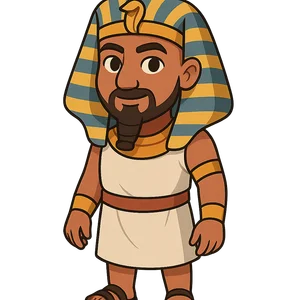
Khufu
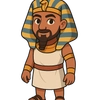
Khufu was an ancient Egyptian pharaoh of the 4th Dynasty during the Old Kingdom.
Reads at Grades 6–8 Listens at Grades 4–8
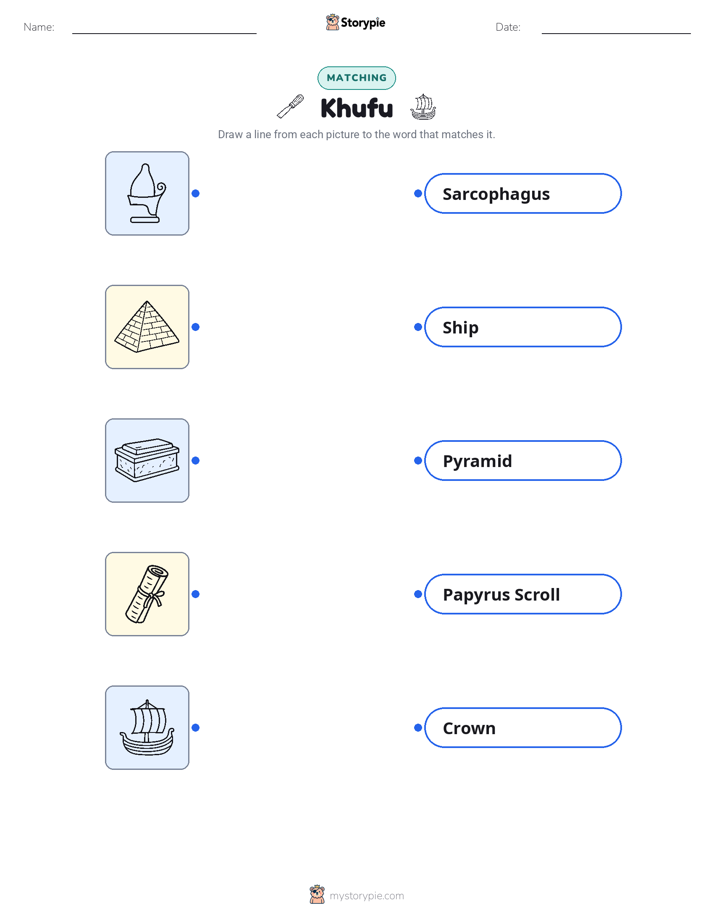
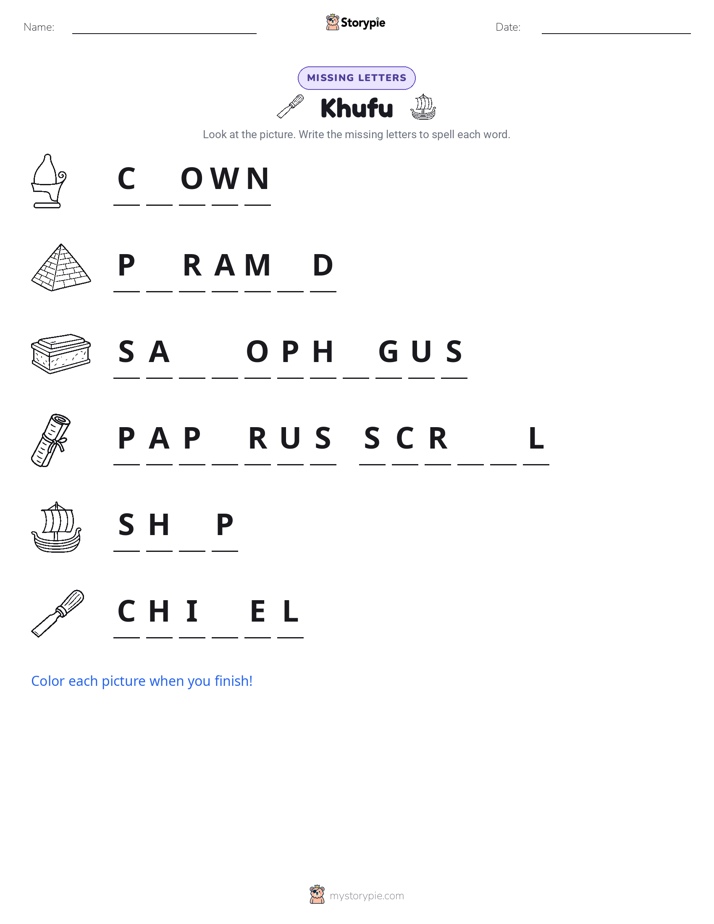
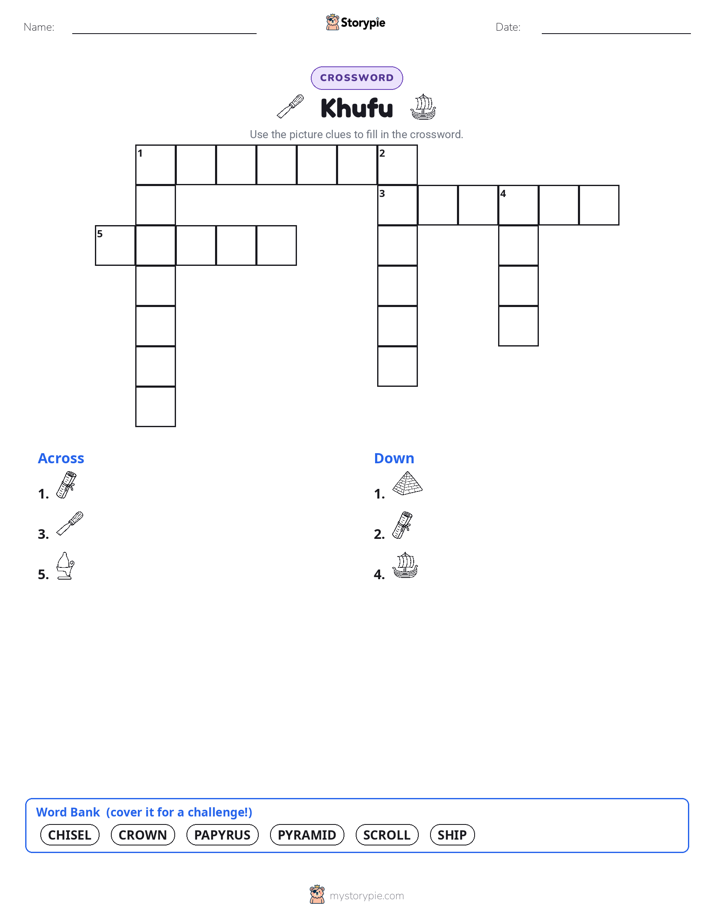
Print & create
Answer keys·No prep·Free with an account
28 worksheets · answer keys · full story · quiz · Ages 10-12 · CEFR B2
Plus adds 208,000+ more stories in 27 languages, audio for every one, and printables for all of them.
Just want Khufu?
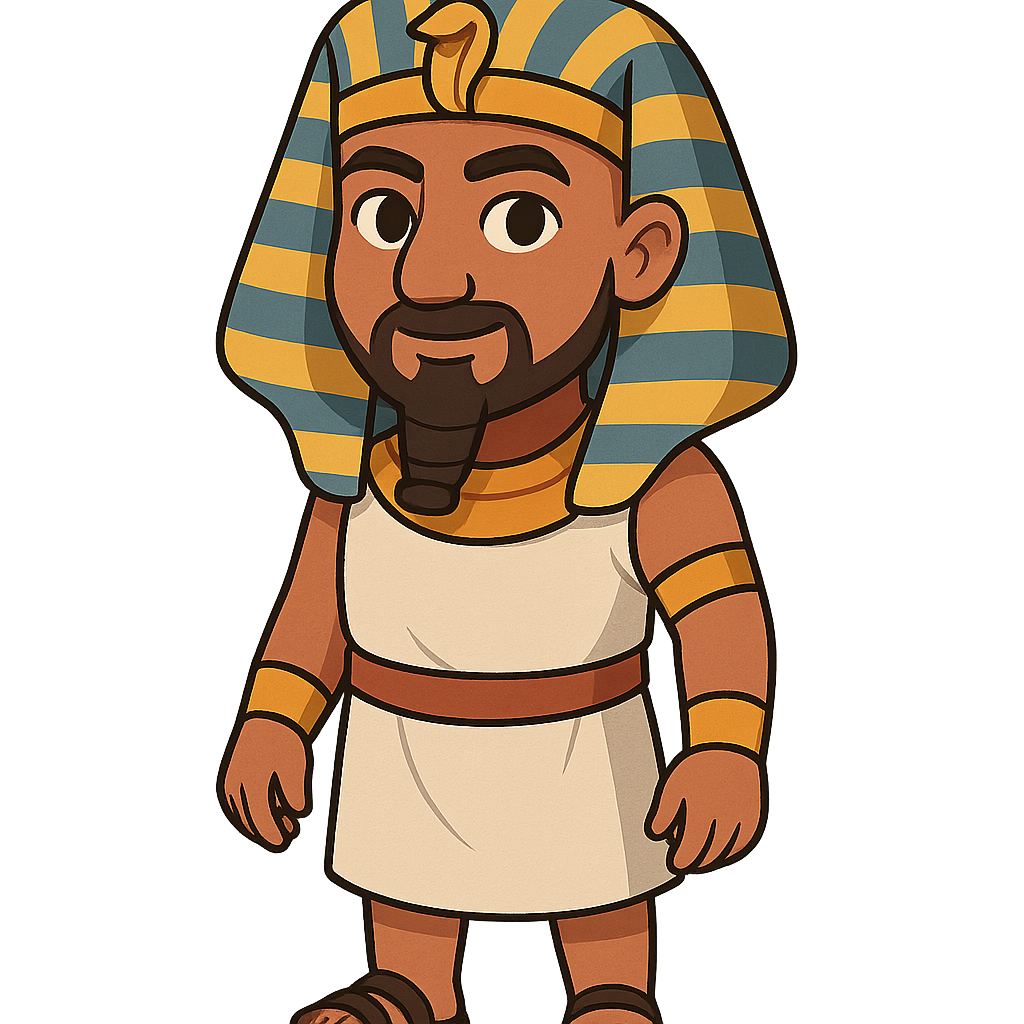
Greetings. I am Khufu, a pharaoh who ruled during the Fourth Dynasty of ancient Egypt. You may know me as the builder of the Great Pyramid of Giza, but my story began long before the first stone was laid. I was born into the powerful Old Kingdom in the early 26th century BCE, a time when Egypt was strong and united. My father was the great Pharaoh Sneferu, a remarkable builder himself. I grew up watching his incredible projects take shape, like the famous Bent Pyramid and Red Pyramid. His work taught me that a pharaoh's legacy is written in stone, meant to last for eternity. My full name was Khnum-Khufu, which means “the god Khnum protects me.” From my earliest days, I was raised to understand that my path was already set. I was destined to wear the Double Crown, uniting Upper and Lower Egypt, and to lead my people to greatness. I knew my reign had to be more than just powerful; it had to leave a mark that would defy time itself.
Around the year 2589 BCE, I ascended to the throne and became the pharaoh of Egypt. Wearing the Double Crown was an immense responsibility, one that I took with the utmost seriousness. To my people, I was not just a king; I was a living god, a direct link between the heavens and the Earth. My primary duty was to maintain 'ma'at,' the divine concept of order, balance, truth, and justice. If 'ma'at' was upheld, our kingdom would prosper. This meant ensuring that the annual floods of the Nile River arrived on time to water our crops, leading to bountiful harvests that could feed everyone. It also involved organizing the kingdom’s vast resources, from the stone quarries along the Nile to the mines in the distant desert. I oversaw a complex government of officials, scribes, and priests who helped me manage the affairs of our great nation. Every decision I made, from settling disputes to commissioning temples, was done to preserve the divine harmony that kept Egypt strong and stable. My word was law, but that law was guided by the sacred duty to care for my land and my people.
Khufu: Builder of the Great Pyramid
Greetings. I am Khufu, a pharaoh who ruled during the Fourth Dynasty of ancient Egypt. You may know me as the builder of the Great Pyramid of Giza, but my story began long before the first stone was laid. I was born into the powerful Old Kingdom in the early 26th century BCE, a time when Egypt was strong and united. My father was the great Pharaoh Sneferu, a remarkable builder himself. I grew up watching his incredible projects take shape, like the famous Bent Pyramid and Red Pyramid. His work taught me that a pharaoh's legacy is written in stone, meant to last for eternity. My full name was Khnum-Khufu, which means “the god Khnum protects me.” From my earliest days, I was raised to understand that my path was already set. I was destined to wear the Double Crown, uniting Upper and Lower Egypt, and to lead my people to greatness. I knew my reign had to be more than just powerful; it had to leave a mark that would defy time itself.
Around the year 2589 BCE, I ascended to the throne and became the pharaoh of Egypt. Wearing the Double Crown was an immense responsibility, one that I took with the utmost seriousness. To my people, I was not just a king; I was a living god, a direct link between the heavens and the Earth. My primary duty was to maintain 'ma'at,' the divine concept of order, balance, truth, and justice. If 'ma'at' was upheld, our kingdom would prosper. This meant ensuring that the annual floods of the Nile River arrived on time to water our crops, leading to bountiful harvests that could feed everyone. It also involved organizing the kingdom’s vast resources, from the stone quarries along the Nile to the mines in the distant desert. I oversaw a complex government of officials, scribes, and priests who helped me manage the affairs of our great nation. Every decision I made, from settling disputes to commissioning temples, was done to preserve the divine harmony that kept Egypt strong and stable. My word was law, but that law was guided by the sacred duty to care for my land and my people.
My greatest project, the one for which I am most remembered, was the creation of my tomb on the Giza plateau. But to call it a mere tomb is to misunderstand its purpose. This structure was my 'Akhet,' my horizon, a stairway to the heavens from which my eternal spirit could rise and join the gods in the afterlife. The planning and construction of what you now call the Great Pyramid was an undertaking of incredible scale, beginning shortly after I became pharaoh. For about 20 years, the Giza plateau was transformed into a bustling center of innovation and labor. Under the brilliant direction of my vizier and nephew, Hemiunu, thousands of skilled workers—stonemasons, engineers, surveyors, and artisans—came together to build my monument. They were not slaves, but paid laborers who took great pride in their work. They precisely cut and moved millions of massive limestone and granite blocks, some weighing several tons, and assembled them with a perfection that still puzzles engineers today. This was more than a building; it was a national project that showcased the unity, skill, and devotion of the Egyptian people.
While the construction of my 'Akhet' was a central focus of my reign, my duties as pharaoh extended far beyond the Giza plateau. Ruling a vast and prosperous kingdom required constant attention. I had a family to lead, including my sons Djedefre and Khafre, who would both follow me as rulers of Egypt. It was my responsibility to ensure the line of succession was secure and that they were prepared to uphold 'ma'at' as I had. To acquire the resources our kingdom needed, I organized and sent trade expeditions to foreign lands. We sailed to places like Byblos, a city on the coast of modern-day Lebanon, to trade for precious cedarwood. This strong, beautiful wood was essential for building large ships for our fleet and for constructing the sacred boats that would be buried near my pyramid, ready to carry me through the underworld. My daily work was that of a king dedicated to the glory of Egypt, ensuring its economy was strong, its borders were secure, and its people were provided for.
My reign as pharaoh lasted for about 23 years, coming to an end around 2566 BCE. My time on Earth concluded, and my son Djedefre succeeded me on the throne, continuing the work of our dynasty. As was planned, my body was carefully mummified and placed within the stone sarcophagus deep inside the Great Pyramid, ready for my spirit’s journey to the afterlife. For over 4,500 years, my pyramid has stood against the sands of time. It is the oldest and last remaining of the Seven Wonders of the Ancient World. My true legacy is not just the stone structure itself, but the incredible ambition, organization, and unity of the Egyptian people who built it. Today, people from all over the world still travel to see my 'Akhet Khufu'—my horizon at Giza—and marvel at what we were able to achieve so long ago.
Wow facts
About
Khufu was an ancient Egyptian pharaoh of the 4th Dynasty during the Old Kingdom. He is best known for commissioning the Great Pyramid of Giza, one of the Seven Wonders of the Ancient World.
Take a Quiz
Question 1 of 5
According to the story, what was the primary purpose of the Great Pyramid for Khufu?
Explore next


Want to do even more?
Go beyond exploring. Unlock tools that turn every story into real learning.

Storypie Plus for families
Full stories, quizzes, and printables. Nights and car rides, sorted.
- Unlimited audio stories
- Create Mode: your child stars in the story
- Offline downloads
- Printable worksheets & coloring pages

Why Storypie for Schools
Students engaged. Prep in seconds. Evenings back to you.
- Worksheets & Quizzes
- Classroom Management
- Formative Assessment
- Custom Curriculum & Lesson Plans
- 27 Languages

Why Storypie for Homeschool
Curriculum done. They'll ask for more. Hours back in your day.
- Worksheet Generator
- First-Person Audio Stories
- Built-in Comprehension Quizzes
- Custom Curriculum & Lesson Plans
- Print & Go Activities