English

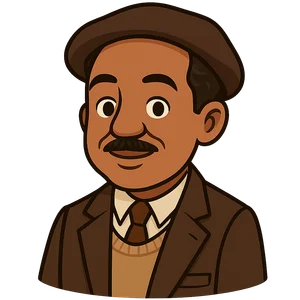
Langston Hughes
Langston Hughes was a pioneering African American poet, social activist, novelist, and playwright…
Reads at Grades 6–8 Listens at Grades 4–8
Print & create
Answer keys·No prep·Free with an account
28 worksheets · answer keys · full story · quiz · Ages 10-12 · CEFR B2
Plus adds 244,000+ more stories in 27 languages, audio for every one, and printables for all of them.
Just want Langston Hughes?
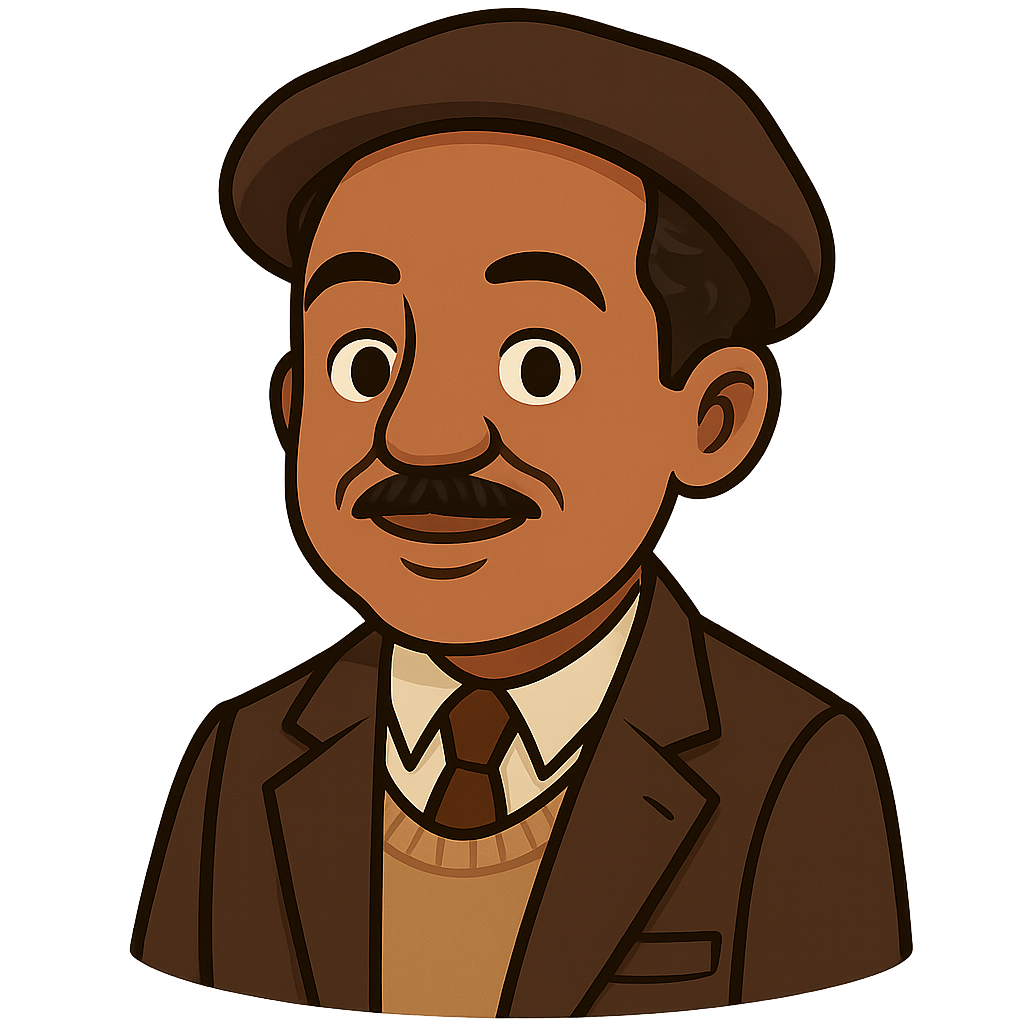
Hello, my name is Langston Hughes, and I am a writer. I want to tell you the story of my life and how I used words to paint a picture of my world. I was born on February 1st, 1902, in a town called Joplin, Missouri. My childhood was spent moving from one city to another, which wasn't always easy. For some of my most important early years, I lived with my grandmother, Mary Patterson Langston, in Lawrence, Kansas. She was a wonderful storyteller, and she filled my head with stories of our family and the history of our people—stories of pride and incredible resilience. It was during this time that I discovered a deep love for books. Reading opened up new worlds for me, and soon, I wanted to create worlds of my own. I began writing poems, and in eighth grade, my classmates elected me as the class poet. That small moment was a big spark for me; it made me believe that maybe, just maybe, I could become a real writer one day.
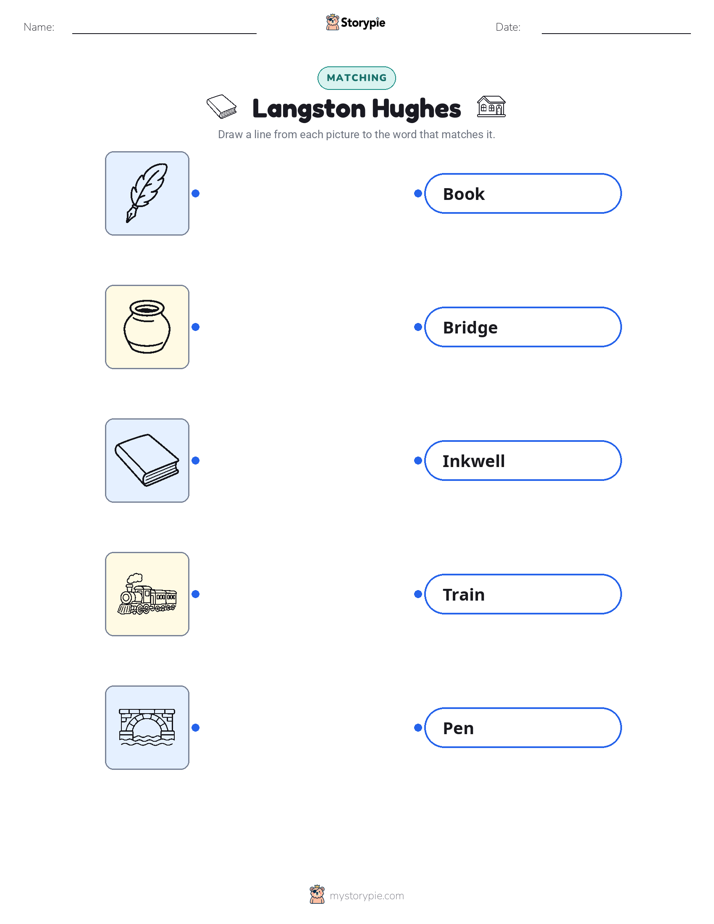
My journey as a poet truly began to take shape during my teenage years. After graduating from high school in Cleveland, Ohio, in 1920, I set off on an adventure. The following year, in 1921, I took a long train ride to visit my father, who was living in Mexico. As the train rumbled across a bridge over the mighty Mississippi River, something magical happened. I looked out at the water, thinking about its long history and the journey of my ancestors, and the words for a poem began to flow into my mind. That poem became 'The Negro Speaks of Rivers,' one of my most famous works. After that trip, I attended Columbia University in New York City, but I only stayed for a year. I decided to leave in 1922 because I felt a strong pull to learn about the world not just from books, but by experiencing it myself. I wanted to travel, meet people, and gather the stories that would fuel my writing.
Langston Hughes: The Dream Keeper
Hello, my name is Langston Hughes, and I am a writer. I want to tell you the story of my life and how I used words to paint a picture of my world. I was born on February 1st, 1902, in a town called Joplin, Missouri. My childhood was spent moving from one city to another, which wasn't always easy. For some of my most important early years, I lived with my grandmother, Mary Patterson Langston, in Lawrence, Kansas. She was a wonderful storyteller, and she filled my head with stories of our family and the history of our people—stories of pride and incredible resilience. It was during this time that I discovered a deep love for books. Reading opened up new worlds for me, and soon, I wanted to create worlds of my own. I began writing poems, and in eighth grade, my classmates elected me as the class poet. That small moment was a big spark for me; it made me believe that maybe, just maybe, I could become a real writer one day.
My journey as a poet truly began to take shape during my teenage years. After graduating from high school in Cleveland, Ohio, in 1920, I set off on an adventure. The following year, in 1921, I took a long train ride to visit my father, who was living in Mexico. As the train rumbled across a bridge over the mighty Mississippi River, something magical happened. I looked out at the water, thinking about its long history and the journey of my ancestors, and the words for a poem began to flow into my mind. That poem became 'The Negro Speaks of Rivers,' one of my most famous works. After that trip, I attended Columbia University in New York City, but I only stayed for a year. I decided to leave in 1922 because I felt a strong pull to learn about the world not just from books, but by experiencing it myself. I wanted to travel, meet people, and gather the stories that would fuel my writing.
My travels eventually led me to a neighborhood in New York City that was bursting with energy and creativity: Harlem. Living there during the 1920s was like being at the center of a cultural explosion, which later became known as the Harlem Renaissance. It was a time when Black artists, writers, and musicians were creating amazing work and sharing it with the world. I was surrounded by inspiration. The sound of jazz music drifted out of clubs, and the soulful melodies of the blues told stories of sorrow and joy. I wanted my poetry to sound like that music. I tried to capture its rhythm and its honesty in my words. In 1926, I felt a huge sense of accomplishment when my very first book of poems, 'The Weary Blues,' was published. My goal was simple but powerful: I wanted my writing to be a true reflection of the lives, language, and experiences of my people.
Throughout my career, my writing was always driven by a clear purpose. I used my poems, stories, and plays to give voice to the hopes, the struggles, and the beautiful dreams of African Americans. I wanted to show the world our strength, our humor, and our humanity. After years of learning from life, I decided to complete my formal education, and in 1929, I earned my college degree from Lincoln University in Pennsylvania. My education didn't stop there, though. I continued to travel the world, visiting different countries and meeting people from all walks of life. These journeys deepened my understanding of the universal fight for freedom and justice. They reinforced my belief that every single person, no matter where they come from, has a dream that deserves to be heard and respected.
I lived to be 65 years old, and during that time, I wrote from my heart about the world I saw and the future I hoped for. I hope I am remembered as a voice for people whose stories weren't always told, a writer who tried to capture the music and the spirit of my community. My dream was that my words would build bridges of understanding between people and inspire everyone, especially young people, to hold fast to their own dreams, no matter how hard the journey gets.
Wow facts
About
Langston Hughes was a pioneering African American poet, social activist, novelist, and playwright, best known as a leader of the Harlem Renaissance.
Take a Quiz
Question 1 of 5
What inspired me to write the poem 'The Negro Speaks of Rivers'?
Explore next





Want to do even more?
Go beyond exploring. Unlock tools that turn every story into real learning.

Storypie Plus for families
Full stories, quizzes, and printables. Nights and car rides, sorted.
- Unlimited audio stories
- Create Mode: your child stars in the story
- Offline downloads
- Printable worksheets & coloring pages

Why Storypie for Schools
Students engaged. Prep in seconds. Evenings back to you.
- Worksheets & Quizzes
- Classroom Management
- Formative Assessment
- Custom Curriculum & Lesson Plans
- 27 Languages

Why Storypie for Homeschool
Curriculum done. They'll ask for more. Hours back in your day.
- Worksheet Generator
- First-Person Audio Stories
- Built-in Comprehension Quizzes
- Custom Curriculum & Lesson Plans
- Print & Go Activities