English

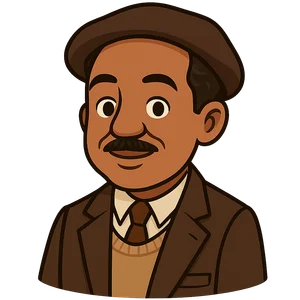
Langston Hughes
Langston Hughes was a pioneering African American poet, social activist, novelist, and playwright…
Reads at Grades 3–5 Listens at Grades 1–5
Print & create
Answer keys·No prep·Free with an account
28 worksheets · answer keys · full story · quiz · Ages 8-10 · CEFR B1
Plus adds 244,000+ more stories in 27 languages, audio for every one, and printables for all of them.
Just want Langston Hughes?
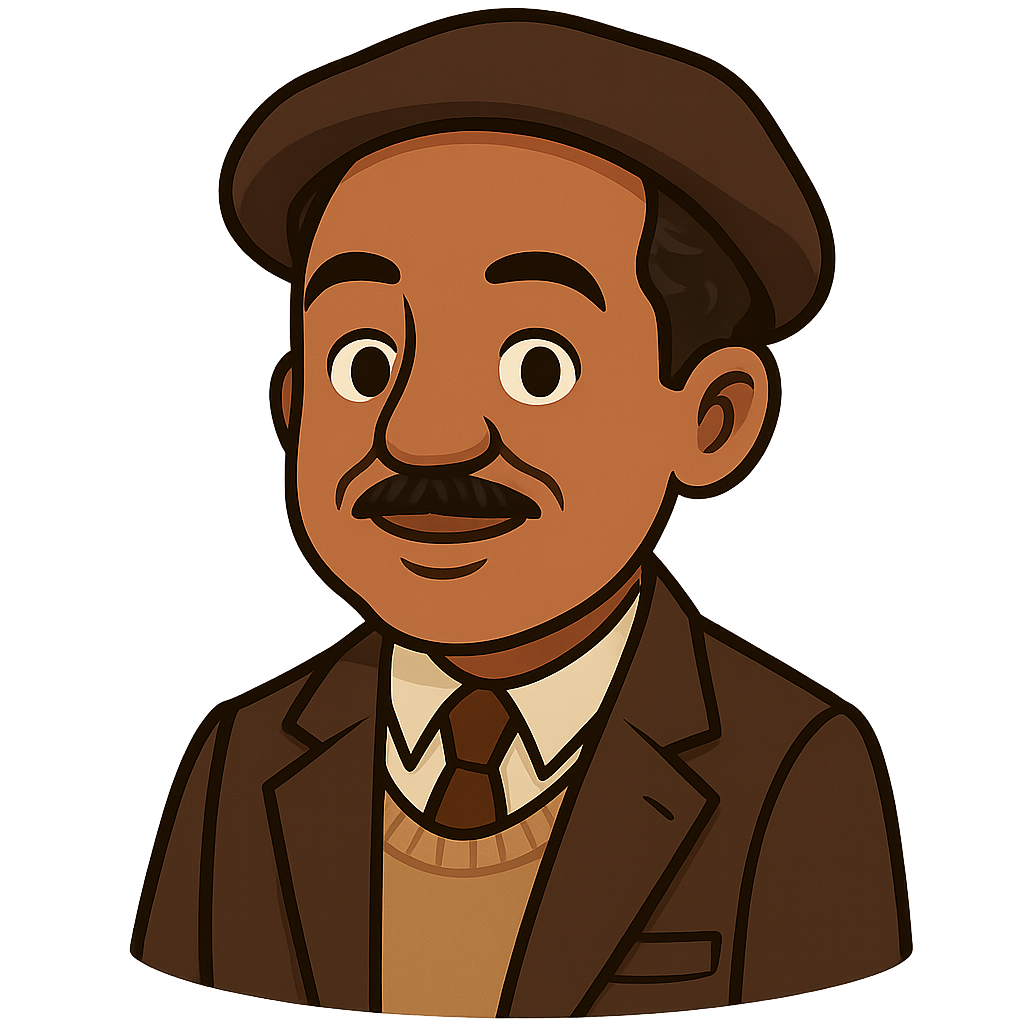
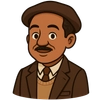
Hello, I'm Langston Hughes, and I am a writer. My story begins on February 1st, 1902, in a town called Joplin, Missouri. My childhood was a bit like a rolling stone; I moved around quite a bit. For a long time, I lived with my grandmother. Every night, she would tell me amazing stories about our people—tales of their strength, their struggles, and their pride. She filled my head with words and history. It was in her house, surrounded by her stories, that I first fell in love with books. I discovered that words held a special kind of magic. They could build worlds, paint pictures, and share the deepest feelings of a person's heart. This love of language would stay with me for my entire life and become the work I am known for today.
My love for writing really took flight when I was in high school in Cleveland, Ohio. In 1916, something wonderful happened—my classmates elected me as the class poet. That moment made me feel that my words could truly mean something to others. During this time, I was also listening to a lot of jazz and blues music. The music had a special beat, a rhythm that told stories of sadness and joy. I wanted my poems to feel just like that music. I tried to capture its rhythm and feeling in the lines I wrote. One of my most famous poems, 'The Negro Speaks of Rivers,' came to me in 1920. I was on a train, crossing the Mississippi River to visit my father, and the words just flowed onto the page. The next year, in 1921, I started studying at Columbia University, but I soon realized I wanted to learn about the world by experiencing it, not just by reading about it in a classroom.
A Biography of Langston Hughes
Hello, I'm Langston Hughes, and I am a writer. My story begins on February 1st, 1902, in a town called Joplin, Missouri. My childhood was a bit like a rolling stone; I moved around quite a bit. For a long time, I lived with my grandmother. Every night, she would tell me amazing stories about our people—tales of their strength, their struggles, and their pride. She filled my head with words and history. It was in her house, surrounded by her stories, that I first fell in love with books. I discovered that words held a special kind of magic. They could build worlds, paint pictures, and share the deepest feelings of a person's heart. This love of language would stay with me for my entire life and become the work I am known for today.
My love for writing really took flight when I was in high school in Cleveland, Ohio. In 1916, something wonderful happened—my classmates elected me as the class poet. That moment made me feel that my words could truly mean something to others. During this time, I was also listening to a lot of jazz and blues music. The music had a special beat, a rhythm that told stories of sadness and joy. I wanted my poems to feel just like that music. I tried to capture its rhythm and feeling in the lines I wrote. One of my most famous poems, 'The Negro Speaks of Rivers,' came to me in 1920. I was on a train, crossing the Mississippi River to visit my father, and the words just flowed onto the page. The next year, in 1921, I started studying at Columbia University, but I soon realized I wanted to learn about the world by experiencing it, not just by reading about it in a classroom.
So, I left the university and traveled, but my heart eventually led me to a special neighborhood in New York City called Harlem. I moved there during the 1920s, which was an incredible time to be there. This period was known as the Harlem Renaissance. It was a time when Black artists, writers, and musicians were creating some of the most amazing work the world had ever seen. The streets were filled with music, art, and new ideas. I felt like I was exactly where I was supposed to be. In 1926, I published my very first book of poems, called 'The Weary Blues.' It was a dream come true to see my words in a real book. A few years later, in 1929, I proudly graduated from Lincoln University. I felt honored to be one of the many voices telling the stories of my people during this exciting time.
Throughout my career, I had one main goal. My purpose as a writer was to show the real lives of Black people. I wanted to write about everything—our happiness, our challenges, the music that made us dance, and the dreams we held in our hearts. I didn't want my writing to be complicated or hard to read. I wrote poems, stories, plays, and even newspaper columns in a way that everyone could understand, not just fancy critics or professors. I wanted my words to be like a mirror for my community. When people read my work, I hoped they would see their own lives reflected back at them. I wanted them to see the beauty, the dignity, and the incredible strength I saw in them every single day.
I lived to be 65 years old, and I kept writing right up until I passed away in 1967. Looking back, my greatest hope was that my words would build a bridge of understanding between people and, most importantly, give my community a sense of pride in who they are. Today, my poems are still read in schools all over the world. My old home in Harlem is now a landmark, a place that reminds everyone of the power of art and storytelling. I hope my life shows you that your voice matters and that you should always hold fast to your dreams.
Wow facts
About
Langston Hughes was a pioneering African American poet, social activist, novelist, and playwright, best known as a leader of the Harlem Renaissance.
Take a Quiz
Question 1 of 5
In the story, I said I wanted my writing to be like a 'mirror.' What did I mean by that?
Explore next





Want to do even more?
Go beyond exploring. Unlock tools that turn every story into real learning.

Storypie Plus for families
Full stories, quizzes, and printables. Nights and car rides, sorted.
- Unlimited audio stories
- Create Mode: your child stars in the story
- Offline downloads
- Printable worksheets & coloring pages

Why Storypie for Schools
Students engaged. Prep in seconds. Evenings back to you.
- Worksheets & Quizzes
- Classroom Management
- Formative Assessment
- Custom Curriculum & Lesson Plans
- 27 Languages

Why Storypie for Homeschool
Curriculum done. They'll ask for more. Hours back in your day.
- Worksheet Generator
- First-Person Audio Stories
- Built-in Comprehension Quizzes
- Custom Curriculum & Lesson Plans
- Print & Go Activities