English

Le Corbusier
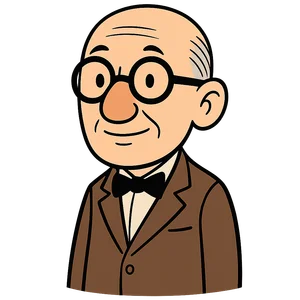
I was a Swiss-French architect, designer, painter…
Reads at Grades 6–8 Listens at Grades 4–8
Print & create
Answer keys·No prep·Free with an account
28 worksheets · answer keys · full story · quiz · Ages 10-12 · CEFR B2
Plus adds 244,000+ more stories in 27 languages, audio for every one, and printables for all of them.
Just want Le Corbusier?
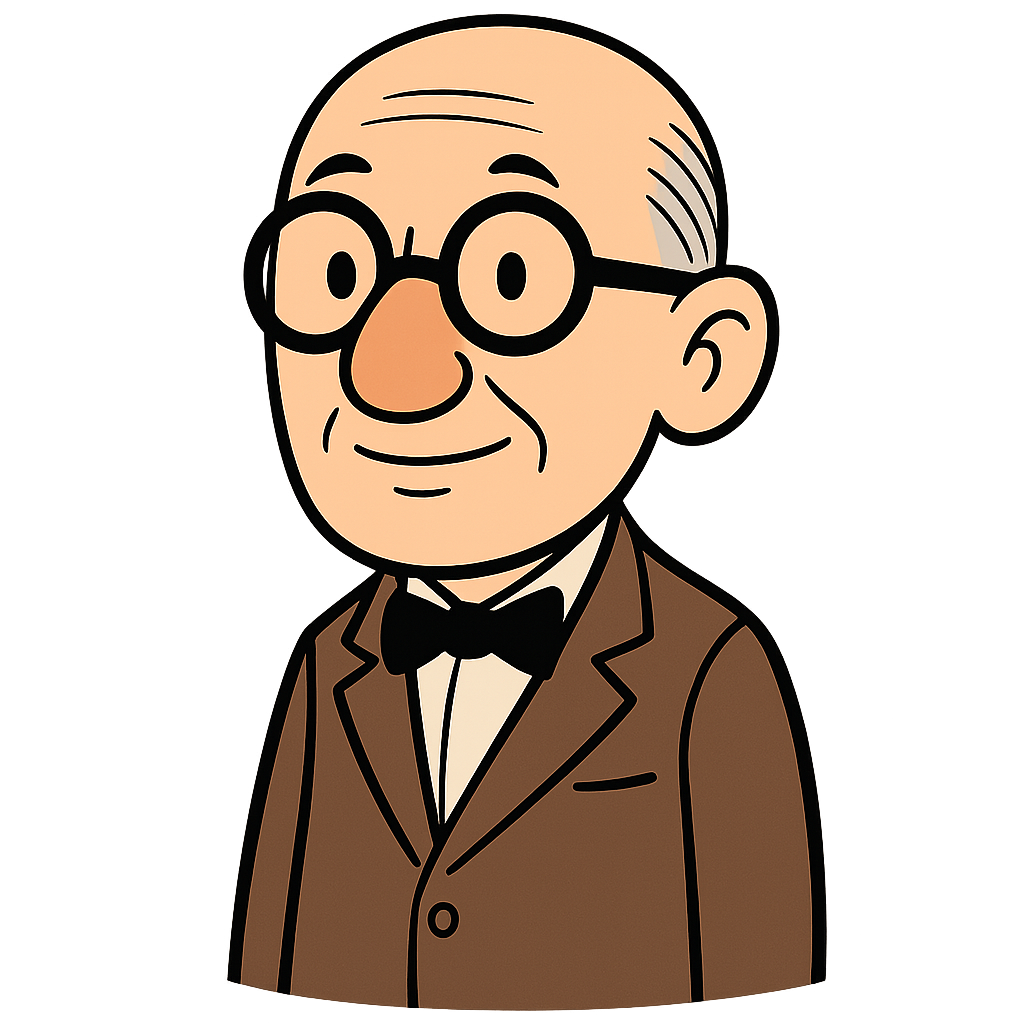
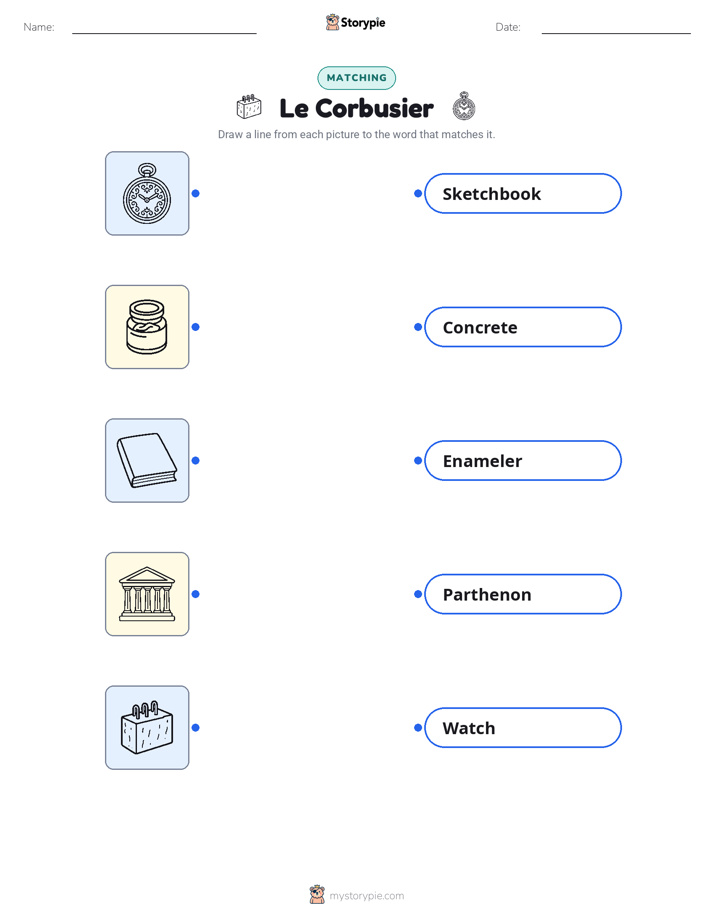
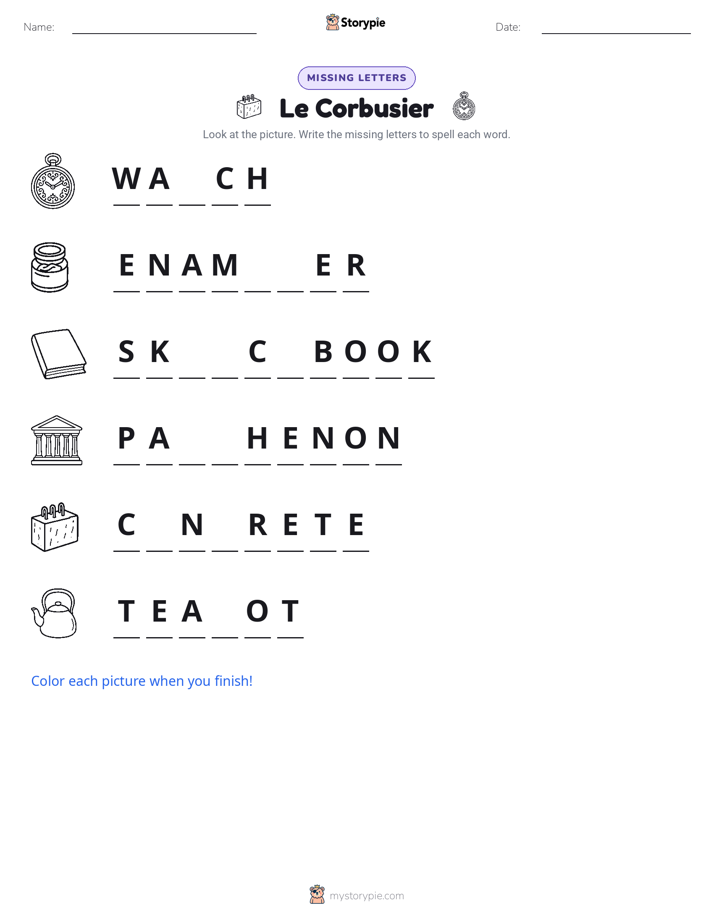
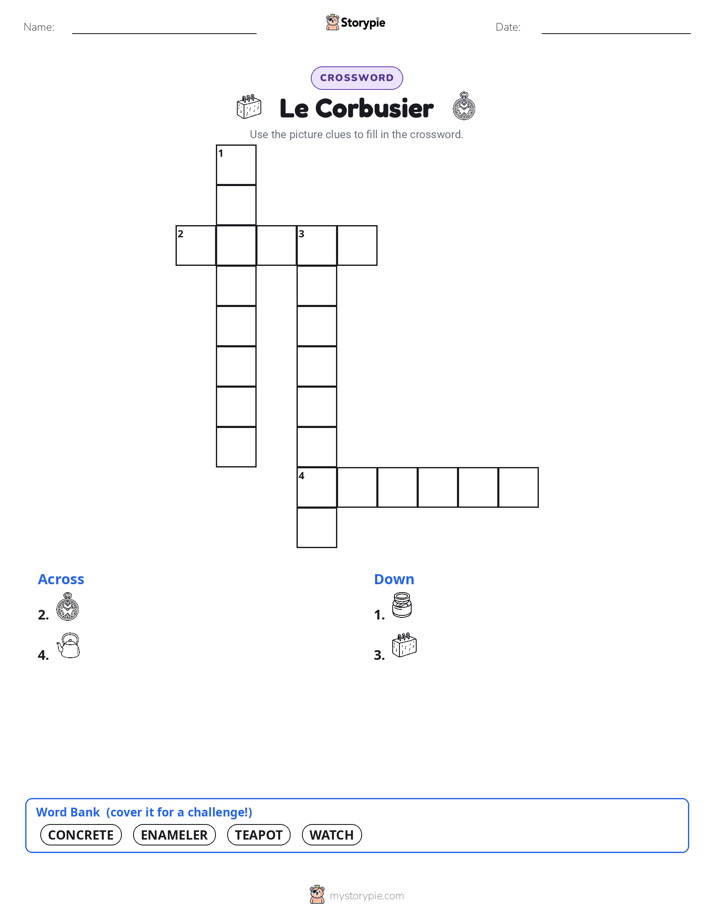
Hello! You might know me by the name Le Corbusier, but that’s not the name I was born with. My story begins on October 6th, 1887, when I was born Charles-Édouard Jeanneret in a small Swiss town called La Chaux-de-Fonds. My town was famous for making beautiful, intricate watches, and my father was a watch dial enameler. It seemed natural that I would follow in his footsteps, and I began training to engrave watchcases. I loved art and the shapes I saw in nature, but I soon realized that my future wasn't in tiny watches. My art school teacher, a man named Charles L’Eplattenier, saw something special in me. He believed I should think bigger—much bigger! He was the one who first encouraged me to study architecture, the art of designing buildings.
To become an architect, I knew I had to see the world. Between 1907 and 1911, I set off on a grand journey across Europe. I traveled to Italy, Athens, Vienna, and Paris, sketching everything I saw. I was amazed by the simple, perfect shapes of ancient buildings like the Parthenon in Greece, but I was also fascinated by modern structures being made from new materials. I worked for a short time in the offices of famous architects who were experimenting with these new ideas. In Paris, I learned from Auguste Perret, a genius with a material called reinforced concrete. In Berlin, I worked for Peter Behrens, who designed everything from buildings to teapots. These experiences made me realize that buildings didn't have to look like they did in the past. They could be designed for the modern world—for cars, for sunshine, and for the way people really lived.
Le Corbusier: A New Vision for a Modern World
Hello! You might know me by the name Le Corbusier, but that’s not the name I was born with. My story begins on October 6th, 1887, when I was born Charles-Édouard Jeanneret in a small Swiss town called La Chaux-de-Fonds. My town was famous for making beautiful, intricate watches, and my father was a watch dial enameler. It seemed natural that I would follow in his footsteps, and I began training to engrave watchcases. I loved art and the shapes I saw in nature, but I soon realized that my future wasn't in tiny watches. My art school teacher, a man named Charles L’Eplattenier, saw something special in me. He believed I should think bigger—much bigger! He was the one who first encouraged me to study architecture, the art of designing buildings.
To become an architect, I knew I had to see the world. Between 1907 and 1911, I set off on a grand journey across Europe. I traveled to Italy, Athens, Vienna, and Paris, sketching everything I saw. I was amazed by the simple, perfect shapes of ancient buildings like the Parthenon in Greece, but I was also fascinated by modern structures being made from new materials. I worked for a short time in the offices of famous architects who were experimenting with these new ideas. In Paris, I learned from Auguste Perret, a genius with a material called reinforced concrete. In Berlin, I worked for Peter Behrens, who designed everything from buildings to teapots. These experiences made me realize that buildings didn't have to look like they did in the past. They could be designed for the modern world—for cars, for sunshine, and for the way people really lived.
In 1917, I moved to Paris to start my own architectural practice. A few years later, in 1920, I decided I needed a new name—one that sounded as bold and modern as my ideas. I chose Le Corbusier. With my new name came a new vision for architecture. I believed houses should be 'machines for living in,' meaning they should be practical, efficient, and full of light. Around 1926, I came up with what I called my 'Five Points of Architecture.' First, lift the building off the ground with columns called 'pilotis.' Second, have an open floor plan without thick interior walls. Third, design the exterior walls freely, since they no longer had to hold up the building. Fourth, use long, horizontal 'ribbon' windows to let in maximum light. And fifth, put a garden on the roof to give back the green space the house took up. I put all these ideas together in one of my most famous buildings, the Villa Savoye, which was finished near Paris in 1931.
I didn't just want to design houses; I wanted to redesign entire cities. I dreamed of cities with tall apartment buildings surrounded by beautiful green parks, where people could live and work with plenty of fresh air and sunlight. After World War II, I got the chance to make some of these ideas a reality. In Marseille, France, I designed a huge apartment building called the Unité d'Habitation, completed in 1952. It was like a 'vertical city'—it had apartments, but also shops, a hotel, and even a running track and a small pool on the roof! My biggest challenge came in the 1950s, when I was asked to design a brand-new capital city in India called Chandigarh. I designed the entire layout of the city and its most important government buildings. It was a massive project, and it allowed me to test my ideas on a grand scale, creating a modern city from scratch.
My ideas about architecture and cities were sometimes controversial, but I always hoped they would help people live better, healthier lives. I spent my life painting, writing, and designing, always searching for new solutions to old problems. I lived to be 77 years old, and my work continued until the very end of my life in 1965. Today, my 'Five Points' are taught in architecture schools everywhere, and my buildings are visited by people from all over the world. Many of them are even protected as UNESCO World Heritage sites, recognized for their importance to human history. I hope my story inspires you to look at the buildings and cities around you and imagine how they could be made even better for everyone.
Wow facts
About
I was a Swiss-French architect, designer, painter, and writer who became one of the most important pioneers of modern architecture in the 20th century.
Take a Quiz
Question 1 of 5
What was Le Corbusier's main goal as an architect, as described in the story?
Explore next






Want to do even more?
Go beyond exploring. Unlock tools that turn every story into real learning.

Storypie Plus for families
Full stories, quizzes, and printables. Nights and car rides, sorted.
- Unlimited audio stories
- Create Mode: your child stars in the story
- Offline downloads
- Printable worksheets & coloring pages

Why Storypie for Schools
Students engaged. Prep in seconds. Evenings back to you.
- Worksheets & Quizzes
- Classroom Management
- Formative Assessment
- Custom Curriculum & Lesson Plans
- 27 Languages

Why Storypie for Homeschool
Curriculum done. They'll ask for more. Hours back in your day.
- Worksheet Generator
- First-Person Audio Stories
- Built-in Comprehension Quizzes
- Custom Curriculum & Lesson Plans
- Print & Go Activities