English

Le Corbusier
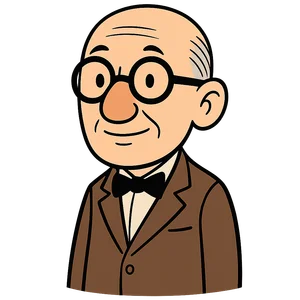
I was a Swiss-French architect, designer, painter…
Reads at Grades 3–5 Listens at Grades 1–5
Print & create
Answer keys·No prep·Free with an account
28 worksheets · answer keys · full story · quiz · Ages 8-10 · CEFR B1
Plus adds 244,000+ more stories in 27 languages, audio for every one, and printables for all of them.
Just want Le Corbusier?
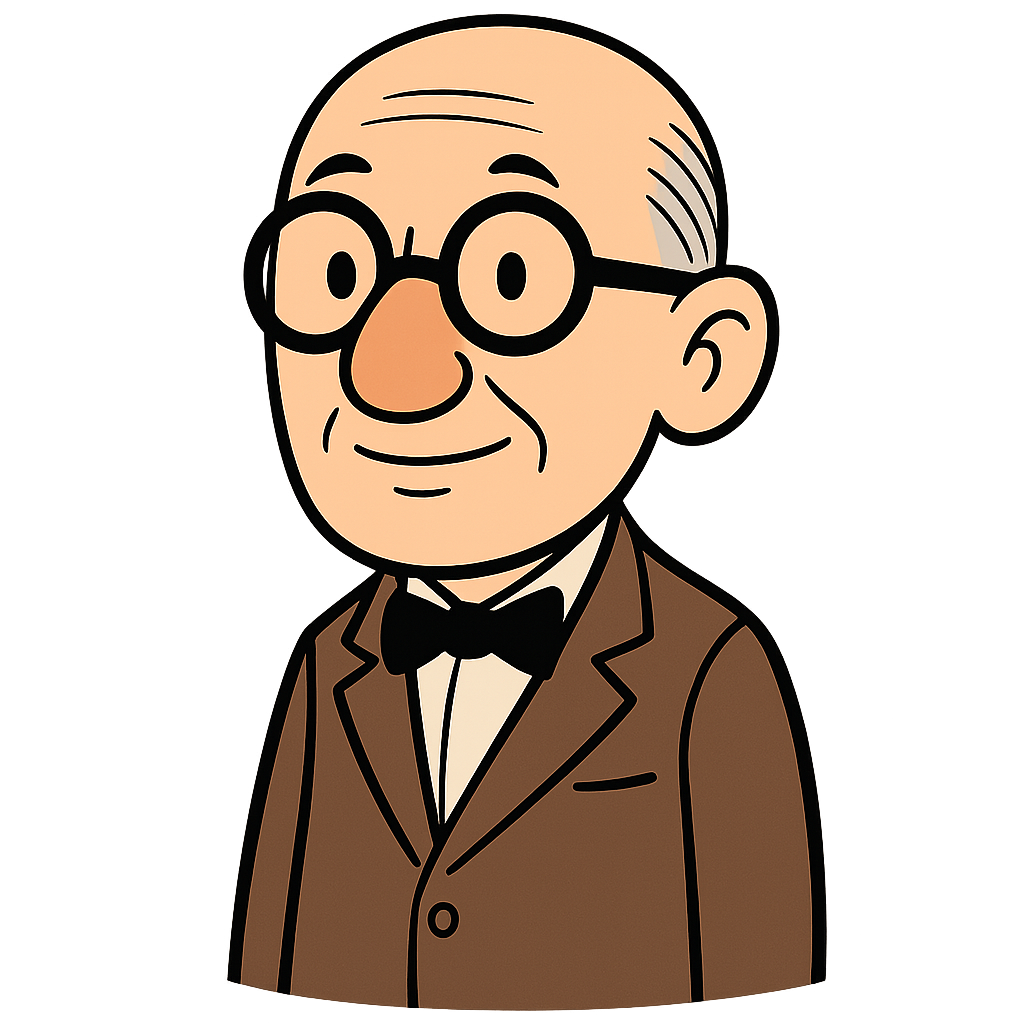
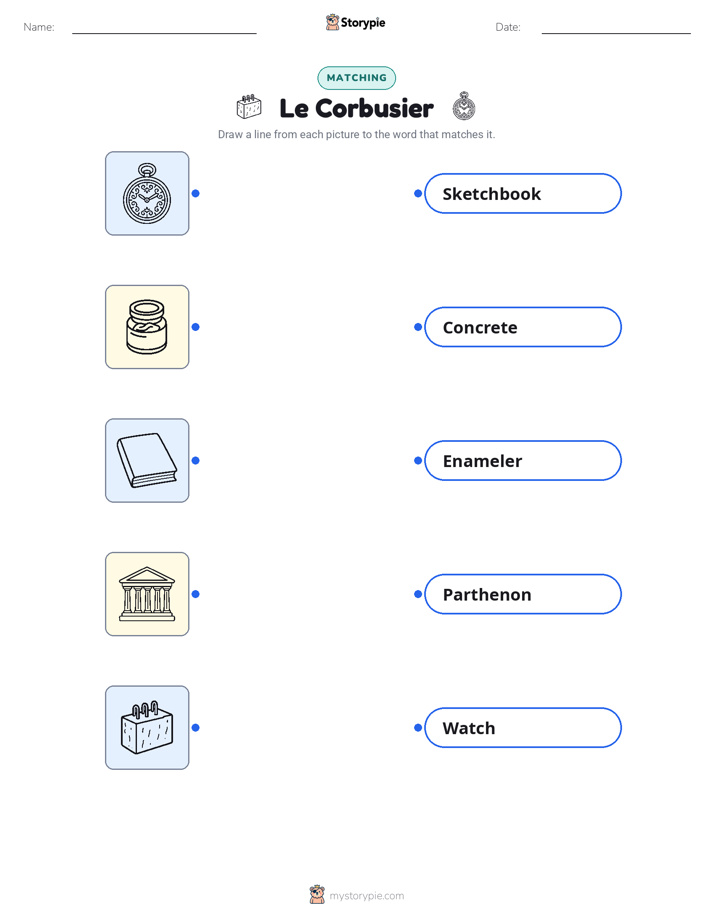
Hello. You may know me by my famous name, Le Corbusier, but that wasn't the name I was given when I was born. My story begins on October 6th, 1887, in a small Swiss town called La Chaux-de-Fonds, where I was born Charles-Édouard Jeanneret-Gris. My town was famous for making beautiful, precise watches, and I grew up surrounded by people who cared about details and craftsmanship. As a boy, I didn't dream of making watches; instead, I loved to be outdoors, drawing the plants and trees I saw in nature. My drawings were so good that around the year 1900, I went to an art school. There, my wonderful teacher, Charles L’Éplattenier, saw my talent. He believed I could do more than just draw pictures on paper; he encouraged me to study architecture and design the buildings where people live and work.
My teacher's advice sparked a great curiosity in me. I realized that to learn how to design new buildings, I first needed to understand the old ones. So, between 1907 and 1911, I set off on a journey across Europe. It was like a great adventure for my education. I traveled to see the magnificent ancient structures that had stood for centuries. In Greece, I stood before the Parthenon and was amazed by its simple and powerful design. I filled sketchbook after sketchbook with drawings of everything I saw, studying the shapes, the light, and the materials. During my travels, I also worked for important architects. In Paris, I worked for Auguste Perret, who taught me about a strong and flexible new material called reinforced concrete. Later, I worked for Peter Behrens in Germany, learning even more about modern design.
Le Corbusier: Building a New World
Hello. You may know me by my famous name, Le Corbusier, but that wasn't the name I was given when I was born. My story begins on October 6th, 1887, in a small Swiss town called La Chaux-de-Fonds, where I was born Charles-Édouard Jeanneret-Gris. My town was famous for making beautiful, precise watches, and I grew up surrounded by people who cared about details and craftsmanship. As a boy, I didn't dream of making watches; instead, I loved to be outdoors, drawing the plants and trees I saw in nature. My drawings were so good that around the year 1900, I went to an art school. There, my wonderful teacher, Charles L’Éplattenier, saw my talent. He believed I could do more than just draw pictures on paper; he encouraged me to study architecture and design the buildings where people live and work.
My teacher's advice sparked a great curiosity in me. I realized that to learn how to design new buildings, I first needed to understand the old ones. So, between 1907 and 1911, I set off on a journey across Europe. It was like a great adventure for my education. I traveled to see the magnificent ancient structures that had stood for centuries. In Greece, I stood before the Parthenon and was amazed by its simple and powerful design. I filled sketchbook after sketchbook with drawings of everything I saw, studying the shapes, the light, and the materials. During my travels, I also worked for important architects. In Paris, I worked for Auguste Perret, who taught me about a strong and flexible new material called reinforced concrete. Later, I worked for Peter Behrens in Germany, learning even more about modern design.
After my travels, I knew my life's work would be in architecture. In 1917, I moved to Paris, a bustling city full of new ideas, and opened my own office. It was an exciting time, and I felt I was becoming a new person with a new vision for the world. To mark this change, in 1920 I adopted a new name for my architecture work: Le Corbusier. With my new name came new ideas. I famously said that a house should be a "machine for living in." I didn't mean it should have gears and engines. I meant that a home should be designed to work perfectly for the people inside it—it should be practical, efficient, and filled with sunlight and fresh air. To achieve this, I developed what I called my 'Five Points of Architecture.' I believed buildings should be raised off the ground on columns, have open floor plans without many walls, simple exterior walls, long horizontal windows to let in light, and beautiful gardens on the roof.
My ideas were different from anything people had seen before, and I got the chance to bring them to life. One of my most famous projects was the Villa Savoye, a house I designed in France between 1928 and 1931. It looked like a pure white box floating on thin stilts, with long ribbon-like windows that wrapped around the building. After the difficult times of World War II, I wanted to help people live better in crowded cities. Between 1947 and 1952, I designed a large apartment building in France called the Unité d'habitation. It was like a 'vertical city' where everything people needed—apartments, shops, and even a rooftop garden—was inside one massive concrete structure. My work wasn't just in Europe. In the 1950s, I traveled to India to help design the brand-new city of Chandigarh, planning everything from government buildings to public spaces.
I spent my entire life thinking about how architecture could build a better, brighter world for everyone. My goal was always to use design to bring more order, light, and happiness into people's lives. I lived to be 77 years old. Today, my ideas about modern design have changed the way our towns and cities look all over the world. When you see a building with huge glass windows, a flat roof, or one that stands up on pillars, you might be seeing a little piece of my dream. My work reminds us that the buildings we live in can be both useful and beautiful.
Wow facts
About
I was a Swiss-French architect, designer, painter, and writer who became one of the most important pioneers of modern architecture in the 20th century.
Take a Quiz
Question 1 of 5
In the story, what did I mean when I said a house should be a 'machine for living in'?
Explore next






Want to do even more?
Go beyond exploring. Unlock tools that turn every story into real learning.

Storypie Plus for families
Full stories, quizzes, and printables. Nights and car rides, sorted.
- Unlimited audio stories
- Create Mode: your child stars in the story
- Offline downloads
- Printable worksheets & coloring pages

Why Storypie for Schools
Students engaged. Prep in seconds. Evenings back to you.
- Worksheets & Quizzes
- Classroom Management
- Formative Assessment
- Custom Curriculum & Lesson Plans
- 27 Languages

Why Storypie for Homeschool
Curriculum done. They'll ask for more. Hours back in your day.
- Worksheet Generator
- First-Person Audio Stories
- Built-in Comprehension Quizzes
- Custom Curriculum & Lesson Plans
- Print & Go Activities