English

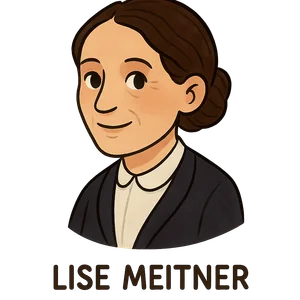
Lise Meitner
Lise Meitner was a pioneering Austrian-Swedish physicist whose work was fundamental to the discovery of…
Reads at Grades 6–8 Listens at Grades 4–8
Print & create
Answer keys·No prep·Free with an account
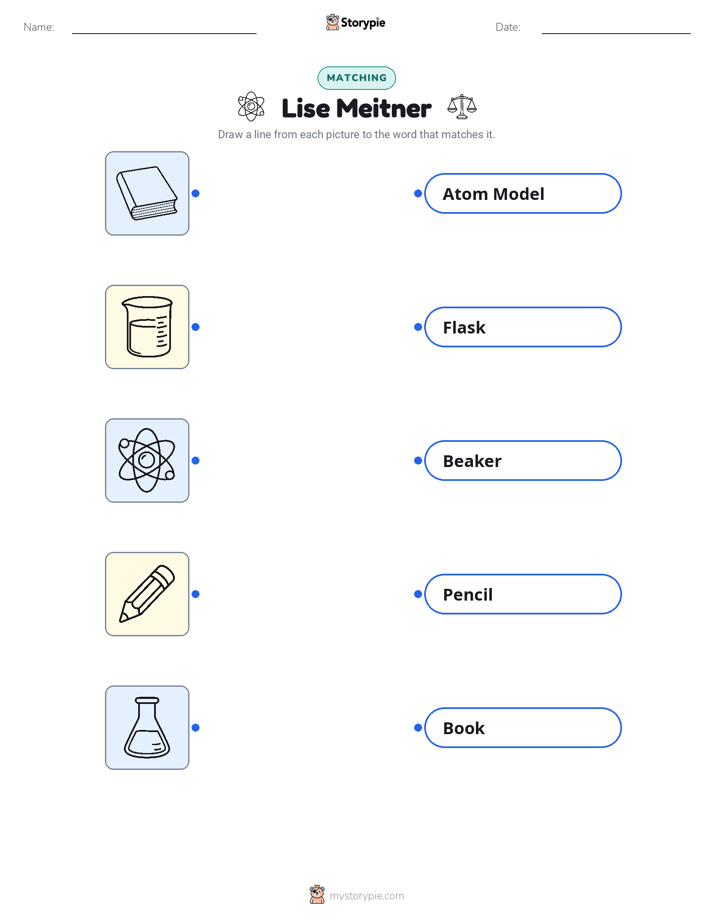
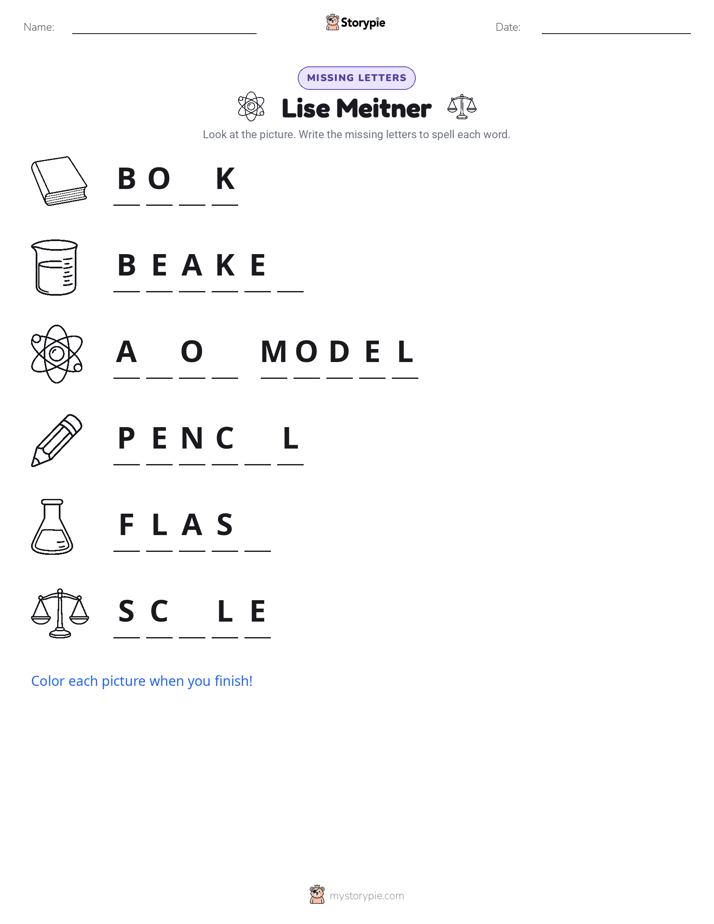
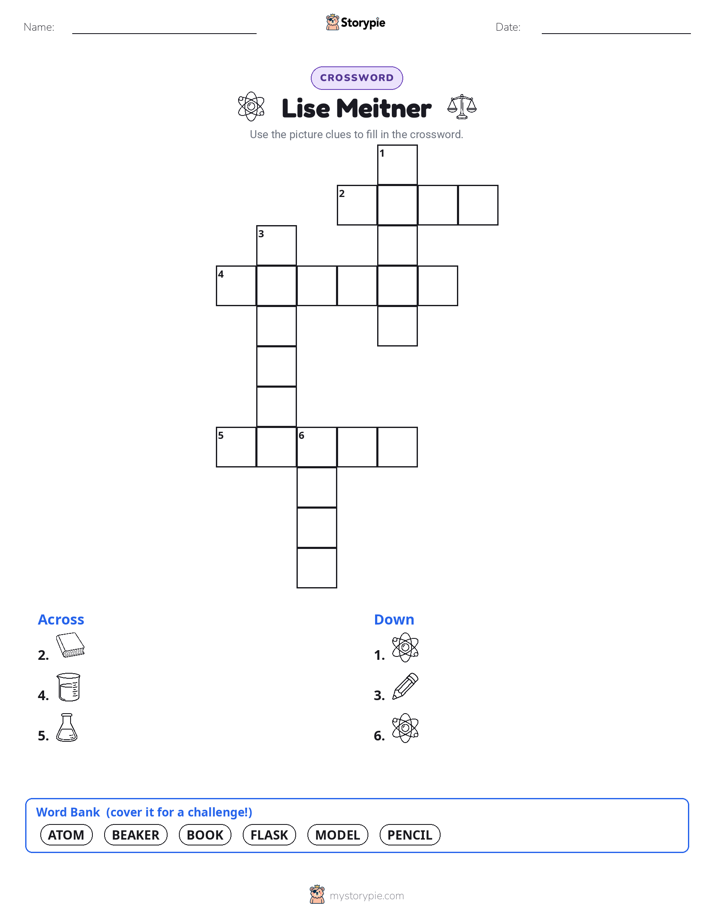
28 worksheets · answer keys · full story · quiz · Ages 10-12 · CEFR B2
Plus adds 208,000+ more stories in 27 languages, audio for every one, and printables for all of them.
Just want Lise Meitner?
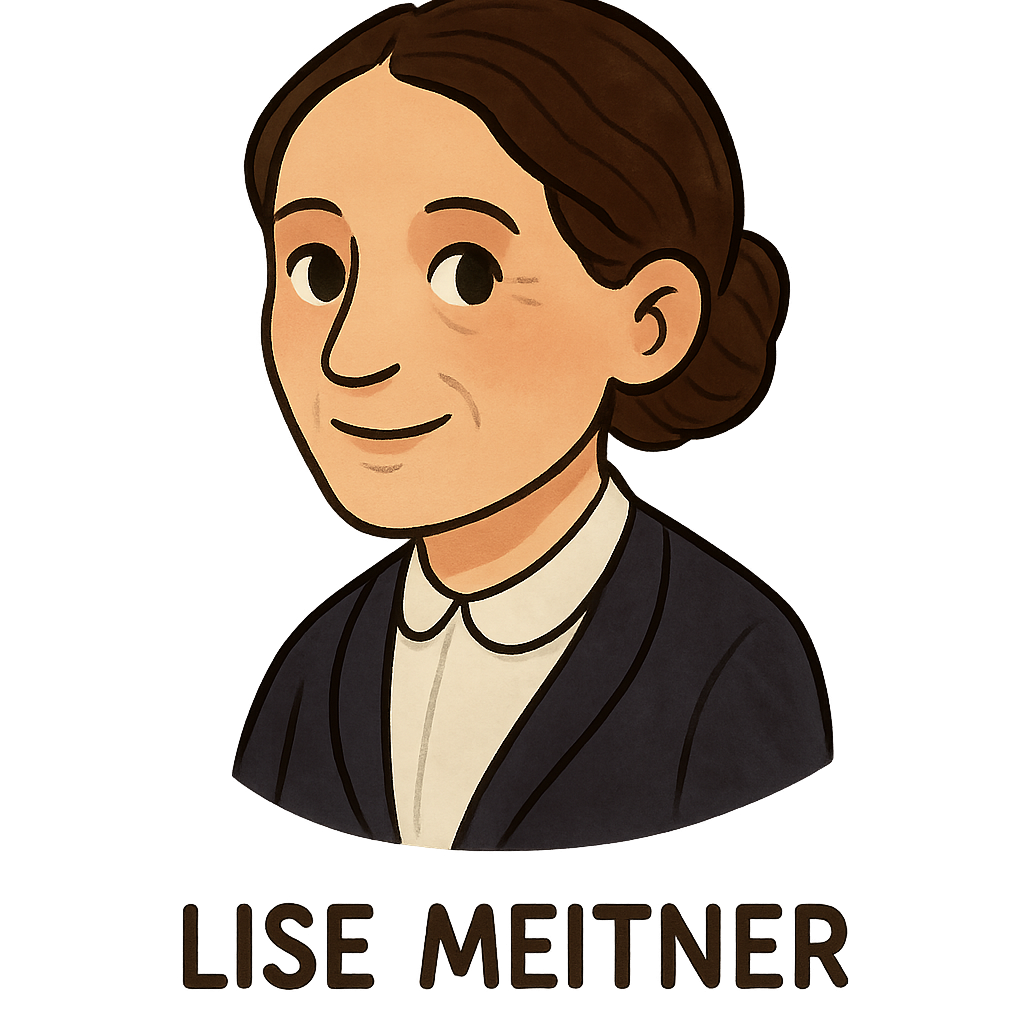
Hello, my name is Lise Meitner, and I want to share the story of my life in science. I was born in Vienna, Austria, on November 7th, 1878, into a world that wasn't always ready for a girl who loved physics and mathematics. From a young age, I was fascinated by numbers and the rules that govern the universe, but in those days, girls were not expected to pursue higher education. The universities were for men, and the path to becoming a scientist was nearly closed to women. I refused to let that stop me. I studied privately, working incredibly hard to prepare for the university entrance exam. In 1901, my hard work paid off, and I proudly enrolled at the University of Vienna. It was a thrilling time, and my passion for physics only grew stronger. In 1906, I achieved something very few women had before: I earned my doctorate in physics, ready to make my own contributions to science.
In 1907, I moved to Berlin, Germany, to study with the brilliant physicist Max Planck. It was there that I met a chemist named Otto Hahn, and we began a scientific partnership that would last for thirty years. Our journey together was not easy. Because I was a woman, the director of the institute would not allow me to work in the main laboratories. We were given a small space in a basement woodshop to set up our lab. Despite these challenges, Otto and I were determined. We focused our research on radioactivity, a new and exciting field. Our persistence led to a major breakthrough, and in 1917, we announced our joint discovery of a new element: protactinium. We had proven that with dedication, we could overcome obstacles and contribute important new knowledge to the world of science.
Lise Meitner: The Woman Who Unlocked the Atom
Hello, my name is Lise Meitner, and I want to share the story of my life in science. I was born in Vienna, Austria, on November 7th, 1878, into a world that wasn't always ready for a girl who loved physics and mathematics. From a young age, I was fascinated by numbers and the rules that govern the universe, but in those days, girls were not expected to pursue higher education. The universities were for men, and the path to becoming a scientist was nearly closed to women. I refused to let that stop me. I studied privately, working incredibly hard to prepare for the university entrance exam. In 1901, my hard work paid off, and I proudly enrolled at the University of Vienna. It was a thrilling time, and my passion for physics only grew stronger. In 1906, I achieved something very few women had before: I earned my doctorate in physics, ready to make my own contributions to science.
In 1907, I moved to Berlin, Germany, to study with the brilliant physicist Max Planck. It was there that I met a chemist named Otto Hahn, and we began a scientific partnership that would last for thirty years. Our journey together was not easy. Because I was a woman, the director of the institute would not allow me to work in the main laboratories. We were given a small space in a basement woodshop to set up our lab. Despite these challenges, Otto and I were determined. We focused our research on radioactivity, a new and exciting field. Our persistence led to a major breakthrough, and in 1917, we announced our joint discovery of a new element: protactinium. We had proven that with dedication, we could overcome obstacles and contribute important new knowledge to the world of science.
My career continued to grow, and in 1926, I reached a significant milestone when I became Germany's first female full professor of physics, working at the prestigious Kaiser Wilhelm Institute. By the 1930s, my team, which included Otto Hahn and another talented chemist, Fritz Strassmann, began a series of groundbreaking experiments. Our goal was to explore the very heart of the atom. We started bombarding uranium atoms with tiny particles called neutrons, hoping to create even heavier elements that had never been seen before. But our experiments produced results that were completely baffling. The outcomes didn't match any existing scientific theories. We were seeing something new and unexpected, but we couldn't figure out what it was. It was a puzzle that consumed our thoughts as we tried to understand the strange behavior of the uranium atom.
As our scientific puzzle deepened, the world outside our laboratory was becoming a very dangerous place. By the 1930s, the political climate in Germany had grown hostile, and because I had Jewish heritage, my life was in danger. In July 1938, I was forced to make a tense and difficult escape, leaving behind my home, my friends, and my life's work to find safety in Sweden. Even in exile, my mind was on our research. That winter, I received a letter from Otto Hahn dated December 1938, where he described his latest confusing results. I took the letter with me on a Christmas visit with my nephew, Otto Frisch, who was also a physicist. As we walked in the snow, discussing the problem, the solution suddenly struck me with incredible clarity. The uranium atom wasn't creating a heavier element—it was splitting in two! We named this process 'nuclear fission' and quickly calculated that it would release a tremendous amount of energy. In early 1939, we published our explanation, changing the course of science forever.
Our discovery of nuclear fission was revolutionary, and it opened the door to both the creation of nuclear energy and, tragically, the atomic bomb. I was horrified when I learned that our scientific breakthrough was being used to build a weapon of mass destruction. When I was invited to work on the American bomb-making program, known as the Manhattan Project, I refused completely. I believed that science should be used to improve life, not to end it. In 1944, Otto Hahn was awarded the Nobel Prize in Chemistry for the discovery of nuclear fission. While he certainly deserved recognition, the Nobel committee did not include me in the prize, overlooking my critical role in the discovery and its theoretical explanation. Despite this, I dedicated the rest of my career to advocating for the peaceful and responsible use of atomic energy, hoping to steer our discovery toward a better future for humanity.
I lived a long and full life, filled with the joy of scientific discovery, even when faced with great challenges. I passed away at 89 years old, having dedicated my life to the pursuit of knowledge. Though the Nobel Prize was not part of my story, the scientific community found a different way to honor my contributions. In 1997, decades after my passing, the chemical element 109 was officially named 'meitnerium' in my honor, cementing my place in the periodic table forever. My story serves as a reminder that curiosity is one of the most powerful forces we have, and that the true purpose of science is to build a better and more peaceful world for everyone.
Wow facts
About
Lise Meitner was a pioneering Austrian-Swedish physicist whose work was fundamental to the discovery of nuclear fission, a process she co-named and helped explain with her colleague, Frisch. Despite facing significant gender and racial discrimination, she became the first female physics professor in Germany.
Take a Quiz
Question 1 of 5
Which of the following best summarizes the main events of Lise Meitner's scientific journey?
Explore next






Want to do even more?
Go beyond exploring. Unlock tools that turn every story into real learning.

Storypie Plus for families
Full stories, quizzes, and printables. Nights and car rides, sorted.
- Unlimited audio stories
- Create Mode: your child stars in the story
- Offline downloads
- Printable worksheets & coloring pages

Why Storypie for Schools
Students engaged. Prep in seconds. Evenings back to you.
- Worksheets & Quizzes
- Classroom Management
- Formative Assessment
- Custom Curriculum & Lesson Plans
- 27 Languages

Why Storypie for Homeschool
Curriculum done. They'll ask for more. Hours back in your day.
- Worksheet Generator
- First-Person Audio Stories
- Built-in Comprehension Quizzes
- Custom Curriculum & Lesson Plans
- Print & Go Activities