English

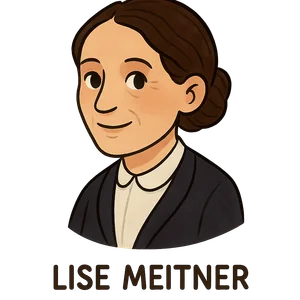
Lise Meitner
Lise Meitner was a pioneering Austrian-Swedish physicist whose work was fundamental to the discovery of…
Reads at Grades 3–5 Listens at Grades 1–5
Print & create
Answer keys·No prep·Free with an account
28 worksheets · answer keys · full story · quiz · Ages 8-10 · CEFR B1
Plus adds 208,000+ more stories in 27 languages, audio for every one, and printables for all of them.
Just want Lise Meitner?
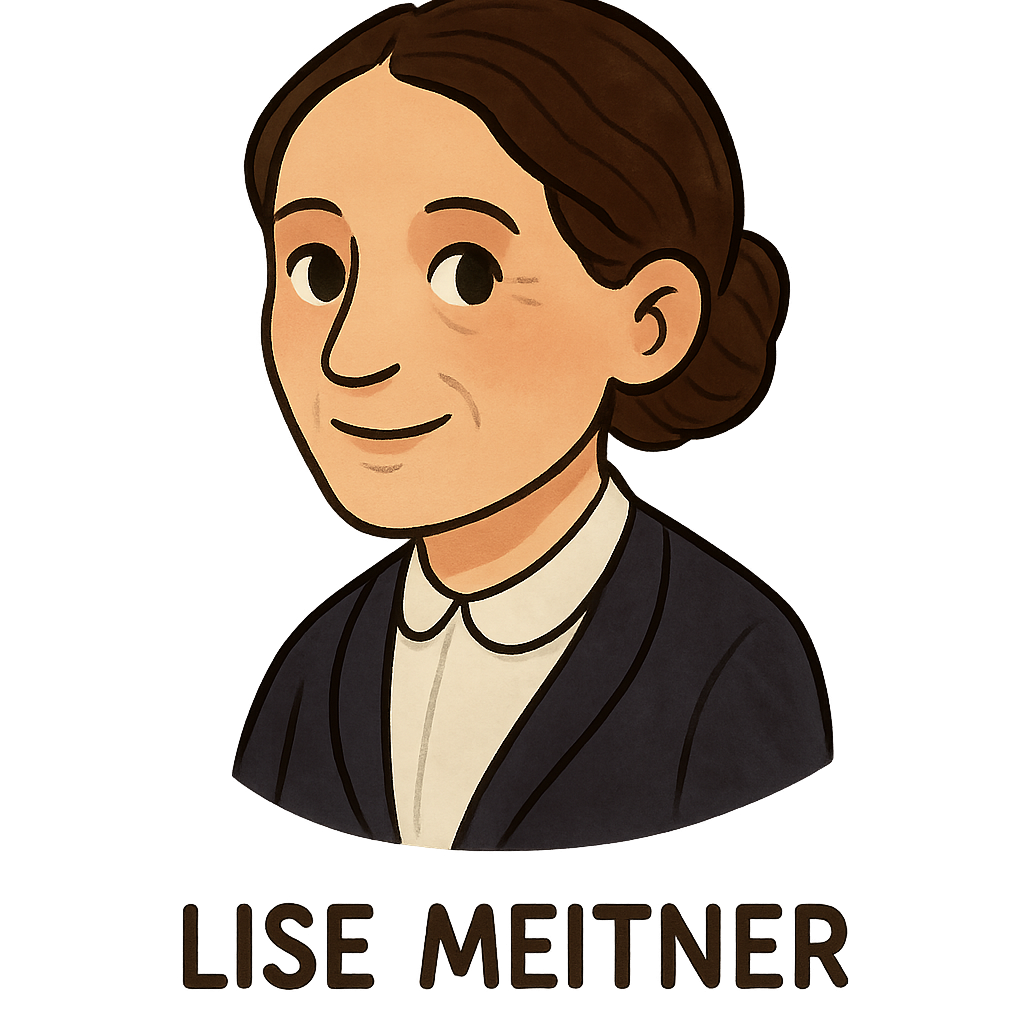
Hello! My name is Lise Meitner, and I was a physicist who fell in love with the invisible world of atoms. I was born on November 7th, 1878, in Vienna, Austria. Growing up, most people didn't believe that women should study difficult subjects like science, but my family was different. They saw my curiosity and always encouraged me to learn as much as I could. I loved to study, and I worked very hard. In 1901, my hard work allowed me to attend the University of Vienna, which was a very exciting opportunity. After years of focused effort, I earned my doctorate degree in physics in 1906. This was a very rare and special achievement for a woman at that time, and I was incredibly proud to have reached my goal.
In 1907, I moved to Berlin, Germany, to continue my studies with some of the greatest scientists in the world. It was a thrilling, but sometimes difficult, time. There, I met a talented chemist named Otto Hahn. We quickly realized we made a great team, and we worked together for the next 30 years. When I first started, the rules were very strict, and women were not allowed in the main laboratory. I had to work in a small, cramped room in the basement. But we didn't let that stop our curiosity or our research. Together, we studied radioactivity, and our teamwork led to a major breakthrough. In 1917, we discovered a brand new element, which we named protactinium. My dedication was finally recognized, and in 1926, I became the first woman in all of Germany to be named a full professor of physics.
Lise Meitner
Hello! My name is Lise Meitner, and I was a physicist who fell in love with the invisible world of atoms. I was born on November 7th, 1878, in Vienna, Austria. Growing up, most people didn't believe that women should study difficult subjects like science, but my family was different. They saw my curiosity and always encouraged me to learn as much as I could. I loved to study, and I worked very hard. In 1901, my hard work allowed me to attend the University of Vienna, which was a very exciting opportunity. After years of focused effort, I earned my doctorate degree in physics in 1906. This was a very rare and special achievement for a woman at that time, and I was incredibly proud to have reached my goal.
In 1907, I moved to Berlin, Germany, to continue my studies with some of the greatest scientists in the world. It was a thrilling, but sometimes difficult, time. There, I met a talented chemist named Otto Hahn. We quickly realized we made a great team, and we worked together for the next 30 years. When I first started, the rules were very strict, and women were not allowed in the main laboratory. I had to work in a small, cramped room in the basement. But we didn't let that stop our curiosity or our research. Together, we studied radioactivity, and our teamwork led to a major breakthrough. In 1917, we discovered a brand new element, which we named protactinium. My dedication was finally recognized, and in 1926, I became the first woman in all of Germany to be named a full professor of physics.
I loved my work and the life I had built in Berlin. However, during the 1930s, things in Germany began to change and become very dangerous. A new government, known as the Nazis, came to power, and their ideas brought fear to many people. Because my family was Jewish, I was suddenly no longer safe in the country I called home. I was forced to give up my job as a professor, and I knew that if I wanted to survive, I had to leave. In July of 1938, some of my dear friends helped me plan a secret escape. I left Germany and moved to Sweden. I had to leave almost everything I owned behind, but I carried my most important possession with me: my love for physics.
Even though I was in a new country, I stayed in touch with my partner, Otto Hahn, by writing letters. In December of 1938, I received a letter from him that contained a scientific puzzle. He told me about a strange result from one of his experiments. He had been shooting tiny particles called neutrons at uranium, but instead of getting a slightly heavier element as expected, he found a much lighter one called barium. He was completely stumped and had no idea how it was possible. That Christmas, I was visiting my nephew, Otto Frisch, who was also a physicist. As we walked together in the snow, I thought deeply about the problem. Suddenly, the answer came to me in a flash of understanding. The uranium atom hadn't just been chipped—it had split completely in two. We called this incredible process 'nuclear fission' and realized it released a tremendous amount of energy. We published our world-changing discovery in 1939.
Later, my former partner, Otto Hahn, was awarded the famous Nobel Prize for the discovery of nuclear fission, but my essential role in figuring it all out was overlooked. While this was disappointing, I was always very proud of my work and the contributions I made to science. Throughout my life, I hoped that our discovery would be used for peaceful purposes, like creating clean energy to power homes and cities around the world. I lived to be 89 years old, passing away in 1968. Today, I am remembered as a pioneering scientist who broke down barriers for women and never gave up on her passion. To honor my work, scientists even named element 109 on the periodic table 'meitnerium' after me.
Wow facts
About
Lise Meitner was a pioneering Austrian-Swedish physicist whose work was fundamental to the discovery of nuclear fission, a process she co-named and helped explain with her colleague, Frisch. Despite facing significant gender and racial discrimination, she became the first female physics professor in Germany.
Take a Quiz
Question 1 of 5
What was the name of the new element Lise Meitner and Otto Hahn discovered together in 1917?
Explore next





Want to do even more?
Go beyond exploring. Unlock tools that turn every story into real learning.

Storypie Plus for families
Full stories, quizzes, and printables. Nights and car rides, sorted.
- Unlimited audio stories
- Create Mode: your child stars in the story
- Offline downloads
- Printable worksheets & coloring pages

Why Storypie for Schools
Students engaged. Prep in seconds. Evenings back to you.
- Worksheets & Quizzes
- Classroom Management
- Formative Assessment
- Custom Curriculum & Lesson Plans
- 27 Languages

Why Storypie for Homeschool
Curriculum done. They'll ask for more. Hours back in your day.
- Worksheet Generator
- First-Person Audio Stories
- Built-in Comprehension Quizzes
- Custom Curriculum & Lesson Plans
- Print & Go Activities