English

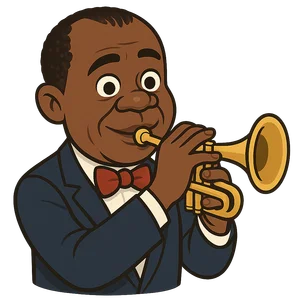
Louis Armstrong
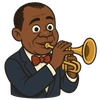
Louis Armstrong was an American trumpeter and vocalist who was one of the most influential figures in jazz…
Reads at Grades 6–8 Listens at Grades 4–8
Print & create
Answer keys·No prep·Free with an account
28 worksheets · answer keys · full story · quiz · Ages 10-12 · CEFR B2
Plus adds 208,000+ more stories in 27 languages, audio for every one, and printables for all of them.
Just want Louis Armstrong?
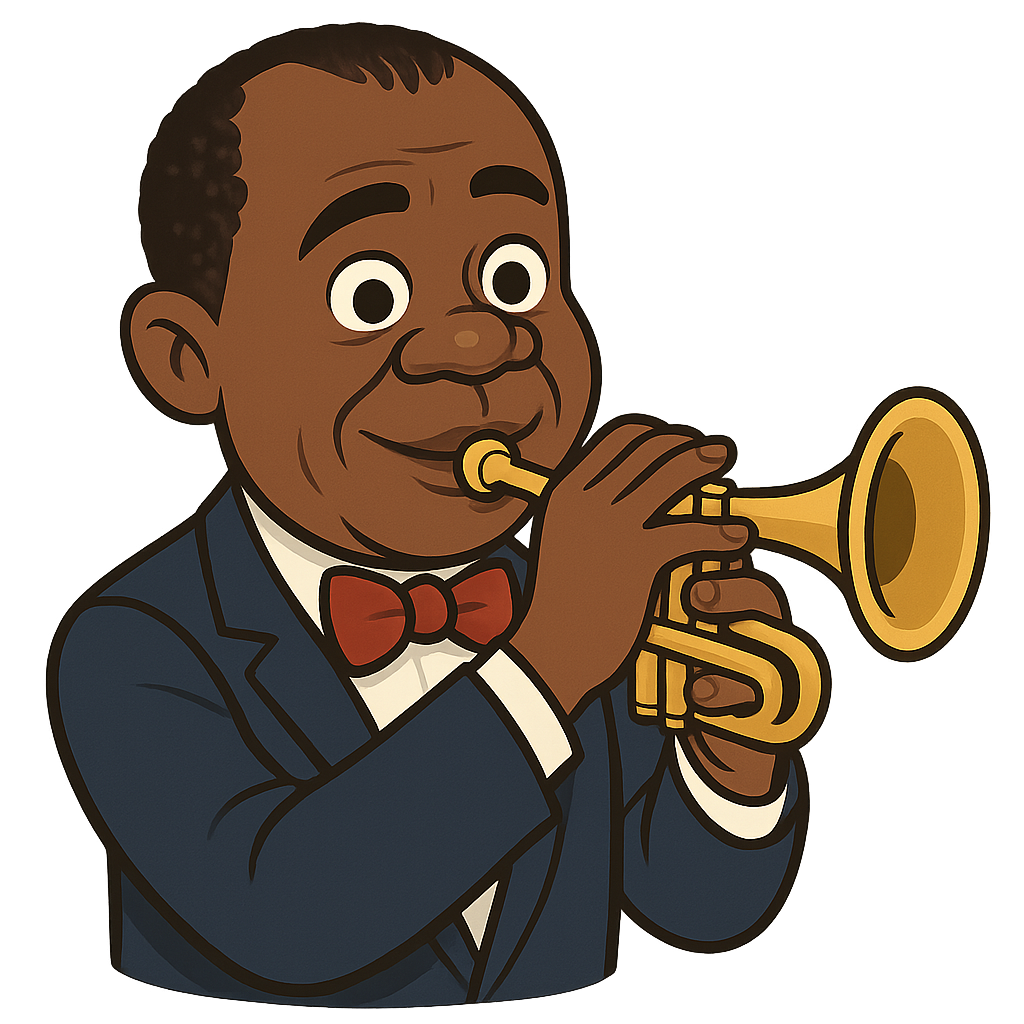
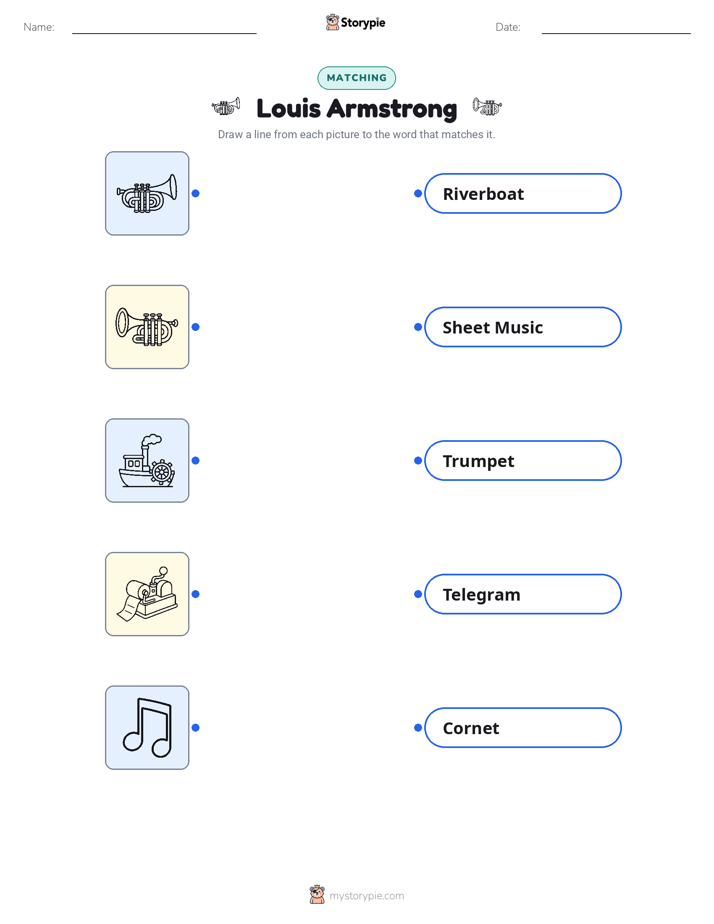
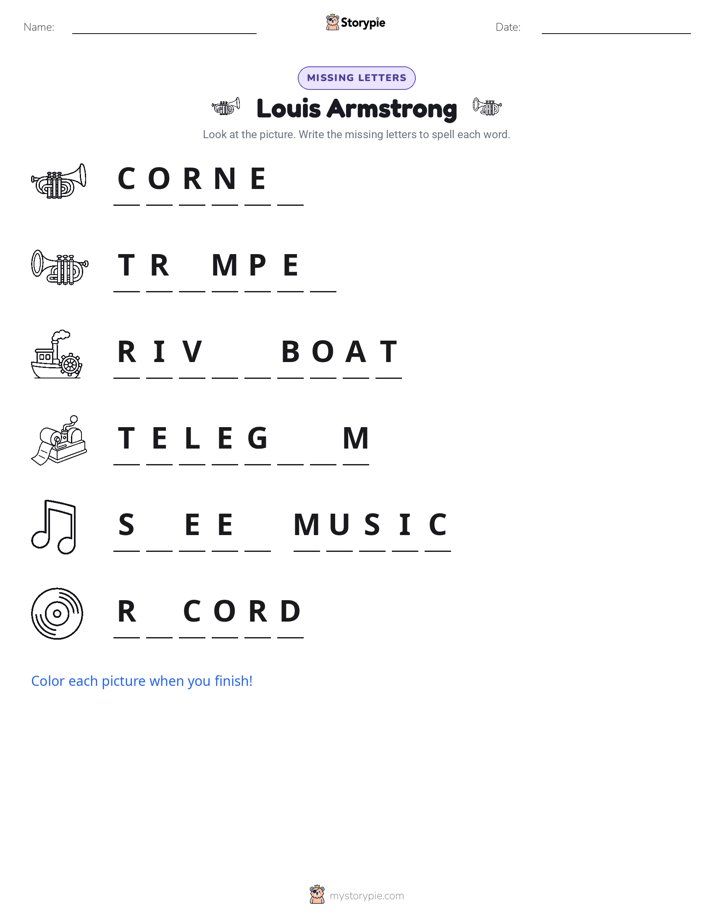
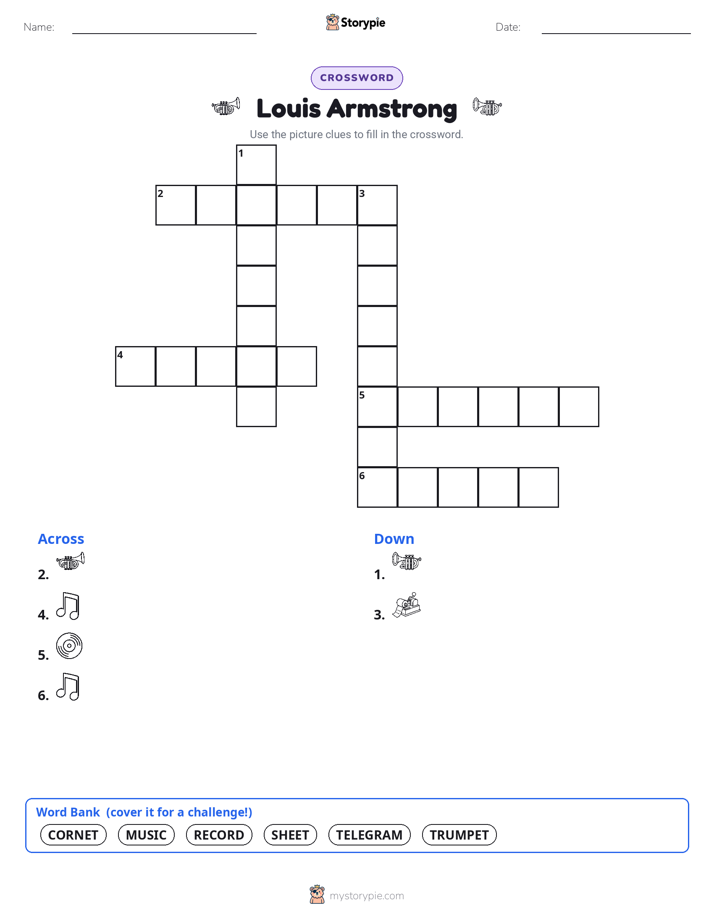
Hello there! My name is Louis Armstrong, and people often say the sound of my trumpet changed the world. My story starts on a hot day, August 4th, 1901, in a part of New Orleans, Louisiana, that everyone called 'the Battlefield.' It was a tough neighborhood to grow up in, but it was absolutely filled with something wonderful: music. Music was everywhere! I heard brass bands marching in parades and playing soulful, beautiful songs at funerals. I would listen to the bands on the riverboats chugging along the Mississippi River and dream of playing an instrument myself. We didn't have much money, but I worked hard doing odd jobs and eventually saved enough to buy my very first horn, a cornet. A kind Jewish family, the Karnofskys, took me in and treated me like their own son, always encouraging me to follow my musical dreams.
When I was eleven years old, in 1912, I got into some trouble on New Year's Eve and was sent to live at the Colored Waif's Home for Boys. It might sound like a scary place, but it turned out to be one of the most important things that ever happened to me. It was there that I joined the home's band and truly learned how to play my cornet with skill and passion. Music became my entire world. When I was released, I knew exactly what I wanted to do with my life. I started playing gigs all over New Orleans, learning from all the older, more experienced musicians. My biggest hero was a man named Joe 'King' Oliver. He was the best cornet player in the city! In 1922, he sent me a telegram asking me to come to Chicago and join his famous Creole Jazz Band. I packed my bags right away. Moving to Chicago was a huge step, and I was about to play for the whole world.
Louis Armstrong: Ambassador Satch
Hello there! My name is Louis Armstrong, and people often say the sound of my trumpet changed the world. My story starts on a hot day, August 4th, 1901, in a part of New Orleans, Louisiana, that everyone called 'the Battlefield.' It was a tough neighborhood to grow up in, but it was absolutely filled with something wonderful: music. Music was everywhere! I heard brass bands marching in parades and playing soulful, beautiful songs at funerals. I would listen to the bands on the riverboats chugging along the Mississippi River and dream of playing an instrument myself. We didn't have much money, but I worked hard doing odd jobs and eventually saved enough to buy my very first horn, a cornet. A kind Jewish family, the Karnofskys, took me in and treated me like their own son, always encouraging me to follow my musical dreams.
When I was eleven years old, in 1912, I got into some trouble on New Year's Eve and was sent to live at the Colored Waif's Home for Boys. It might sound like a scary place, but it turned out to be one of the most important things that ever happened to me. It was there that I joined the home's band and truly learned how to play my cornet with skill and passion. Music became my entire world. When I was released, I knew exactly what I wanted to do with my life. I started playing gigs all over New Orleans, learning from all the older, more experienced musicians. My biggest hero was a man named Joe 'King' Oliver. He was the best cornet player in the city! In 1922, he sent me a telegram asking me to come to Chicago and join his famous Creole Jazz Band. I packed my bags right away. Moving to Chicago was a huge step, and I was about to play for the whole world.
In Chicago, and later in New York City where I moved in 1924 to play with the Fletcher Henderson Orchestra, I started playing music in a new and exciting way. Back then, jazz was mostly played by the whole band together, with everyone following a set arrangement. But I loved to step out and play solos, making up melodies right there on the spot. This was called improvisation, and it let me put my own feelings and personality into the music. In 1925, I returned to Chicago and started my own bands, the Hot Five and later the Hot Seven. The records we made between 1925 and 1928 changed jazz forever. I also started singing in a unique way. One day in 1926, while recording a song called 'Heebie Jeebies,' I accidentally dropped my sheet music! Instead of stopping, I just started singing sounds and nonsense syllables—'doodly-doo, bop-bop-bee-bop!' That was the beginning of what people now call 'scat singing.'
By the 1930s, my music had made me a star. My songs were on the radio, and I was even acting in movies. My wide smile became almost as famous as my trumpet playing. I formed a new band, the All Stars, and we traveled all over the world. The U.S. government even asked us to serve as musical ambassadors, sharing the joy of jazz with people in Europe, Africa, and Asia. People started calling me 'Ambassador Satch.' It was a great honor, but life wasn't always easy. Back home in America, segregation was the law in many places. This meant that because I was Black, I often couldn't stay in the same hotels or eat in the same restaurants as my white bandmates. It was deeply unfair, and sometimes I used my fame to speak out about it, like during the school integration crisis in Little Rock in 1957. I truly believed that music had the power to bring people together, no matter the color of their skin.
As I got older, I never stopped playing my horn. In 1967, I recorded a song that became one of my most famous: 'What a Wonderful World.' It was a simple song about the beauty of trees, skies, and people getting along. It was my way of sharing a message of hope with everyone. I lived to be 69 years old, and I spent my life sharing the gift of music. People remember me for my big, gravelly voice, my dazzling trumpet solos, and a smile that could light up any room. My greatest legacy is helping to create a truly American art form, jazz, and for spreading its joyful sound all across the globe.
Wow facts
About
Louis Armstrong was an American trumpeter and vocalist who was one of the most influential figures in jazz music. Known for his charismatic stage presence and innovative playing, he helped shift jazz from collective improvisation to solo performance.
Take a Quiz
Question 1 of 5
Which of the following best summarizes the main idea of Louis Armstrong's story?
Explore next






Want to do even more?
Go beyond exploring. Unlock tools that turn every story into real learning.

Storypie Plus for families
Full stories, quizzes, and printables. Nights and car rides, sorted.
- Unlimited audio stories
- Create Mode: your child stars in the story
- Offline downloads
- Printable worksheets & coloring pages

Why Storypie for Schools
Students engaged. Prep in seconds. Evenings back to you.
- Worksheets & Quizzes
- Classroom Management
- Formative Assessment
- Custom Curriculum & Lesson Plans
- 27 Languages

Why Storypie for Homeschool
Curriculum done. They'll ask for more. Hours back in your day.
- Worksheet Generator
- First-Person Audio Stories
- Built-in Comprehension Quizzes
- Custom Curriculum & Lesson Plans
- Print & Go Activities