English

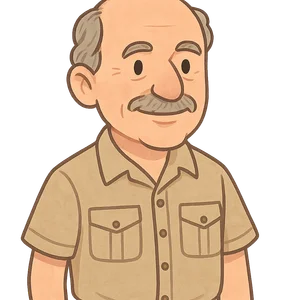
Louis Leakey
Louis Leakey was a Kenyan-British paleoanthropologist and archaeologist whose groundbreaking fossil…
Reads at Grades 6–8 Listens at Grades 4–8
Print & create
Answer keys·No prep·Free with an account
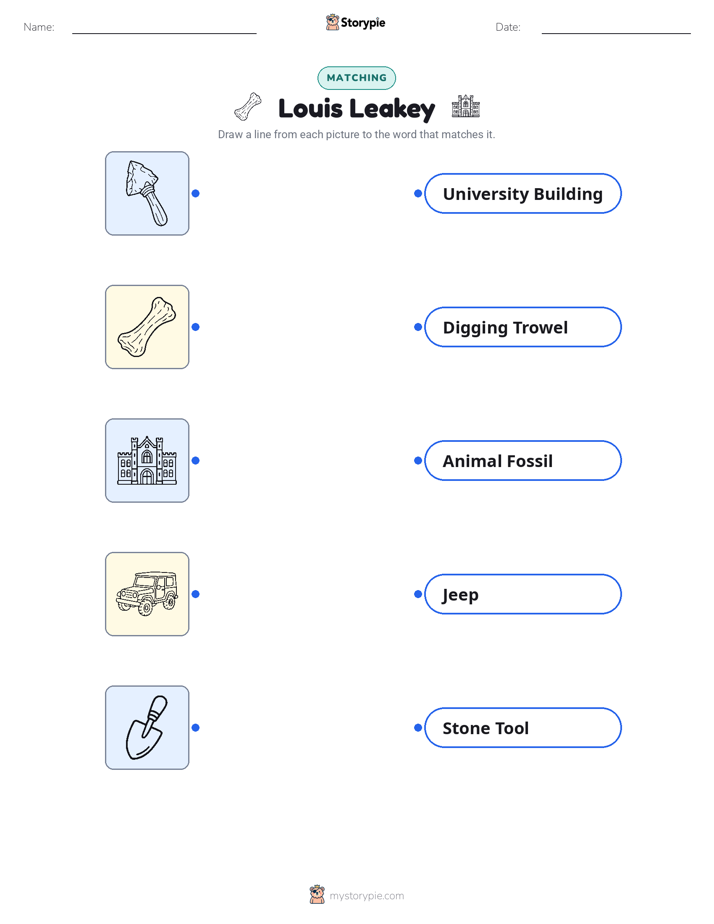
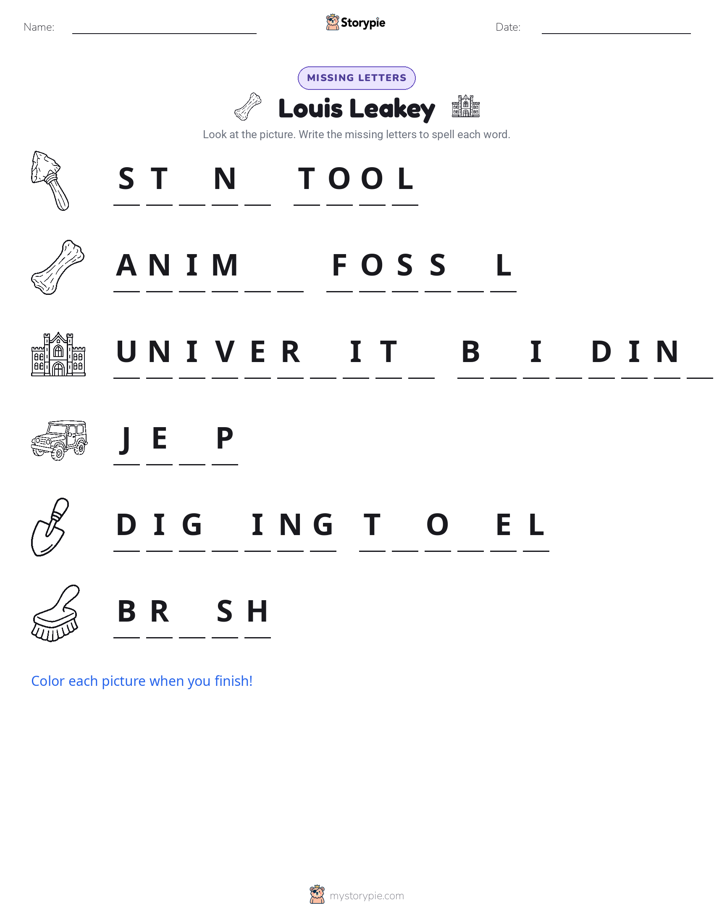
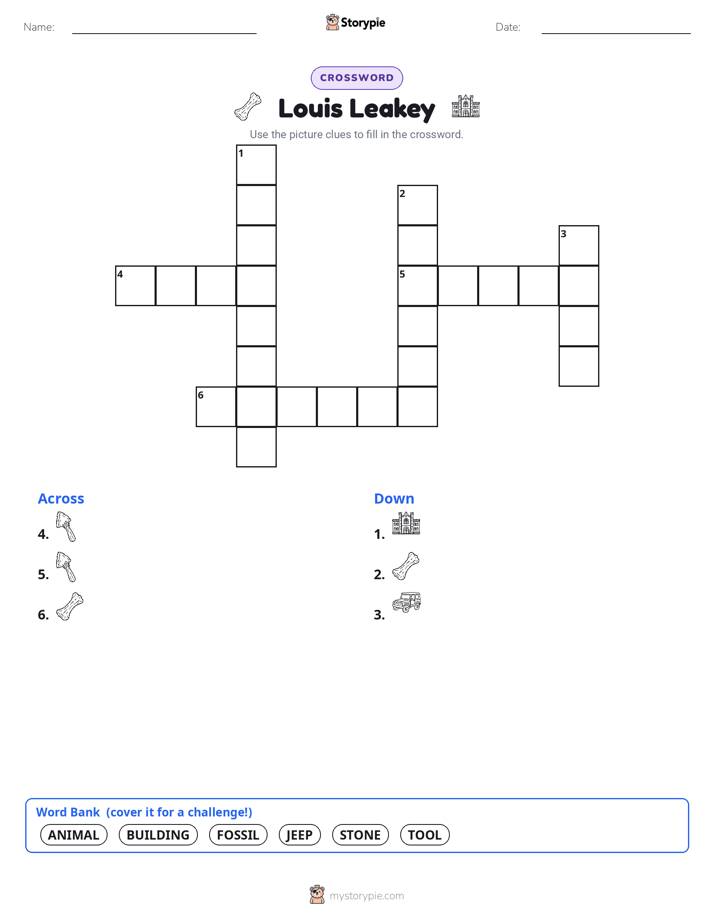
28 worksheets · answer keys · full story · quiz · Ages 10-12 · CEFR B2
Plus adds 279,000+ more stories in 27 languages, audio for every one, and printables for all of them.
Just want Louis Leakey?
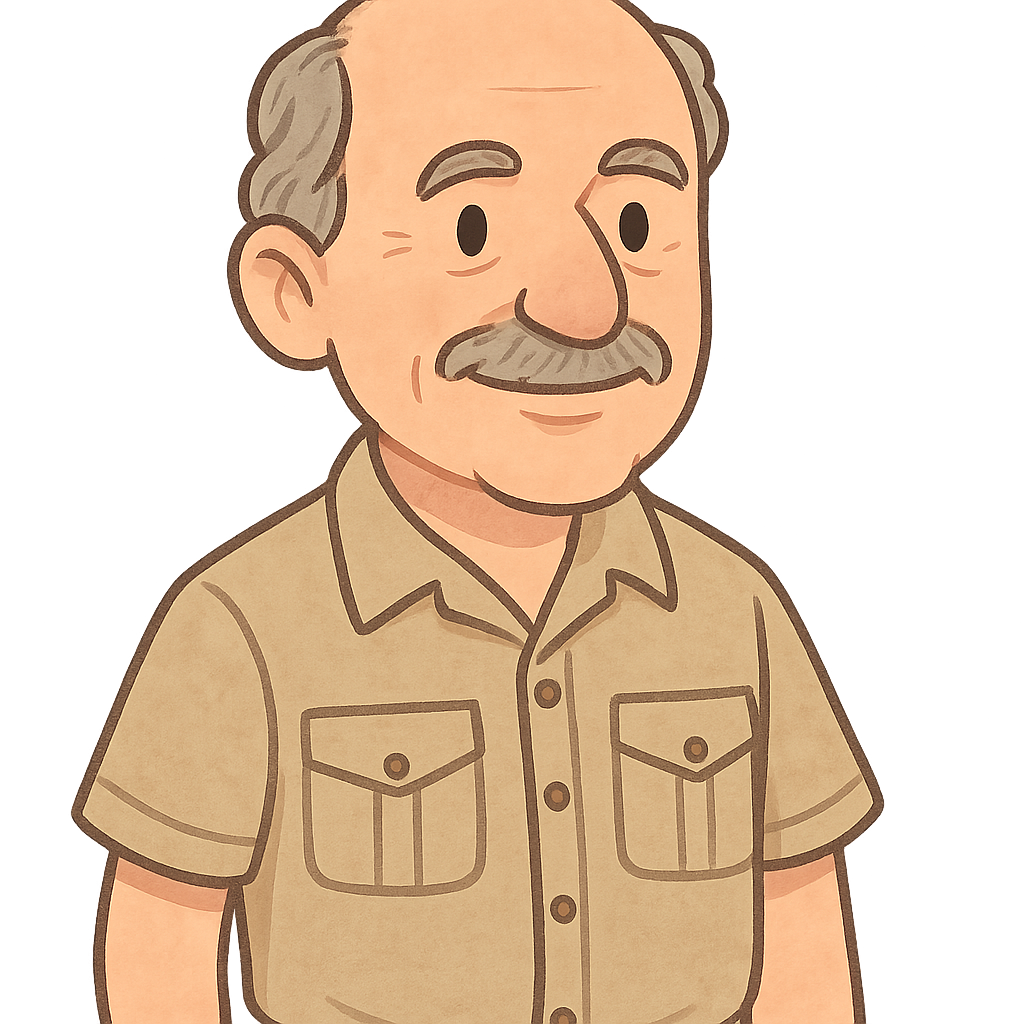
Hello! My name is Louis Leakey, and I want to tell you the story of my search for the very first humans. I was born on August 7th, 1903, in a place called Kabete in British East Africa, which is now the country of Kenya. My parents were English missionaries, but I spent my childhood playing with the children of the Kikuyu people. I learned their language, their traditions, and how to track animals. I felt more Kikuyu than English. From a very young age, I was fascinated by the sharp, ancient stones I found in the dirt. I collected them and called them 'my things.' I didn't know it then, but these were stone tools made by people who lived thousands of years before me, and they sparked a curiosity that would last my entire life.
When I was a teenager, my parents sent me to school in England. It was a huge change, and I missed the open plains of Africa. I eventually went to Cambridge University, one of the best schools in the world, to study archaeology and anthropology—the study of ancient objects and human cultures. After I graduated in 1926, I was ready to challenge the scientific world. At that time, most scientists believed that the first humans came from Asia or Europe. But I had a different idea. Based on the animal fossils and stone tools I knew from my home, I was absolutely convinced that Africa was the true cradle of humankind. It was a bold claim, and many important professors disagreed with me. But I knew I had to go back to Africa to find the proof.
I returned to East Africa to begin my search. I was joined by my wife, Mary, who was a brilliant archaeologist herself. Together, we focused our work on a place called Olduvai Gorge in Tanzania. It is a deep ravine where layers of ancient earth are exposed, like a history book written in rock. For years, we searched under the hot sun, finding many stone tools and animal fossils, but no human ancestors. It was difficult work. Then, on July 17th, 1959, everything changed. Mary spotted a piece of a skull sticking out of the ground. After weeks of careful digging, we uncovered an amazing fossil of an early human relative with huge teeth. We nicknamed him 'Zinjanthropus.' This discovery made us famous and brought support from organizations like the National Geographic Society, which allowed us to continue our important work.
The Story of Louis Leakey
Hello! My name is Louis Leakey, and I want to tell you the story of my search for the very first humans. I was born on August 7th, 1903, in a place called Kabete in British East Africa, which is now the country of Kenya. My parents were English missionaries, but I spent my childhood playing with the children of the Kikuyu people. I learned their language, their traditions, and how to track animals. I felt more Kikuyu than English. From a very young age, I was fascinated by the sharp, ancient stones I found in the dirt. I collected them and called them 'my things.' I didn't know it then, but these were stone tools made by people who lived thousands of years before me, and they sparked a curiosity that would last my entire life.
When I was a teenager, my parents sent me to school in England. It was a huge change, and I missed the open plains of Africa. I eventually went to Cambridge University, one of the best schools in the world, to study archaeology and anthropology—the study of ancient objects and human cultures. After I graduated in 1926, I was ready to challenge the scientific world. At that time, most scientists believed that the first humans came from Asia or Europe. But I had a different idea. Based on the animal fossils and stone tools I knew from my home, I was absolutely convinced that Africa was the true cradle of humankind. It was a bold claim, and many important professors disagreed with me. But I knew I had to go back to Africa to find the proof.
I returned to East Africa to begin my search. I was joined by my wife, Mary, who was a brilliant archaeologist herself. Together, we focused our work on a place called Olduvai Gorge in Tanzania. It is a deep ravine where layers of ancient earth are exposed, like a history book written in rock. For years, we searched under the hot sun, finding many stone tools and animal fossils, but no human ancestors. It was difficult work. Then, on July 17th, 1959, everything changed. Mary spotted a piece of a skull sticking out of the ground. After weeks of careful digging, we uncovered an amazing fossil of an early human relative with huge teeth. We nicknamed him 'Zinjanthropus.' This discovery made us famous and brought support from organizations like the National Geographic Society, which allowed us to continue our important work.
Our discovery of 'Zinj' was just the beginning. The very next year, in 1960, our son Jonathan found parts of a skull and hand from a different type of hominin, or early human. This one had a bigger brain and a more human-like hand than 'Zinj.' Most importantly, we found its fossils near simple stone tools. We realized this was the toolmaker! In 1964, my colleagues and I gave it the scientific name Homo habilis, which means 'handy man.' This was a revolutionary idea. We argued that Homo habilis was a direct ancestor of modern humans. Many scientists were skeptical at first, but our discovery proved that different species of early humans could live at the same time and helped rewrite the story of human evolution.
My work wasn't just about digging up bones. I believed that to understand our ancient ancestors, we also needed to understand our closest living relatives: the great apes. I decided to find passionate researchers to study them in the wild. I chose three amazing women for this work, who later became known as the 'Trimates' or 'Leakey's Angels.' I sent Jane Goodall to study chimpanzees, Dian Fossey to study mountain gorillas, and Birutė Galdikas to study orangutans. Their research changed the world's understanding of these incredible animals and gave us new clues about the behavior of our own earliest relatives.
I lived a full and exciting life of discovery and passed away on October 1st, 1972. I lived to be 69 years old. My greatest contribution was helping to prove that humanity's story began in Africa. I am remembered for the incredible fossils my family and I discovered, for challenging old ideas, and for inspiring a new generation of scientists to explore the mysteries of our past. The work didn't stop with me; my wife Mary and our children, especially our son Richard, continued the family tradition, making their own amazing discoveries and adding even more pages to the story of us.
Wow facts
About
Louis Leakey was a Kenyan-British paleoanthropologist and archaeologist whose groundbreaking fossil discoveries in East Africa were crucial in establishing that humanity originated in Africa.
Take a Quiz
Question 1 of 5
What was Louis Leakey's most significant and controversial idea that guided his life's work?
Explore next





Want to do even more?
Go beyond exploring. Unlock tools that turn every story into real learning.

Storypie Plus for families
Full stories, quizzes, and printables. Nights and car rides, sorted.
- Unlimited audio stories
- Create Mode: your child stars in the story
- Offline downloads
- Printable worksheets & coloring pages

Why Storypie for Schools
Students engaged. Prep in seconds. Evenings back to you.
- Worksheets & Quizzes
- Classroom Management
- Formative Assessment
- Custom Curriculum & Lesson Plans
- 27 Languages

Why Storypie for Homeschool
Curriculum done. They'll ask for more. Hours back in your day.
- Worksheet Generator
- First-Person Audio Stories
- Built-in Comprehension Quizzes
- Custom Curriculum & Lesson Plans
- Print & Go Activities