English

National Geographic Society
The National Geographic Society is a global nonprofit organization that uses the power of science…
Reads at Grades 3–5 Listens at Grades 1–5
Print & create
Answer keys·No prep·Free with an account
28 worksheets · answer keys · full story · quiz · Ages 8-10 · CEFR B1
Plus adds 116,000+ more stories in 27 languages, audio for every one, and printables for all of them.
Just want National Geographic Society?
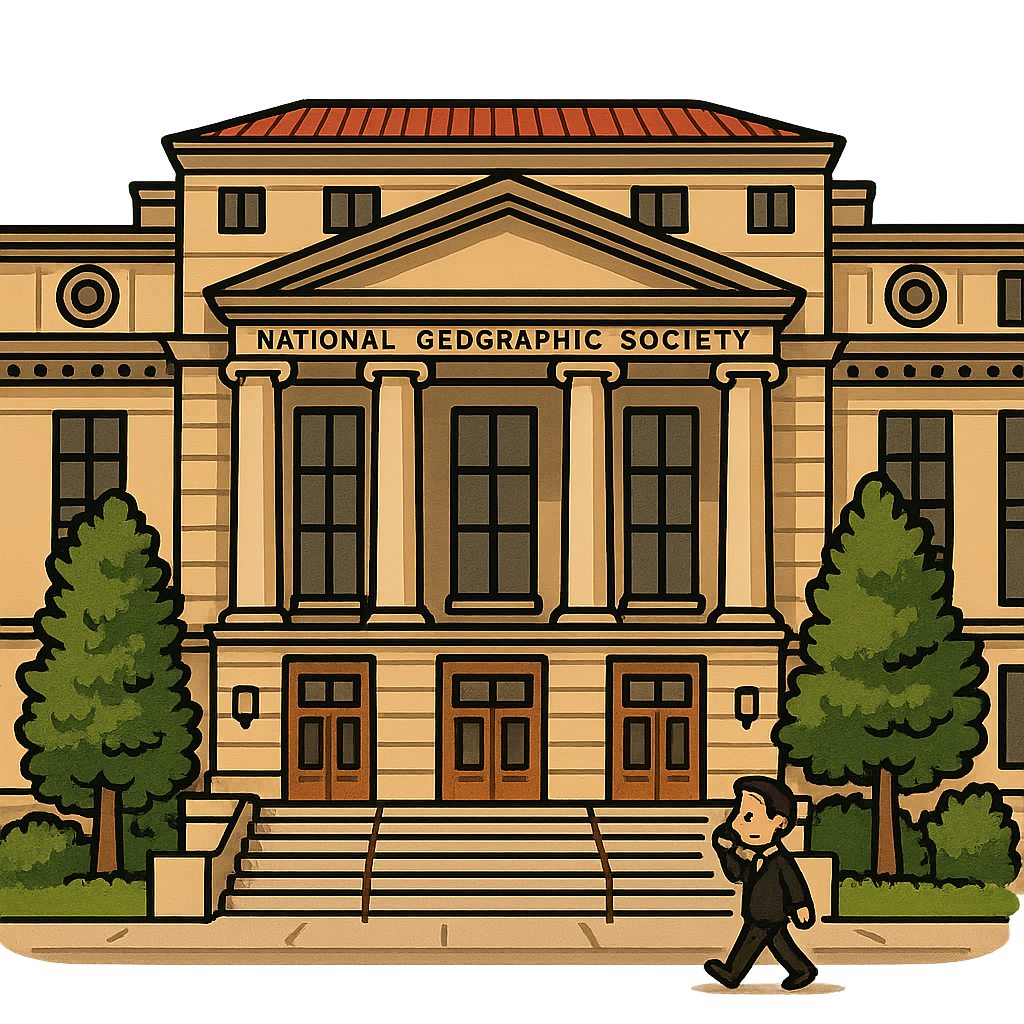
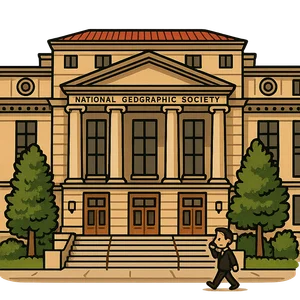
Hello! We are the National Geographic Society, and for more than a century, we have dedicated ourselves to a very important mission: exploring and protecting our amazing planet. Our story began on a cold day, January 27th, 1888, in Washington, D.C. On that day, a group of 33 people came together to form a new organization. These founders were a mix of accomplished explorers, curious scientists, and expert geographers who all shared a deep love for the world and a desire to understand it better. They established a goal that was both simple and enormous: to increase geographic knowledge and then share that knowledge with everyone. They believed that the more people understood the world, the more they would care about it.
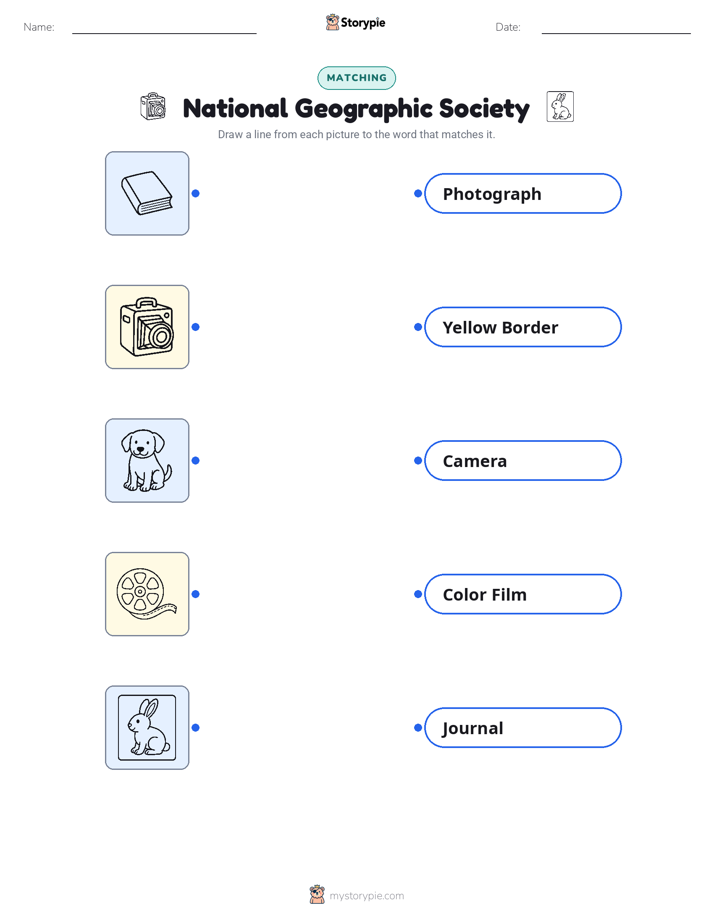
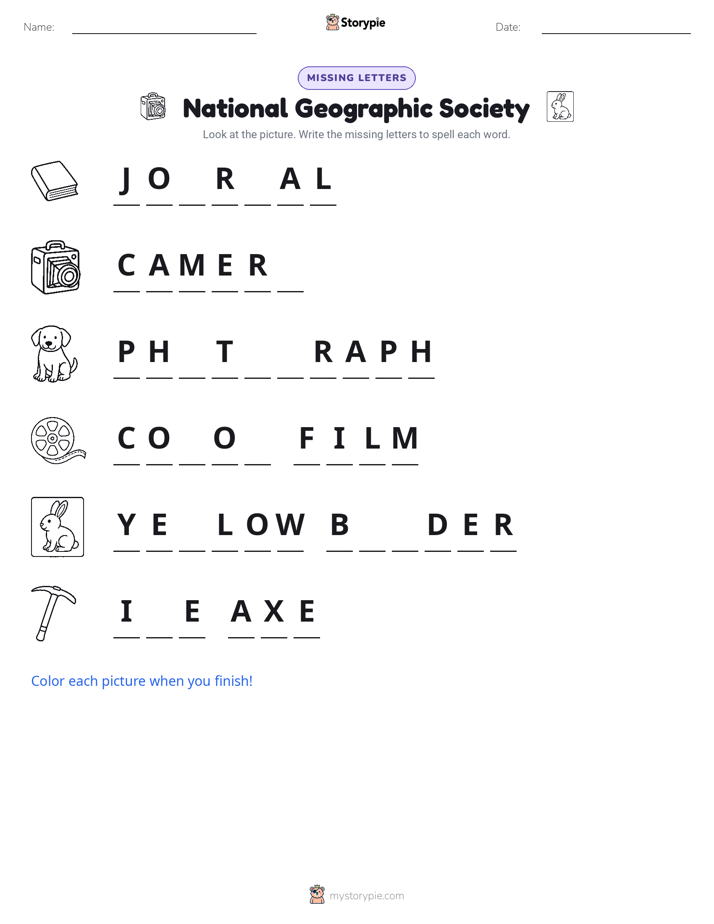
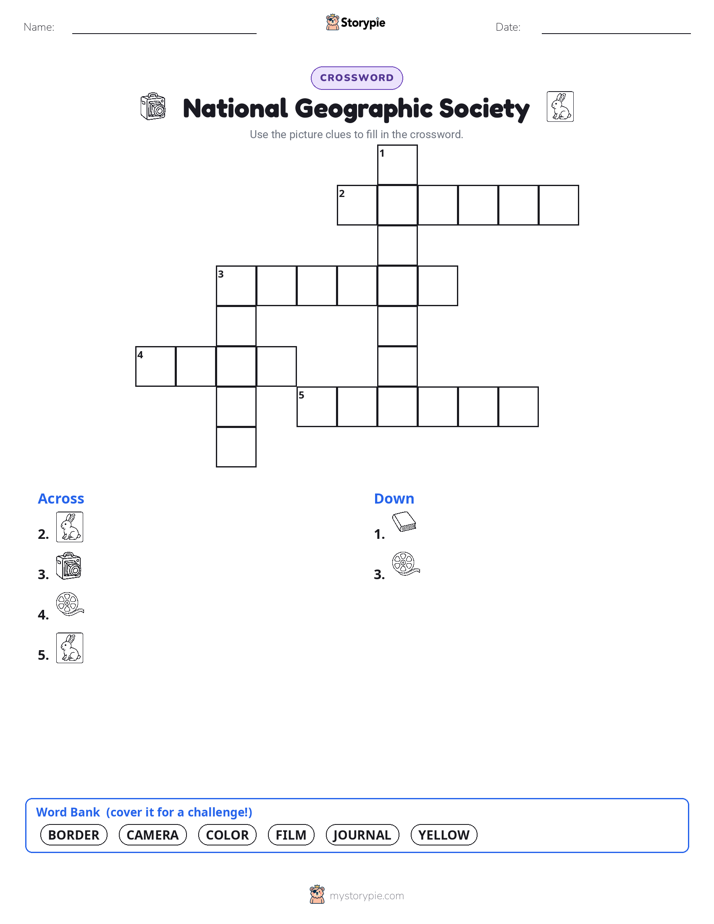
To begin sharing the discoveries that were being made, we knew we needed a way to reach people directly in their homes. Just a few months after our founding in 1888, we launched a publication to do just that. We called it *National Geographic* magazine. Over time, our magazine became famous for two things in particular: its bright, sunny yellow border, which made it instantly recognizable on any newsstand, and its breathtaking photographs. Before our magazine existed, most people had only read descriptions of faraway lands. We changed that by filling our pages with incredible pictures. For the very first time, people could see stunning images of distant places they had only dreamed of, learn about the traditions of different cultures, and see close-up photographs of amazing animals in their natural habitats.
Our Story: The National Geographic Society
Hello! We are the National Geographic Society, and for more than a century, we have dedicated ourselves to a very important mission: exploring and protecting our amazing planet. Our story began on a cold day, January 27th, 1888, in Washington, D.C. On that day, a group of 33 people came together to form a new organization. These founders were a mix of accomplished explorers, curious scientists, and expert geographers who all shared a deep love for the world and a desire to understand it better. They established a goal that was both simple and enormous: to increase geographic knowledge and then share that knowledge with everyone. They believed that the more people understood the world, the more they would care about it.
To begin sharing the discoveries that were being made, we knew we needed a way to reach people directly in their homes. Just a few months after our founding in 1888, we launched a publication to do just that. We called it National Geographic magazine. Over time, our magazine became famous for two things in particular: its bright, sunny yellow border, which made it instantly recognizable on any newsstand, and its breathtaking photographs. Before our magazine existed, most people had only read descriptions of faraway lands. We changed that by filling our pages with incredible pictures. For the very first time, people could see stunning images of distant places they had only dreamed of, learn about the traditions of different cultures, and see close-up photographs of amazing animals in their natural habitats.
A magazine needs stories and pictures, and those come from exploration and research. A central part of our work has always been to support the people who make these discoveries possible. We do this by providing money, which are called grants, to fund important projects led by brave explorers and brilliant scientists. Over the many decades of our history, we have given grants to support thousands of different expeditions all across the globe. For example, we helped fund the work of Robert Peary as he undertook challenging expeditions to explore the Arctic. We also supported Hiram Bingham's travels to Peru, where his expeditions brought the incredible ancient city of Machu Picchu to the world's attention. And when the world beneath the waves was still a deep mystery, we funded the work of Jacques Cousteau, whose pioneering explorations revealed the vibrant and complex life under the sea.
As the years went on, our magazine continued to be very popular, but we started to think about new and exciting ways to share our stories with the world. Technology was changing, and we wanted to change with it. In the 1960s, we saw a powerful new tool for storytelling: television. We began creating television shows and documentaries that could bring our expeditions to life in a way that photographs alone could not. With moving pictures and sound, we could show viewers what it was really like to be on an adventure. Our television programs took audiences everywhere, from watching lions hunting on the African savanna to swimming alongside divers as they explored the ocean with giant whales. This new way of sharing knowledge helped us reach an even bigger audience all around the world.
The more we explored our planet, from the highest mountains to the deepest oceans, the more we learned. But we also began to understand something serious: many beautiful parts of our world, and the animals living in them, were in danger. This realization led us to expand our purpose. Our mission grew beyond just exploration and sharing knowledge to include conservation—the act of protecting our planet. Today, a huge part of what we do is focused on this protective work. We fund important projects that help protect endangered species, such as the world's magnificent big cats. We also support initiatives that work to clean up the plastic pollution that is harming our oceans, and we help in the effort to preserve important wild places for future generations.
Today, we carry on our mission as a global nonprofit organization. Our work continues to be driven by the same passion for discovery and learning that our founders had in 1888. We still provide grants to explorers, scientists, educators, and storytellers who are on the front lines, working to understand and protect the wonder of our world. We use every tool we have to share their discoveries and insights. Through our magazines, our television channels, our website, and our educational programs for schools, we aim to bring the world to everyone. We hope that by sharing these powerful stories, we can inspire people everywhere to care about our planet and to help us protect it for many years to come.
Wow facts
About
The National Geographic Society is a global nonprofit organization that uses the power of science, exploration, education, and storytelling to illuminate and protect the wonder of our world.
Take a Quiz
Question 1 of 5
What was the original goal of the National Geographic Society when it was founded in 1888?
Explore next





Want to do even more?
Go beyond exploring. Unlock tools that turn every story into real learning.

Storypie Plus for families
Full stories, quizzes, and printables. Nights and car rides, sorted.
- Unlimited audio stories
- Create Mode: your child stars in the story
- Offline downloads
- Printable worksheets & coloring pages

Why Storypie for Schools
Students engaged. Prep in seconds. Evenings back to you.
- Worksheets & Quizzes
- Classroom Management
- Formative Assessment
- Custom Curriculum & Lesson Plans
- 27 Languages

Why Storypie for Homeschool
Curriculum done. They'll ask for more. Hours back in your day.
- Worksheet Generator
- First-Person Audio Stories
- Built-in Comprehension Quizzes
- Custom Curriculum & Lesson Plans
- Print & Go Activities