English

Luis Federico Leloir
Luis Federico Leloir was an Argentine physician and biochemist who won the 1970 Nobel Prize in Chemistry for…
Reads at Grades 6–8 Listens at Grades 4–8
Print & create
Answer keys·No prep·Free with an account
28 worksheets · answer keys · full story · quiz · Ages 10-12 · CEFR B2
Plus adds 164,000+ more stories in 27 languages, audio for every one, and printables for all of them.
Just want Luis Federico Leloir?
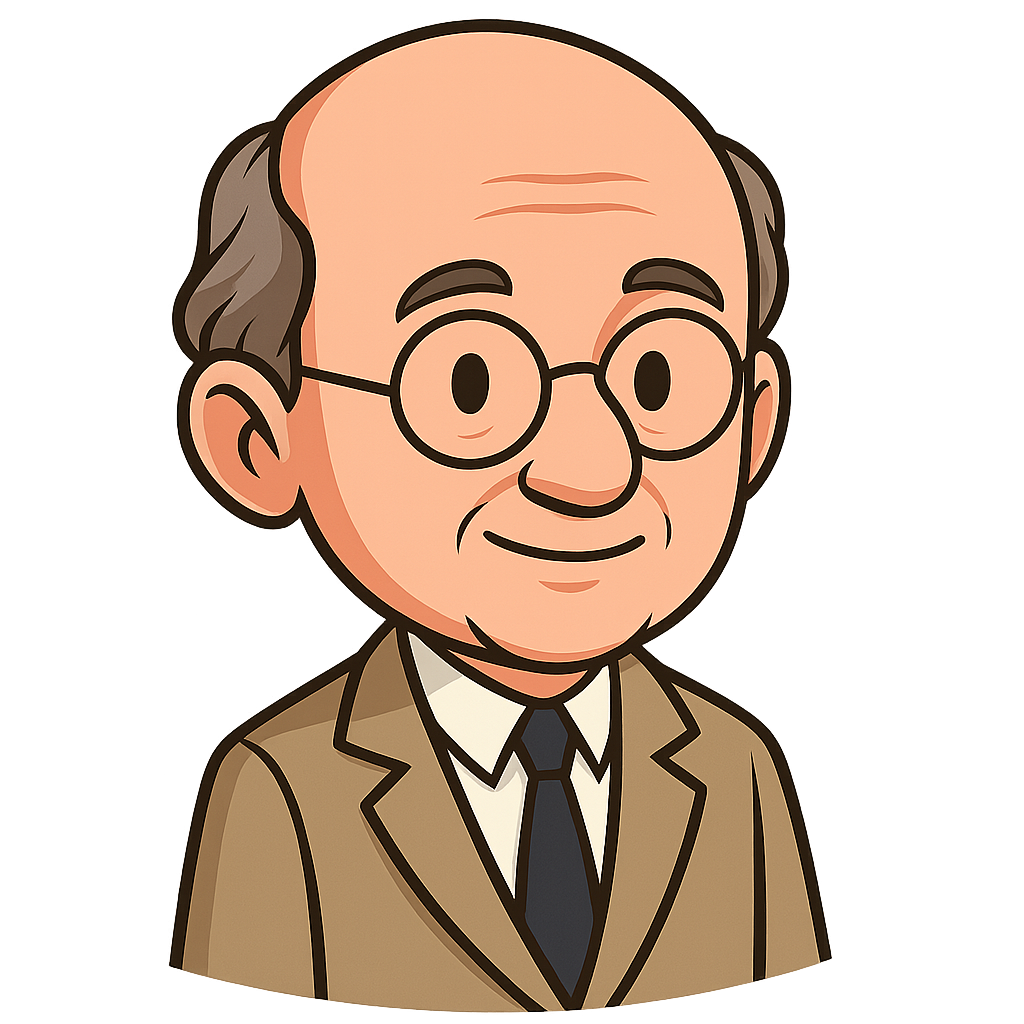
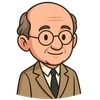
Hello! My name is Luis Federico Leloir. You might be surprised to learn that even though I am one of Argentina’s most celebrated scientists, I was actually born in Paris, France, on September 6th, 1906. My parents were Argentine, and we moved back to Buenos Aires when I was just two years old. My childhood was spent on the vast, beautiful plains of Argentina known as the pampas. It was there, surrounded by nature, that I spent countless hours observing the world around me. This early fascination with how things worked sparked a deep curiosity that stayed with me for my entire life, setting me on a path of scientific discovery.
I didn’t always know I wanted to be a research scientist. I first enrolled at the University of Buenos Aires to study medicine, and in 1932, I officially became a doctor. However, while working in a hospital, I found myself more drawn to the 'why' behind the illnesses I was seeing rather than just treating the symptoms. I wanted to understand the microscopic, invisible processes happening inside our bodies that caused disease. This intense curiosity led me from the hospital ward to the laboratory and into the fascinating field of biochemistry—the study of chemical processes within living organisms. I knew then that I wanted to dedicate my life to research and solve the complex puzzles of the human body.
To become the best scientist I could be, I knew I needed to learn from the world's leading minds. In 1936, I traveled to England to work at Cambridge University alongside a brilliant scientist and Nobel Prize winner, Sir Frederick Gowland Hopkins. He taught me a tremendous amount about the frontiers of biochemistry. A few years later, political instability in Argentina prompted me to move to the United States, where I was able to continue my research. These experiences abroad were incredibly valuable. They introduced me to new ways of thinking and new experimental techniques, and I carried all of that knowledge with me when I eventually returned home to Argentina.
Luis Federico Leloir: The Curious Chemist
Hello! My name is Luis Federico Leloir. You might be surprised to learn that even though I am one of Argentina’s most celebrated scientists, I was actually born in Paris, France, on September 6th, 1906. My parents were Argentine, and we moved back to Buenos Aires when I was just two years old. My childhood was spent on the vast, beautiful plains of Argentina known as the pampas. It was there, surrounded by nature, that I spent countless hours observing the world around me. This early fascination with how things worked sparked a deep curiosity that stayed with me for my entire life, setting me on a path of scientific discovery.
I didn’t always know I wanted to be a research scientist. I first enrolled at the University of Buenos Aires to study medicine, and in 1932, I officially became a doctor. However, while working in a hospital, I found myself more drawn to the 'why' behind the illnesses I was seeing rather than just treating the symptoms. I wanted to understand the microscopic, invisible processes happening inside our bodies that caused disease. This intense curiosity led me from the hospital ward to the laboratory and into the fascinating field of biochemistry—the study of chemical processes within living organisms. I knew then that I wanted to dedicate my life to research and solve the complex puzzles of the human body.
To become the best scientist I could be, I knew I needed to learn from the world's leading minds. In 1936, I traveled to England to work at Cambridge University alongside a brilliant scientist and Nobel Prize winner, Sir Frederick Gowland Hopkins. He taught me a tremendous amount about the frontiers of biochemistry. A few years later, political instability in Argentina prompted me to move to the United States, where I was able to continue my research. These experiences abroad were incredibly valuable. They introduced me to new ways of thinking and new experimental techniques, and I carried all of that knowledge with me when I eventually returned home to Argentina.
When I came back to Argentina for good, I was filled with a new determination: I wanted to create a place where world-class science could flourish. In 1947, with the support of some friends, I established a small, private research laboratory called the Institute for Biochemical Research, which was also known as the Fundación Campomar. Our beginnings were very humble. We worked out of an old house and often had to build our own scientific equipment because we couldn't afford to buy it. Despite these challenges, my team and I were fueled by passion. We worked tirelessly, shared our ideas openly, and were united by a common goal: to make significant scientific discoveries right there in our home country.
At our new institute, my team and I became obsessed with a major biological question: How does the human body use and store sugar to create energy? It was one of the great unsolved puzzles of our time. After years of meticulous experiments, my team and I had a breakthrough in 1949. We discovered a special group of molecules called sugar nucleotides. You can think of them as tiny 'energy packets' or even 'instruction manuals' that guide the body in building the complex carbohydrates it needs from simple sugars. This discovery was the key that unlocked our understanding of how our bodies metabolize and manage energy from the food we eat. It was a fundamental piece in the puzzle of life itself.
I never pursued my work in the hopes of winning awards or becoming famous; my motivation was always pure curiosity. So, you can imagine my complete surprise one day in 1970 when I received a long-distance telephone call informing me that I had won the Nobel Prize in Chemistry for my discovery of sugar nucleotides. It was an unbelievable honor, not just for me, but for my entire team and for the scientific community in Argentina. It was proof that with passion, dedication, and perseverance, groundbreaking discoveries could be made anywhere in the world, not just in the famous, well-funded laboratories of Europe or North America.
I continued my research for many more years at the institute, which was eventually renamed in my honor and is now known as the Leloir Institute. I lived to be 81 years old, and my life came to a close on December 2nd, 1987. I am remembered for discovering how our bodies get energy from sugar, a finding that helps scientists today understand and combat diseases. But I hope my story also serves as a reminder that a curious mind and a dedicated team can achieve extraordinary things, no matter where they start their journey.
Wow facts
About
Luis Federico Leloir was an Argentine physician and biochemist who won the 1970 Nobel Prize in Chemistry for his discovery of sugar nucleotides and their role in carbohydrate metabolism.
Take a Quiz
Question 1 of 5
Retell in your own words the main challenge Leloir and his team faced when they first started their research institute in Buenos Aires.
Explore next




Want to do even more?
Go beyond exploring. Unlock tools that turn every story into real learning.

Storypie Plus for families
Full stories, quizzes, and printables. Nights and car rides, sorted.
- Unlimited audio stories
- Create Mode: your child stars in the story
- Offline downloads
- Printable worksheets & coloring pages

Why Storypie for Schools
Students engaged. Prep in seconds. Evenings back to you.
- Worksheets & Quizzes
- Classroom Management
- Formative Assessment
- Custom Curriculum & Lesson Plans
- 27 Languages

Why Storypie for Homeschool
Curriculum done. They'll ask for more. Hours back in your day.
- Worksheet Generator
- First-Person Audio Stories
- Built-in Comprehension Quizzes
- Custom Curriculum & Lesson Plans
- Print & Go Activities