English

Margarita Salas
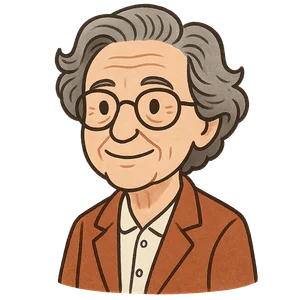
Margarita Salas was a pioneering Spanish scientist and biochemist whose discovery of phi29 DNA polymerase has…
Reads at Grades 6–8 Listens at Grades 4–8
Print & create
Answer keys·No prep·Free with an account
28 worksheets · answer keys · full story · quiz · Ages 10-12 · CEFR B2
Plus adds 164,000+ more stories in 27 languages, audio for every one, and printables for all of them.
Just want Margarita Salas?
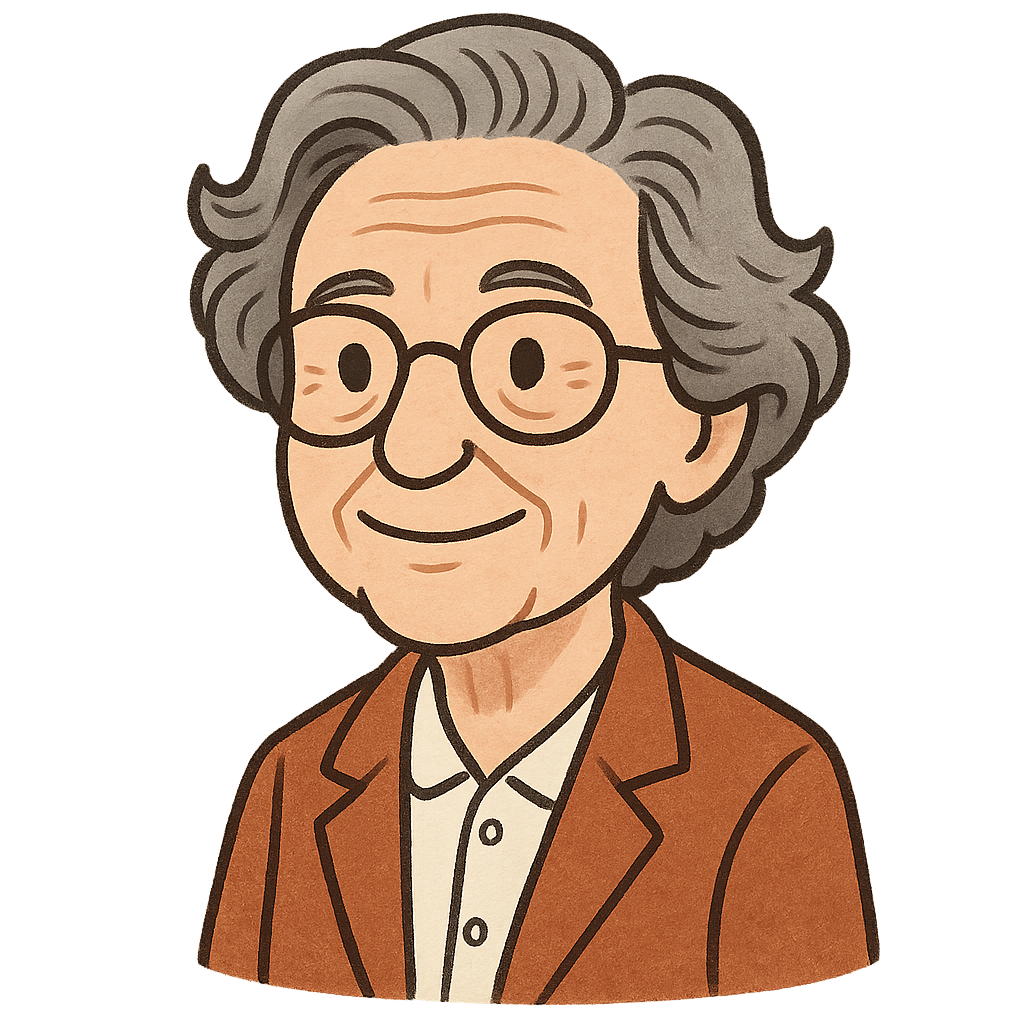
Hello, my name is Margarita Salas, and I was a scientist who spent her life exploring the tiny, invisible world inside our cells. My journey began on November 30th, 1938, in a small village in Spain called Canero. Growing up, my world was filled with curiosity. My father was a doctor and my mother was a teacher, and together they instilled in me a deep love for learning. They taught me that asking questions was one of the most important things a person could do. While other children played, I was often fascinated by the natural world, wondering how living things worked. This early fascination with science and medicine was like a small seed being planted, one that would grow into a lifelong passion for discovery and understanding the very building blocks of life.
When it was time for university in 1955, I made a choice that was quite unusual for a young woman in Spain at the time: I decided to study chemistry at the Complutense University of Madrid. The world of science was mostly dominated by men, but I was determined to follow my passion. It was in the university laboratory that I met another young scientist, Eladio Viñuela, who would later become my husband and research partner. A truly life-changing moment happened in 1958 when I attended a lecture by Severo Ochoa, a brilliant Spanish scientist who had won the Nobel Prize. Hearing him speak about the mysteries of biochemistry—the chemistry of life—ignited a fire within me. In that moment, I knew I had found my calling. I wanted to dedicate my life to unraveling the secrets hidden within our genes.
Margarita Salas: Unlocking the Secrets of DNA
Hello, my name is Margarita Salas, and I was a scientist who spent her life exploring the tiny, invisible world inside our cells. My journey began on November 30th, 1938, in a small village in Spain called Canero. Growing up, my world was filled with curiosity. My father was a doctor and my mother was a teacher, and together they instilled in me a deep love for learning. They taught me that asking questions was one of the most important things a person could do. While other children played, I was often fascinated by the natural world, wondering how living things worked. This early fascination with science and medicine was like a small seed being planted, one that would grow into a lifelong passion for discovery and understanding the very building blocks of life.
When it was time for university in 1955, I made a choice that was quite unusual for a young woman in Spain at the time: I decided to study chemistry at the Complutense University of Madrid. The world of science was mostly dominated by men, but I was determined to follow my passion. It was in the university laboratory that I met another young scientist, Eladio Viñuela, who would later become my husband and research partner. A truly life-changing moment happened in 1958 when I attended a lecture by Severo Ochoa, a brilliant Spanish scientist who had won the Nobel Prize. Hearing him speak about the mysteries of biochemistry—the chemistry of life—ignited a fire within me. In that moment, I knew I had found my calling. I wanted to dedicate my life to unraveling the secrets hidden within our genes.
My scientific journey took an exciting turn in 1964 when Eladio and I moved to the United States. We traveled to New York City to work as postdoctoral researchers in the very laboratory of my hero, Severo Ochoa, at New York University. It was an incredible opportunity. Imagine being in the heart of scientific discovery, where the field of molecular biology was rapidly expanding. Every day was filled with new ideas and challenges. Working alongside Dr. Ochoa was like an apprenticeship with a master. He taught me about the importance of scientific rigor, which means being incredibly precise, careful, and honest in your research. He also showed me that creativity is just as important as logic in science, because sometimes you have to imagine new possibilities to find the truth.
After three transformative years in America, Eladio and I returned to Spain in 1967. We didn't just come back with new knowledge; we came back with a mission. Our goal was to establish the very first research group dedicated to molecular biology in our home country. It was not an easy task. We faced many challenges, from limited funding to a lack of equipment, but our determination was strong. We wanted to build a foundation for modern biological research in Spain. For my own research, I became fascinated by a very, very small subject: a tiny virus called bacteriophage phi29. This virus is a specialist—it only infects bacteria. What fascinated me most was understanding how it copied its own genetic material, its DNA, with such speed and efficiency. I spent years studying this tiny virus, believing it held an important secret.
And it did. After years of patient and persistent work, my research team and I made our most important discovery during the 1980s. We found a special protein, an enzyme, inside the phi29 virus. We named this enzyme phi29 DNA polymerase. This enzyme was nothing short of amazing. It could take a single, tiny fragment of DNA and make millions, even billions, of perfect copies of it. It worked faster and more accurately than any other tool known at the time. This was a massive breakthrough because it solved a huge problem for scientists: how to study DNA when you only have a very small, almost invisible amount. Our discovery meant that genetic material from a single hair at a crime scene, a drop of blood, or an ancient fossil could now be amplified and studied. In 1989, we patented this discovery, and the royalties from it helped fund even more scientific research in Spain for decades to come.
My work on phi29 was a major part of my life, but my passion for science extended beyond my own laboratory. I believed deeply in the power of education and mentorship. I spent many years as a professor, teaching and guiding new generations of scientists. I took special care to encourage young women to pursue careers in STEM fields, knowing the challenges they might face. I wanted to show them that it was possible. Over the years, I was honored to receive recognition for my work. A particularly proud moment came in 2007, when I became the first Spanish woman ever elected as a member of the U.S. National Academy of Sciences. I also had the privilege of leading several important scientific institutions in Spain, helping to shape the future of research in my country.
I lived to be 80 years old, passing away on November 7th, 2019. My life was full of questions, challenges, and incredible discoveries. The enzyme my team and I found, phi29 DNA polymerase, is still considered one of the most essential tools in genetics and molecular biology today. It is used in medical labs to diagnose diseases, by forensic scientists to solve crimes, and by researchers to study the history of life on Earth. I hope my story shows you that a great love for learning and a refusal to give up can lead to discoveries that change the world. Always follow your curiosity, work hard, and never let anyone tell you what you can or cannot achieve.
Wow facts
About
Margarita Salas was a pioneering Spanish scientist and biochemist whose discovery of phi29 DNA polymerase has significantly advanced DNA replication techniques. This has led to better ways to make copies of DNA, which are very important in many areas, including solving crimes and studying genes. She was a trailblazer for women in STEM.
Take a Quiz
Question 1 of 5
What was Margarita Salas's most significant scientific discovery and why was it so important?
Explore next




Want to do even more?
Go beyond exploring. Unlock tools that turn every story into real learning.

Storypie Plus for families
Full stories, quizzes, and printables. Nights and car rides, sorted.
- Unlimited audio stories
- Create Mode: your child stars in the story
- Offline downloads
- Printable worksheets & coloring pages

Why Storypie for Schools
Students engaged. Prep in seconds. Evenings back to you.
- Worksheets & Quizzes
- Classroom Management
- Formative Assessment
- Custom Curriculum & Lesson Plans
- 27 Languages

Why Storypie for Homeschool
Curriculum done. They'll ask for more. Hours back in your day.
- Worksheet Generator
- First-Person Audio Stories
- Built-in Comprehension Quizzes
- Custom Curriculum & Lesson Plans
- Print & Go Activities