English

Maria Mitchell
Maria Mitchell was an American astronomer who, in 1847…
Reads at Grades 6–8 Listens at Grades 4–8
Print & create
Answer keys·No prep·Free with an account
28 worksheets · answer keys · full story · quiz · Ages 10-12 · CEFR B2
Plus adds 290,000+ more stories in 27 languages, audio for every one, and printables for all of them.
Just want Maria Mitchell?
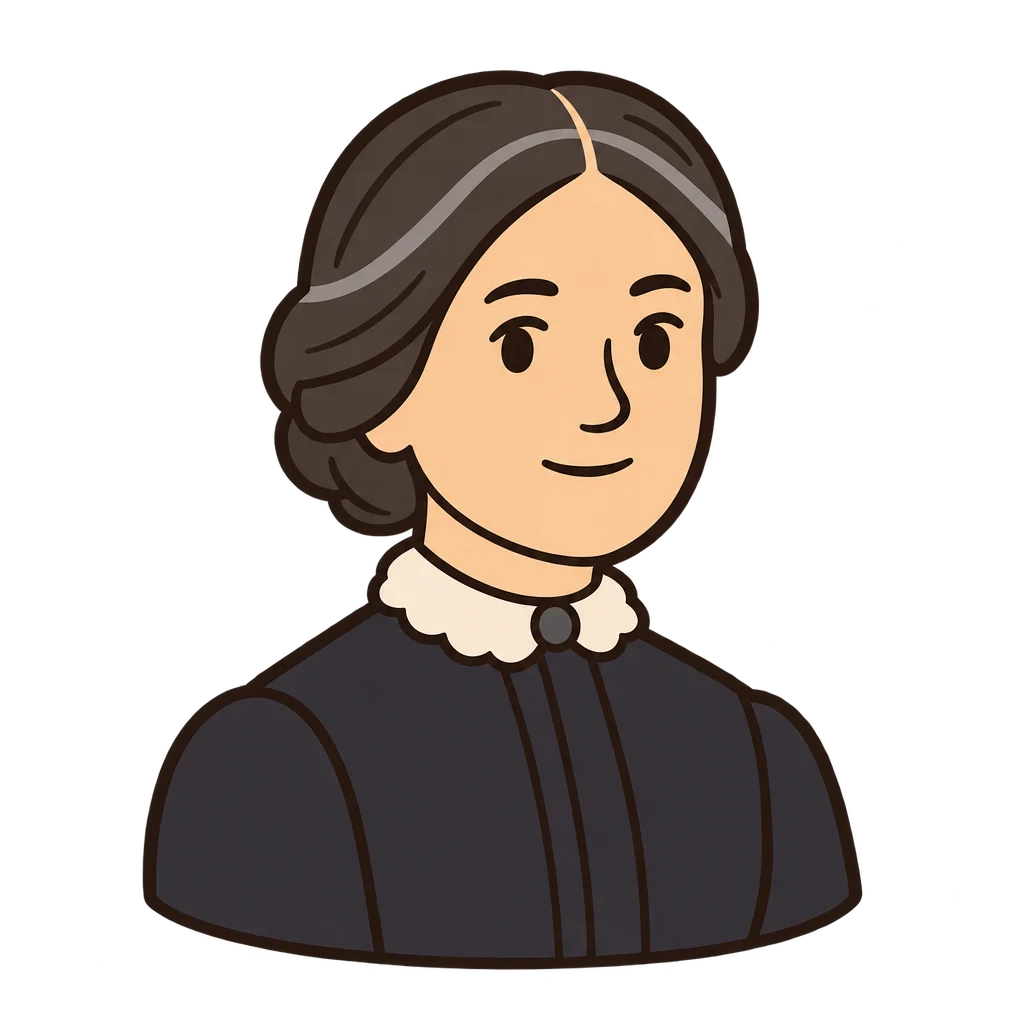
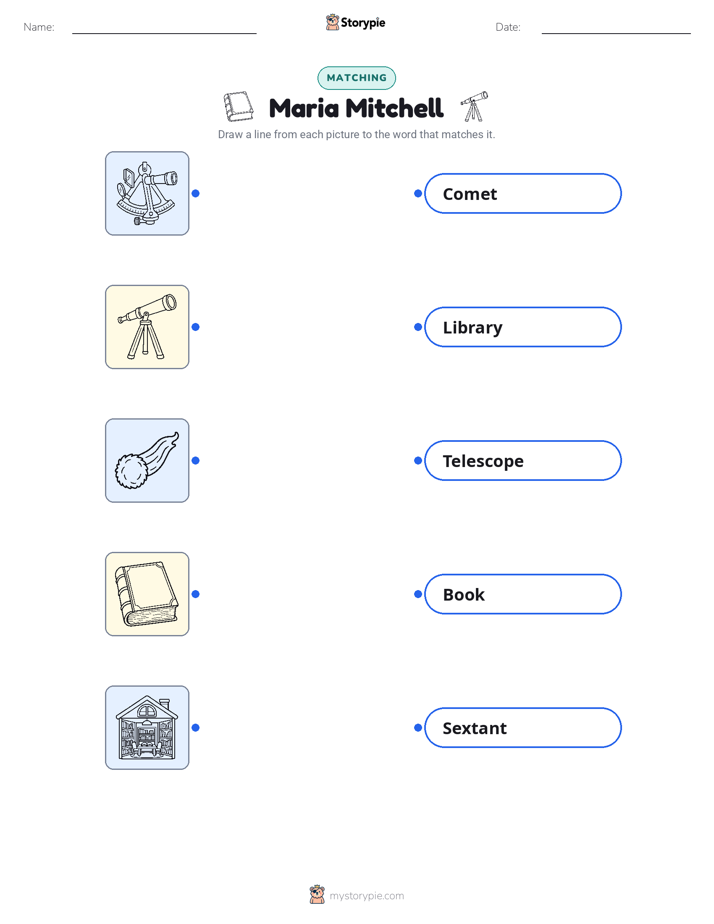
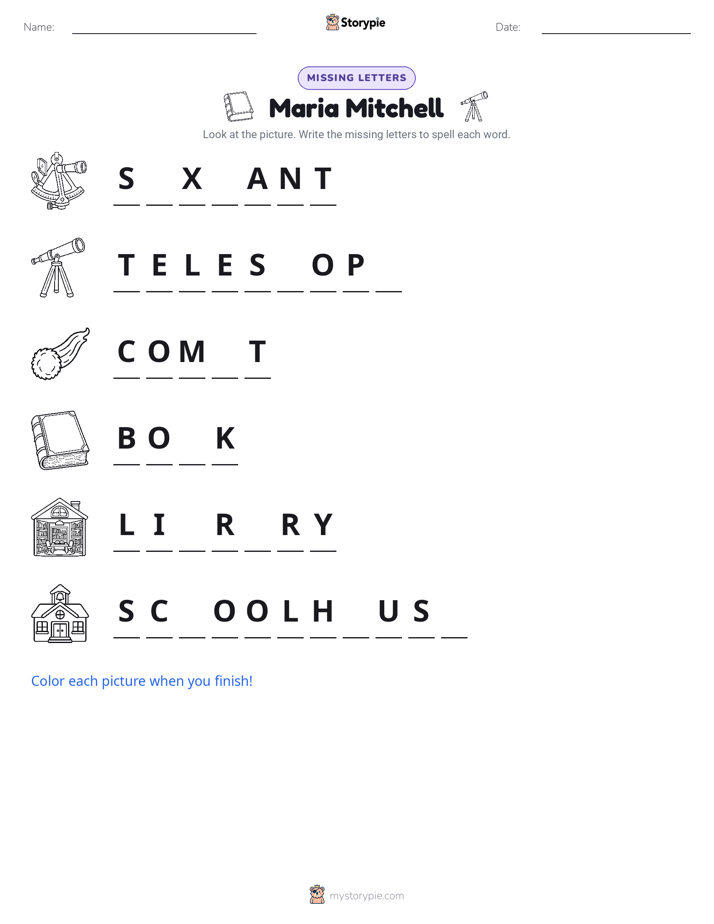
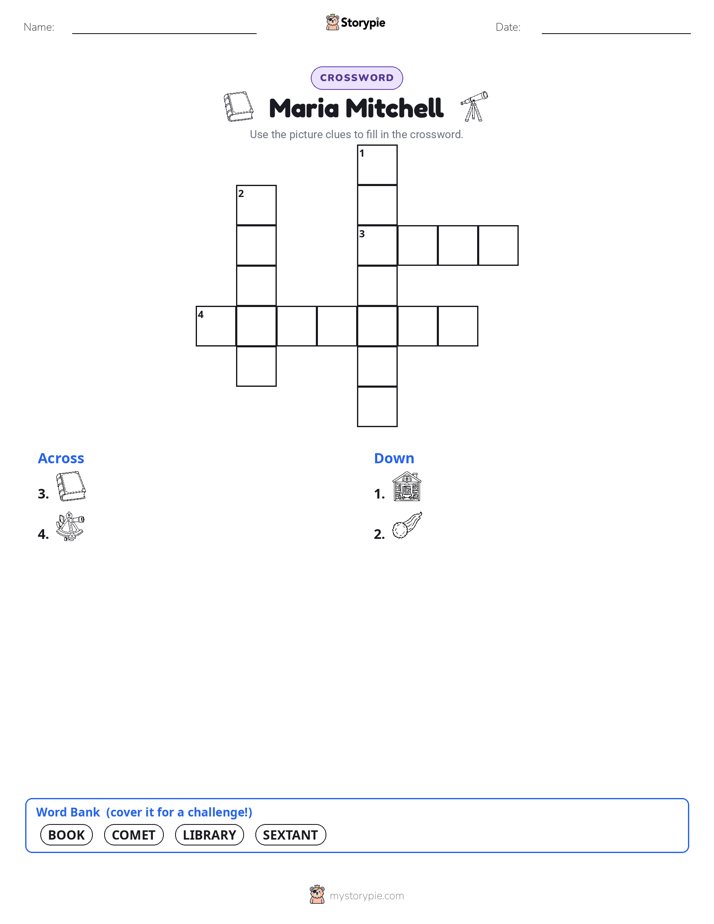
Hello, my name is Maria Mitchell. My story begins on a small island called Nantucket, Massachusetts, where I was born on August 1st, 1818. In my time, Nantucket was the heart of the world’s whaling industry, and the sea was a way of life. Sailors navigated the vast oceans using the stars as their map, and our island community understood the night sky in a practical, essential way. My father, William Mitchell, was a teacher and an amateur astronomer, and he passed his love for the cosmos on to me. He taught me how to use a sextant and a telescope, and our rooftop became my first classroom. I remember one thrilling night in 1831, when I was just twelve years old. There was a solar eclipse, and my father and I worked together to calculate the exact moment it would occur. Standing there beside him, timing the celestial event, I felt a spark ignite within me. That night, I knew that studying the stars was what I wanted to do for the rest of my life.
Pursuing a passion for science wasn't simple for a girl in the 1800s. Most colleges and universities did not admit women, so a higher education seemed out of reach. But I was determined not to let that stop me. If the world wouldn't provide me with a path, I would create my own. In 1835, I opened my own school, where I could teach other girls and continue learning myself. A year later, in 1836, an even greater opportunity arose when I became the first librarian at the Nantucket Atheneum. This library was my gateway to the universe. For the next twenty years, I spent my days managing the library and my nights devouring its books. I taught myself advanced mathematics, studied the works of famous scientists, and kept up with the latest astronomical discoveries. The Atheneum was more than a job; it was my university, a quiet place where I could prepare for the discoveries that lay ahead.
Maria Mitchell: A Comet of Her Own
Hello, my name is Maria Mitchell. My story begins on a small island called Nantucket, Massachusetts, where I was born on August 1st, 1818. In my time, Nantucket was the heart of the world’s whaling industry, and the sea was a way of life. Sailors navigated the vast oceans using the stars as their map, and our island community understood the night sky in a practical, essential way. My father, William Mitchell, was a teacher and an amateur astronomer, and he passed his love for the cosmos on to me. He taught me how to use a sextant and a telescope, and our rooftop became my first classroom. I remember one thrilling night in 1831, when I was just twelve years old. There was a solar eclipse, and my father and I worked together to calculate the exact moment it would occur. Standing there beside him, timing the celestial event, I felt a spark ignite within me. That night, I knew that studying the stars was what I wanted to do for the rest of my life.
Pursuing a passion for science wasn't simple for a girl in the 1800s. Most colleges and universities did not admit women, so a higher education seemed out of reach. But I was determined not to let that stop me. If the world wouldn't provide me with a path, I would create my own. In 1835, I opened my own school, where I could teach other girls and continue learning myself. A year later, in 1836, an even greater opportunity arose when I became the first librarian at the Nantucket Atheneum. This library was my gateway to the universe. For the next twenty years, I spent my days managing the library and my nights devouring its books. I taught myself advanced mathematics, studied the works of famous scientists, and kept up with the latest astronomical discoveries. The Atheneum was more than a job; it was my university, a quiet place where I could prepare for the discoveries that lay ahead.
The most important night of my scientific career arrived on October 1st, 1847. As I did most clear evenings, I climbed to the roof of the Pacific National Bank, where my father worked, to use my telescope. I was methodically sweeping the sky, a familiar and peaceful routine, when I spotted something unusual. It was a faint, blurry smudge of light in a place where I knew no star should be. I checked my star charts again and again, but the object wasn't on any of them. A jolt of excitement ran through me. Could it be? I suspected I had found a new comet. I hurried to tell my father, who confirmed my observation. He helped me carefully document my finding and send word to observatories in America and Europe. After my discovery was verified, the scientific world took notice. The comet was officially named 'Miss Mitchell's Comet' in my honor, and suddenly, my life was about to change forever.
Discovering a comet did more than just add a new object to our solar system; it opened doors that had long been closed to women. The world of science was dominated by men, but my discovery could not be ignored. In 1848, I received a great honor: a gold medal from King Christian VIII of Denmark, who had offered a prize to the first person to discover a comet by telescope. That same year, I was elected as the first female member of the prestigious American Academy of Arts and Sciences. It was a monumental step. Then, in 1850, I was invited to join the American Association for the Advancement of Science. These weren't just personal achievements; they were victories for all women who dreamed of contributing to science. I had proven that a woman, with determination and a love for learning, could make her mark on a field that had tried to exclude her.
My journey took an exciting new turn in 1865 when I was offered a position as the first professor of astronomy at the newly founded Vassar College, an institution dedicated to providing women with an education equal to that of men. I accepted the role and also became the director of the college observatory. As a professor, I wanted my students to experience the thrill of discovery for themselves. I rejected rote memorization. Instead, we spent our nights in the observatory, tracking stars, recording sunspots, and photographing planets. I encouraged them to question everything. During my time at Vassar, I also fought for what was right. When I learned that my male colleagues were being paid more than me, I demanded and eventually received a salary increase. To further support women in their professional pursuits, I helped co-found the Association for the Advancement of Women in 1873, creating a network for educated women to support one another.
After many years of teaching and exploring the cosmos, I retired from Vassar College in 1888. I lived to be 70 years old, and my life's journey came to an end in 1889. I had dedicated my life to science and to opening doors for others, and I hoped my work had shown the world that a woman's mind is just as capable of scientific thought as a man's. My legacy continues on my home island of Nantucket through the Maria Mitchell Association, which still operates an observatory and encourages scientific learning. I hope that every time a young person looks up at the night sky with curiosity and asks a question, my spirit of discovery lives on.
Wow facts
About
Maria Mitchell was an American astronomer who, in 1847, became the first American to discover a comet with a telescope. She was the first female professional astronomer in the United States and a dedicated educator and advocate for women in science.
Take a Quiz
Question 1 of 5
Based on the story, what does the word 'pioneering' mean when used to describe an astronomer like Maria Mitchell?
Explore next



Want to do even more?
Go beyond exploring. Unlock tools that turn every story into real learning.

Storypie Plus for families
Full stories, quizzes, and printables. Nights and car rides, sorted.
- Unlimited audio stories
- Create Mode: your child stars in the story
- Offline downloads
- Printable worksheets & coloring pages

Why Storypie for Schools
Students engaged. Prep in seconds. Evenings back to you.
- Worksheets & Quizzes
- Classroom Management
- Formative Assessment
- Custom Curriculum & Lesson Plans
- 27 Languages

Why Storypie for Homeschool
Curriculum done. They'll ask for more. Hours back in your day.
- Worksheet Generator
- First-Person Audio Stories
- Built-in Comprehension Quizzes
- Custom Curriculum & Lesson Plans
- Print & Go Activities