English

Maria Mitchell
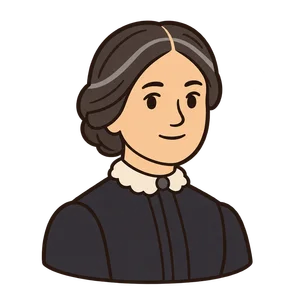
Maria Mitchell was an American astronomer who, in 1847…
Reads at Grades K-2 Listens at K–3
Print & create
Answer keys·No prep·Free with an account
28 worksheets · answer keys · full story · quiz · Ages 6-8 · CEFR A2
Plus adds 290,000+ more stories in 27 languages, audio for every one, and printables for all of them.
Just want Maria Mitchell?
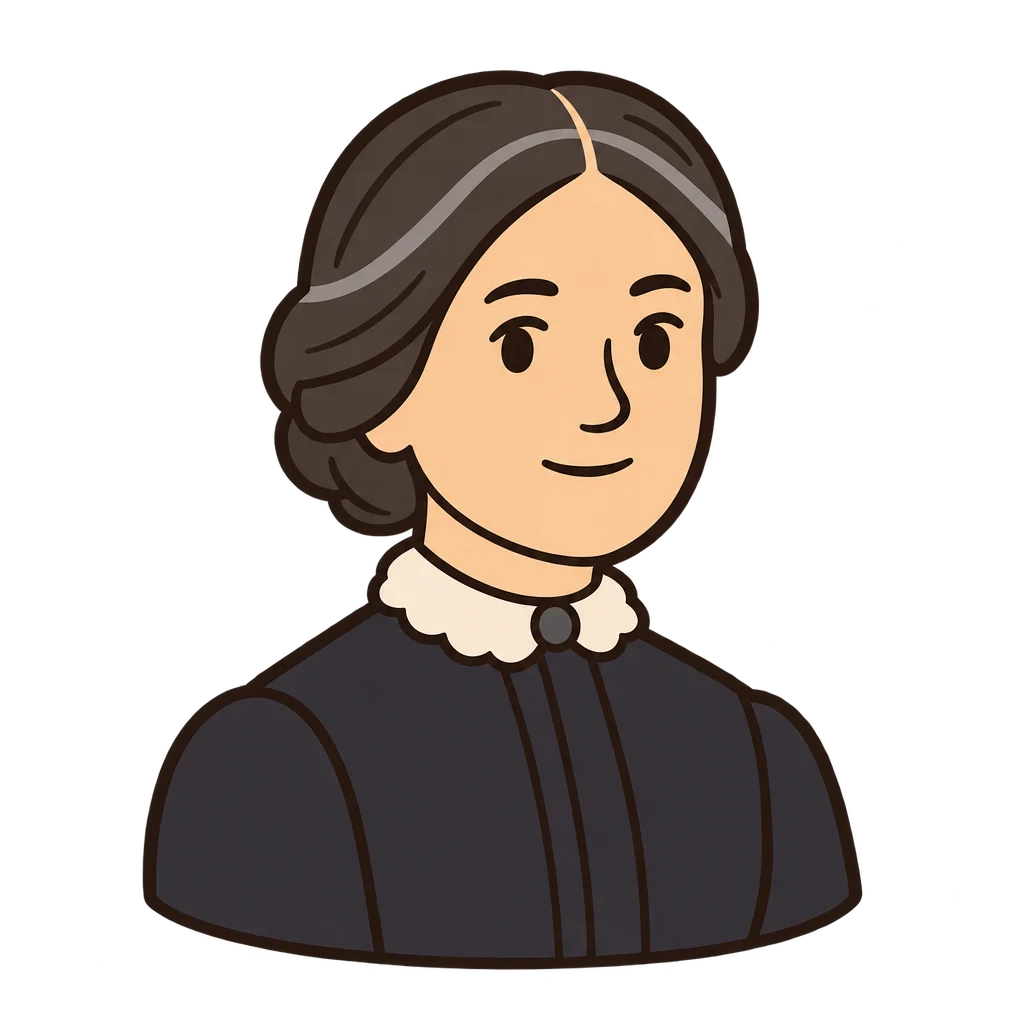
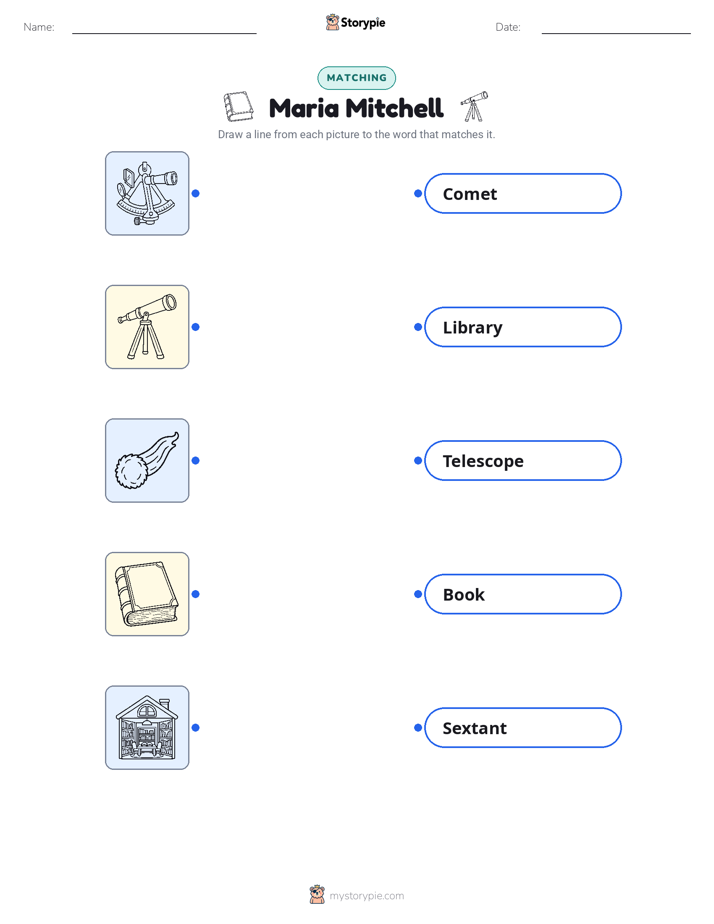
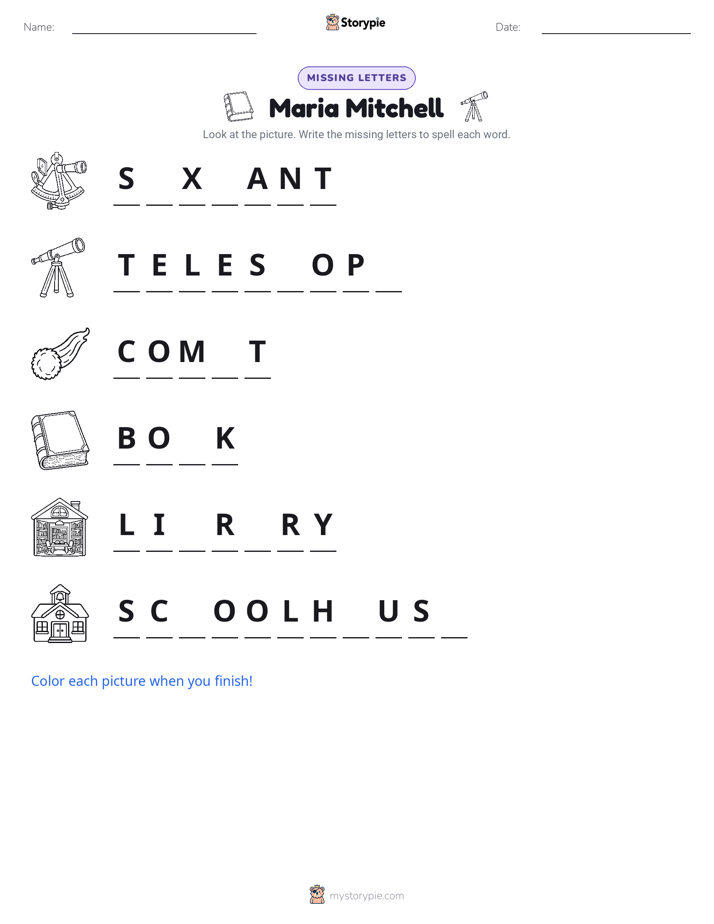
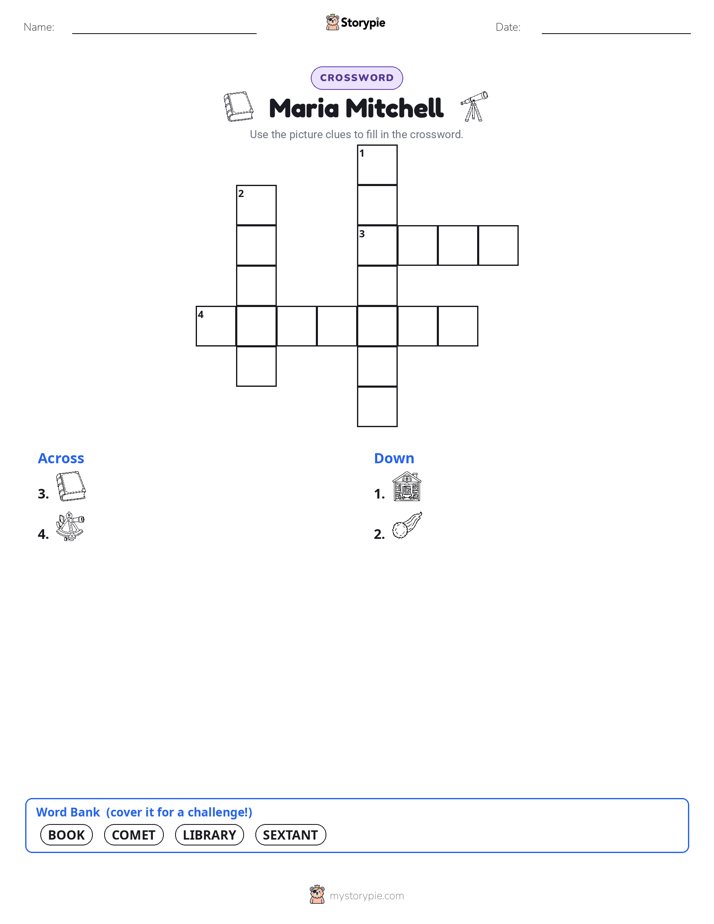
Hello! My name is Maria Mitchell. I was born on a little island called Nantucket on August 1st, 1818. My house was right near the ocean, but my favorite thing to look at was the night sky. My father, William Mitchell, was a teacher who loved the stars as much as I did. He had a special brass telescope, and he taught me how to use it to see planets, stars, and faraway galaxies. In my family, we believed that girls should learn just as much as boys, so I spent all my free time reading books and helping my dad with his star-watching work.
Every clear night, I would climb up to our roof to 'sweep the heavens' with our telescope. That means I would look back and forth across the sky, searching for anything new. On the night of October 1st, 1847, I saw something special! It was a fuzzy little light that I had never seen before. It was moving across the sky! I knew right away it had to be a comet—a big ball of ice and dust that travels through space. I was so excited I could barely sleep. I had found a brand new comet all by myself! People later called it 'Miss Mitchell's Comet'.
After my discovery, something amazing happened. The King of Denmark sent me a shiny gold medal as a prize! Suddenly, people all over the world knew my name. In 1848, I was invited to join a very important group of scientists called the American Academy of Arts and Sciences. I was the very first woman they ever asked to join! It was a huge honor. It showed everyone that women could be just as good at science as men. I traveled to meet other scientists and even got to see the Pope’s own observatory in Rome.
Maria Mitchell
Hello! My name is Maria Mitchell. I was born on a little island called Nantucket on August 1st, 1818. My house was right near the ocean, but my favorite thing to look at was the night sky. My father, William Mitchell, was a teacher who loved the stars as much as I did. He had a special brass telescope, and he taught me how to use it to see planets, stars, and faraway galaxies. In my family, we believed that girls should learn just as much as boys, so I spent all my free time reading books and helping my dad with his star-watching work.
Every clear night, I would climb up to our roof to 'sweep the heavens' with our telescope. That means I would look back and forth across the sky, searching for anything new. On the night of October 1st, 1847, I saw something special! It was a fuzzy little light that I had never seen before. It was moving across the sky! I knew right away it had to be a comet—a big ball of ice and dust that travels through space. I was so excited I could barely sleep. I had found a brand new comet all by myself! People later called it 'Miss Mitchell's Comet'.
After my discovery, something amazing happened. The King of Denmark sent me a shiny gold medal as a prize! Suddenly, people all over the world knew my name. In 1848, I was invited to join a very important group of scientists called the American Academy of Arts and Sciences. I was the very first woman they ever asked to join! It was a huge honor. It showed everyone that women could be just as good at science as men. I traveled to meet other scientists and even got to see the Pope’s own observatory in Rome.
My favorite job wasn't just looking at the stars, but teaching others about them. In 1865, I became a professor of astronomy at a new school for women called Vassar College. I loved my students! I didn't want them to just memorize facts from a book. I taught them to look through the telescope themselves, to ask questions, and to make their own discoveries. We would stay up late at night watching for meteor showers and studying the moon. We even took a trip to Colorado in 1878 to see a total solar eclipse. It was magical!
I lived to be 70 years old, spending my life looking up at the amazing, wonderful sky. Today, people remember me not just for the comet I found, but for being a teacher who believed in the power of curiosity. I wanted to show every young woman that she could reach for the stars, literally! I hope my story reminds you to always look up, ask big questions, and never let anyone tell you that your dreams are out of reach. The universe is full of wonders waiting to be discovered.
Wow facts
About
Maria Mitchell was an American astronomer who, in 1847, became the first American to discover a comet with a telescope. She was the first female professional astronomer in the United States and a dedicated educator and advocate for women in science.
Take a Quiz
Question 1 of 4
On what date did I discover the special fuzzy light in the sky?
Explore next




Want to do even more?
Go beyond exploring. Unlock tools that turn every story into real learning.

Storypie Plus for families
Full stories, quizzes, and printables. Nights and car rides, sorted.
- Unlimited audio stories
- Create Mode: your child stars in the story
- Offline downloads
- Printable worksheets & coloring pages

Why Storypie for Schools
Students engaged. Prep in seconds. Evenings back to you.
- Worksheets & Quizzes
- Classroom Management
- Formative Assessment
- Custom Curriculum & Lesson Plans
- 27 Languages

Why Storypie for Homeschool
Curriculum done. They'll ask for more. Hours back in your day.
- Worksheet Generator
- First-Person Audio Stories
- Built-in Comprehension Quizzes
- Custom Curriculum & Lesson Plans
- Print & Go Activities