English

Matsuo Bashō
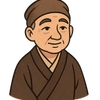
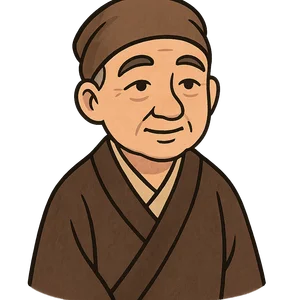
Matsuo Bashō was a Japanese poet from the Edo period, widely regarded as the greatest master of haiku.
Reads at Grades 6–8 Listens at Grades 4–8
Print & create
Answer keys·No prep·Free with an account
28 worksheets · answer keys · full story · quiz · Ages 10-12 · CEFR B2
Plus adds 164,000+ more stories in 27 languages, audio for every one, and printables for all of them.
Just want Matsuo Bashō?
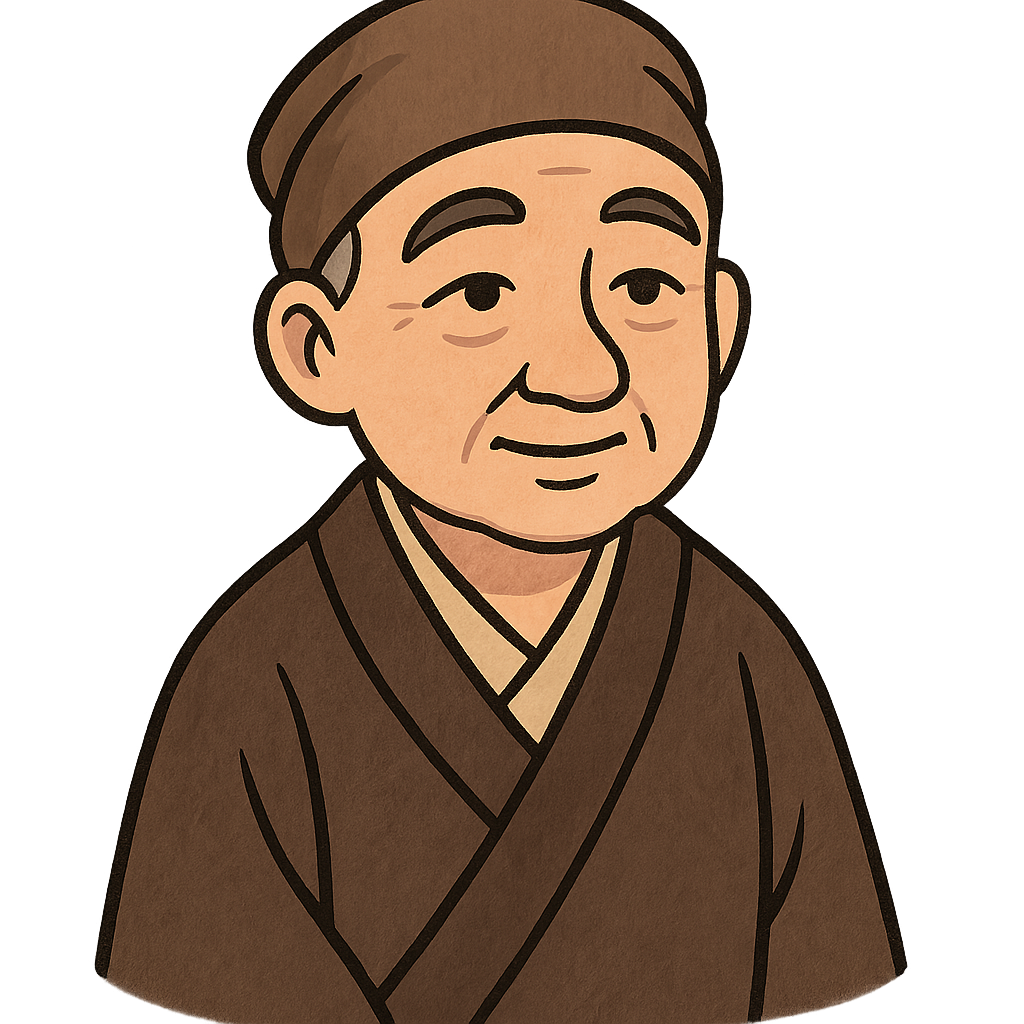
Hello. My name is Matsuo Bashō, and I would like to share my story with you. I was born in the year 1644 in a place called Iga Province in Japan, a land of mountains and quiet valleys. My father was a samurai, a respected warrior, and in those days, it was expected that a samurai's son would follow in his footsteps. However, from a very young age, I found that my heart was not drawn to the way of the sword. Instead, I was fascinated by the world around me—the gentle curve of a cherry blossom branch, the sound of rain on a bamboo roof, and the changing of the seasons. My greatest joy came from trying to capture these moments in words. I had a very dear friend, a young lord named Tōdō Yoshitada, who shared my love for art. Instead of spending our days practicing combat, we would sit with our ink brushes, writing poetry together. He understood my passion. But our time together was cut short when he passed away suddenly in 1666. His loss left a deep sadness in my heart and changed the course of my life forever. It was then that I decided to leave my samurai heritage behind and dedicate myself completely to the art of poetry.
To become a true master of poetry, I knew I had to learn from the best. So, around the year 1672, I journeyed to the great city of Edo, which you now know as Tokyo. It was a bustling, crowded place, very different from my quiet home province. Life was not easy for a young poet trying to make his way, but I devoted myself to my studies and spent my days writing and reading. Gradually, people in the city’s literary circles began to take notice of my work. By 1677, I had attracted a small group of students who wished to learn my style of poetry. In 1680, my students showed their kindness by building a small, simple hut for me near the Sumida River. It was a peaceful place to write. Outside my new home, they planted a Japanese banana tree, which is called a 'bashō' in my language. I grew to love that tree, with its broad, graceful leaves. It became so special to me that I decided to take its name as my own. From that point on, I was known not by my birth name, but as Bashō. My quiet life was interrupted in 1682 when a terrible fire swept through Edo, and my little hut burned to the ground. Losing my home made me realize that I should not be attached to possessions, and this new understanding set me on the path of a wanderer.
Matsuo Bashō: The Wandering Poet
Hello. My name is Matsuo Bashō, and I would like to share my story with you. I was born in the year 1644 in a place called Iga Province in Japan, a land of mountains and quiet valleys. My father was a samurai, a respected warrior, and in those days, it was expected that a samurai's son would follow in his footsteps. However, from a very young age, I found that my heart was not drawn to the way of the sword. Instead, I was fascinated by the world around me—the gentle curve of a cherry blossom branch, the sound of rain on a bamboo roof, and the changing of the seasons. My greatest joy came from trying to capture these moments in words. I had a very dear friend, a young lord named Tōdō Yoshitada, who shared my love for art. Instead of spending our days practicing combat, we would sit with our ink brushes, writing poetry together. He understood my passion. But our time together was cut short when he passed away suddenly in 1666. His loss left a deep sadness in my heart and changed the course of my life forever. It was then that I decided to leave my samurai heritage behind and dedicate myself completely to the art of poetry.
To become a true master of poetry, I knew I had to learn from the best. So, around the year 1672, I journeyed to the great city of Edo, which you now know as Tokyo. It was a bustling, crowded place, very different from my quiet home province. Life was not easy for a young poet trying to make his way, but I devoted myself to my studies and spent my days writing and reading. Gradually, people in the city’s literary circles began to take notice of my work. By 1677, I had attracted a small group of students who wished to learn my style of poetry. In 1680, my students showed their kindness by building a small, simple hut for me near the Sumida River. It was a peaceful place to write. Outside my new home, they planted a Japanese banana tree, which is called a 'bashō' in my language. I grew to love that tree, with its broad, graceful leaves. It became so special to me that I decided to take its name as my own. From that point on, I was known not by my birth name, but as Bashō. My quiet life was interrupted in 1682 when a terrible fire swept through Edo, and my little hut burned to the ground. Losing my home made me realize that I should not be attached to possessions, and this new understanding set me on the path of a wanderer.
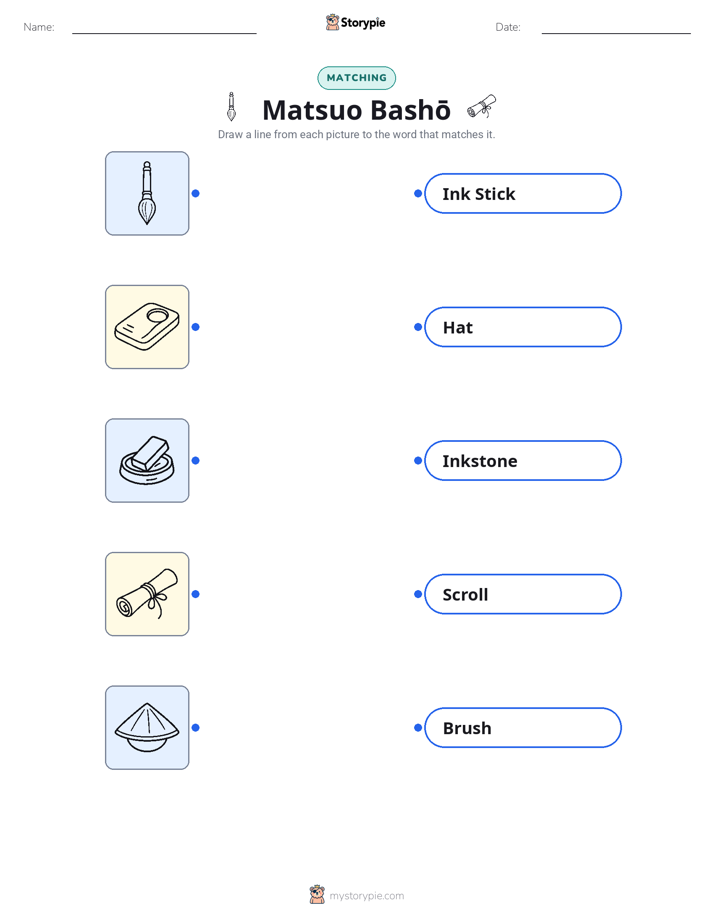
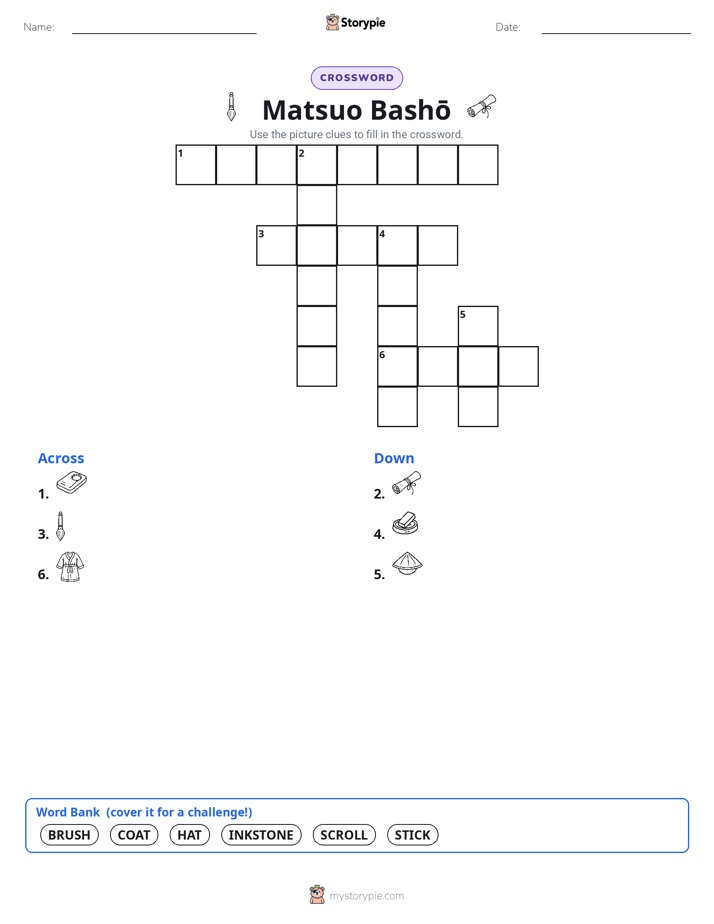
I came to believe that to write poetry that felt true, I had to experience the world not from a quiet room, but directly, with my own two feet. This belief led me to spend much of my life as a traveler, walking across the vast landscapes of Japan. My needs were simple. I wore a coat made of paper to keep me warm, carried a small bag for my ink and brush, and wore a wide-brimmed hat to shield me from the sun and rain. These journeys were my true school. My most famous journey began in the spring of 1689. My student and companion, Sora, and I set out on a long walk to see the northern regions of Japan, a land of wild beauty and ancient history. For months, we traveled hundreds of miles on foot. This incredible experience became the heart of my most famous book, 'Oku no Hosomichi,' which means 'The Narrow Road to the Deep North.' On our way, we visited old temples perched on mountainsides, gazed at the rugged coastlines, and met all kinds of people, from monks to farmers. Every sight, every sound, and every encounter was an inspiration. I filled my travel journal with observations and the poems they inspired. One of the most well-known poems from this time captures a single, perfect moment: 'An old silent pond... / A frog jumps into the pond— / Splash! Silence again.'
I would like to tell you about the special kind of poetry I wrote. Today, it is famous around the world and known as haiku. In my time, however, we called it 'hokku.' A hokku was the opening verse of a much longer chain of poems, called a renga, that poets would write together as a group. But I saw something uniquely powerful in those first three short lines. I believed that an entire world of feeling, observation, and connection to nature could be captured in just seventeen syllables. My poetry was guided by certain ideas. One of these was 'sabi,' which describes the feeling of quiet loneliness or profound peace that one can find in nature, like the feeling of watching the moon rise over a field. Another idea was 'wabi,' which is the appreciation of beauty in simple, humble, and everyday things. Instead of writing about grand battles or wealthy lords, I found beauty in a wild iris, a crow on a bare branch, or the sound of a cicada's cry. My goal was always to write poems that felt light and simple on the surface but carried a deep and resonant meaning, connecting the reader to a single, powerful moment in time.
My travels continued for many more years, as my search for inspiration never truly ended. It was on one of these journeys, in the autumn of 1694, that I fell ill in the city of Osaka. I passed away there, surrounded by my loyal students who had followed me and learned from me. I lived to be 50 years old. Though my own physical journey ended then, my words have continued to travel far beyond the shores of Japan. My book, 'The Narrow Road to the Deep North,' is still read and studied by people all over the world, and the haiku has become one of the most beloved and practiced forms of poetry. I hope my story reminds you to look closely at the world around you, to find the deep beauty hidden in small moments, and to understand that the greatest art can often be found in the simplest of things.
Wow facts
About
Matsuo Bashō was a Japanese poet from the Edo period, widely regarded as the greatest master of haiku. His poetry was influenced by his extensive travels across Japan, and his work focuses on nature and quiet observation.
Take a Quiz
Question 1 of 5
In your own words, describe the two major events that caused Bashō to change his path in life.
Explore next




Want to do even more?
Go beyond exploring. Unlock tools that turn every story into real learning.

Storypie Plus for families
Full stories, quizzes, and printables. Nights and car rides, sorted.
- Unlimited audio stories
- Create Mode: your child stars in the story
- Offline downloads
- Printable worksheets & coloring pages

Why Storypie for Schools
Students engaged. Prep in seconds. Evenings back to you.
- Worksheets & Quizzes
- Classroom Management
- Formative Assessment
- Custom Curriculum & Lesson Plans
- 27 Languages

Why Storypie for Homeschool
Curriculum done. They'll ask for more. Hours back in your day.
- Worksheet Generator
- First-Person Audio Stories
- Built-in Comprehension Quizzes
- Custom Curriculum & Lesson Plans
- Print & Go Activities