English

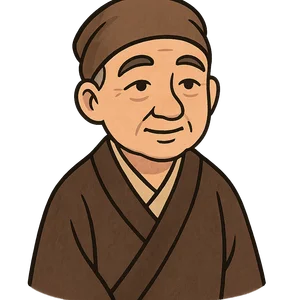
Matsuo Bashō
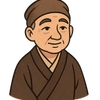
Matsuo Bashō was a Japanese poet from the Edo period, widely regarded as the greatest master of haiku.
Reads at Grades 3–5 Listens at Grades 1–5
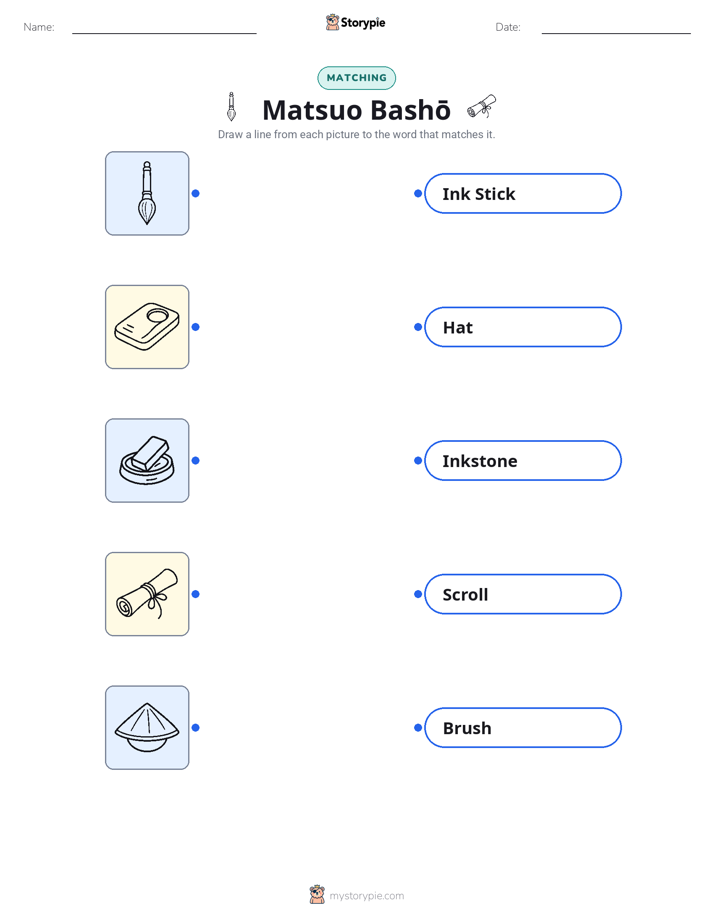
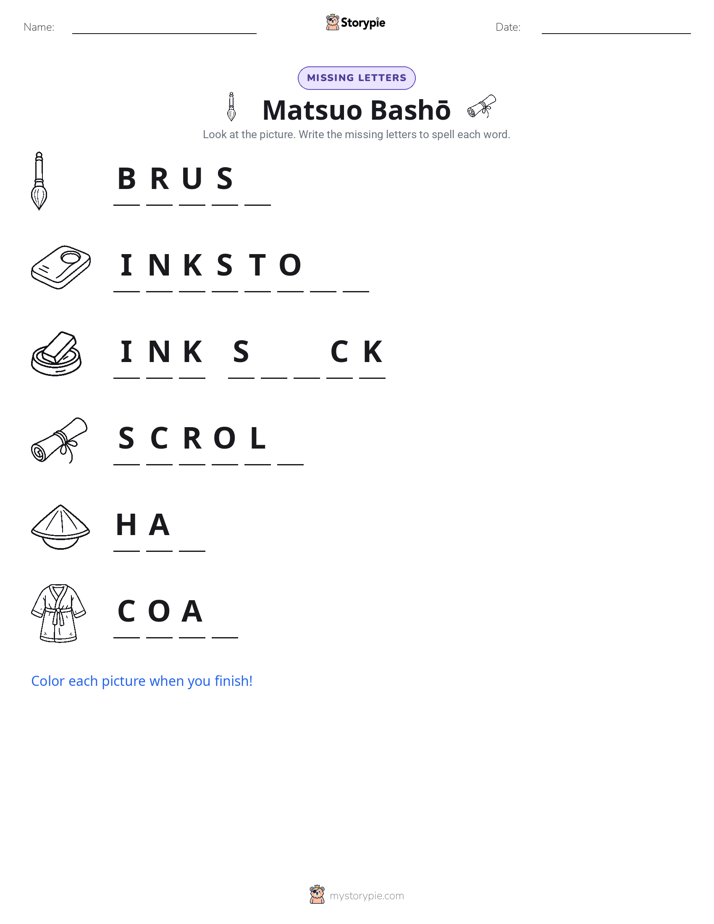
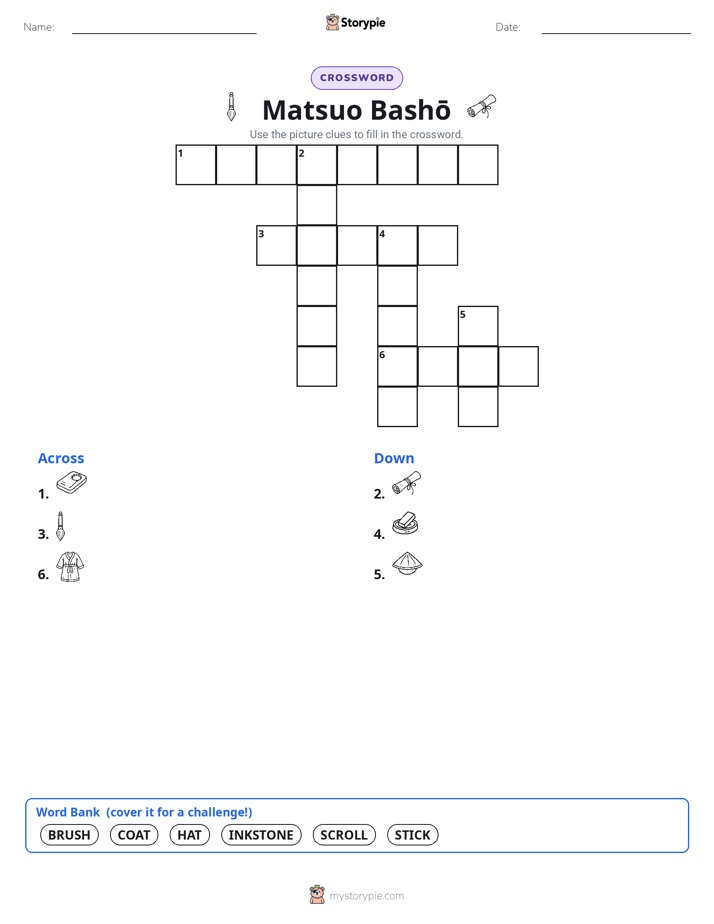
Print & create
Answer keys·No prep·Free with an account
28 worksheets · answer keys · full story · quiz · Ages 8-10 · CEFR B1
Plus adds 164,000+ more stories in 27 languages, audio for every one, and printables for all of them.
Just want Matsuo Bashō?
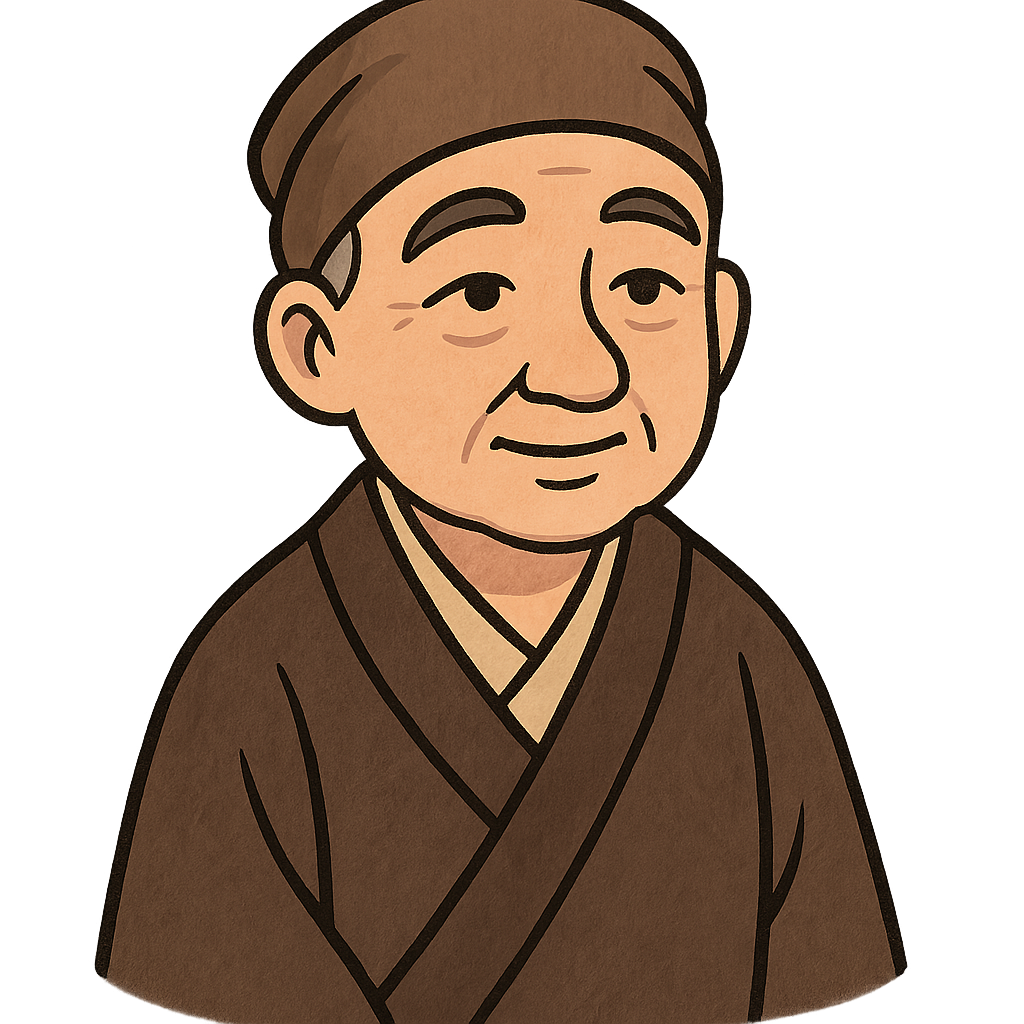
Hello! My name is Matsuo Bashō, and I was a poet from Japan. I was born in the year 1644 in a town called Ueno, which was near a grand castle. When I was a boy, my name was Kinsaku. I didn't spend much time indoors because I loved being outside, watching the leaves turn from green to gold and feeling the first snowflakes of winter on my face. When I grew a little older, I was given a very special job. I went to work for a young lord named Tōdō Yoshitada. He was much more than just my master—he became my very best friend. We shared a love for writing poetry. Our favorite kind was a style called 'haikai no renga,' where we would link our poems together. We could spend whole afternoons writing verses back and forth, laughing and creating something beautiful together.
Everything changed when I was 22 years old. In 1666, my best friend, Yoshitada, passed away. My heart was broken, and the world felt quiet and empty without him. I knew I could not stay in the place that held so many memories of our friendship. It took a few years, but around 1672, I decided it was time for a new start. I packed the few things I owned and began the long journey to a big, bustling city called Edo. Today, you would know this city as Tokyo. Life there was so different from my quiet hometown, but I was determined to follow my dream. I decided I would dedicate my whole life to poetry. I studied with famous poetry masters, read everything I could, and practiced writing every single day. Slowly, people in the great city of Edo began to notice my poems.
The Story of Matsuo Bashō
Hello! My name is Matsuo Bashō, and I was a poet from Japan. I was born in the year 1644 in a town called Ueno, which was near a grand castle. When I was a boy, my name was Kinsaku. I didn't spend much time indoors because I loved being outside, watching the leaves turn from green to gold and feeling the first snowflakes of winter on my face. When I grew a little older, I was given a very special job. I went to work for a young lord named Tōdō Yoshitada. He was much more than just my master—he became my very best friend. We shared a love for writing poetry. Our favorite kind was a style called 'haikai no renga,' where we would link our poems together. We could spend whole afternoons writing verses back and forth, laughing and creating something beautiful together.
Everything changed when I was 22 years old. In 1666, my best friend, Yoshitada, passed away. My heart was broken, and the world felt quiet and empty without him. I knew I could not stay in the place that held so many memories of our friendship. It took a few years, but around 1672, I decided it was time for a new start. I packed the few things I owned and began the long journey to a big, bustling city called Edo. Today, you would know this city as Tokyo. Life there was so different from my quiet hometown, but I was determined to follow my dream. I decided I would dedicate my whole life to poetry. I studied with famous poetry masters, read everything I could, and practiced writing every single day. Slowly, people in the great city of Edo began to notice my poems.
In Edo, I found a new purpose as a poetry teacher. By the year 1680, I had many students who wanted to learn from me. The style of poetry I taught was different from what many were used to. It was simple, direct, and inspired by the small, quiet moments in nature. I especially loved a very short type of poem that we created from the opening lines of our 'haikai' poetry games. This little three-line poem is now known all over the world as a haiku. A haiku is like taking a picture of a moment with words. It has a special rhythm and usually talks about something in the natural world. One of my most famous haiku tries to capture a simple sound: 'An old silent pond... A frog jumps into the pond— Splash! Silence again.' Can you see and hear that moment in your mind? I hoped my poems would help people slow down, pay attention, and feel a connection to the beautiful, peaceful world all around us.
After teaching for a while, I realized something important. To write truly and honestly about nature, I couldn't just stay in the city and think about it. I needed to go out and live in it. And so, I decided to become a traveler. I gave away almost everything I owned, packed a small bag, and set off on long journeys across Japan, traveling mostly by foot. My most famous journey began in the spring of 1689. I walked for many months, making my way toward the wild and beautiful northern parts of the country. I kept a travel journal where I wrote about everything I saw and felt. I called it 'Oku no Hosomichi,' which means 'The Narrow Road to the Deep North.' In its pages, I described the misty mountains I climbed, the ancient temples where I rested, and the kind people who shared their food with me. And all along the way, I wrote many, many haiku to capture the spirit of my travels.
My travels and my poetry filled the rest of my days. I was on another one of my journeys when I became ill. I passed away in the city of Osaka on November 28th, 1694. I lived to be 50 years old. Though my own travels on foot came to an end, my words continued to journey far and wide. Today, people all around the world, from Japan to your own country, still read my poems and my travel diaries. It makes me so happy to know that my haiku still inspire people to stop for a moment, look closely at the world, and find the poetry in a single raindrop, a colorful falling leaf, or the surprising sound of a frog jumping into a quiet pond.
Wow facts
About
Matsuo Bashō was a Japanese poet from the Edo period, widely regarded as the greatest master of haiku. His poetry was influenced by his extensive travels across Japan, and his work focuses on nature and quiet observation.
Take a Quiz
Question 1 of 5
The story says Bashō's world felt 'empty' after his friend died. What does this phrase mean?
Explore next




Want to do even more?
Go beyond exploring. Unlock tools that turn every story into real learning.

Storypie Plus for families
Full stories, quizzes, and printables. Nights and car rides, sorted.
- Unlimited audio stories
- Create Mode: your child stars in the story
- Offline downloads
- Printable worksheets & coloring pages

Why Storypie for Schools
Students engaged. Prep in seconds. Evenings back to you.
- Worksheets & Quizzes
- Classroom Management
- Formative Assessment
- Custom Curriculum & Lesson Plans
- 27 Languages

Why Storypie for Homeschool
Curriculum done. They'll ask for more. Hours back in your day.
- Worksheet Generator
- First-Person Audio Stories
- Built-in Comprehension Quizzes
- Custom Curriculum & Lesson Plans
- Print & Go Activities