English

Maurice Ravel
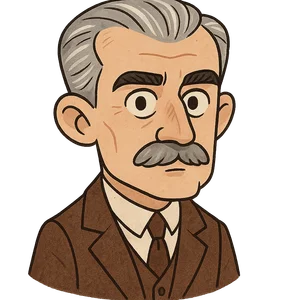
Maurice Ravel was a French composer, pianist, and conductor whose music shows features of Impressionism…
Reads at Grades 6–8 Listens at Grades 4–8
Print & create
Answer keys·No prep·Free with an account
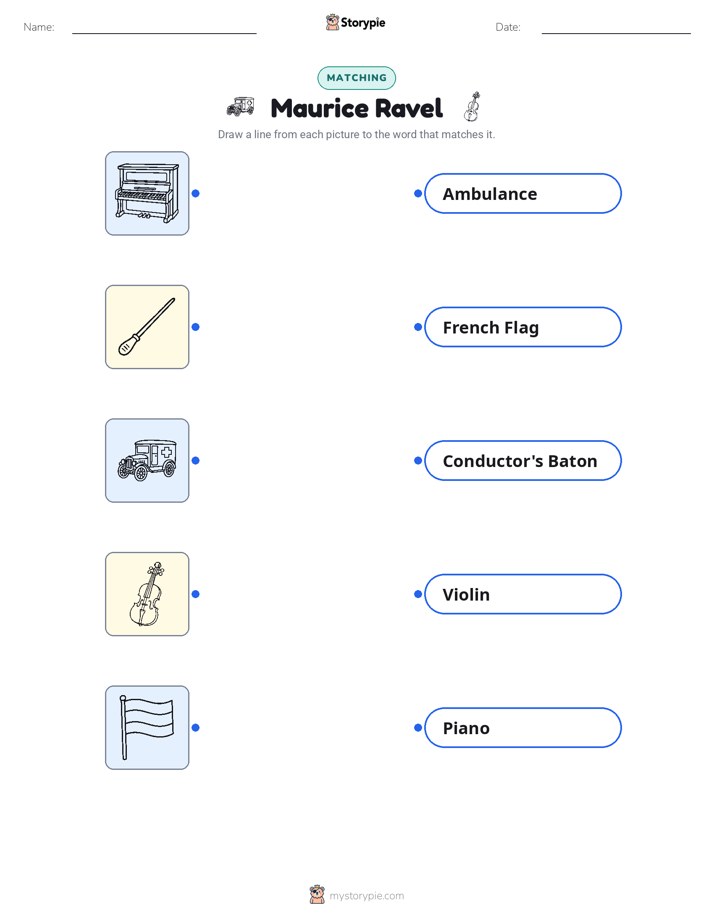
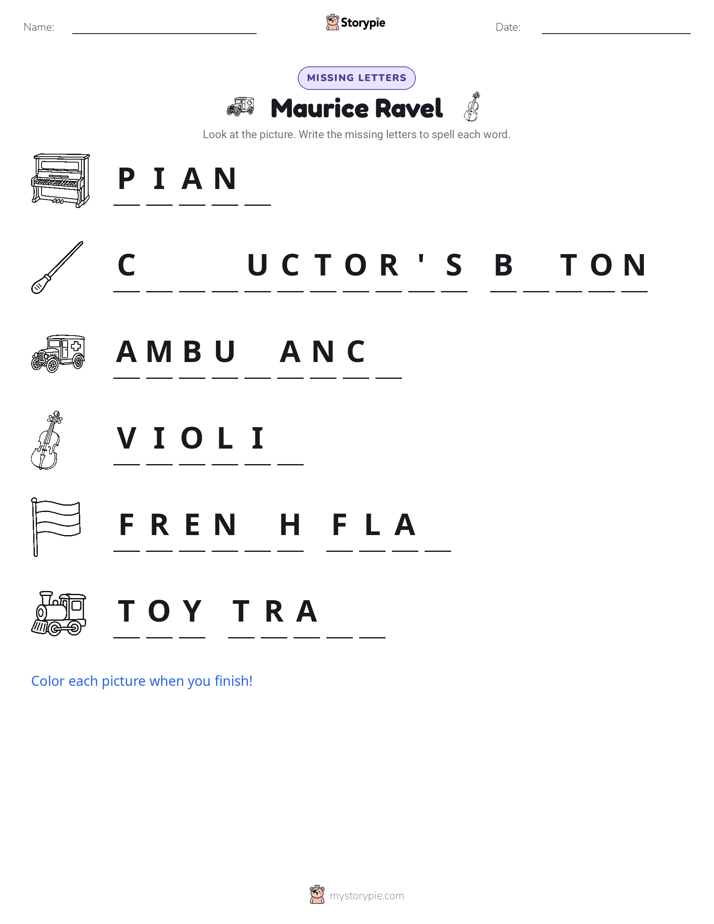
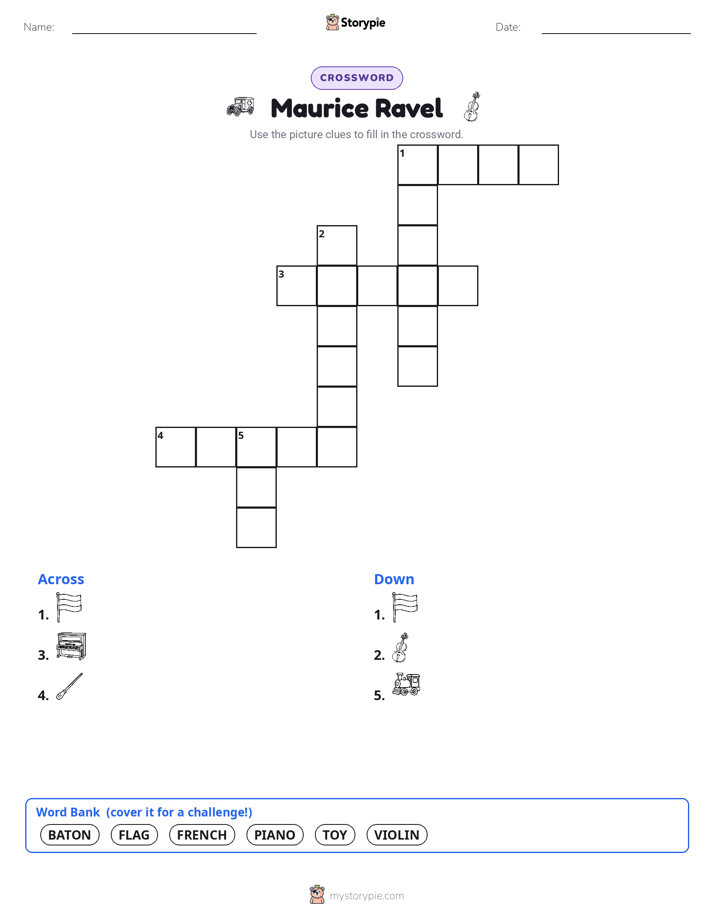
28 worksheets · answer keys · full story · quiz · Ages 10-12 · CEFR B2
Plus adds 244,000+ more stories in 27 languages, audio for every one, and printables for all of them.
Just want Maurice Ravel?
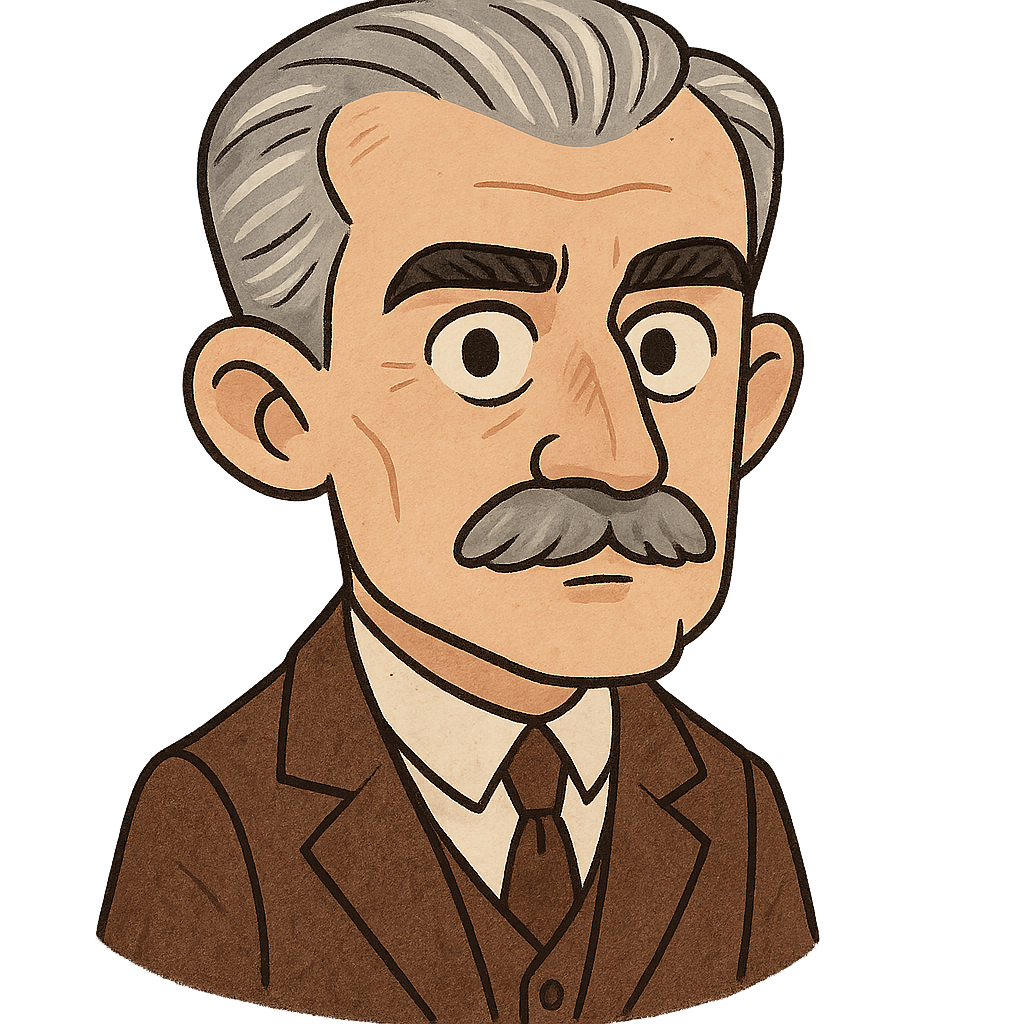
Hello! My name is Maurice Ravel, and I am a composer. I want to tell you the story of my life, which was filled with music from the very beginning. I was born on March 7th, 1875, in a lovely little town called Ciboure in the Basque country of France, right near the border with Spain. My father was a clever Swiss engineer and inventor, and my mother was of Basque heritage, which gave me a lifelong love for Spanish culture and music. From a young age, my parents saw that I had a special connection to music. They encouraged me, and I began piano lessons when I was just seven years old. I wasn't always the most dedicated student when it came to practicing scales, but I loved to experiment with sound and create my own little melodies. When I was 14, in 1889, my family and I moved to the bustling city of Paris, and I entered the famous Paris Conservatoire to officially begin my life as a musician.
The Paris Conservatoire was an exciting, and sometimes challenging, place. I studied with wonderful teachers, including the great composer Gabriel Fauré. I worked hard to learn the rules of music, but I was always more interested in finding my own unique way of expressing myself. During these years, I tried several times to win a very important award for young composers called the Prix de Rome, but I never succeeded. In 1905, when I was not allowed to compete in the final round, it caused quite a stir in the music world! But I didn't let it stop me. I was already composing pieces that people were beginning to notice. In 1899, I wrote a beautiful, gentle piano piece called *Pavane pour une infante défunte*, which means 'Pavane for a Dead Princess.' It wasn't about a real princess; I just liked the way the words sounded together. It became one of my most popular early works. I was finding my own voice, creating music that was precise, elegant, and full of shimmering colors, a bit like a detailed painting made of sound.
Maurice Ravel: A Master of Sound
Hello! My name is Maurice Ravel, and I am a composer. I want to tell you the story of my life, which was filled with music from the very beginning. I was born on March 7th, 1875, in a lovely little town called Ciboure in the Basque country of France, right near the border with Spain. My father was a clever Swiss engineer and inventor, and my mother was of Basque heritage, which gave me a lifelong love for Spanish culture and music. From a young age, my parents saw that I had a special connection to music. They encouraged me, and I began piano lessons when I was just seven years old. I wasn't always the most dedicated student when it came to practicing scales, but I loved to experiment with sound and create my own little melodies. When I was 14, in 1889, my family and I moved to the bustling city of Paris, and I entered the famous Paris Conservatoire to officially begin my life as a musician.
The Paris Conservatoire was an exciting, and sometimes challenging, place. I studied with wonderful teachers, including the great composer Gabriel Fauré. I worked hard to learn the rules of music, but I was always more interested in finding my own unique way of expressing myself. During these years, I tried several times to win a very important award for young composers called the Prix de Rome, but I never succeeded. In 1905, when I was not allowed to compete in the final round, it caused quite a stir in the music world! But I didn't let it stop me. I was already composing pieces that people were beginning to notice. In 1899, I wrote a beautiful, gentle piano piece called Pavane pour une infante défunte, which means 'Pavane for a Dead Princess.' It wasn't about a real princess; I just liked the way the words sounded together. It became one of my most popular early works. I was finding my own voice, creating music that was precise, elegant, and full of shimmering colors, a bit like a detailed painting made of sound.
Life changed for everyone when World War I began in 1914. I felt a strong duty to serve my country, France. Although I was small and not considered strong enough to be a soldier, I was determined to help. In 1915, I joined the army as an ambulance driver, transporting wounded soldiers from the front lines. The things I saw during the war were horrifying and changed me forever. During this difficult time, I also suffered a great personal loss when my beloved mother passed away in 1917. My heart was broken. After the war, I found it hard to compose, but I channeled my feelings into my music. I wrote a piano suite called Le Tombeau de Couperin. Each movement was dedicated to a friend I had lost in the war. It wasn't a sad piece, though. Instead, it was a tribute to their spirits, filled with the elegance and beauty of 18th-century French music that I loved so much.
By the 1920s, my music was being played all over the world. In 1928, I went on a grand tour of the United States and Canada. It was an amazing experience! I met many American musicians and was fascinated by their new style of music called jazz. I even met the famous composer George Gershwin. That same year, 1928, I composed what would become my most famous piece of all, but it started as a simple experiment. A dancer named Ida Rubinstein asked me to write a ballet with a Spanish character. I decided to try something unusual: I wrote a single, long, slow melody and repeated it over and over again, but with a different combination of instruments each time. The music gets louder and louder until a dramatic finish. This piece was Boléro. I was surprised by how popular it became! I once joked that it was my greatest masterpiece, but unfortunately, it contained no music.
My later years were quieter. In 1932, I was in a taxi accident that left me with health problems that made it very difficult for me to write music. It was frustrating to have so many musical ideas in my head but be unable to write them down. I spent my final years living in my country home, surrounded by friends and my collections of little toys and trinkets. I lived to be 62 years old and passed away on December 28th, 1937. Today, people remember me as a master of orchestration—the art of combining instruments to create amazing sounds. My music, from the powerful rhythm of Boléro to the delicate notes of my piano pieces, is still played by orchestras and musicians all around the globe, carrying my musical stories to new generations.
Wow facts
About
Maurice Ravel was a French composer, pianist, and conductor whose music shows features of Impressionism, but he himself did not like being called an Impressionist. He is best known for his masterpiece, 'Boléro'.
Take a Quiz
Question 1 of 5
In your own words, what was unique about the musical structure of Ravel's most famous piece, *Boléro*?
Explore next






Want to do even more?
Go beyond exploring. Unlock tools that turn every story into real learning.

Storypie Plus for families
Full stories, quizzes, and printables. Nights and car rides, sorted.
- Unlimited audio stories
- Create Mode: your child stars in the story
- Offline downloads
- Printable worksheets & coloring pages

Why Storypie for Schools
Students engaged. Prep in seconds. Evenings back to you.
- Worksheets & Quizzes
- Classroom Management
- Formative Assessment
- Custom Curriculum & Lesson Plans
- 27 Languages

Why Storypie for Homeschool
Curriculum done. They'll ask for more. Hours back in your day.
- Worksheet Generator
- First-Person Audio Stories
- Built-in Comprehension Quizzes
- Custom Curriculum & Lesson Plans
- Print & Go Activities