English

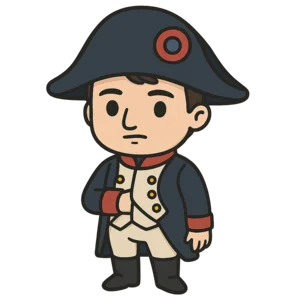
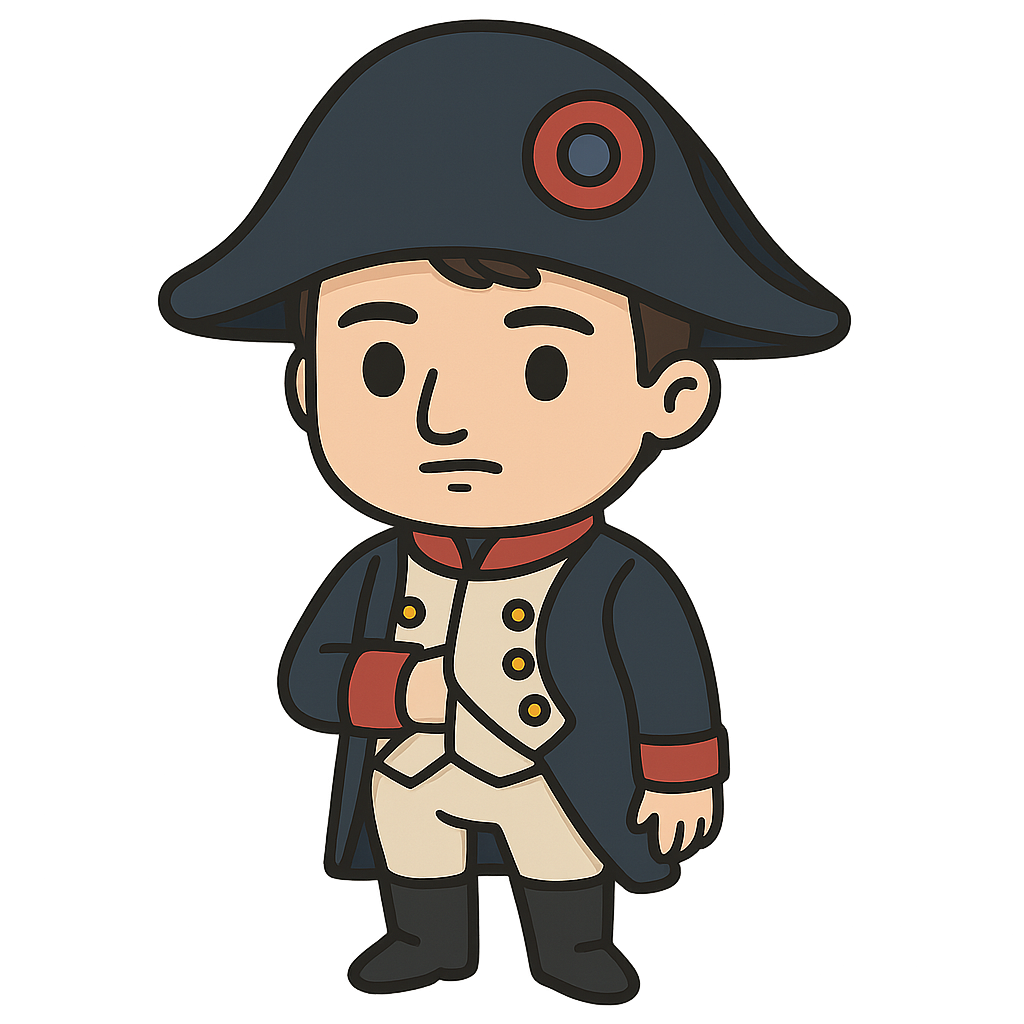
Napoleon Bonaparte
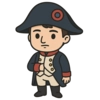
A French military and political leader who rose to prominence during the French Revolution.
Reads at Grades 3–5 Listens at Grades 1–5
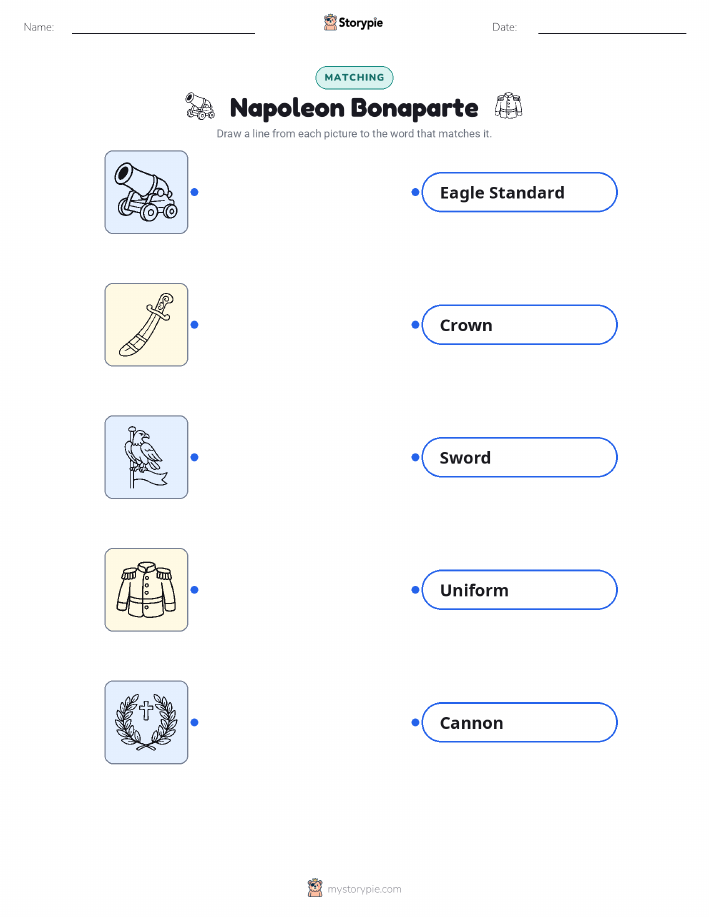
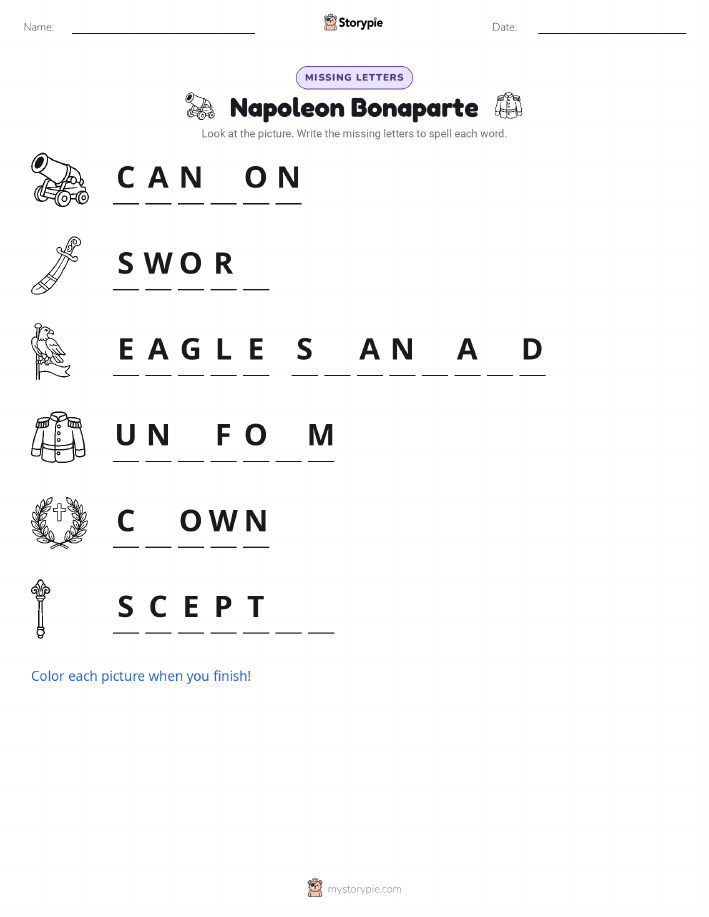
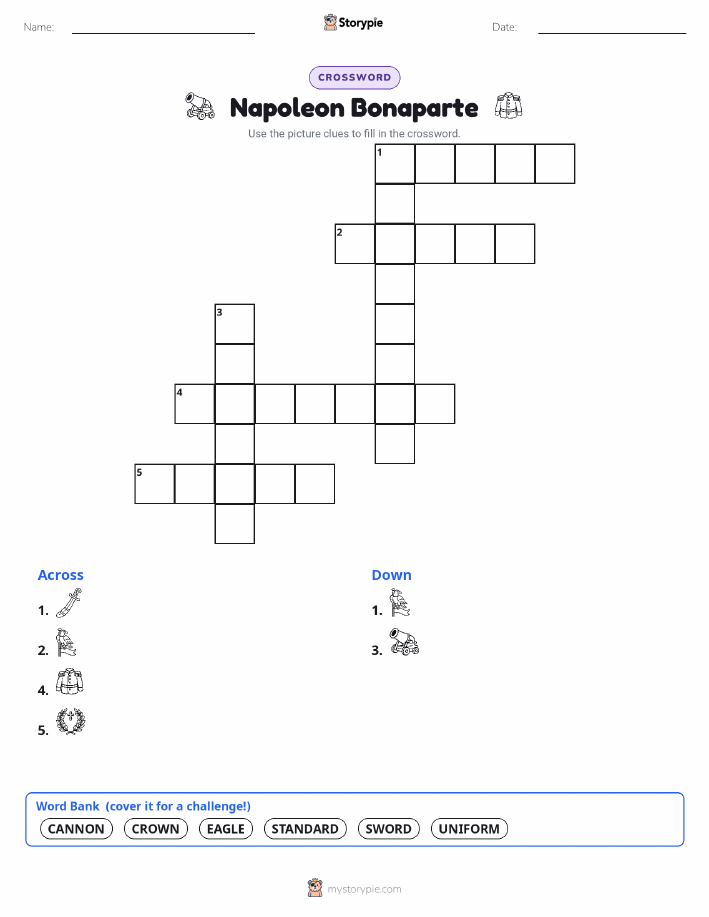
Print & create
Answer keys·No prep·Free with an account
28 worksheets · answer keys · full story · quiz · Ages 8-10 · CEFR B1
Plus adds 244,000+ more stories in 27 languages, audio for every one, and printables for all of them.
Just want Napoleon Bonaparte?
Hello, my name is Napoleon Bonaparte, and I want to tell you my story. It begins not in France, where I would one day rule, but on a sunny little island in the Mediterranean Sea called Corsica, where I was born in 1769. As a boy, I wasn't interested in simple games. Instead, my head was filled with stories of great leaders from history, like Alexander the Great and Julius Caesar. I would spend hours reading their tales and imagining myself as a general leading armies. My favorite toys were my toy soldiers, and I would arrange them in complex battle formations, planning strategies and imagining great victories. When I was just nine years old, I was sent to a military school in France. It was a difficult time. I spoke with a Corsican accent, and the other boys, who were mostly from rich French families, made fun of me. I felt like an outsider, but that feeling only made me work harder. I buried myself in books, especially math and history. I knew that if I couldn't win them over with my family name, I would win their respect with my mind. I was determined to prove that a boy from a small island could become someone great.
As I grew up, France was going through a very chaotic time called the French Revolution. The king and queen were gone, and nobody knew who was in charge. There was a lot of fighting and confusion. This was my chance to use everything I had learned. I joined the French army as an officer, and soon people started to notice me. In 1793, at the battle of Toulon, I used my knowledge of artillery to come up with a clever plan that helped us win a major victory. My soldiers began to trust me because my strategies were bold and often worked. I wasn't afraid to lead from the front, and they saw my bravery. I won more battles in Italy and even in Egypt, and with each victory, my name became more famous throughout France. The people were tired of chaos and wanted a strong leader to bring back order. They saw that leader in me. In 1799, I returned to Paris as a hero. With the support of the people and the army, I took charge of the government, becoming the leader of France with the title of First Consul. My first job was to bring peace and stability back to our country.
My Story, by Napoleon Bonaparte
Hello, my name is Napoleon Bonaparte, and I want to tell you my story. It begins not in France, where I would one day rule, but on a sunny little island in the Mediterranean Sea called Corsica, where I was born in 1769. As a boy, I wasn't interested in simple games. Instead, my head was filled with stories of great leaders from history, like Alexander the Great and Julius Caesar. I would spend hours reading their tales and imagining myself as a general leading armies. My favorite toys were my toy soldiers, and I would arrange them in complex battle formations, planning strategies and imagining great victories. When I was just nine years old, I was sent to a military school in France. It was a difficult time. I spoke with a Corsican accent, and the other boys, who were mostly from rich French families, made fun of me. I felt like an outsider, but that feeling only made me work harder. I buried myself in books, especially math and history. I knew that if I couldn't win them over with my family name, I would win their respect with my mind. I was determined to prove that a boy from a small island could become someone great.
As I grew up, France was going through a very chaotic time called the French Revolution. The king and queen were gone, and nobody knew who was in charge. There was a lot of fighting and confusion. This was my chance to use everything I had learned. I joined the French army as an officer, and soon people started to notice me. In 1793, at the battle of Toulon, I used my knowledge of artillery to come up with a clever plan that helped us win a major victory. My soldiers began to trust me because my strategies were bold and often worked. I wasn't afraid to lead from the front, and they saw my bravery. I won more battles in Italy and even in Egypt, and with each victory, my name became more famous throughout France. The people were tired of chaos and wanted a strong leader to bring back order. They saw that leader in me. In 1799, I returned to Paris as a hero. With the support of the people and the army, I took charge of the government, becoming the leader of France with the title of First Consul. My first job was to bring peace and stability back to our country.
Once France was stable, I felt I could do even more. I didn't just want to be a leader; I wanted to build an empire that would be remembered forever. In 1804, in a grand ceremony at the Notre Dame Cathedral, I crowned myself Emperor of the French. My dear wife, Joséphine, was crowned Empress beside me. As emperor, I worked to make France the most powerful and modern nation in Europe. One of my proudest achievements was creating a new set of laws for everyone, which became known as the Napoleonic Code. Before, laws were confusing and different from town to town. My code made sure that laws were the same for all citizens, and it protected things like property and individual freedom. It was so successful that many other countries adopted it. I also ordered the building of new roads, bridges, and canals to connect the country, and I opened new schools to improve education. Of course, being an emperor also meant leading my army. For years, my Grand Army marched across Europe, winning incredible victories at battles like Austerlitz and Jena. My empire grew until it stretched from Spain to Poland, and my family members were placed on the thrones of other nations. For a time, it seemed like nothing could stop me.
But an emperor's grip can weaken, and my ambition led me to make my biggest mistake. In 1812, I decided to invade the vast and cold country of Russia. I gathered the largest European army ever seen, over half a million soldiers, and we marched toward Moscow. We won the battles, but we could not defeat the Russian winter. The snow and freezing temperatures were a more terrible enemy than any army. My soldiers were starving and cold, and the long march back home was a disaster. Most of my great army was lost in the snow. This terrible defeat showed my enemies in other countries—like Britain, Prussia, and Austria—that I was not unbeatable. They joined forces against me, and in 1814, they captured Paris. I was forced to give up my throne and was sent to live on the small island of Elba. But my story wasn't over. I escaped Elba in 1815, returned to France, and raised another army. But my final stand came at a battle in Belgium called Waterloo. There, I faced my great rival, the Duke of Wellington, and his British and Prussian allies. After a long and difficult day of fighting, my army was defeated for the last time.
After Waterloo, I was sent away again, but this time to a faraway, lonely island in the middle of the Atlantic Ocean called Saint Helena. There would be no escape. I spent the last six years of my life there, thinking and writing about my incredible journey. In 1821, my life ended on that rocky island. Looking back, my life was filled with amazing victories and terrible defeats. Some remember me as a tyrant who wanted to conquer the world, while others see me as a great leader who brought modern ideas to Europe. I believe my true legacy is not in the battles I won or lost, but in the changes I made. The Napoleonic Code, my system of fair laws, is still the basis for legal systems in France and many other countries around the world. My ideas about government, education, and organization spread far and wide. So, while my empire is gone, my impact on history remains, proving that a boy from a small island can indeed change the world.
Wow facts
About
A French military and political leader who rose to prominence during the French Revolution. He was Emperor of the French from 1804 to 1814 and again in 1815.
Take a Quiz
Question 1 of 5
Why did Napoleon feel like an 'outsider' when he first went to military school in France?
Explore next

Want to do even more?
Go beyond exploring. Unlock tools that turn every story into real learning.

Storypie Plus for families
Full stories, quizzes, and printables. Nights and car rides, sorted.
- Unlimited audio stories
- Create Mode: your child stars in the story
- Offline downloads
- Printable worksheets & coloring pages

Why Storypie for Schools
Students engaged. Prep in seconds. Evenings back to you.
- Worksheets & Quizzes
- Classroom Management
- Formative Assessment
- Custom Curriculum & Lesson Plans
- 27 Languages

Why Storypie for Homeschool
Curriculum done. They'll ask for more. Hours back in your day.
- Worksheet Generator
- First-Person Audio Stories
- Built-in Comprehension Quizzes
- Custom Curriculum & Lesson Plans
- Print & Go Activities