English

Ötzi
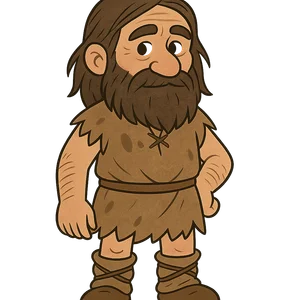
Ötzi is the well-preserved natural mummy of a man who lived during the Copper Age, between 3350 and 3110 BCE.
Reads at Grades 6–8 Listens at Grades 4–8
Print & create
Answer keys·No prep·Free with an account
28 worksheets · answer keys · full story · quiz · Ages 10-12 · CEFR B2
Plus adds 244,000+ more stories in 27 languages, audio for every one, and printables for all of them.
Just want Ötzi?
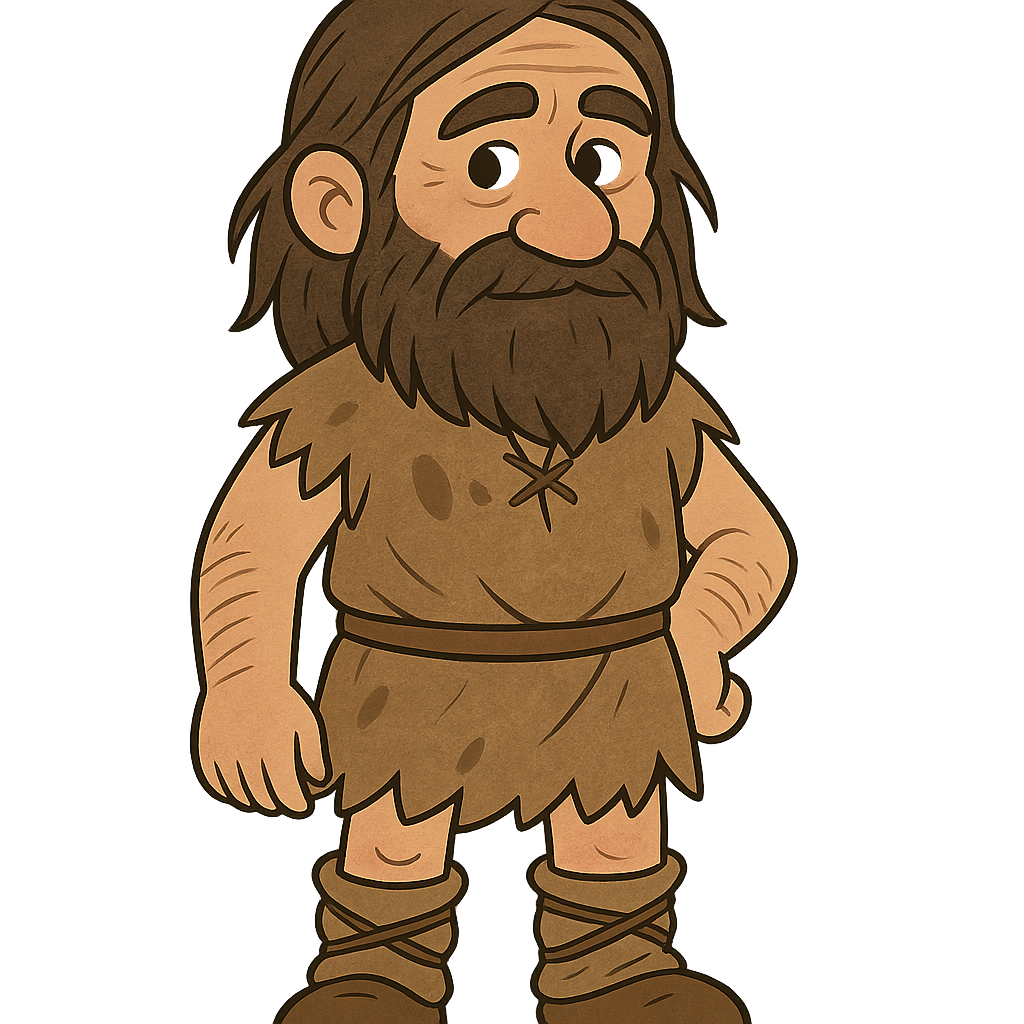
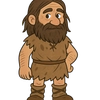
Hello. You may know me by the name scientists have given me: Ötzi, the Iceman. I am a voice from a time you can only read about in books, a world that existed over 5,300 years ago. My home was in the high, rugged mountains that you now call the Alps. When I walked the earth, the world was in a period known as the Copper Age, a time of great change when people were first learning to use metal. My story is not one I ever expected to tell, as it was frozen in ice for thousands of years, waiting for the world to change before I could be found. I want to tell you about my life, my final journey, and how I became an accidental traveler through time.
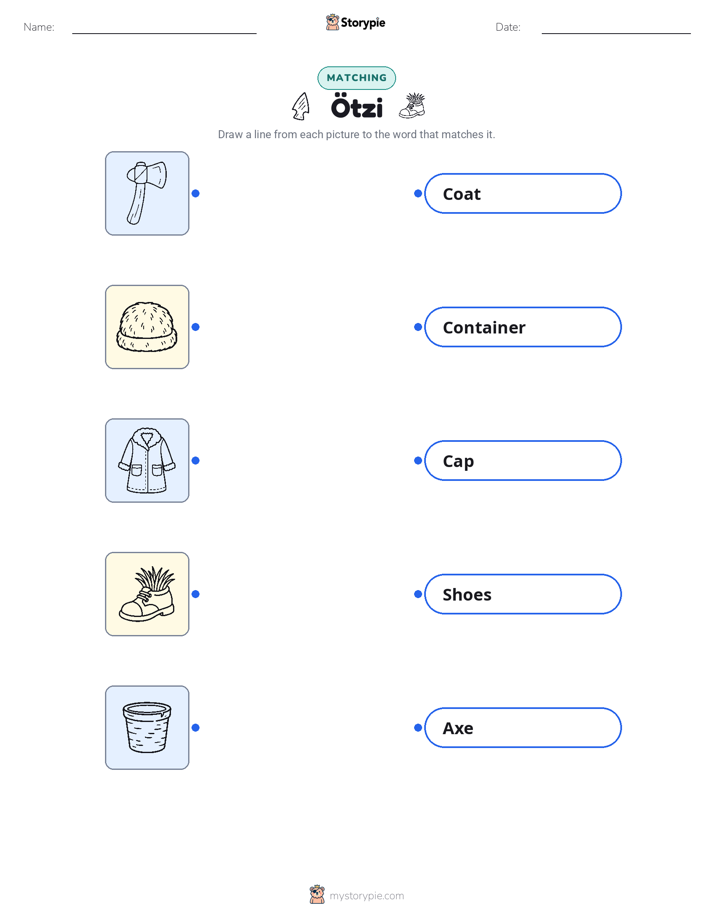
My life took place around 3300 BCE, during what is called the Chalcolithic period, or the Copper Age. My world was one of wood, stone, and the exciting new material, copper. I was a man of the mountains, and it is likely that I was a herdsman, guiding animals like sheep and goats through the high pastures. I belonged to a small community, where everyone had to work together to survive the harsh seasons. We relied on our knowledge of the land, the plants, and the animals. The greatest technological shift of my time was the use of copper. I carried a tool that was very valuable and a symbol of status: a copper-bladed axe. This axe was not just a tool for chopping wood; it showed that I was a person of some importance and that our people had the skill to shape metal, a craft that was changing the way we lived and worked.
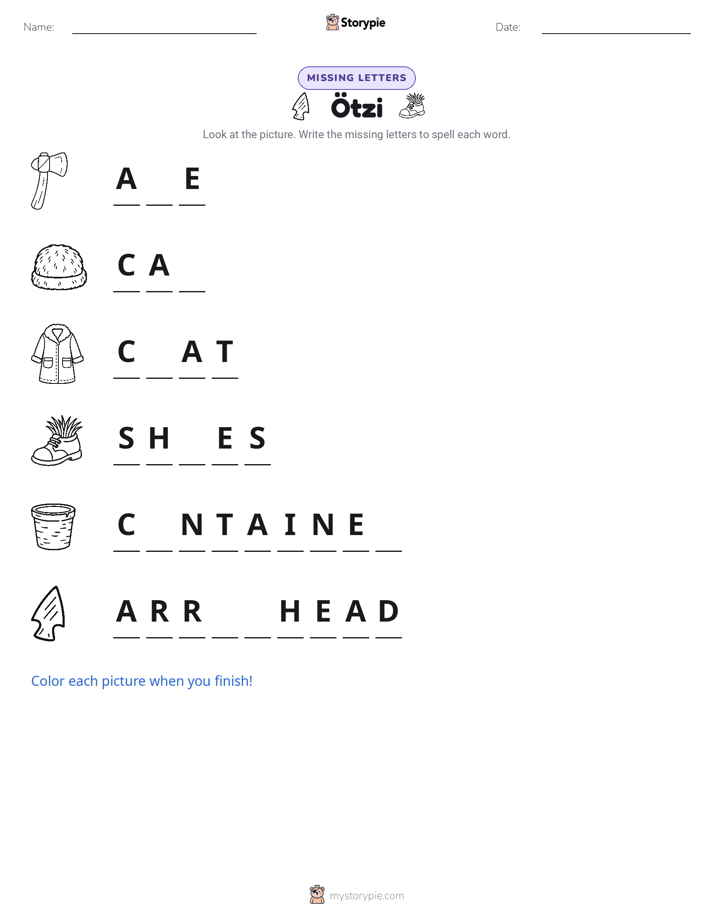
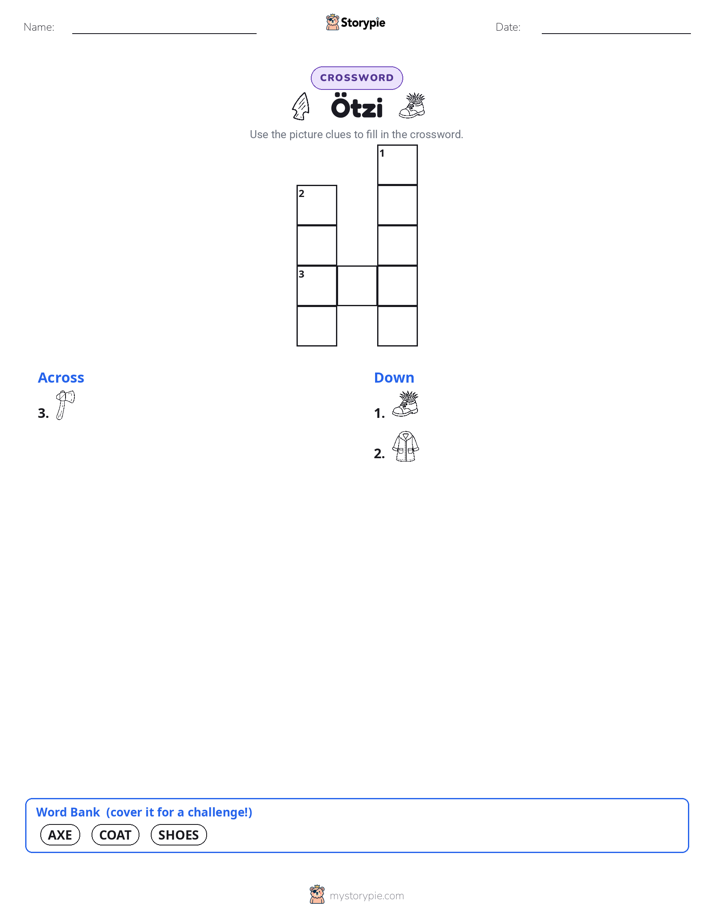
Surviving in the Alps required skill and the right equipment, and I was well-prepared. My clothing was complex and perfectly suited for the cold mountain environment. On my head, I wore a cap made from the fur of a brown bear. My long coat was carefully made from stitched-together hides of both sheep and goat, designed to keep me warm and dry. My shoes were especially clever; they were made from different types of leather and insulated with grass to protect my feet from the biting cold and the rough terrain. I also carried a collection of important tools for survival. I had a longbow made from yew wood and a quiver filled with arrows, ready for hunting or defense. I also carried two birch bark containers. One was for carrying food or supplies, but the other held something precious: embers from a fire, carefully wrapped in maple leaves, so I could start a new fire wherever my journey took me.
Ötzi the Iceman
Hello. You may know me by the name scientists have given me: Ötzi, the Iceman. I am a voice from a time you can only read about in books, a world that existed over 5,300 years ago. My home was in the high, rugged mountains that you now call the Alps. When I walked the earth, the world was in a period known as the Copper Age, a time of great change when people were first learning to use metal. My story is not one I ever expected to tell, as it was frozen in ice for thousands of years, waiting for the world to change before I could be found. I want to tell you about my life, my final journey, and how I became an accidental traveler through time.
My life took place around 3300 BCE, during what is called the Chalcolithic period, or the Copper Age. My world was one of wood, stone, and the exciting new material, copper. I was a man of the mountains, and it is likely that I was a herdsman, guiding animals like sheep and goats through the high pastures. I belonged to a small community, where everyone had to work together to survive the harsh seasons. We relied on our knowledge of the land, the plants, and the animals. The greatest technological shift of my time was the use of copper. I carried a tool that was very valuable and a symbol of status: a copper-bladed axe. This axe was not just a tool for chopping wood; it showed that I was a person of some importance and that our people had the skill to shape metal, a craft that was changing the way we lived and worked.
Surviving in the Alps required skill and the right equipment, and I was well-prepared. My clothing was complex and perfectly suited for the cold mountain environment. On my head, I wore a cap made from the fur of a brown bear. My long coat was carefully made from stitched-together hides of both sheep and goat, designed to keep me warm and dry. My shoes were especially clever; they were made from different types of leather and insulated with grass to protect my feet from the biting cold and the rough terrain. I also carried a collection of important tools for survival. I had a longbow made from yew wood and a quiver filled with arrows, ready for hunting or defense. I also carried two birch bark containers. One was for carrying food or supplies, but the other held something precious: embers from a fire, carefully wrapped in maple leaves, so I could start a new fire wherever my journey took me.
My life came to an end when I was about 45 years old, during a journey that would be my last. The evidence found with my body suggests I was fleeing from a conflict. A deep, unhealed defensive wound on my hand shows that I had been in a fight just days before I made my final climb. I was traveling high into a mountain pass, perhaps trying to find safety or escape an enemy. It was there, alone in the vast, cold landscape, that I was struck from behind by an arrowhead that lodged in my shoulder. The injury was severe, and I was losing strength. I found a shallow gully and settled into it to rest, hoping to recover. But my strength faded, and my life ended there in that rocky hollow. Soon after, a storm moved in and covered me with snow. Over time, that snow turned into a glacier, and the ice became my tomb, preserving me perfectly for thousands of years.
For 5,300 years, I lay undisturbed, frozen in time as the world outside the ice changed in ways I could never have imagined. Civilizations rose and fell, new technologies were invented, and the mountains themselves were renamed. The glacier that held me moved slowly, but it kept me safe and almost perfectly preserved. Then, the world began to warm. On September 19th, 1991, two German hikers named Helmut and Erika Simon were walking off the main path in the mountains. Because the glacier had melted more than usual that summer, they spotted my body emerging from the ice. They thought they had found a modern mountaineer who had recently had an accident. They had no idea they were looking at a man who had lived more than five millennia ago. In that moment, I became an accidental time traveler, waking from the ice into a new world.
I lived to be about 45 years old. When my journey ended in that mountain pass, I could never have known that my story was just beginning. My body, my clothing, and all the tools I carried with me have become a remarkable 'time capsule' for the people of your time. Because I was so perfectly preserved, scientists have been able to learn things they never knew about life in the Copper Age. They have studied my health, the food I ate, the clothes I wore, and the technology I used. I have given them a direct window into a long-lost world. Today, my story continues to teach people about their ancient past. I now rest in a specially designed cold cell at the South Tyrol Museum of Archaeology in Bolzano, Italy, where people from all over the world can learn from the man who came out of the ice.
Wow facts
About
Ötzi is the well-preserved natural mummy of a man who lived during the Copper Age, between 3350 and 3110 BCE. His body and belongings were discovered in 1991, frozen in a glacier in the Ötztal Alps.
Take a Quiz
Question 1 of 5
What evidence from the story suggests that Ötzi was involved in a conflict before his final journey?
Explore next






Want to do even more?
Go beyond exploring. Unlock tools that turn every story into real learning.

Storypie Plus for families
Full stories, quizzes, and printables. Nights and car rides, sorted.
- Unlimited audio stories
- Create Mode: your child stars in the story
- Offline downloads
- Printable worksheets & coloring pages

Why Storypie for Schools
Students engaged. Prep in seconds. Evenings back to you.
- Worksheets & Quizzes
- Classroom Management
- Formative Assessment
- Custom Curriculum & Lesson Plans
- 27 Languages

Why Storypie for Homeschool
Curriculum done. They'll ask for more. Hours back in your day.
- Worksheet Generator
- First-Person Audio Stories
- Built-in Comprehension Quizzes
- Custom Curriculum & Lesson Plans
- Print & Go Activities