English

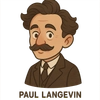
Paul Langevin
Paul Langevin was a prominent French physicist and inventor known for his work on magnetism and for showing…
Reads at Grades 6–8 Listens at Grades 4–8
Print & create
Answer keys·No prep·Free with an account
28 worksheets · answer keys · full story · quiz · Ages 10-12 · CEFR B2
Plus adds 244,000+ more stories in 27 languages, audio for every one, and printables for all of them.
Just want Paul Langevin?
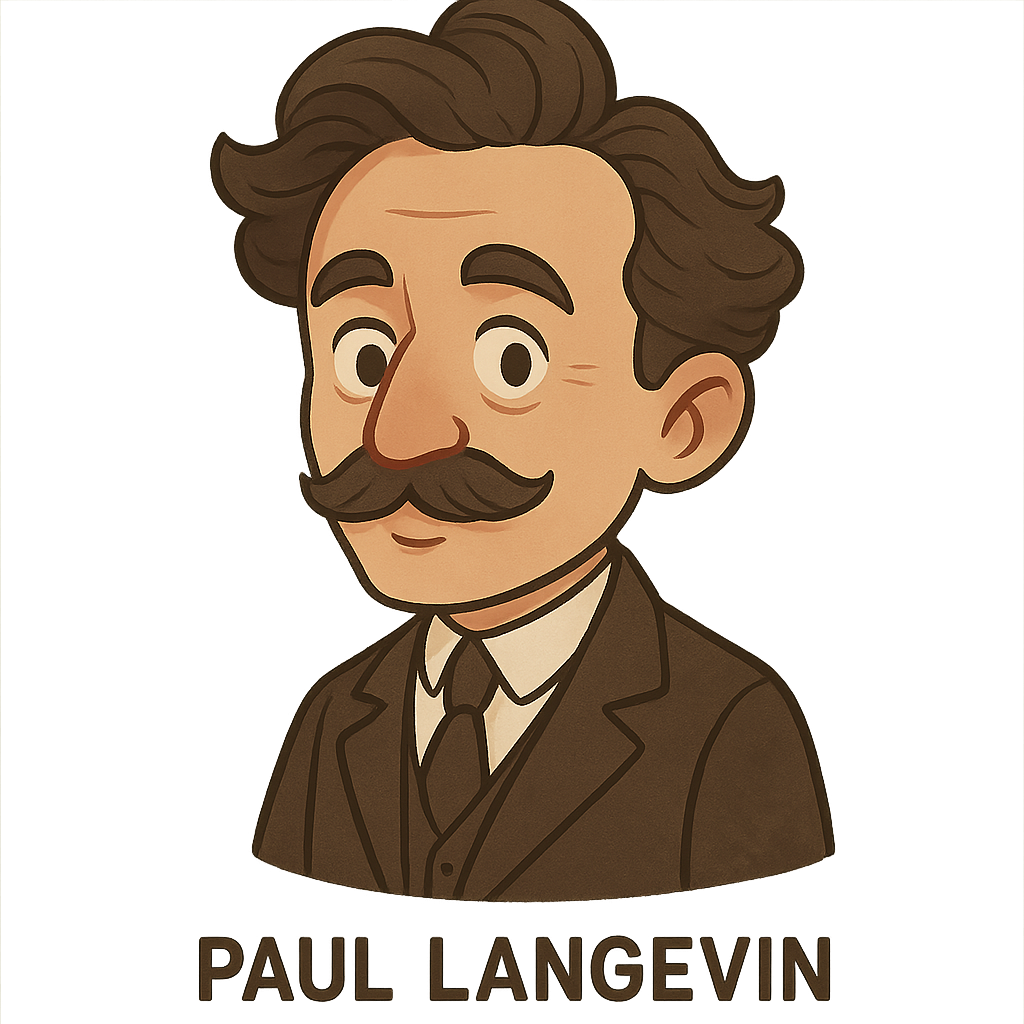
Hello! My name is Paul Langevin, and I want to tell you my story. I was born in the beautiful city of Paris, France, on January 23rd, 1872. As a boy, I wasn't just interested in playing games; I was fascinated by how the world worked. I loved taking things apart to see their inner workings and was always asking questions. My parents saw my curiosity and encouraged my love for learning. This passion led me to study at some of the best schools in France. In 1888, I began my studies at the École de Physique et de Chimie Industrielles. Later, in 1894, I entered the prestigious École Normale Supérieure. I knew from a young age that I wanted to spend my life uncovering the secrets of science.
My studies took me on an incredible journey into a world too small to see. In 1897, I traveled to England to work at the famous Cavendish Laboratory at Cambridge University, where I dove into the study of ions and X-rays. When I returned to Paris, I focused my research on magnetism. Have you ever wondered why a magnet sticks to a refrigerator? I wanted to understand the forces behind it at the level of atoms and their tiny particles, called electrons. I developed theories to explain different types of magnetism, which are now called paramagnetism and diamagnetism. My work earned me my doctorate degree from the Sorbonne in 1902. By 1909, I became a professor at the famous Collège de France. There, I had the honor of teaching and working alongside some of the greatest scientific minds of my time, including my dear friends Pierre and Marie Curie, and later, the brilliant Albert Einstein. We would spend hours discussing ideas that would change the way we understood the universe.
Paul Langevin
Hello! My name is Paul Langevin, and I want to tell you my story. I was born in the beautiful city of Paris, France, on January 23rd, 1872. As a boy, I wasn't just interested in playing games; I was fascinated by how the world worked. I loved taking things apart to see their inner workings and was always asking questions. My parents saw my curiosity and encouraged my love for learning. This passion led me to study at some of the best schools in France. In 1888, I began my studies at the École de Physique et de Chimie Industrielles. Later, in 1894, I entered the prestigious École Normale Supérieure. I knew from a young age that I wanted to spend my life uncovering the secrets of science.
My studies took me on an incredible journey into a world too small to see. In 1897, I traveled to England to work at the famous Cavendish Laboratory at Cambridge University, where I dove into the study of ions and X-rays. When I returned to Paris, I focused my research on magnetism. Have you ever wondered why a magnet sticks to a refrigerator? I wanted to understand the forces behind it at the level of atoms and their tiny particles, called electrons. I developed theories to explain different types of magnetism, which are now called paramagnetism and diamagnetism. My work earned me my doctorate degree from the Sorbonne in 1902. By 1909, I became a professor at the famous Collège de France. There, I had the honor of teaching and working alongside some of the greatest scientific minds of my time, including my dear friends Pierre and Marie Curie, and later, the brilliant Albert Einstein. We would spend hours discussing ideas that would change the way we understood the universe.
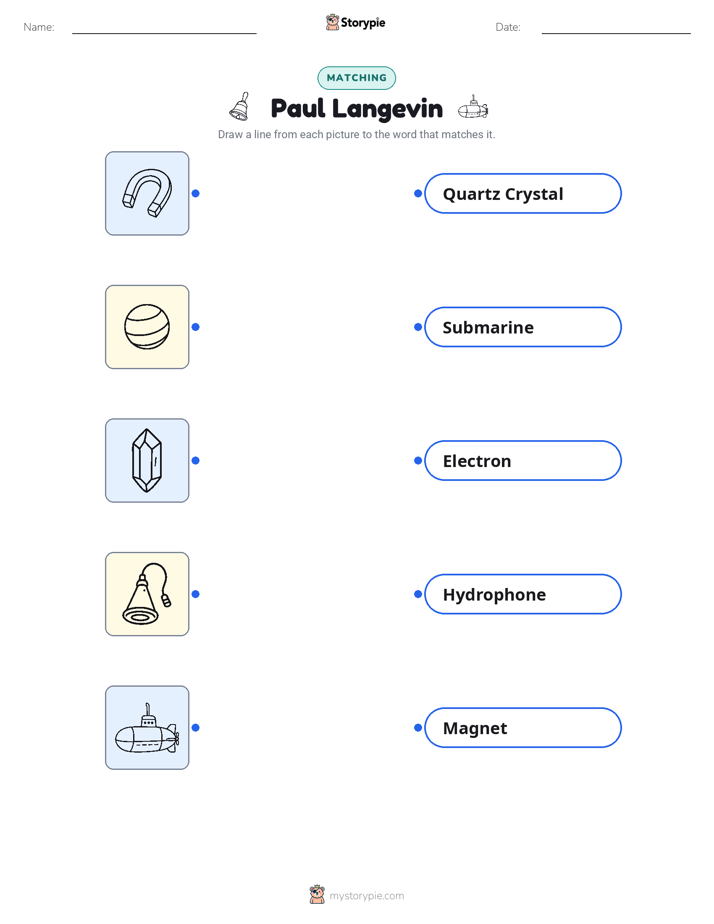
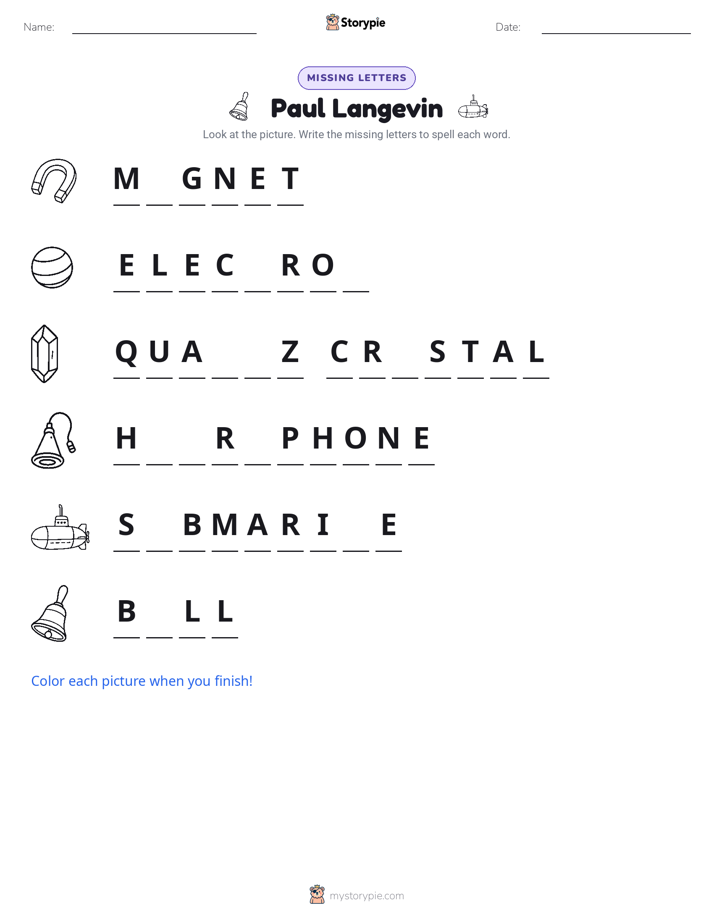
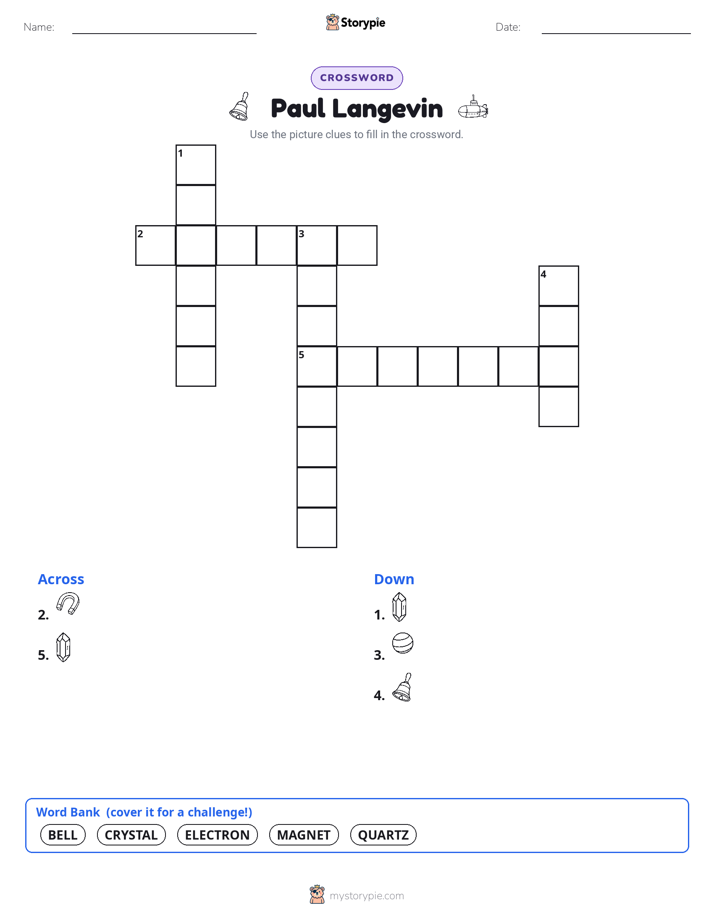
In 1914, a terrible event changed the world: World War I began. The seas became a dangerous place, with enemy submarines called U-boats hiding beneath the waves. I knew that science, which I loved for its ability to explain the world, could also be used to protect people. I was asked to help find a way to detect these submarines. My idea was to use sound, but not just any sound. I worked with very high-frequency sound waves, called ultrasound, which are too high for humans to hear. I discovered that I could use a special property of quartz crystals, called the piezoelectric effect, to send out a powerful ultrasonic 'ping' into the water. If that ping hit something, like a submarine, an echo would bounce back. By listening for that echo with a sensitive underwater microphone, or hydrophone, we could tell where the hidden object was. Between 1916 and 1918, my team and I developed this technology, which became the world's first active sonar system. We had created a way to 'see' with sound.
After World War I ended in 1918, I couldn't forget the destruction it caused. I believed strongly that science should be a force for good, used to build a better world, not to destroy it. I became a public voice against fascism, a political movement that was growing in Europe and threatened peace and freedom. I spoke out for what I believed in, even when it was dangerous. When World War II began, my open opposition to the Nazis put me at great risk. In 1940, I was arrested in Paris by the Gestapo, the secret police. I was placed under house arrest, but my spirit wasn't broken. With the help of friends, I managed to escape to Switzerland in 1944, where I stayed until France was liberated from Nazi occupation.
I returned to my beloved Paris after the war and continued my work. I lived to be 74 years old, passing away in 1946. Today, the technology I developed to find submarines has amazing uses I never could have imagined. Sonar is used to map the deepest parts of the ocean floor, help fishing boats find schools of fish, and even in medicine, where ultrasounds let doctors see inside the human body without ever making a cut. I hope you remember me not just as a scientist who listened for echoes in the dark, but as someone who believed in using knowledge to create a more peaceful and just world for everyone.
Wow facts
About
Paul Langevin was a prominent French physicist and inventor known for his work on magnetism and for showing that special crystals could be used to send and receive sound waves called ultrasound to help find submarines during World War I. However, this system was not ready to use before the war ended.
Take a Quiz
Question 1 of 5
What was the main problem that Paul Langevin's sonar invention was designed to solve during World War I?
Explore next





Want to do even more?
Go beyond exploring. Unlock tools that turn every story into real learning.

Storypie Plus for families
Full stories, quizzes, and printables. Nights and car rides, sorted.
- Unlimited audio stories
- Create Mode: your child stars in the story
- Offline downloads
- Printable worksheets & coloring pages

Why Storypie for Schools
Students engaged. Prep in seconds. Evenings back to you.
- Worksheets & Quizzes
- Classroom Management
- Formative Assessment
- Custom Curriculum & Lesson Plans
- 27 Languages

Why Storypie for Homeschool
Curriculum done. They'll ask for more. Hours back in your day.
- Worksheet Generator
- First-Person Audio Stories
- Built-in Comprehension Quizzes
- Custom Curriculum & Lesson Plans
- Print & Go Activities