English

Paul Langevin
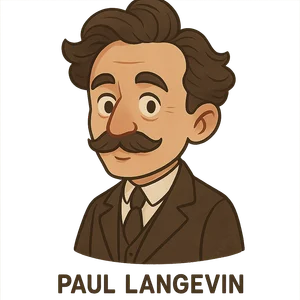
Paul Langevin was a prominent French physicist and inventor known for his work on magnetism and for showing…
Reads at Grades 3–5 Listens at Grades 1–5
Print & create
Answer keys·No prep·Free with an account
28 worksheets · answer keys · full story · quiz · Ages 8-10 · CEFR B1
Plus adds 244,000+ more stories in 27 languages, audio for every one, and printables for all of them.
Just want Paul Langevin?
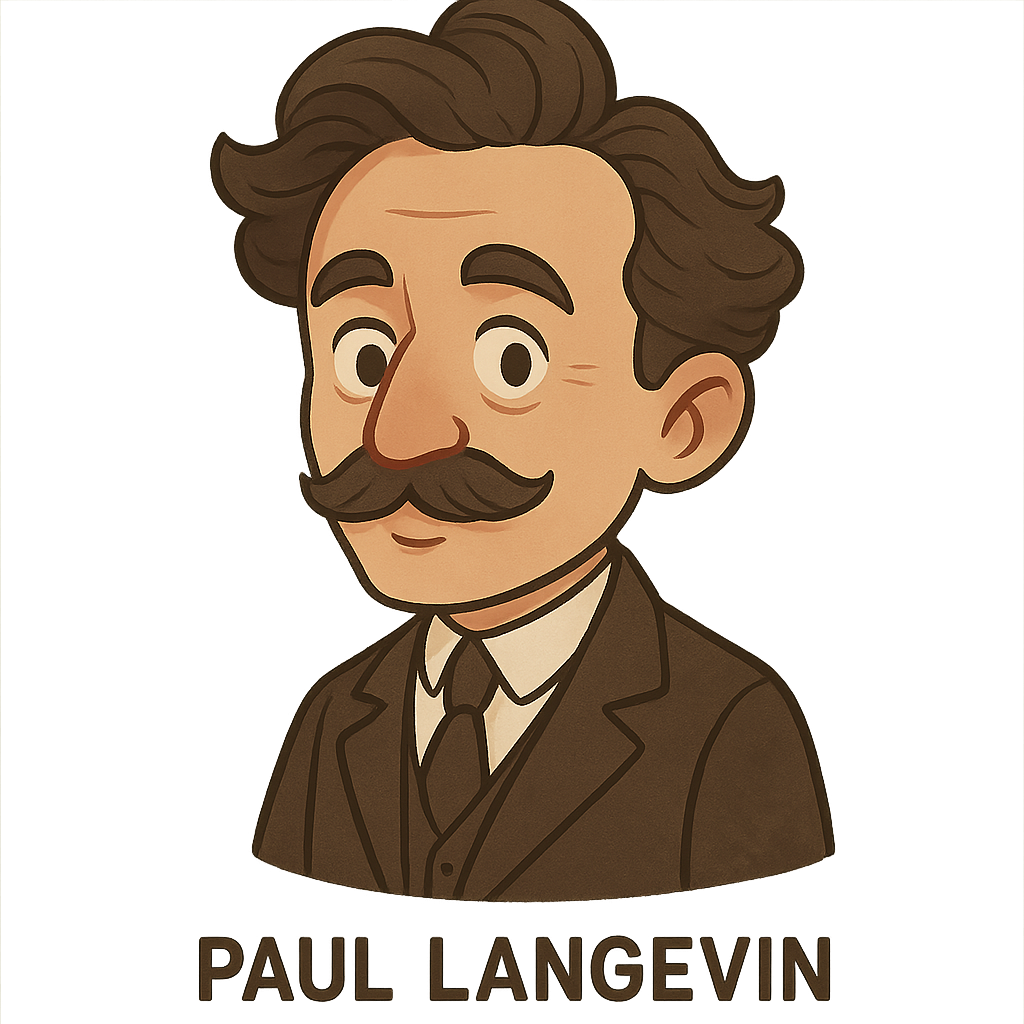
Hello! My name is Paul Langevin. I was a scientist who spent my life asking questions and searching for answers about the invisible forces that shape our world. I was born in the beautiful city of Paris, France, on January 23rd, 1872. Even as a little boy, I was incredibly curious. I loved taking things apart, like clocks and toys, just to see how all the little pieces fit together. My parents always encouraged my curiosity, which set me on a path to a lifetime of discovery.
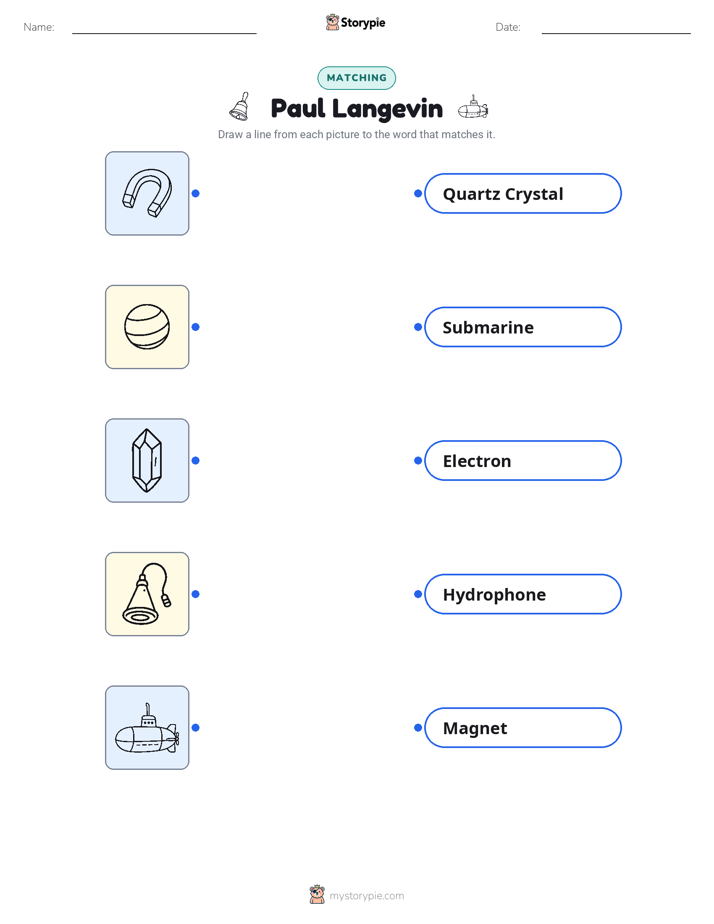
My love for learning took me to some of the best schools in Paris. I wanted to understand everything about physics, which is the study of matter and energy. In 1897, I even traveled to England to study at the famous Cavendish Laboratory. When I returned to Paris, I had the great honor of studying with a brilliant scientist named Pierre Curie. He taught me so much about how to conduct experiments and think like a true scientist. In 1902, I earned my doctorate degree. A few years later, in 1905, I came up with some important ideas that helped explain magnetism—that invisible force that makes magnets stick to metal!
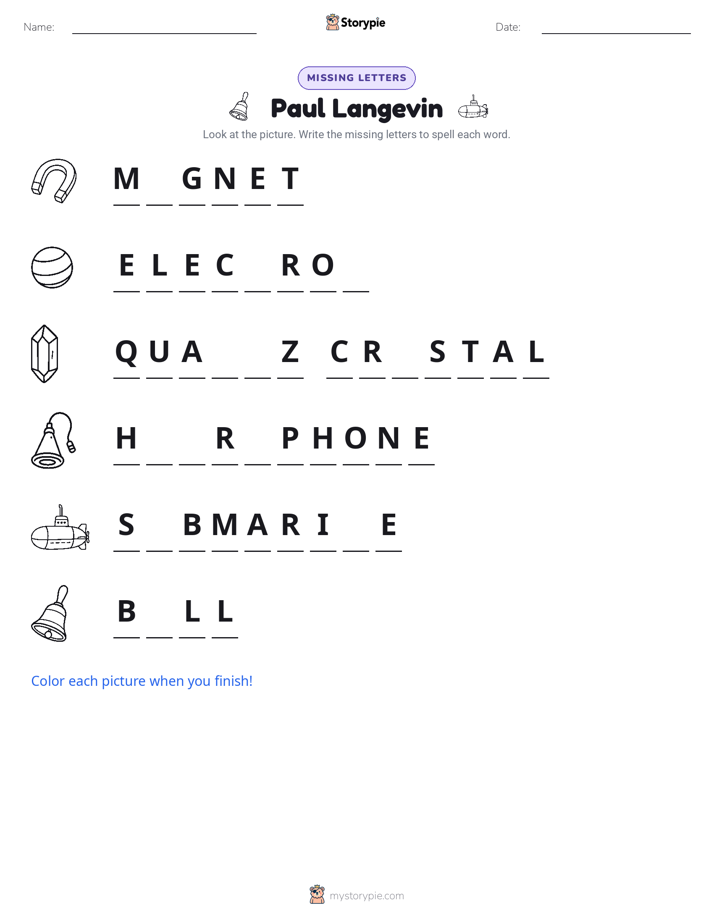
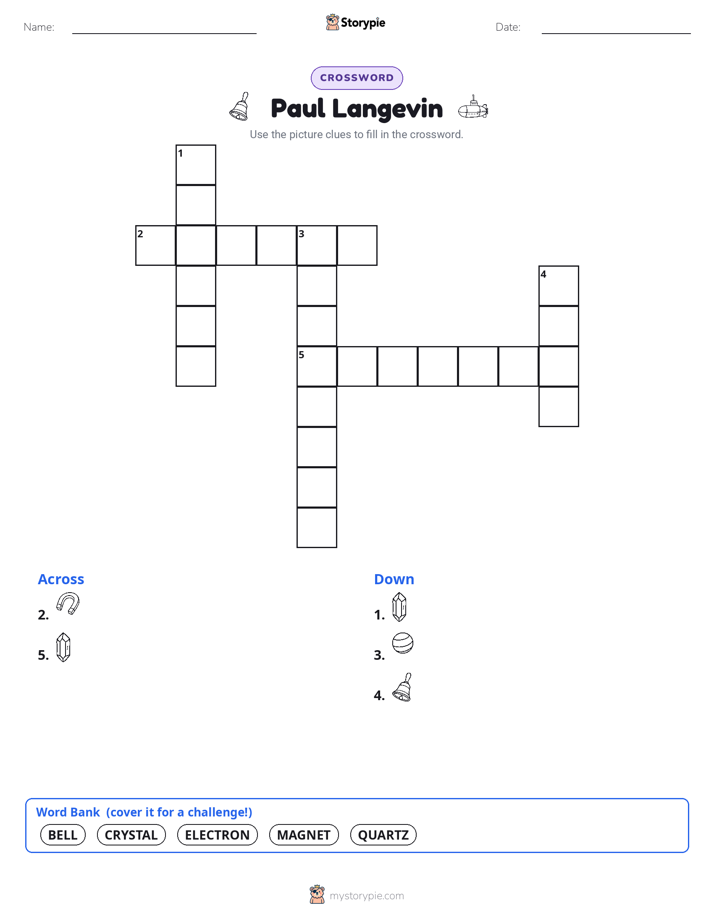
In 1914, a big conflict called World War I began. One of the biggest dangers in the ocean was submarines that could hide silently beneath the waves. I wanted to help find a way to protect sailors. I thought, 'What if we could use sound to 'see' underwater, the way a bat uses sound to navigate in the dark?' Starting around 1915, I began working on an invention. I used special crystals called quartz that could create sound waves too high for human ears to hear. We called this 'ultrasound.' My device would send out a 'ping' of ultrasound into the water and then listen for the echo when it bounced off something, like a submarine. This was the very beginning of what we now call sonar.
Paul Langevin: The Man Who Taught Us to Listen to the Ocean
Hello! My name is Paul Langevin. I was a scientist who spent my life asking questions and searching for answers about the invisible forces that shape our world. I was born in the beautiful city of Paris, France, on January 23rd, 1872. Even as a little boy, I was incredibly curious. I loved taking things apart, like clocks and toys, just to see how all the little pieces fit together. My parents always encouraged my curiosity, which set me on a path to a lifetime of discovery.
My love for learning took me to some of the best schools in Paris. I wanted to understand everything about physics, which is the study of matter and energy. In 1897, I even traveled to England to study at the famous Cavendish Laboratory. When I returned to Paris, I had the great honor of studying with a brilliant scientist named Pierre Curie. He taught me so much about how to conduct experiments and think like a true scientist. In 1902, I earned my doctorate degree. A few years later, in 1905, I came up with some important ideas that helped explain magnetism—that invisible force that makes magnets stick to metal!
In 1914, a big conflict called World War I began. One of the biggest dangers in the ocean was submarines that could hide silently beneath the waves. I wanted to help find a way to protect sailors. I thought, 'What if we could use sound to 'see' underwater, the way a bat uses sound to navigate in the dark?' Starting around 1915, I began working on an invention. I used special crystals called quartz that could create sound waves too high for human ears to hear. We called this 'ultrasound.' My device would send out a 'ping' of ultrasound into the water and then listen for the echo when it bounced off something, like a submarine. This was the very beginning of what we now call sonar.
Besides my science, I deeply believed that all people should be treated with kindness and respect. I was not afraid to speak out against leaders who were cruel or unfair. During another big conflict, World War II, my country was occupied by an enemy army. Because I spoke my mind, I was arrested in 1940 and forced to stay in my home. But I never gave up on my beliefs, and I eventually managed to escape to safety in Switzerland in 1944.
I lived to be 74 years old and spent my final years back in my beloved Paris. People remember me for my work on magnetism and for my invention that became sonar. Today, that idea of using sound to see is used on ships all over the world, by scientists mapping the deep ocean, and even by doctors in hospitals to look inside the human body. I am proud that my lifelong curiosity helped create tools that continue to help people explore and understand the world.
Wow facts
About
Paul Langevin was a prominent French physicist and inventor known for his work on magnetism and for showing that special crystals could be used to send and receive sound waves called ultrasound to help find submarines during World War I. However, this system was not ready to use before the war ended.
Take a Quiz
Question 1 of 5
What problem did I try to solve during World War I?
Explore next






Want to do even more?
Go beyond exploring. Unlock tools that turn every story into real learning.

Storypie Plus for families
Full stories, quizzes, and printables. Nights and car rides, sorted.
- Unlimited audio stories
- Create Mode: your child stars in the story
- Offline downloads
- Printable worksheets & coloring pages

Why Storypie for Schools
Students engaged. Prep in seconds. Evenings back to you.
- Worksheets & Quizzes
- Classroom Management
- Formative Assessment
- Custom Curriculum & Lesson Plans
- 27 Languages

Why Storypie for Homeschool
Curriculum done. They'll ask for more. Hours back in your day.
- Worksheet Generator
- First-Person Audio Stories
- Built-in Comprehension Quizzes
- Custom Curriculum & Lesson Plans
- Print & Go Activities