English

Pepin the Short
Pepin the Short (c.
Reads at Grades 6–8 Listens at Grades 4–8
Print & create
Answer keys·No prep·Free with an account
28 worksheets · answer keys · full story · quiz · Ages 10-12 · CEFR B2
Plus adds 279,000+ more stories in 27 languages, audio for every one, and printables for all of them.
Just want Pepin the Short?
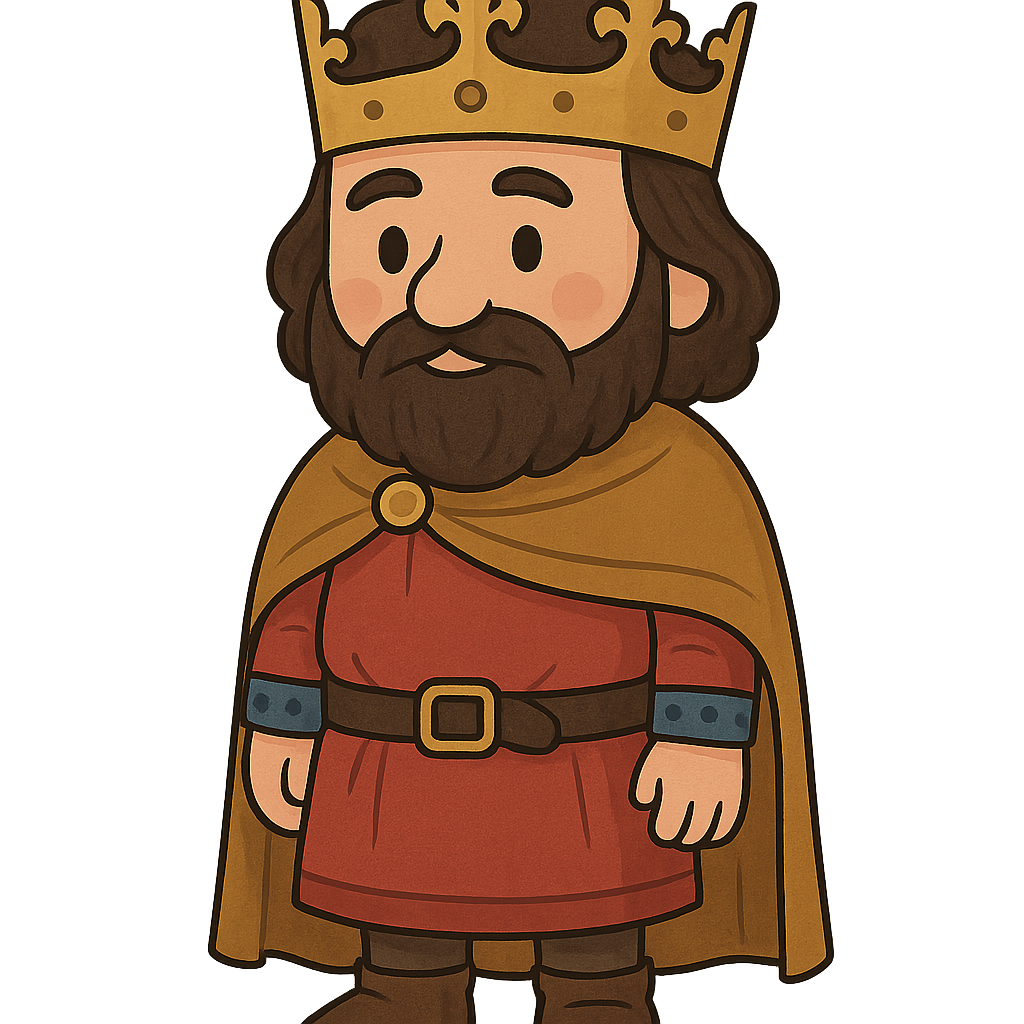
Hello, my name is Pepin, though history often remembers me as Pepin the Short. I was born around the year 714 into a world of power and influence in the kingdom of the Franks. My father was the famous Charles Martel, a man whose name struck fear into the hearts of his enemies and commanded respect from all his allies. He was, without a doubt, the most powerful man in the entire kingdom. But here is the strange part: my father was not the king. His official title was 'Mayor of the Palace.' This meant that while he led the armies, made the laws, and essentially ran the country, another man held the title of king. These kings came from an old family called the Merovingians. By my time, their power had faded completely. They were kings in name only, brought out for ceremonies but holding no real authority. Growing up, I saw this arrangement and always thought it was peculiar. The person with all the responsibility should surely wear the crown.
When my father, Charles Martel, died in the year 741, the immense responsibility of ruling the Franks fell to my older brother, Carloman, and me. We didn't become kings; instead, we inherited our father's title and ruled together as joint Mayors of the Palace. For several years, we shared the duties of leadership, working in partnership to govern the kingdom. We managed the armies, dealt with the nobles, and kept the realm secure. It was a delicate balance of power, but we made it work. Then, in 747, something happened that no one expected. My brother Carloman made a profound personal decision. He chose to give up all his power, his wealth, and his position in the world to become a monk. He retired from public life to dedicate himself to religion. His surprising choice left me as the sole Mayor of the Palace, the undisputed ruler of the Franks. Suddenly, all the power and all the responsibility rested on my shoulders alone.
Pepin the Short: The King with the Power
Hello, my name is Pepin, though history often remembers me as Pepin the Short. I was born around the year 714 into a world of power and influence in the kingdom of the Franks. My father was the famous Charles Martel, a man whose name struck fear into the hearts of his enemies and commanded respect from all his allies. He was, without a doubt, the most powerful man in the entire kingdom. But here is the strange part: my father was not the king. His official title was 'Mayor of the Palace.' This meant that while he led the armies, made the laws, and essentially ran the country, another man held the title of king. These kings came from an old family called the Merovingians. By my time, their power had faded completely. They were kings in name only, brought out for ceremonies but holding no real authority. Growing up, I saw this arrangement and always thought it was peculiar. The person with all the responsibility should surely wear the crown.
When my father, Charles Martel, died in the year 741, the immense responsibility of ruling the Franks fell to my older brother, Carloman, and me. We didn't become kings; instead, we inherited our father's title and ruled together as joint Mayors of the Palace. For several years, we shared the duties of leadership, working in partnership to govern the kingdom. We managed the armies, dealt with the nobles, and kept the realm secure. It was a delicate balance of power, but we made it work. Then, in 747, something happened that no one expected. My brother Carloman made a profound personal decision. He chose to give up all his power, his wealth, and his position in the world to become a monk. He retired from public life to dedicate himself to religion. His surprising choice left me as the sole Mayor of the Palace, the undisputed ruler of the Franks. Suddenly, all the power and all the responsibility rested on my shoulders alone.
As the sole ruler, I found the old system more illogical than ever. I was the one leading the armies, making treaties, and defending the borders. Yet, a man named Childeric III, from the old Merovingian line, held the title of king. He had the crown, but I had the power. I began to believe strongly that this needed to change. The title of king should belong to the person who actually did the job of a king. It was a matter of honesty and practical sense. So, I decided to take a bold and calculated risk. I knew I needed the support of the most important authority in the Christian world, the Pope. I composed a letter addressed to Pope Zachary in Rome. My message was direct and clear. I asked him a simple but revolutionary question: Who should be the rightful king? Is it the one who holds the royal title but has no power, or the one who wields the royal power but has no title? The Pope was in a difficult political position at the time and needed a strong military ally to protect him. He saw the benefit of having a powerful Frankish king on his side, so he sent back the answer I was hoping for. He agreed that the one with the power should also be the king.
The Pope's support changed everything. In the year 751, I acted upon his decision. I gathered the nobles of the Frankish kingdom, and with the Pope’s blessing as my justification, they formally elected me as their king. The old era of the Merovingian kings came to a quiet end. Childeric III was removed from the throne and sent to live out his days peacefully in a monastery. A new age for the Franks had begun. My coronation was a profoundly important ceremony. I was anointed with holy oil by a famous missionary named Boniface. This was more than just a tradition; it was a powerful symbol. The anointing showed that my authority to rule was not just granted by other nobles, but was approved by God himself. This act established a new royal family to lead the Franks. I became the first king of what historians would later call the Carolingian dynasty, a name chosen to honor my father, Charles Martel. I had finally united the title of king with the power of a ruler.
Becoming king was only the beginning; I knew that maintaining a strong alliance with the church was essential for the future of my dynasty. My relationship with the papacy grew even stronger in 754 when the new Pope, Stephen II, did something extraordinary. He traveled all the way from Rome, across the Alps, to meet with me in my kingdom. There, he performed a second coronation ceremony, anointing me as king once more. But this time, he also anointed my two young sons, Charles and Carloman, as future kings. This act secured my family's right to rule for the next generation. In return for this incredible support, I honored my promise to be the protector of the church. The Pope was being threatened by a group called the Lombards in Italy. I led my powerful Frankish army into Italy not once, but twice, to defeat them. After my victory in 756, I took the lands I had conquered from the Lombards and gave them directly to the Pope. This gift, known as the 'Donation of Pepin,' created a territory called the Papal States, which gave the church its own land to rule and protected it for centuries to come.
I continued to rule as King of the Franks, working to strengthen and expand the kingdom my father had left me. My life's journey came to an end on September 24th, 768. I lived to be about 54 years old. I left behind a unified and powerful kingdom, which I divided between my two sons, just as my father had done for my brother and me. One of those sons, Charles, would go on to become one of the most famous rulers in all of history: Charlemagne, or Charles the Great. My legacy is that of a unifier and a founder. I am remembered as the first king of the great Carolingian dynasty, the man who laid the foundation for my son's vast empire. By uniting the crown with true power and forging a lasting bond with the church, I helped shape the future of Europe.
Wow facts
About
Pepin the Short (c. 714–768) was the first King of the Franks of the Carolingian dynasty. He was the son of Charles Martel and the father of the famed emperor Charlemagne.
Take a Quiz
Question 1 of 5
Based on the story, why did Pepin believe he should be king instead of Childeric III?
Explore next






Want to do even more?
Go beyond exploring. Unlock tools that turn every story into real learning.

Storypie Plus for families
Full stories, quizzes, and printables. Nights and car rides, sorted.
- Unlimited audio stories
- Create Mode: your child stars in the story
- Offline downloads
- Printable worksheets & coloring pages

Why Storypie for Schools
Students engaged. Prep in seconds. Evenings back to you.
- Worksheets & Quizzes
- Classroom Management
- Formative Assessment
- Custom Curriculum & Lesson Plans
- 27 Languages

Why Storypie for Homeschool
Curriculum done. They'll ask for more. Hours back in your day.
- Worksheet Generator
- First-Person Audio Stories
- Built-in Comprehension Quizzes
- Custom Curriculum & Lesson Plans
- Print & Go Activities