English

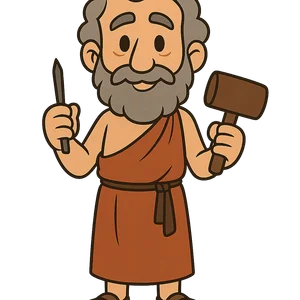
Phidias
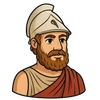
Phidias was an ancient Greek sculptor, painter, and architect…
Reads at Grades 3–5 Listens at Grades 1–5
Print & create
Answer keys·No prep·Free with an account
28 worksheets · answer keys · full story · quiz · Ages 8-10 · CEFR B1
Plus adds 208,000+ more stories in 27 languages, audio for every one, and printables for all of them.
Just want Phidias?
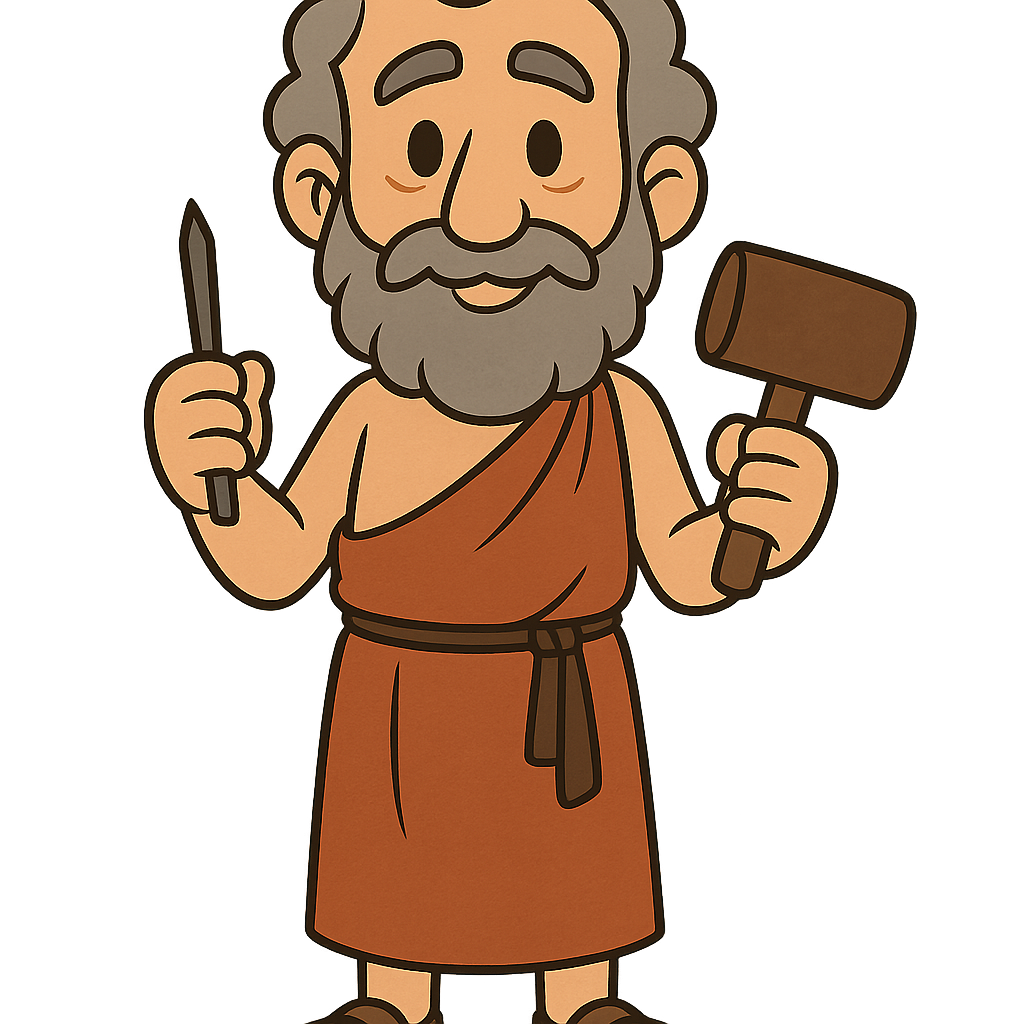
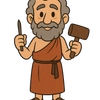
Hello! My name is Phidias, and I was a sculptor in the great city of Athens in Ancient Greece. I was born around the year 480 BCE, a time of great change and creativity. Ever since I was a boy, I loved art. I learned so much from my father, Charmides, and other master artists. I would watch them carve stone and shape metal, and I dreamed that one day I would create statues so grand and beautiful that people would remember them forever. I spent all my time practicing, learning how to make marble look like soft cloth and how to give a face a lifelike expression. My biggest dream was to honor the gods and my city with my work.
I was lucky to have a very good friend named Pericles, who was the leader of Athens. Our city had been through difficult wars, and many of our beautiful temples on the high hill, the Acropolis, had been damaged. Pericles had a grand vision to rebuild them, making them more magnificent than ever before. He wanted to show the world the strength and spirit of Athens. I was filled with excitement when, around 447 BCE, Pericles came to me with an amazing offer. He asked me to be the supervisor, the person in charge of all the art for the most important new building: a temple for our city’s protector, the goddess Athena. This temple would be called the Parthenon.
Getting to work on the Parthenon was the greatest challenge of my life. It was a huge project, and I didn't carve every single stone myself. Instead, I was like a director of a great play. I designed the statues and sculptures, and I guided hundreds of talented artists and craftspeople. It was my job to make sure we all worked together to create a single, beautiful story in marble. For the outside of the temple, we carved long panels called friezes. These showed exciting scenes from mythology, like great battles between heroes and monsters. We also carved a stunning scene of a great parade of Athenian people, all marching to honor the goddess Athena. It felt like we were carving the very spirit of our city into the stone.
Phidias: Sculptor of Athens
Hello! My name is Phidias, and I was a sculptor in the great city of Athens in Ancient Greece. I was born around the year 480 BCE, a time of great change and creativity. Ever since I was a boy, I loved art. I learned so much from my father, Charmides, and other master artists. I would watch them carve stone and shape metal, and I dreamed that one day I would create statues so grand and beautiful that people would remember them forever. I spent all my time practicing, learning how to make marble look like soft cloth and how to give a face a lifelike expression. My biggest dream was to honor the gods and my city with my work.
I was lucky to have a very good friend named Pericles, who was the leader of Athens. Our city had been through difficult wars, and many of our beautiful temples on the high hill, the Acropolis, had been damaged. Pericles had a grand vision to rebuild them, making them more magnificent than ever before. He wanted to show the world the strength and spirit of Athens. I was filled with excitement when, around 447 BCE, Pericles came to me with an amazing offer. He asked me to be the supervisor, the person in charge of all the art for the most important new building: a temple for our city’s protector, the goddess Athena. This temple would be called the Parthenon.
Getting to work on the Parthenon was the greatest challenge of my life. It was a huge project, and I didn't carve every single stone myself. Instead, I was like a director of a great play. I designed the statues and sculptures, and I guided hundreds of talented artists and craftspeople. It was my job to make sure we all worked together to create a single, beautiful story in marble. For the outside of the temple, we carved long panels called friezes. These showed exciting scenes from mythology, like great battles between heroes and monsters. We also carved a stunning scene of a great parade of Athenian people, all marching to honor the goddess Athena. It felt like we were carving the very spirit of our city into the stone.
My most famous and beloved creation was waiting inside the Parthenon. In the year 438 BCE, we finished the magnificent statue of Athena Parthenos. She was enormous, as tall as a four-story building! To make her, we used the most precious materials I could find. Her skin was carved from smooth, white ivory, and her clothes, shield, and helmet were covered in gleaming gold. She was a breathtaking sight. On her shield, I designed scenes of famous battles. And resting in her open hand, she held a small statue of Nike, the goddess of victory. This statue was a symbol of our city’s power and its devotion to the wise goddess Athena.
After my work on the Parthenon was complete, my reputation had spread all across Greece. I was invited to the city of Olympia, the home of the famous games, for another important task. The people there asked me to create a statue for their temple to honor Zeus, the king of all the gods. Around 435 BCE, I finished this sculpture. Like my Athena, the statue of Zeus was huge and made of shining gold and ivory. He sat on a massive, decorated throne, looking powerful and majestic. People who saw it were left speechless by its beauty and size. It was considered so amazing that it later became known as one of the Seven Wonders of the Ancient World.
My final years, around 430 BCE, were difficult because of political troubles back in Athens. Though my own life came to an end, I knew my art would not. My giant statues of Athena and Zeus are gone now, lost to time. However, many of the marble sculptures we created for the Parthenon survived, and they can still be seen in museums around the world today. I hope that my work continues to show people the beauty and spirit of my home, Ancient Athens, and that it inspires new artists to dream big and create wonderful things for everyone to see.
Wow facts
About
Phidias was an ancient Greek sculptor, painter, and architect, widely regarded as one of the greatest sculptors of classical antiquity. He was the artistic director of the Parthenon's construction and created the colossal statues of Athena Parthenos and the Statue of Zeus at Olympia.
Take a Quiz
Question 1 of 5
In the story, Phidias says he was like a 'director' for the Parthenon project. What does this mean?
Explore next


Want to do even more?
Go beyond exploring. Unlock tools that turn every story into real learning.

Storypie Plus for families
Full stories, quizzes, and printables. Nights and car rides, sorted.
- Unlimited audio stories
- Create Mode: your child stars in the story
- Offline downloads
- Printable worksheets & coloring pages

Why Storypie for Schools
Students engaged. Prep in seconds. Evenings back to you.
- Worksheets & Quizzes
- Classroom Management
- Formative Assessment
- Custom Curriculum & Lesson Plans
- 27 Languages

Why Storypie for Homeschool
Curriculum done. They'll ask for more. Hours back in your day.
- Worksheet Generator
- First-Person Audio Stories
- Built-in Comprehension Quizzes
- Custom Curriculum & Lesson Plans
- Print & Go Activities