English

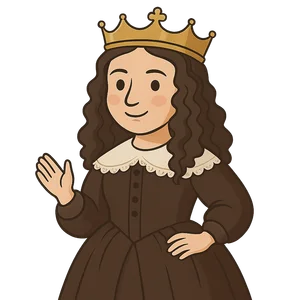
Queen Christina of Sweden
Queen of Sweden from 1632 to 1654, known for her intelligence, support of the arts, unconventional lifestyle…
Reads at Grades 6–8 Listens at Grades 4–8
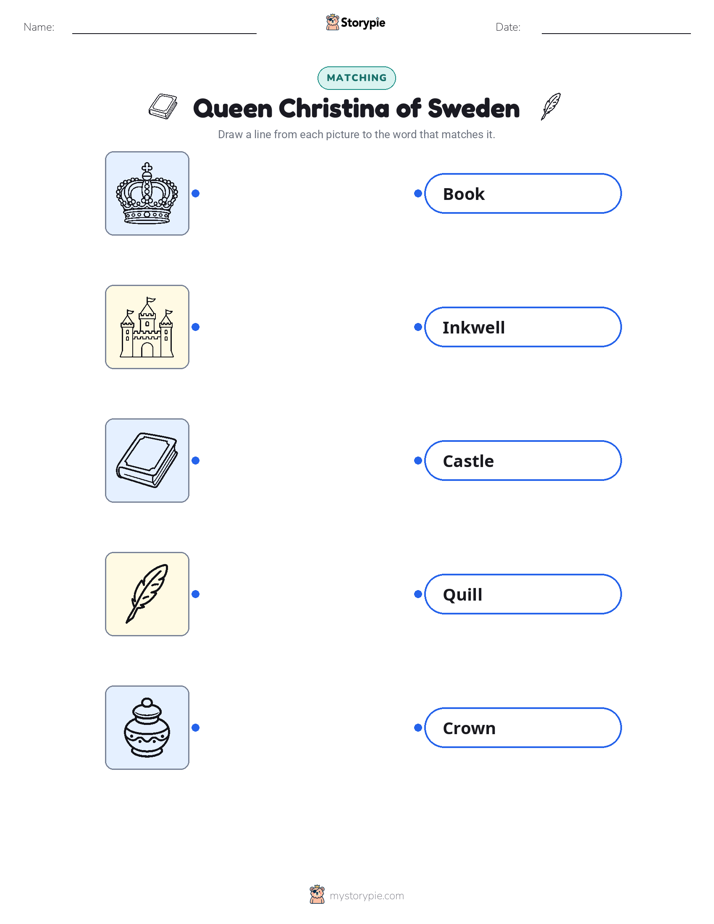
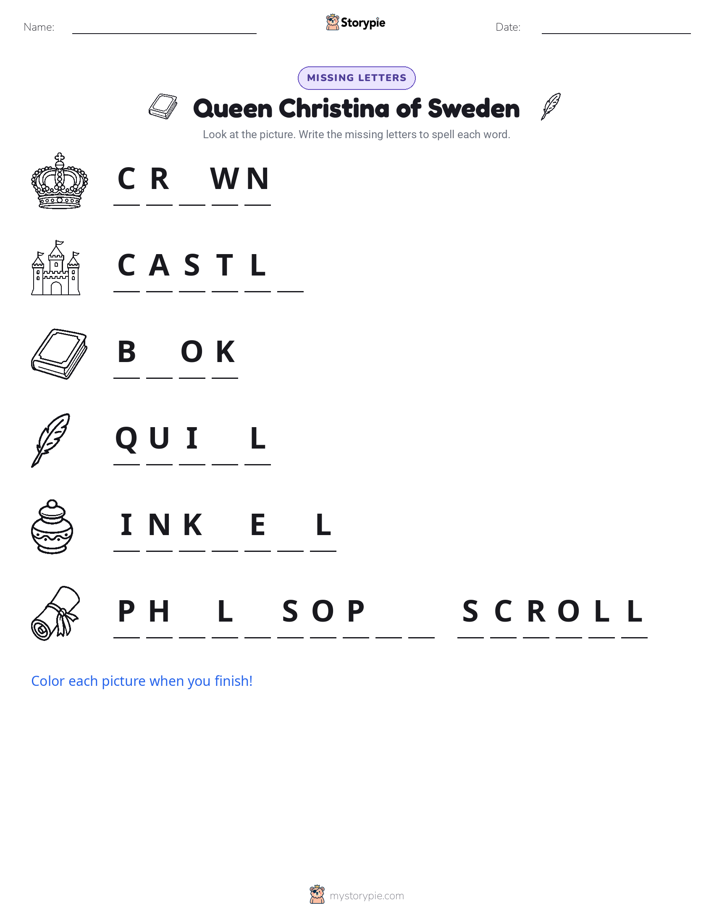
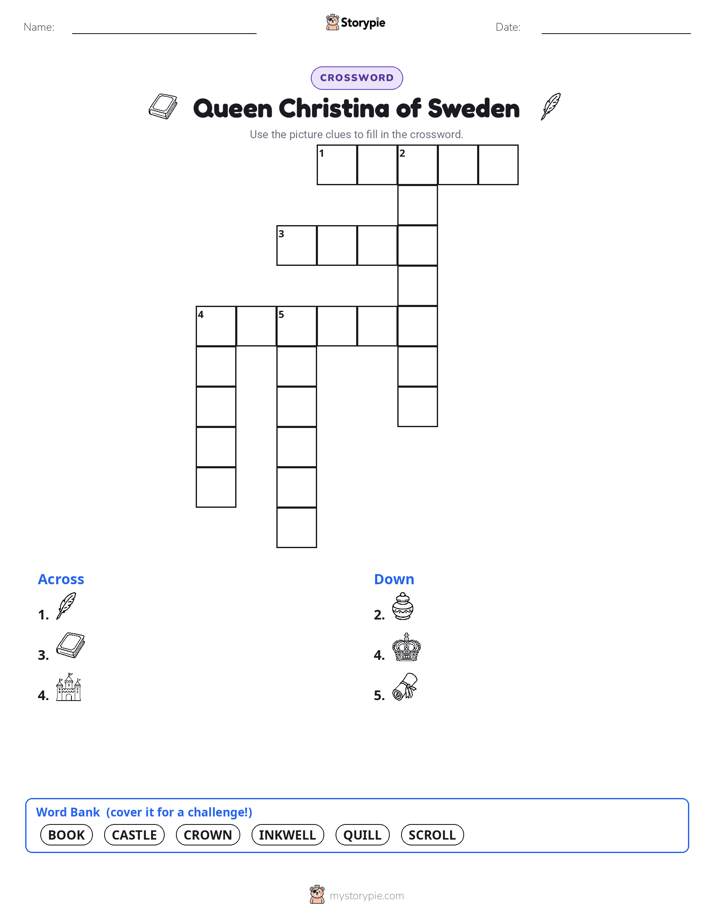
Print & create
Answer keys·No prep·Free with an account
28 worksheets · answer keys · full story · quiz · Ages 10-12 · CEFR B2
Plus adds 244,000+ more stories in 27 languages, audio for every one, and printables for all of them.
Just want Queen Christina of Sweden?
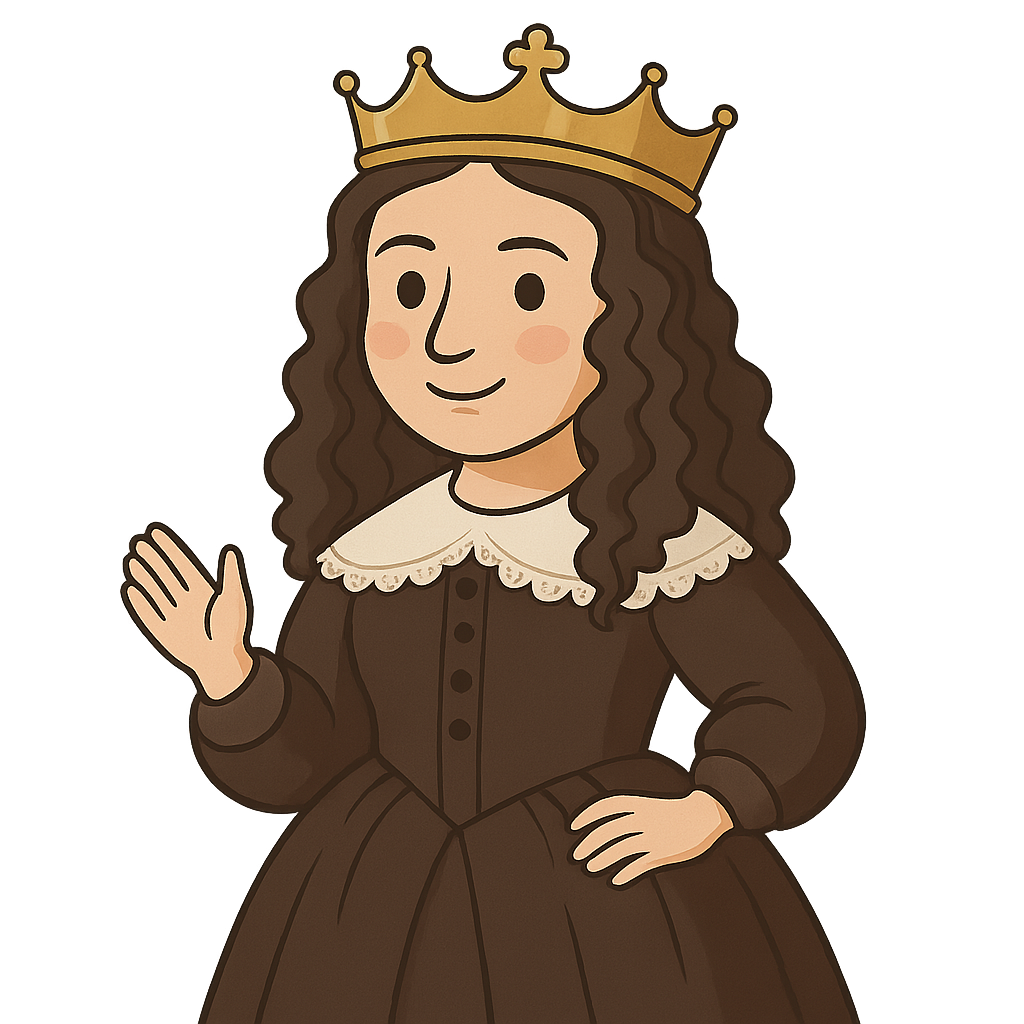
Hello! My name is Christina, and I was once the Queen of Sweden. My story isn't quite like other fairy tales. I was born in the grand Tre Kronor castle in Stockholm on December 8th, 1626. My father, King Gustavus Adolphus, was a great warrior and leader. He had hoped for a son to be his heir, but when I was born, he declared he was perfectly happy. He decided to raise me not as a typical princess, but as a prince! Instead of spending all my time on courtly manners, I studied for ten hours a day. I learned about politics, philosophy, and history. I could speak German, French, Italian, and Latin. My father wanted to make sure I would be wise and strong enough to rule our kingdom one day. This unusual childhood made me independent and curious about the world.
My world turned upside down when I was just six years old. In 1632, my beloved father was killed in the Battle of Lützen during the Thirty Years' War. Suddenly, I was the Queen of Sweden. Of course, a child can't rule a country, so a group of trusted advisors, led by the wise Chancellor Axel Oxenstierna, governed for me. While they managed the kingdom, my education became even more intense. I read everything I could get my hands on and debated ideas with the smartest people in the country. In 1644, when I turned 18, the time came for me to rule on my own. One of my first and most important goals was to bring peace to Europe. After years of fighting, I helped negotiate the Peace of Westphalia in 1648, which finally ended the long and terrible Thirty Years' War. I wanted Sweden to be known not just for its army, but for its ideas and culture.
Christina, Queen of Sweden: A Queen of Wisdom
Hello! My name is Christina, and I was once the Queen of Sweden. My story isn't quite like other fairy tales. I was born in the grand Tre Kronor castle in Stockholm on December 8th, 1626. My father, King Gustavus Adolphus, was a great warrior and leader. He had hoped for a son to be his heir, but when I was born, he declared he was perfectly happy. He decided to raise me not as a typical princess, but as a prince! Instead of spending all my time on courtly manners, I studied for ten hours a day. I learned about politics, philosophy, and history. I could speak German, French, Italian, and Latin. My father wanted to make sure I would be wise and strong enough to rule our kingdom one day. This unusual childhood made me independent and curious about the world.
My world turned upside down when I was just six years old. In 1632, my beloved father was killed in the Battle of Lützen during the Thirty Years' War. Suddenly, I was the Queen of Sweden. Of course, a child can't rule a country, so a group of trusted advisors, led by the wise Chancellor Axel Oxenstierna, governed for me. While they managed the kingdom, my education became even more intense. I read everything I could get my hands on and debated ideas with the smartest people in the country. In 1644, when I turned 18, the time came for me to rule on my own. One of my first and most important goals was to bring peace to Europe. After years of fighting, I helped negotiate the Peace of Westphalia in 1648, which finally ended the long and terrible Thirty Years' War. I wanted Sweden to be known not just for its army, but for its ideas and culture.
I dreamed of making my capital, Stockholm, a great center of learning and art—a new 'Athens of the North.' I spent a fortune inviting the most brilliant minds from all over Europe to my court. I filled my castle with incredible paintings, sculptures, and a library with thousands of rare books and manuscripts. I loved surrounding myself with artists, musicians, and scientists. In 1649, I even convinced the famous French philosopher René Descartes to come to Sweden to be my personal tutor. We would wake up at five in the morning to discuss philosophy in my cold library! I wanted to challenge my own mind and the minds of those around me. I started academies and supported thinkers who were exploring new ideas about the world. My court became a vibrant, exciting place where knowledge was the greatest treasure.
Being a queen came with heavy expectations. My council and my people wanted me to marry a prince and have children to secure the future of our royal family. But I valued my freedom and independence more than anything. The idea of marriage felt like a cage to me. I wanted to live life on my own terms. At the same time, I was secretly exploring ideas that were forbidden in Sweden. Our country was strictly Lutheran Protestant, but I found myself drawn to the art, history, and beliefs of the Catholic Church. I began to study it in private, knowing it was against the law for a Swedish monarch. I realized I could not be true to myself and remain on the throne. So, I made a decision that shocked the entire world. On June 6th, 1654, I formally gave up my crown, a process called abdication. I named my cousin, Charles X Gustav, as the new king and prepared to leave the only home I had ever known.
After leaving Sweden, I traveled across Europe. In 1655, I officially converted to Catholicism in a ceremony in Innsbruck, Austria. From there, I made my way to my new home: Rome. The Pope himself, Alexander VII, welcomed me with a magnificent celebration. In Rome, I was finally free. I didn't have to worry about politics or royal duties. I filled my home, the Palazzo Farnese, with art and books and created a new court of intellectuals and artists. I started another academy, called the Academy of Arcadia, which became one of the most important cultural centers in the city. I supported composers like Arcangelo Corelli and Alessandro Scarlatti, helping to shape the future of music. I spent the rest of my life in this beautiful city, surrounded by the things I loved most: knowledge, art, and lively conversation.
I passed away in Rome on April 19th, 1689. I lived to be 62 years old. I was given the great honor of being one of the very few women buried in St. Peter's Basilica. People remember me as the 'Minerva of the North,' a queen who valued wisdom and art above power and riches. My story shows that it is important to be true to yourself, even if it means making difficult choices. I gave up a crown to follow my own conscience and live a life dedicated to learning and culture, and my legacy is a reminder that the greatest kingdom is the kingdom of the mind.
Wow facts
About
Queen of Sweden from 1632 to 1654, known for her intelligence, support of the arts, unconventional lifestyle, and abdication of the throne due to a combination of factors, including her conversion to Catholicism, refusal to marry, financial problems, and growing unhappiness with her rule.
Take a Quiz
Question 1 of 5
What was the main motivation behind Christina's decision to abdicate the throne in 1654?
Explore next





Want to do even more?
Go beyond exploring. Unlock tools that turn every story into real learning.

Storypie Plus for families
Full stories, quizzes, and printables. Nights and car rides, sorted.
- Unlimited audio stories
- Create Mode: your child stars in the story
- Offline downloads
- Printable worksheets & coloring pages

Why Storypie for Schools
Students engaged. Prep in seconds. Evenings back to you.
- Worksheets & Quizzes
- Classroom Management
- Formative Assessment
- Custom Curriculum & Lesson Plans
- 27 Languages

Why Storypie for Homeschool
Curriculum done. They'll ask for more. Hours back in your day.
- Worksheet Generator
- First-Person Audio Stories
- Built-in Comprehension Quizzes
- Custom Curriculum & Lesson Plans
- Print & Go Activities