English

Raphael
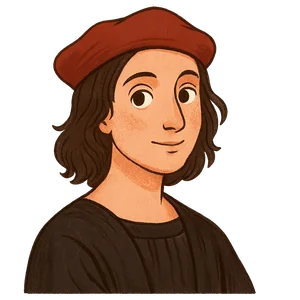
Raphael was an Italian painter and architect of the High Renaissance…
Reads at Grades 6–8 Listens at Grades 4–8
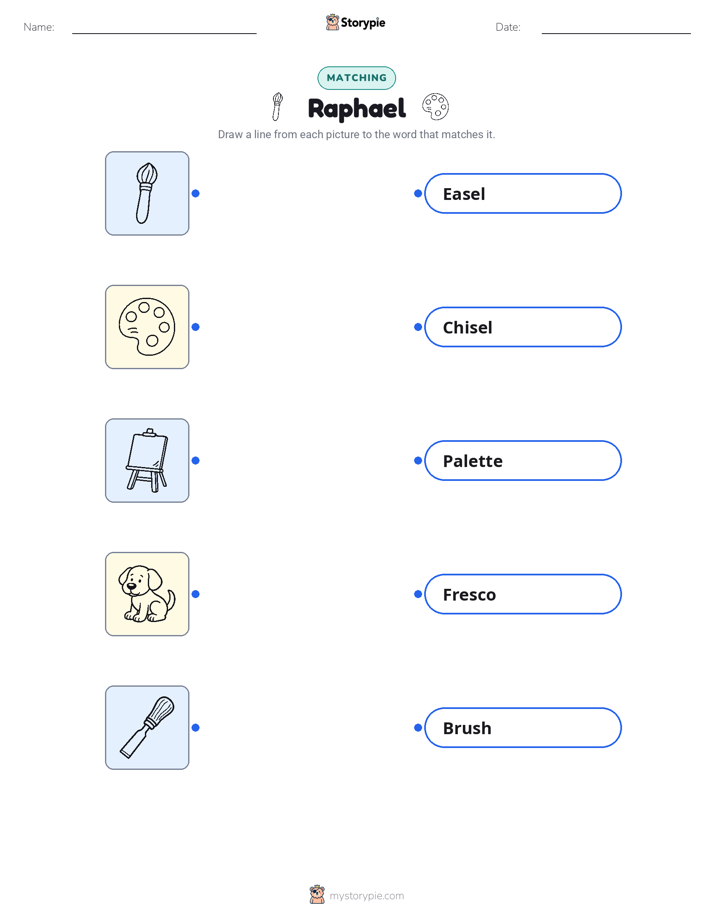
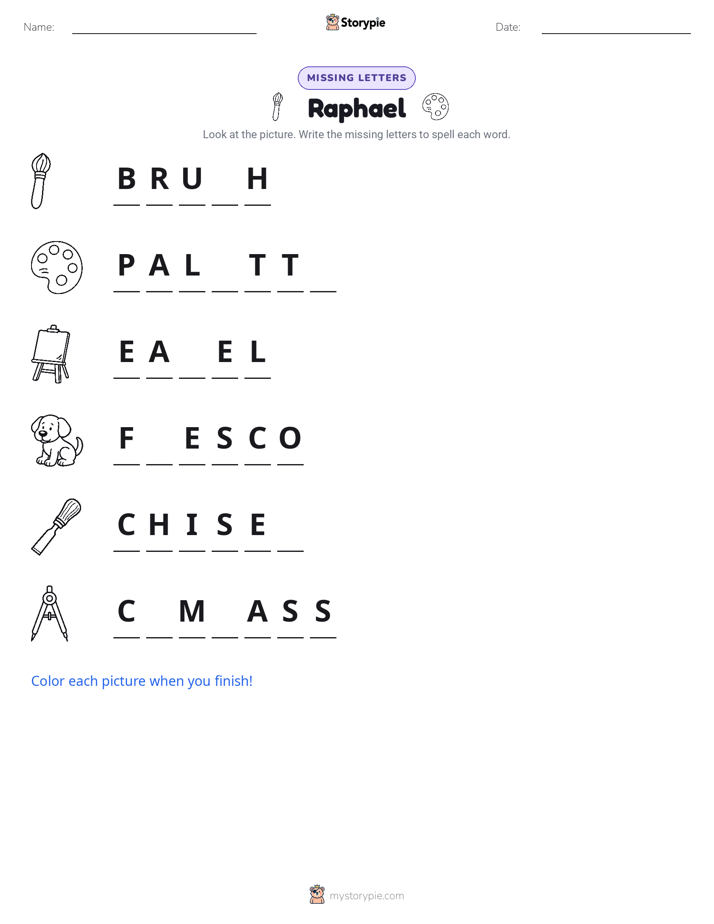
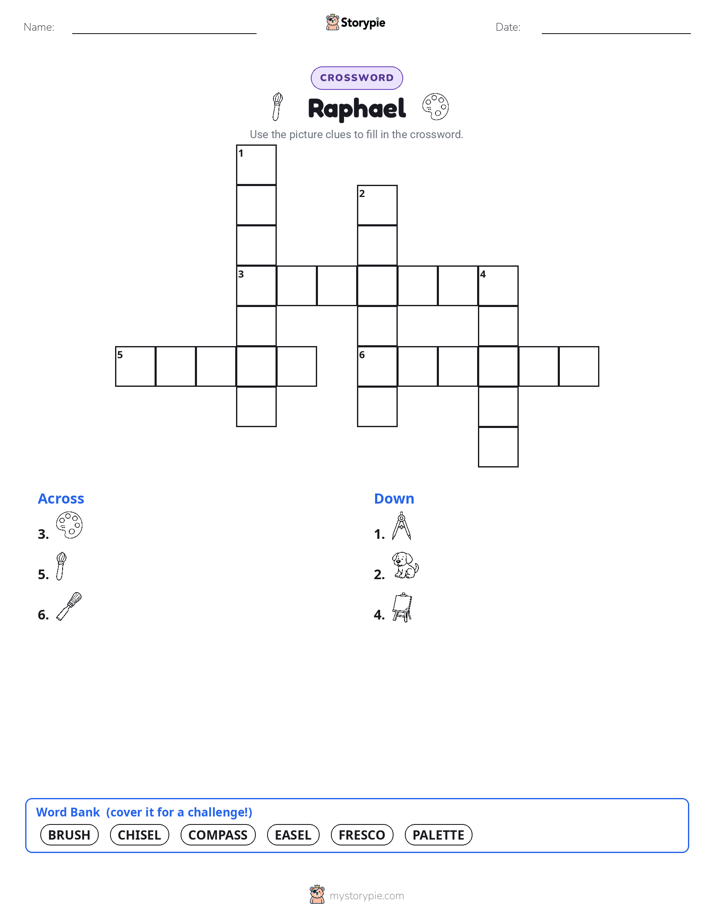
Print & create
Answer keys·No prep·Free with an account
28 worksheets · answer keys · full story · quiz · Ages 10-12 · CEFR B2
Plus adds 164,000+ more stories in 27 languages, audio for every one, and printables for all of them.
Just want Raphael?
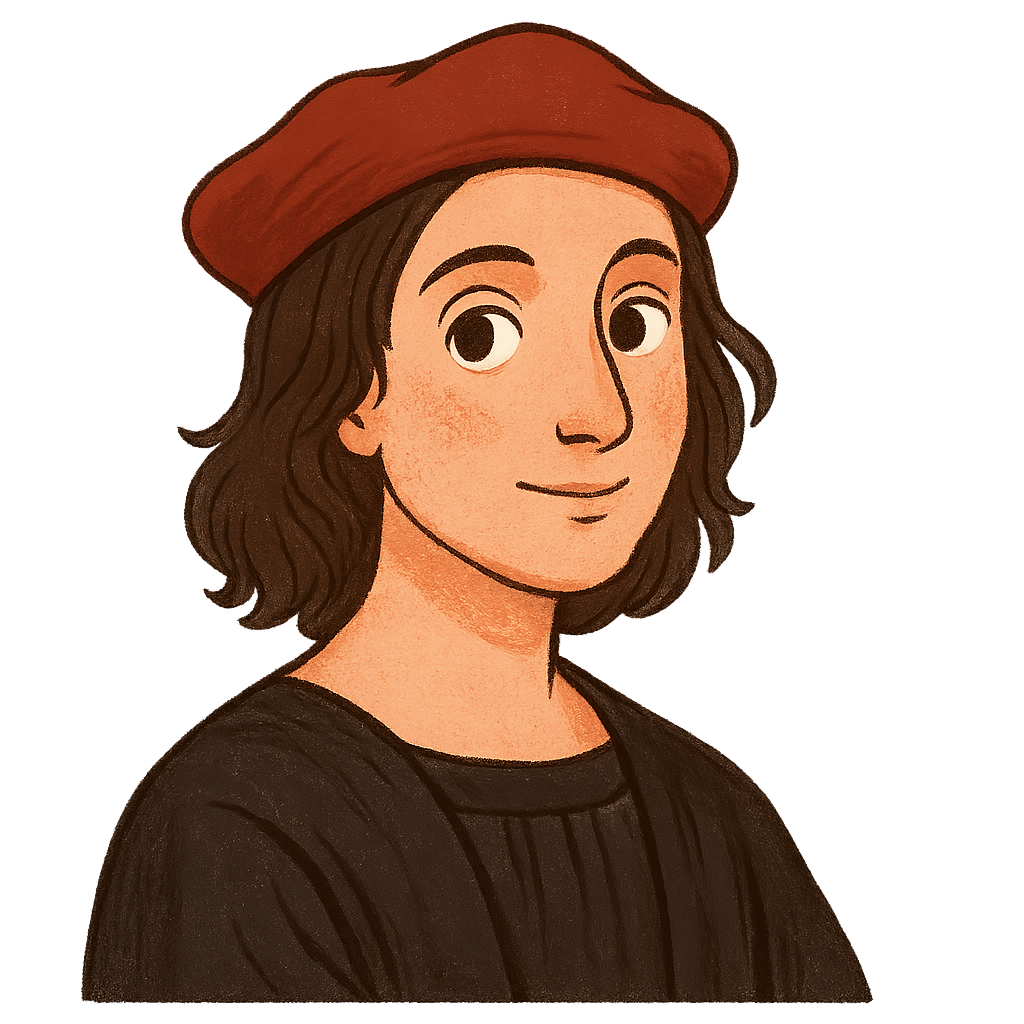
Hello. My full name is Raffaello Sanzio da Urbino, but today, most people know me simply as Raphael. My story begins in the beautiful Italian city of Urbino, where I was born on April 6th, 1483. My father, Giovanni Santi, was a painter for the Duke of Urbino, so I grew up surrounded by the sights and smells of an artist's workshop. From a very young age, I was in my father's studio, learning how to hold a brush, sketch figures, and mix colorful paints. It was a wonderful way to grow up, but my world changed suddenly. My mother passed away in 1491, and just a few years later, in 1494, my father died as well. At only eleven years old, I was an orphan. With my family gone, the workshop and the art within it became the entire focus of my life. I poured all my energy into becoming the best painter I could be.
To continue my training, around the year 1500, I moved to the city of Perugia. There, I became an apprentice to a very famous and respected painter named Pietro Perugino. An apprentice is a student who lives and works with a master to learn their craft, and I was determined to absorb everything he could teach me. I studied his graceful style, his use of light, and the peaceful expressions on his figures. I worked so hard to learn from him that soon, art experts had trouble telling our paintings apart. My skills were growing quickly, and in 1504, I received one of my first major commissions. It was a large painting called 'The Marriage of the Virgin,' and creating it showed me, and the world, that I was no longer just an apprentice but was becoming a master in my own right.
Raphael: A Master of the Renaissance
Hello. My full name is Raffaello Sanzio da Urbino, but today, most people know me simply as Raphael. My story begins in the beautiful Italian city of Urbino, where I was born on April 6th, 1483. My father, Giovanni Santi, was a painter for the Duke of Urbino, so I grew up surrounded by the sights and smells of an artist's workshop. From a very young age, I was in my father's studio, learning how to hold a brush, sketch figures, and mix colorful paints. It was a wonderful way to grow up, but my world changed suddenly. My mother passed away in 1491, and just a few years later, in 1494, my father died as well. At only eleven years old, I was an orphan. With my family gone, the workshop and the art within it became the entire focus of my life. I poured all my energy into becoming the best painter I could be.
To continue my training, around the year 1500, I moved to the city of Perugia. There, I became an apprentice to a very famous and respected painter named Pietro Perugino. An apprentice is a student who lives and works with a master to learn their craft, and I was determined to absorb everything he could teach me. I studied his graceful style, his use of light, and the peaceful expressions on his figures. I worked so hard to learn from him that soon, art experts had trouble telling our paintings apart. My skills were growing quickly, and in 1504, I received one of my first major commissions. It was a large painting called 'The Marriage of the Virgin,' and creating it showed me, and the world, that I was no longer just an apprentice but was becoming a master in my own right.
Later in 1504, I decided to move to Florence, which at that time was the most important city for art in the entire world. The energy there was incredible, and I was thrilled to see the work of two artists who were already legends: Leonardo da Vinci and Michelangelo. I was in awe of their genius. I carefully studied Leonardo's paintings, learning from his gentle, soft style and the way he made his figures look so lifelike and full of emotion. From Michelangelo, I learned about creating powerful, muscular figures that seemed to hold great strength and energy. Seeing their masterpieces didn't discourage me; instead, their work inspired me to push myself and refine my own style. It was during these years in Florence that I became very well-known for a series of paintings of Mary and the baby Jesus. These works, known as my 'Madonnas,' were praised for their serene beauty and tenderness.
My reputation grew, and a truly pivotal moment in my life arrived in 1508. I received a summons from Pope Julius II himself, asking me to come to Rome. This was an immense honor, as the Pope was one of the most powerful patrons of the arts. He wanted me to decorate his private apartments in the Vatican Palace, a series of rooms now known as the Raphael Rooms. I spent years working on these frescoes, which are paintings done on wet plaster so they become part of the wall itself. The most famous of these paintings is 'The School of Athens,' which I completed between 1509 and 1511. In this grand scene, I gathered all the greatest philosophers and thinkers from history, placing them in a magnificent classical building. I wanted to celebrate knowledge and wisdom. If you look closely in the crowd on the right side of the painting, you can even find a small portrait of me, looking out at the viewer.
My work for the Pope was so admired that I became one of the most sought-after artists in Rome. My responsibilities continued to grow beyond painting. In 1514, after the great architect Donato Bramante passed away, Pope Leo X gave me another incredible role: chief architect for the new St. Peter's Basilica. This was one of the most important building projects in the world. My life became incredibly busy, and I ran a large, organized workshop filled with many talented assistants. They helped me manage the enormous number of commissions I was receiving. Together, we worked on many projects, from painting portraits and altarpieces to designing enormous, intricate tapestries that were to hang in the Sistine Chapel, right below Michelangelo's famous ceiling.
I was working on what would be my final masterpiece, a powerful painting called 'The Transfiguration,' when I was struck by a sudden, high fever. My life ended much too soon. I lived to be 37 years old, passing away on my birthday, April 6th, 1520. It was considered a great sign of respect and honor that I was buried in the Pantheon, a magnificent ancient temple in Rome. Today, I am remembered as one of the three great masters of the High Renaissance, alongside Leonardo da Vinci and Michelangelo. My art is still studied and loved around the world for its perfect harmony, its calming beauty, and its gentle grace.
Wow facts
About
Raphael was an Italian painter and architect of the High Renaissance, celebrated for the perfection and grace of his paintings and drawings.
Take a Quiz
Question 1 of 5
In your own words, retell the main events of Raphael's early life, up to when he became an apprentice.
Explore next




Want to do even more?
Go beyond exploring. Unlock tools that turn every story into real learning.

Storypie Plus for families
Full stories, quizzes, and printables. Nights and car rides, sorted.
- Unlimited audio stories
- Create Mode: your child stars in the story
- Offline downloads
- Printable worksheets & coloring pages

Why Storypie for Schools
Students engaged. Prep in seconds. Evenings back to you.
- Worksheets & Quizzes
- Classroom Management
- Formative Assessment
- Custom Curriculum & Lesson Plans
- 27 Languages

Why Storypie for Homeschool
Curriculum done. They'll ask for more. Hours back in your day.
- Worksheet Generator
- First-Person Audio Stories
- Built-in Comprehension Quizzes
- Custom Curriculum & Lesson Plans
- Print & Go Activities