English

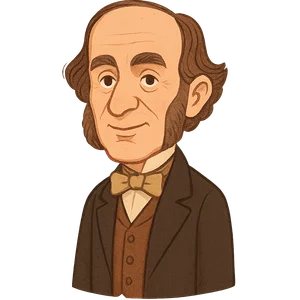
Richard Owen
Sir Richard Owen was a 19th-century English biologist, comparative anatomist…
Reads at Grades 6–8 Listens at Grades 4–8
Print & create
Answer keys·No prep·Free with an account
28 worksheets · answer keys · full story · quiz · Ages 10-12 · CEFR B2
Plus adds 279,000+ more stories in 27 languages, audio for every one, and printables for all of them.
Just want Richard Owen?
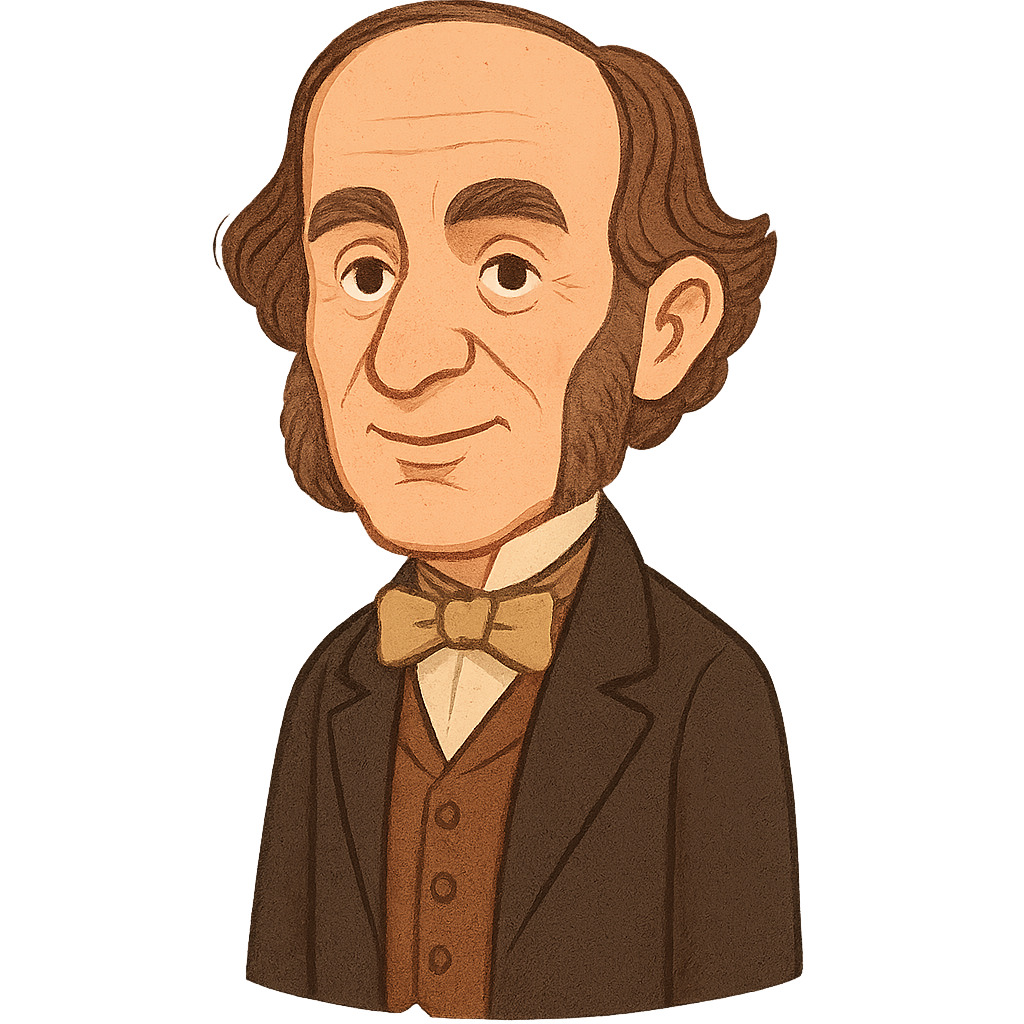
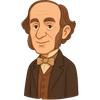
Hello, my name is Richard Owen, and I am a scientist who gave some of the most incredible creatures that ever lived their name. I was born on July 20th, 1804, in the town of Lancaster, England. From a young age, I was fascinated by the natural world. I didn't just want to see animals; I wanted to understand how they were put together and how their bodies worked. This deep curiosity about anatomy, the structure of living things, guided my entire life. When I was a teenager, my interest led me to begin an apprenticeship with a local surgeon in 1820. This was my first real chance to study anatomy up close. I continued my medical education in the great cities of Edinburgh and then London, learning everything I could about the intricate designs of life. My hard work paid off. In 1827, I was offered a position that felt like a dream come true. I became an assistant at the famous Hunterian Museum in London. It was a vast collection, a library of life itself, filled with thousands of animal skeletons and preserved specimens from all over the world. My job was to organize and catalog every single one. It was a monumental task, but for me, it was the perfect place to be.
Working at the museum allowed me to practice a science I loved called comparative anatomy. This is the skill of comparing the body structures of different animals to see how they are similar and how they are different. It’s like being a detective, looking for clues in bones to understand the grand story of life. During the 1820s and 1830s, an incredible mystery began to unfold in England. All across the country, workers were digging up enormous fossilized bones, unlike anything anyone had ever seen. These weren't the bones of elephants or whales; they were something else entirely. I was given the opportunity to study some of these amazing fossils, including those of creatures that had been named Megalosaurus and Iguanodon. As I examined their skeletons, I noticed something remarkable. While they were reptiles, their bones had features that were very different from any living reptile like a lizard or a crocodile. More importantly, they shared certain key features with each other, suggesting they weren't just a random collection of giant lizards. I realized they belonged to their own distinct group of animals. In 1841, I stood before my scientific colleagues and presented my findings, which were then published in 1842. I proposed that these animals should be classified together, and I gave their group a new name: 'Dinosauria.' The name comes from Greek words meaning 'terrible lizard,' a name that I felt captured the awesome and powerful nature of these magnificent ancient reptiles.
Richard Owen
Hello, my name is Richard Owen, and I am a scientist who gave some of the most incredible creatures that ever lived their name. I was born on July 20th, 1804, in the town of Lancaster, England. From a young age, I was fascinated by the natural world. I didn't just want to see animals; I wanted to understand how they were put together and how their bodies worked. This deep curiosity about anatomy, the structure of living things, guided my entire life. When I was a teenager, my interest led me to begin an apprenticeship with a local surgeon in 1820. This was my first real chance to study anatomy up close. I continued my medical education in the great cities of Edinburgh and then London, learning everything I could about the intricate designs of life. My hard work paid off. In 1827, I was offered a position that felt like a dream come true. I became an assistant at the famous Hunterian Museum in London. It was a vast collection, a library of life itself, filled with thousands of animal skeletons and preserved specimens from all over the world. My job was to organize and catalog every single one. It was a monumental task, but for me, it was the perfect place to be.
Working at the museum allowed me to practice a science I loved called comparative anatomy. This is the skill of comparing the body structures of different animals to see how they are similar and how they are different. It’s like being a detective, looking for clues in bones to understand the grand story of life. During the 1820s and 1830s, an incredible mystery began to unfold in England. All across the country, workers were digging up enormous fossilized bones, unlike anything anyone had ever seen. These weren't the bones of elephants or whales; they were something else entirely. I was given the opportunity to study some of these amazing fossils, including those of creatures that had been named Megalosaurus and Iguanodon. As I examined their skeletons, I noticed something remarkable. While they were reptiles, their bones had features that were very different from any living reptile like a lizard or a crocodile. More importantly, they shared certain key features with each other, suggesting they weren't just a random collection of giant lizards. I realized they belonged to their own distinct group of animals. In 1841, I stood before my scientific colleagues and presented my findings, which were then published in 1842. I proposed that these animals should be classified together, and I gave their group a new name: 'Dinosauria.' The name comes from Greek words meaning 'terrible lizard,' a name that I felt captured the awesome and powerful nature of these magnificent ancient reptiles.
Giving the dinosaurs their name brought me a great deal of recognition, and I became one of the most famous scientists in Britain. With my growing influence, I wanted to share the wonders of science with as many people as possible. I believed that knowledge about the natural world shouldn't be locked away for only a few experts to see; it should be available to everyone. In 1856, I was appointed Superintendent of the natural history collections at the British Museum. This was a great honor, but it came with a huge problem. The museum was overflowing. We had so many specimens—from the tiniest insects to the giant dinosaur bones—that we were simply running out of room. That’s when I began to dream of something bigger. I envisioned a new, separate museum dedicated entirely to the story of nature. I imagined a grand building, a beautiful 'cathedral to nature,' that would inspire awe and curiosity in every visitor. It was a long and difficult journey to make this dream a reality. I had to spend years convincing the government to fund the project and worked closely on the plans for its design. Finally, after decades of persistence, my vision came to life. On April 18th, 1881, the magnificent Natural History Museum opened its doors to the public in South Kensington, London. Seeing people walk into that grand hall for the first time, ready to explore the wonders of our planet, was one of the proudest moments of my life.
I dedicated my life to exploring and explaining the vast kingdom of animal life, both ancient and modern. From the smallest specimen in a jar to the towering skeletons of long-extinct giants, I saw a beautiful and complex story that I wanted to share with the world. I lived to be 88 years old, passing away in 1892 after a long and fulfilling career. Today, I am remembered for two main contributions that have shaped how we see the natural world. I am the scientist who gave the dinosaurs their famous name, sparking the imagination of people everywhere. I am also remembered for my tireless work to create the Natural History Museum. That beautiful museum still stands today, welcoming millions of visitors each year and inspiring new generations to marvel at the incredible story of life on Earth. Knowing that my work continues to spark curiosity in others was always my greatest hope.
Wow facts
About
Sir Richard Owen was a 19th-century English biologist, comparative anatomist, and paleontologist who is best known for coining the term 'Dinosauria' and for his role in the creation of the Natural History Museum in London.
Take a Quiz
Question 1 of 5
What was Richard Owen's primary motivation for wanting to build a new museum?
Explore next



Want to do even more?
Go beyond exploring. Unlock tools that turn every story into real learning.

Storypie Plus for families
Full stories, quizzes, and printables. Nights and car rides, sorted.
- Unlimited audio stories
- Create Mode: your child stars in the story
- Offline downloads
- Printable worksheets & coloring pages

Why Storypie for Schools
Students engaged. Prep in seconds. Evenings back to you.
- Worksheets & Quizzes
- Classroom Management
- Formative Assessment
- Custom Curriculum & Lesson Plans
- 27 Languages

Why Storypie for Homeschool
Curriculum done. They'll ask for more. Hours back in your day.
- Worksheet Generator
- First-Person Audio Stories
- Built-in Comprehension Quizzes
- Custom Curriculum & Lesson Plans
- Print & Go Activities