English

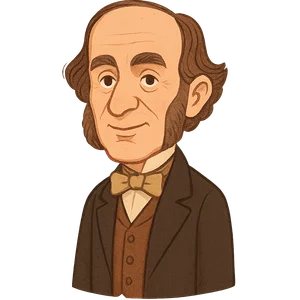
Richard Owen
Sir Richard Owen was a 19th-century English biologist, comparative anatomist…
Reads at Grades 3–5 Listens at Grades 1–5
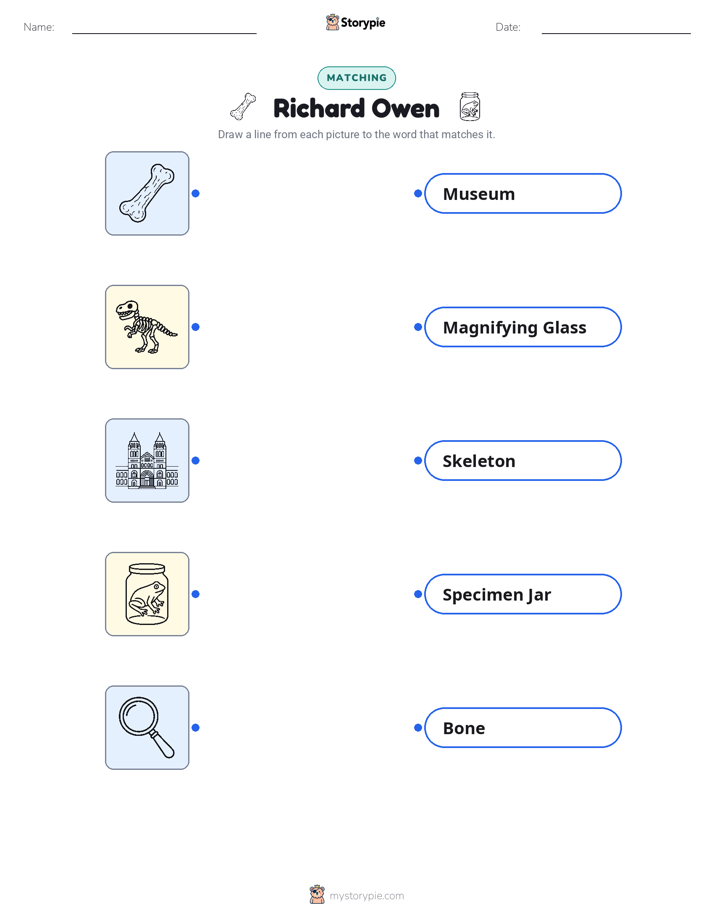
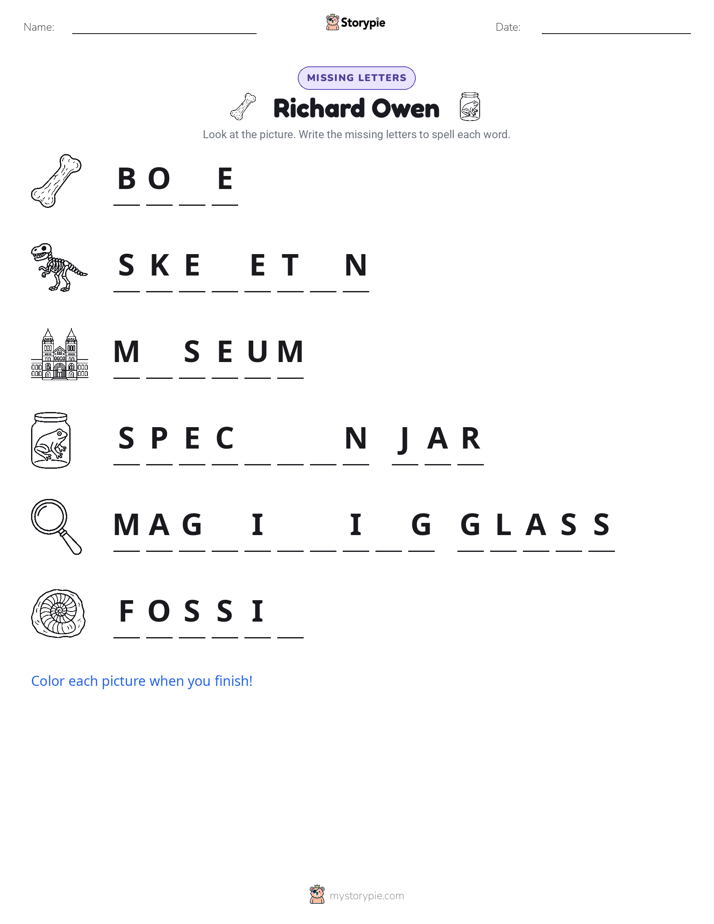
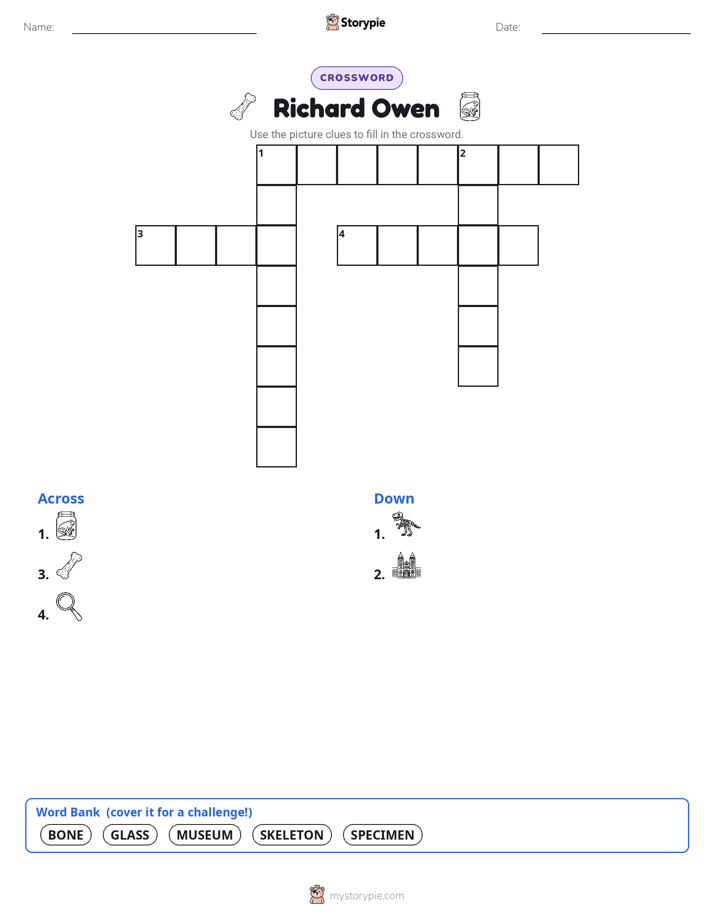
Print & create
Answer keys·No prep·Free with an account
28 worksheets · answer keys · full story · quiz · Ages 8-10 · CEFR B1
Plus adds 279,000+ more stories in 27 languages, audio for every one, and printables for all of them.
Just want Richard Owen?
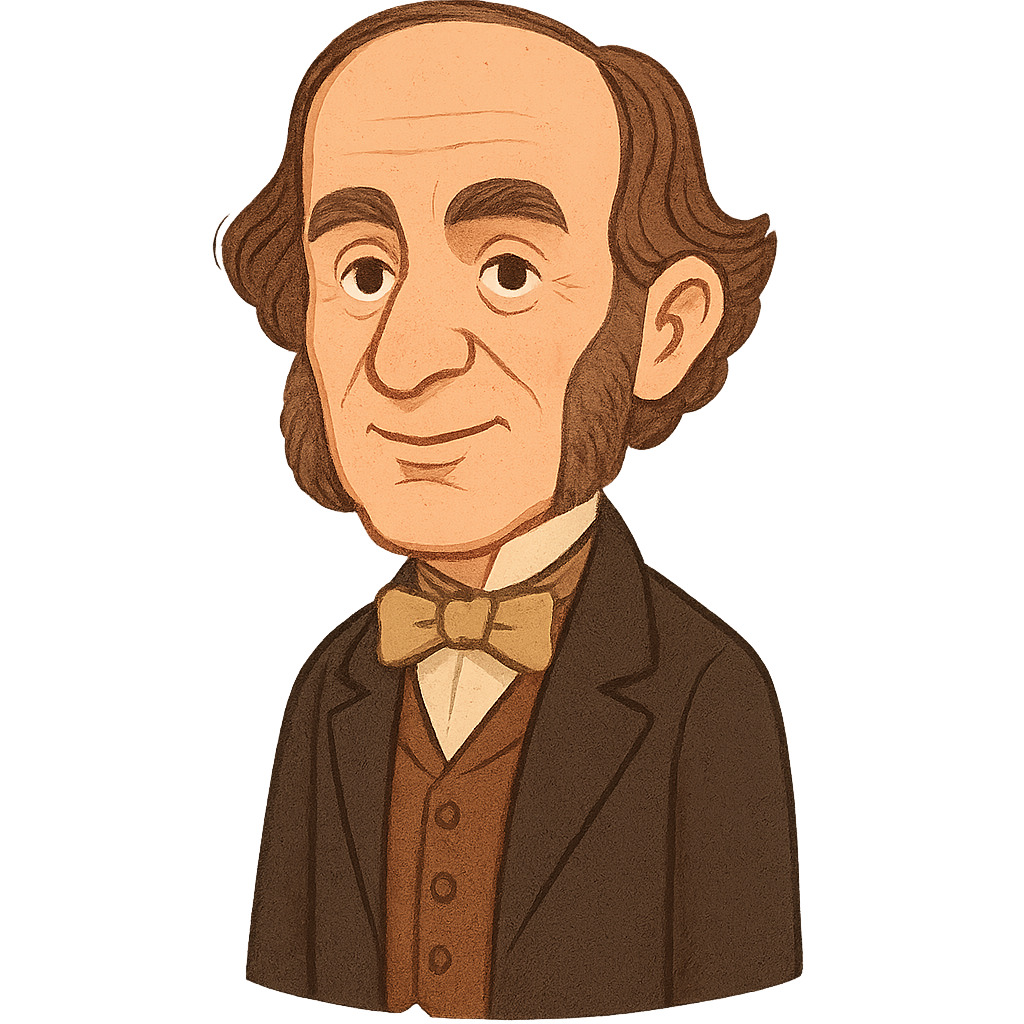
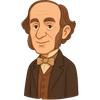
Hello! My name is Richard Owen. I was born a very long time ago, on July 20th, 1804, in a town called Lancaster in England. Even as a young boy, I was fascinated by the natural world, especially animals. I wasn't just interested in watching them run and play; I wanted to know how they worked on the inside. I loved studying bones and learning how every part of an animal's body fit together like a perfect puzzle. This love for anatomy, which is the study of the body's structure, would guide my entire life.
When I grew up, I moved to London to study medicine, but my real passion was still anatomy. In 1827, I was given a wonderful opportunity to work at a special place called the Hunterian Museum. This museum was filled with thousands of skeletons and specimens from animals all over the world. It became my job to study and organize this enormous collection. Can you imagine spending your days surrounded by the bones of lions, whales, and strange creatures you've never seen before? For me, it was a dream come true. Through this careful work, I became an expert at comparing the bodies of different animals, a skill that would soon lead to my biggest discovery.
During the early 1800s, people all over England began finding giant, mysterious bones buried deep in the earth. Some people thought they belonged to giant lizards or even dragons from old myths. I was given the amazing chance to study the fossils of three of these creatures: Megalosaurus, Iguanodon, and Hylaeosaurus. As I carefully examined their bones, I noticed something incredible. They weren't like any lizard living today. They had features that were completely different and shared traits with each other. In 1842, I announced that these animals belonged to a whole new group. I gave them a name you will definitely know: Dinosauria, which means 'terrible lizards.' I had just officially named the dinosaurs.
Richard Owen: The Man Who Named the Dinosaurs
Hello! My name is Richard Owen. I was born a very long time ago, on July 20th, 1804, in a town called Lancaster in England. Even as a young boy, I was fascinated by the natural world, especially animals. I wasn't just interested in watching them run and play; I wanted to know how they worked on the inside. I loved studying bones and learning how every part of an animal's body fit together like a perfect puzzle. This love for anatomy, which is the study of the body's structure, would guide my entire life.
When I grew up, I moved to London to study medicine, but my real passion was still anatomy. In 1827, I was given a wonderful opportunity to work at a special place called the Hunterian Museum. This museum was filled with thousands of skeletons and specimens from animals all over the world. It became my job to study and organize this enormous collection. Can you imagine spending your days surrounded by the bones of lions, whales, and strange creatures you've never seen before? For me, it was a dream come true. Through this careful work, I became an expert at comparing the bodies of different animals, a skill that would soon lead to my biggest discovery.
During the early 1800s, people all over England began finding giant, mysterious bones buried deep in the earth. Some people thought they belonged to giant lizards or even dragons from old myths. I was given the amazing chance to study the fossils of three of these creatures: Megalosaurus, Iguanodon, and Hylaeosaurus. As I carefully examined their bones, I noticed something incredible. They weren't like any lizard living today. They had features that were completely different and shared traits with each other. In 1842, I announced that these animals belonged to a whole new group. I gave them a name you will definitely know: Dinosauria, which means 'terrible lizards.' I had just officially named the dinosaurs.
After my exciting work with dinosaurs, I realized that London's collections of fossils, plants, and animals were getting too big for the museum where they were stored. I had a grand idea: to build a new, magnificent museum dedicated entirely to the story of nature. I worked for many years to make this dream a reality. Finally, in 1881, the beautiful Natural History Museum opened its doors in London. It was designed to be a place where everyone, not just scientists, could come and marvel at the wonders of the natural world, from the tiniest insect to the giant dinosaur skeletons that greeted them at the door.
I continued my work for many more years, always driven by my curiosity about the world. I lived a long and full life, to be 88 years old. Today, people remember me for two big things. First, every time you say the word 'dinosaur,' you are using a word that I came up with. And second, the grand museum I helped create still stands today, inspiring millions of visitors each year to learn about our incredible planet and the amazing creatures who have lived on it. I hope my story shows you that if you follow your passion, you might just discover something wonderful.
Wow facts
About
Sir Richard Owen was a 19th-century English biologist, comparative anatomist, and paleontologist who is best known for coining the term 'Dinosauria' and for his role in the creation of the Natural History Museum in London.
Take a Quiz
Question 1 of 5
In the story, I say I loved studying 'anatomy.' Based on the story, what does anatomy mean?
Explore next



Want to do even more?
Go beyond exploring. Unlock tools that turn every story into real learning.

Storypie Plus for families
Full stories, quizzes, and printables. Nights and car rides, sorted.
- Unlimited audio stories
- Create Mode: your child stars in the story
- Offline downloads
- Printable worksheets & coloring pages

Why Storypie for Schools
Students engaged. Prep in seconds. Evenings back to you.
- Worksheets & Quizzes
- Classroom Management
- Formative Assessment
- Custom Curriculum & Lesson Plans
- 27 Languages

Why Storypie for Homeschool
Curriculum done. They'll ask for more. Hours back in your day.
- Worksheet Generator
- First-Person Audio Stories
- Built-in Comprehension Quizzes
- Custom Curriculum & Lesson Plans
- Print & Go Activities