English

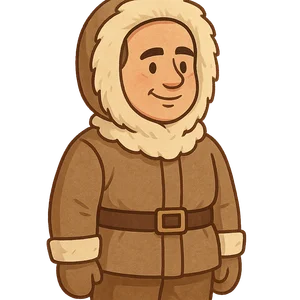
Robert Falcon Scott
Robert Falcon Scott was a British Royal Navy officer and explorer who led two expeditions to Antarctica…
Reads at Grades 6–8 Listens at Grades 4–8
Print & create
Answer keys·No prep·Free with an account
28 worksheets · answer keys · full story · quiz · Ages 10-12 · CEFR B2
Plus adds 208,000+ more stories in 27 languages, audio for every one, and printables for all of them.
Just want Robert Falcon Scott?
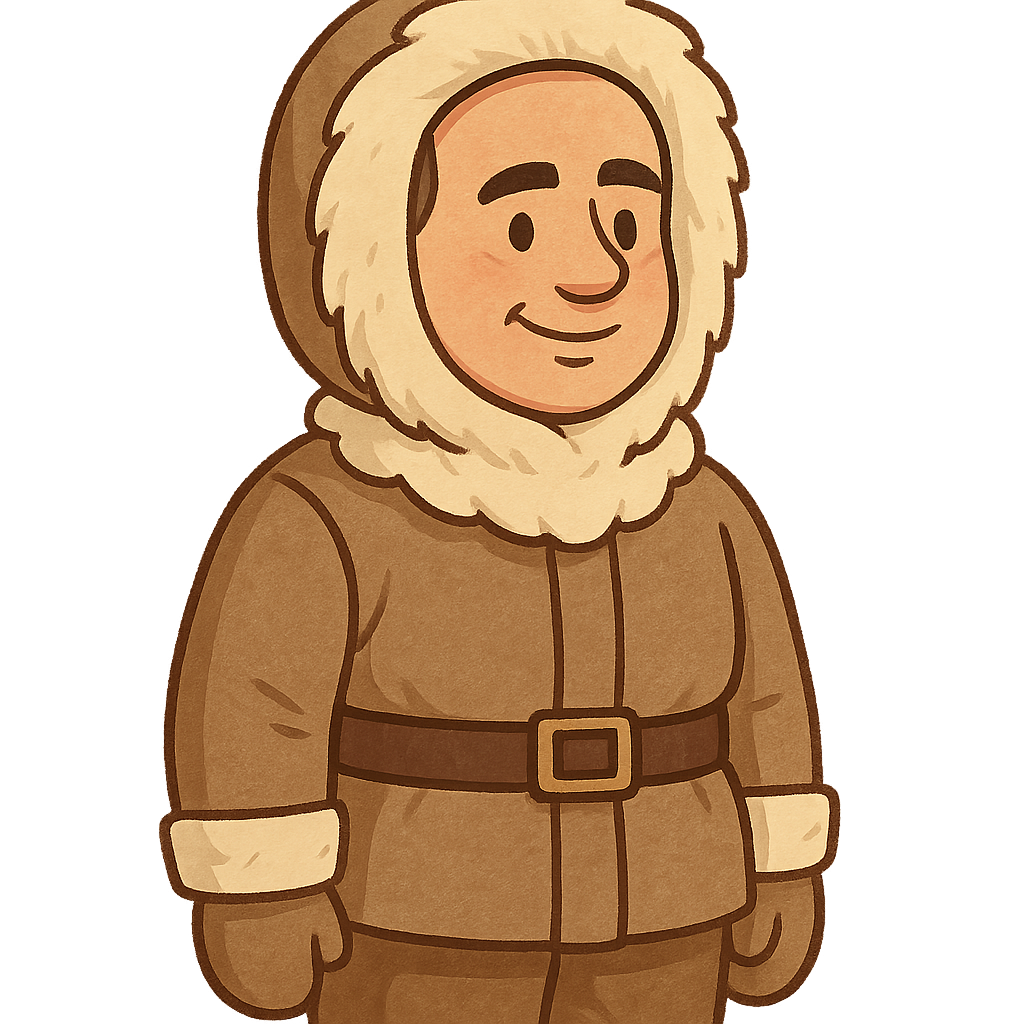
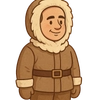
Hello! My name is Robert Falcon Scott, but you can call me Con, as my family did. I was born on June 6th, 1868, in a port town called Plymouth, in England. From my earliest days, I was fascinated by the sea and the grand ships of the Royal Navy. It felt like a world of adventure was waiting just beyond the horizon. In 1881, at just 13 years old, I made that world my own when I joined the navy as a cadet. I spent my youth learning about navigation, leadership, and the challenges of life at sea, never dreaming that these skills would one day take me to the coldest, most remote place on Earth.
My first great adventure began in 1901 when I was chosen to lead the British National Antarctic Expedition. Our sturdy ship was named the *Discovery*, and it carried us toward a continent of ice and snow at the very bottom of the world. Our goal was to explore Antarctica, a place few had ever seen. For three years, my crew and I studied the weather, the animals, and the geography of this mysterious land. With my companions, including Ernest Shackleton and Edward Wilson, we traveled farther south than anyone had before, setting a record in 1902. The conditions were incredibly difficult, with biting winds and extreme cold, but the experience prepared me for an even greater challenge to come.
After returning home, I couldn't forget the stark, silent beauty of Antarctica. The idea of a final, great earthly journey took hold of me. I began planning a new expedition, one with a very specific, ambitious goal: to be the first person in history to reach the South Pole. We set sail in 1910 on a ship called the *Terra Nova*. It was a mission of national pride and scientific importance. However, we soon learned that a Norwegian explorer, Roald Amundsen, had the same goal. It had become a race! Our expedition wasn't just about reaching the Pole, though; we brought along talented scientists to continue our important research about the Antarctic environment, its geology, and its weather.
Robert Falcon Scott: Journey to the South Pole
Hello! My name is Robert Falcon Scott, but you can call me Con, as my family did. I was born on June 6th, 1868, in a port town called Plymouth, in England. From my earliest days, I was fascinated by the sea and the grand ships of the Royal Navy. It felt like a world of adventure was waiting just beyond the horizon. In 1881, at just 13 years old, I made that world my own when I joined the navy as a cadet. I spent my youth learning about navigation, leadership, and the challenges of life at sea, never dreaming that these skills would one day take me to the coldest, most remote place on Earth.
My first great adventure began in 1901 when I was chosen to lead the British National Antarctic Expedition. Our sturdy ship was named the Discovery, and it carried us toward a continent of ice and snow at the very bottom of the world. Our goal was to explore Antarctica, a place few had ever seen. For three years, my crew and I studied the weather, the animals, and the geography of this mysterious land. With my companions, including Ernest Shackleton and Edward Wilson, we traveled farther south than anyone had before, setting a record in 1902. The conditions were incredibly difficult, with biting winds and extreme cold, but the experience prepared me for an even greater challenge to come.
After returning home, I couldn't forget the stark, silent beauty of Antarctica. The idea of a final, great earthly journey took hold of me. I began planning a new expedition, one with a very specific, ambitious goal: to be the first person in history to reach the South Pole. We set sail in 1910 on a ship called the Terra Nova. It was a mission of national pride and scientific importance. However, we soon learned that a Norwegian explorer, Roald Amundsen, had the same goal. It had become a race! Our expedition wasn't just about reaching the Pole, though; we brought along talented scientists to continue our important research about the Antarctic environment, its geology, and its weather.
In November of 1911, we began our 900-mile journey across the ice. The Antarctic continent is a harsh and unforgiving place, and our march was the hardest thing I had ever done. Our motor sledges, which we had hoped would make the journey easier, broke down in the extreme temperatures. The ponies we brought to haul supplies couldn't handle the intense cold and deep snow. We had to rely on our own strength, pulling heavy sledges loaded with food and equipment day after day. For the final push to the Pole, I chose four companions to join me: my dear friend Dr. Edward Wilson, Henry Bowers, Edgar Evans, and Captain Lawrence Oates. Together, the five of us marched into the vast, white unknown.
On January 17th, 1912, we finally made it. We stood at the South Pole, the very bottom of the world. It was a moment of incredible achievement, but it was also a moment of great disappointment. There, fluttering in the icy wind, was a Norwegian flag. A small tent stood nearby with a letter inside. Roald Amundsen and his team had beaten us by about a month. We took photographs and planted our own British flag, proud of our long and difficult journey, but we had a dangerous 900-mile trek back to our base, and our spirits were low.
The journey back was a desperate struggle. The weather turned against us and was far worse than we had ever expected. We faced blinding blizzards and temperatures colder than minus 40 degrees. We grew weak from exhaustion and a lack of food as our rations dwindled. We sadly lost two of our men along the way. First, Edgar Evans weakened and collapsed. Later, Lawrence Oates, suffering from severe frostbite, walked out of our tent into a blizzard, bravely sacrificing himself to give the rest of us a better chance. The three of us who remained—Wilson, Bowers, and I—pushed on, but a fierce blizzard trapped us in our tent, only 11 miles from a supply camp that could have saved us.
Our bodies and my journals, where I had written everything down, were found by a search party eight months later, in November 1912. I lived to be 43 years old. Though we did not make it home, our story of courage, friendship, and endurance in the face of impossible odds has inspired people for generations. The scientific samples we collected, which we dragged on our sledges even on that final journey, taught the world a great deal about Antarctica. I hope my story reminds you that the spirit of exploration is not just about being first, but about pushing the limits of what is possible and facing life's greatest challenges with bravery.
Wow facts
About
Robert Falcon Scott was a British Royal Navy officer and explorer who led two expeditions to Antarctica, including the famed but ill-fated Terra Nova Expedition to be the first to reach the South Pole.
Take a Quiz
Question 1 of 5
Summarize the main challenge my team and I faced on the return journey from the South Pole.
Explore next




Want to do even more?
Go beyond exploring. Unlock tools that turn every story into real learning.

Storypie Plus for families
Full stories, quizzes, and printables. Nights and car rides, sorted.
- Unlimited audio stories
- Create Mode: your child stars in the story
- Offline downloads
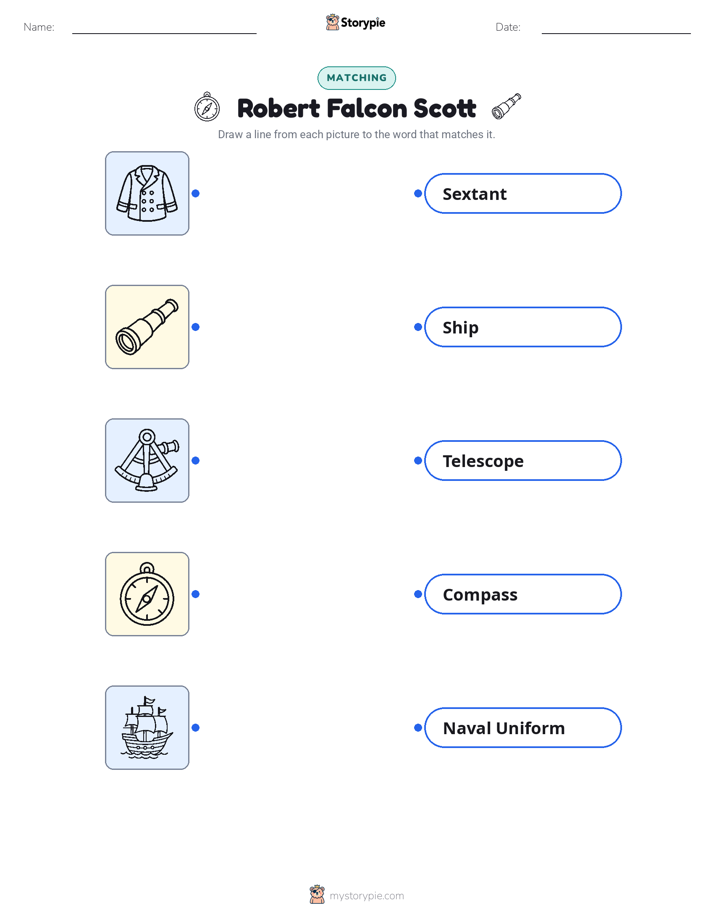
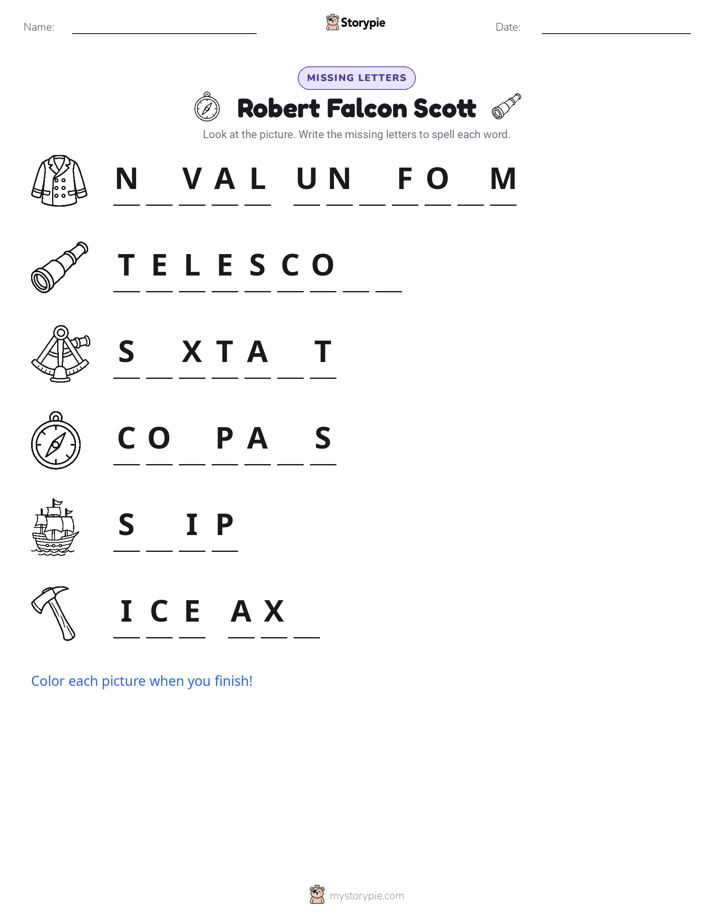
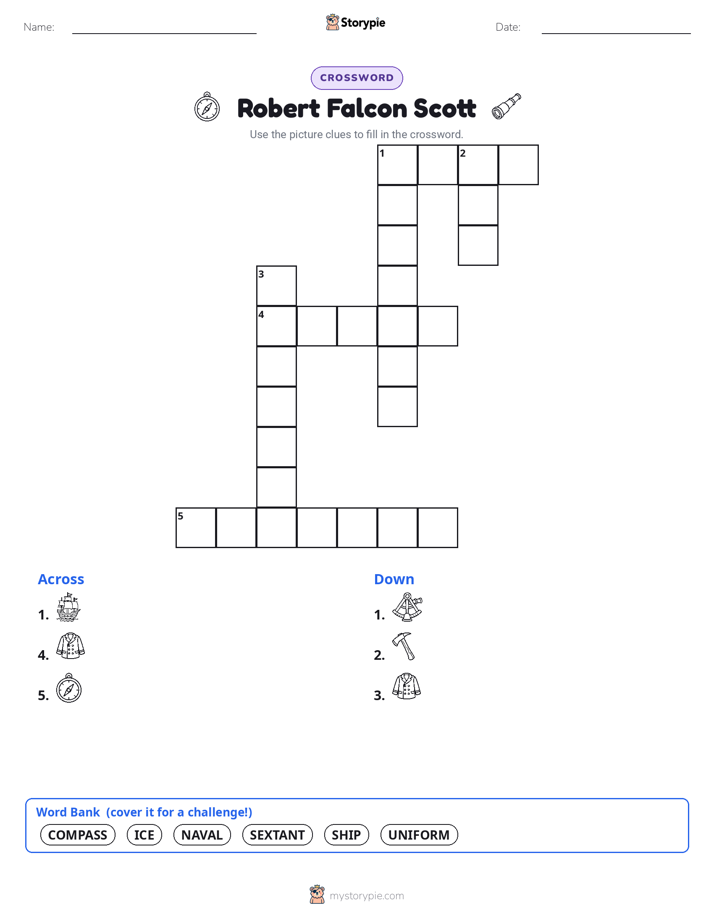
- Printable worksheets & coloring pages

Why Storypie for Schools
Students engaged. Prep in seconds. Evenings back to you.
- Worksheets & Quizzes
- Classroom Management
- Formative Assessment
- Custom Curriculum & Lesson Plans
- 27 Languages

Why Storypie for Homeschool
Curriculum done. They'll ask for more. Hours back in your day.
- Worksheet Generator
- First-Person Audio Stories
- Built-in Comprehension Quizzes
- Custom Curriculum & Lesson Plans
- Print & Go Activities