English

Robert Fulton
Robert Fulton was an American engineer and inventor who is widely credited with developing the first…
Reads at Grades 6–8 Listens at Grades 4–8
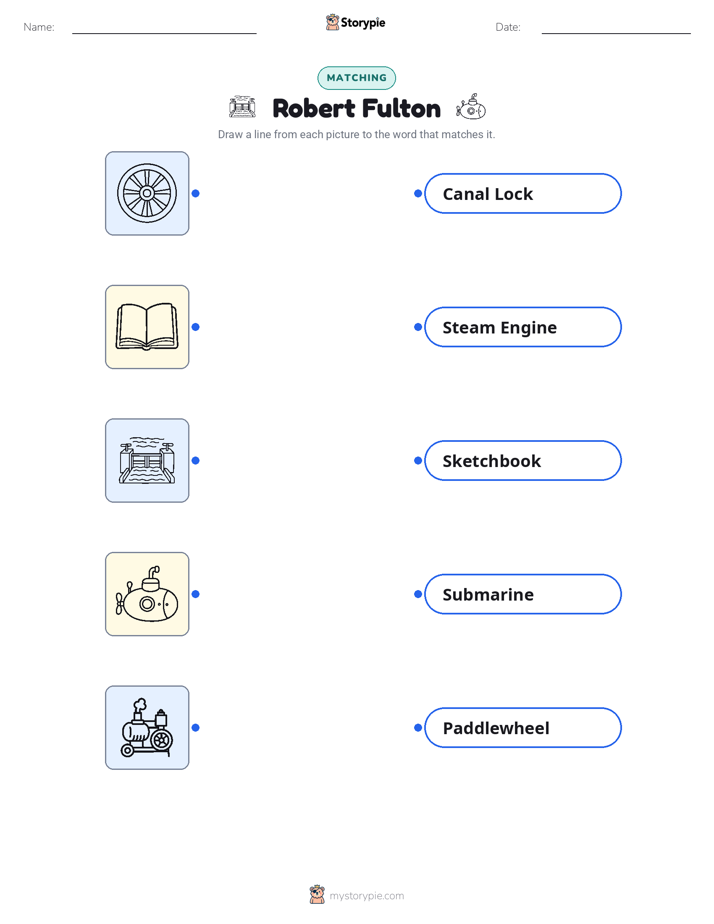
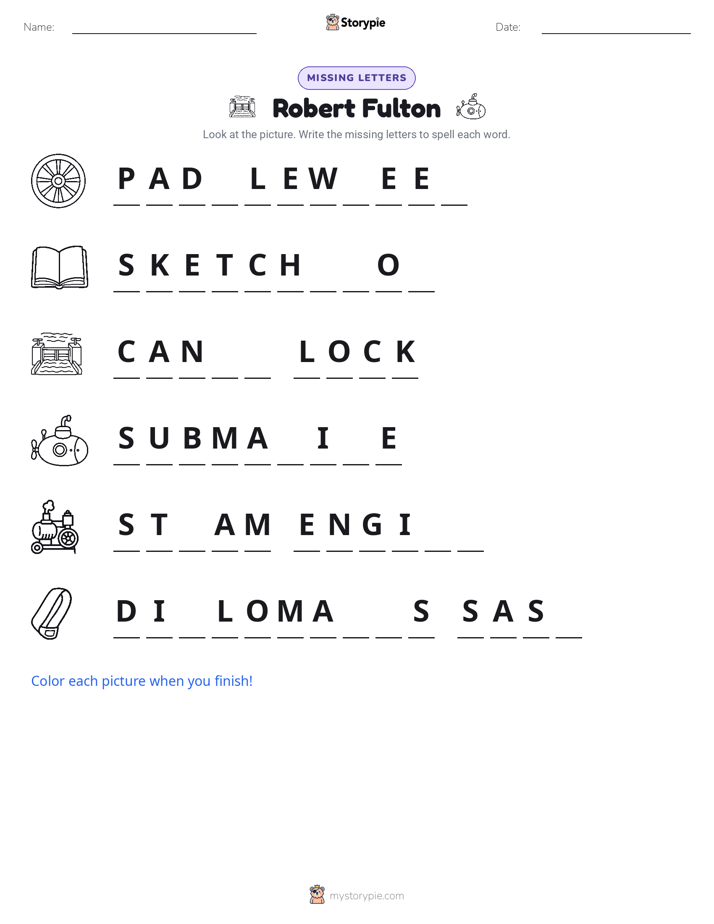
Print & create
Answer keys·No prep·Free with an account
28 worksheets · answer keys · full story · quiz · Ages 10-12 · CEFR B2
Plus adds 244,000+ more stories in 27 languages, audio for every one, and printables for all of them.
Just want Robert Fulton?
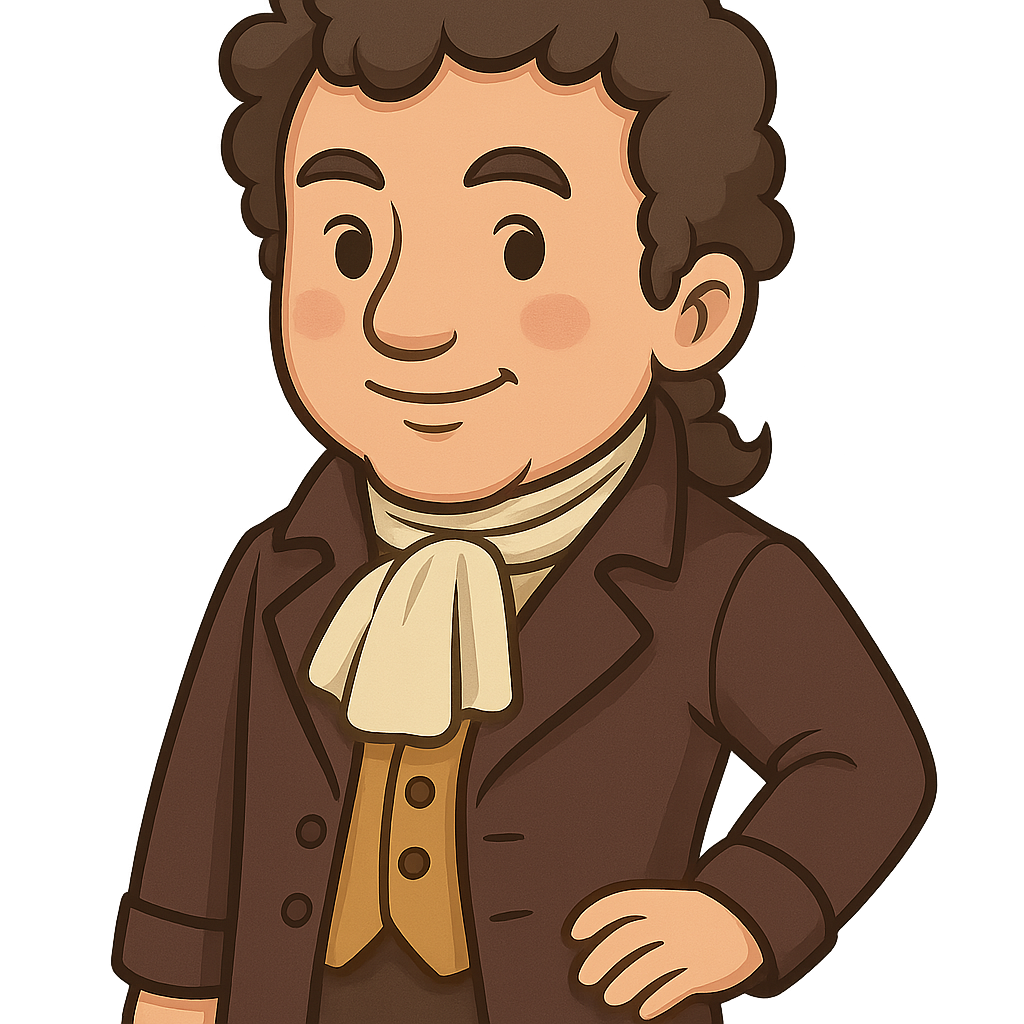
Hello, my name is Robert Fulton, and I am an inventor who helped change the way the world traveled. My story begins in rural Pennsylvania, where I was born on November 14th, 1765. Growing up, I wasn't like the other boys who spent all their time playing games. My mind was always buzzing with ideas, and my hands were always busy tinkering. I loved to sketch designs for new machines and figure out how things worked. When I was just a boy, I even built my own hand-powered paddlewheel for my fishing boat so I wouldn't have to row. This early passion for creation was my constant companion. Around 1782, I decided to pursue a career that combined my artistic eye with my steady hand. I moved to the bustling city of Philadelphia and began working as an artist, specializing in painting miniature portraits on ivory. It was a good living, but I soon realized that while I enjoyed art, my true calling was in the world of invention and engineering.
In 1786, my artistic ambitions took me across the Atlantic Ocean to London, England. I went there to study with a very famous American painter named Benjamin West. I learned a great deal about art, but my mind never stopped wandering back to machines and new ways of doing things. In England, I was fascinated by the network of canals they used to transport goods across the country. Watching the slow-moving canal boats, I became convinced there had to be a more efficient way to move things on water. My fascination grew into a new passion for engineering. My head was filled with ideas for canal improvements, locks, and even different types of boats. This shift from art to engineering became official when, in 1796, I published a book on the subject of canal navigation, sharing my ideas with the world.
Robert Fulton: The Man Who Steamed Ahead
Hello, my name is Robert Fulton, and I am an inventor who helped change the way the world traveled. My story begins in rural Pennsylvania, where I was born on November 14th, 1765. Growing up, I wasn't like the other boys who spent all their time playing games. My mind was always buzzing with ideas, and my hands were always busy tinkering. I loved to sketch designs for new machines and figure out how things worked. When I was just a boy, I even built my own hand-powered paddlewheel for my fishing boat so I wouldn't have to row. This early passion for creation was my constant companion. Around 1782, I decided to pursue a career that combined my artistic eye with my steady hand. I moved to the bustling city of Philadelphia and began working as an artist, specializing in painting miniature portraits on ivory. It was a good living, but I soon realized that while I enjoyed art, my true calling was in the world of invention and engineering.
In 1786, my artistic ambitions took me across the Atlantic Ocean to London, England. I went there to study with a very famous American painter named Benjamin West. I learned a great deal about art, but my mind never stopped wandering back to machines and new ways of doing things. In England, I was fascinated by the network of canals they used to transport goods across the country. Watching the slow-moving canal boats, I became convinced there had to be a more efficient way to move things on water. My fascination grew into a new passion for engineering. My head was filled with ideas for canal improvements, locks, and even different types of boats. This shift from art to engineering became official when, in 1796, I published a book on the subject of canal navigation, sharing my ideas with the world.
My journey as an inventor took me to France around the year 1797. This was a time of great change and innovation in Europe, and I wanted to be part of it. It was here that I took on one of my most daring projects: designing one of the world's first practical submarines. In the year 1800, I completed my creation and named it the Nautilus. It was a hand-cranked vessel that could travel underwater and even attach an explosive charge to an enemy ship. I successfully demonstrated the Nautilus for the French government, proving that underwater travel was possible. While this invention was remarkable, my greatest dream was still to build a boat powered by a steam engine. In 1802, while I was in Paris, I met a man who would help make that dream a reality. His name was Robert R. Livingston, an American diplomat who believed in my vision and agreed to become my partner.
With Livingston's support, I returned to America in 1806, ready to begin the most important project of my life. My goal was to build a commercially successful steamboat. The work was difficult, and many people were skeptical. They had never seen a boat move without sails or oars, and they openly mocked my project, calling it 'Fulton's Folly.' They were certain it would fail. But I was determined to prove them wrong. After months of hard work, my boat was ready. On August 17th, 1807, a crowd gathered at the docks of New York City to watch what they expected to be a disaster. My North River Steamboat, which would later be known as the Clermont, chugged away from the dock, its steam engine puffing smoke and its paddlewheels churning the water. We made the 150-mile journey up the Hudson River to Albany in just 32 hours, a trip that took sailing vessels four days. The sight of our boat moving steadily against the current without sails was astonishing. On that day, I felt the incredible satisfaction of proving that steam power could conquer the rivers and change the world.
After the success of the Clermont, my life was dedicated to advancing steam-powered transportation. I went on to build many more steamboats, establishing commercial routes that helped connect the cities and towns of a rapidly growing America. My work also caught the attention of the U.S. government. I was asked to help design the world's first steam-powered warship for the U.S. Navy. That ship, the Demologos, was launched in 1814. My life was filled with the constant challenge of invention and the reward of seeing my ideas come to life. My work continued until I passed away in the winter of 1815. I lived to be 49 years old. My inventions, especially the steamboat, became a vital part of American life, making travel and trade faster and more reliable, and showing everyone the incredible power of steam.
Wow facts
About
Robert Fulton was an American engineer and inventor who is widely credited with developing the first commercially successful steamboat, the North River Steamboat, also known as the Clermont, which was built in 1807.
Take a Quiz
Question 1 of 5
What does the word 'folly' mean in the phrase 'Fulton's Folly'?
Explore next




Want to do even more?
Go beyond exploring. Unlock tools that turn every story into real learning.

Storypie Plus for families
Full stories, quizzes, and printables. Nights and car rides, sorted.
- Unlimited audio stories
- Create Mode: your child stars in the story
- Offline downloads
- Printable worksheets & coloring pages

Why Storypie for Schools
Students engaged. Prep in seconds. Evenings back to you.
- Worksheets & Quizzes
- Classroom Management
- Formative Assessment
- Custom Curriculum & Lesson Plans
- 27 Languages

Why Storypie for Homeschool
Curriculum done. They'll ask for more. Hours back in your day.
- Worksheet Generator
- First-Person Audio Stories
- Built-in Comprehension Quizzes
- Custom Curriculum & Lesson Plans
- Print & Go Activities