English

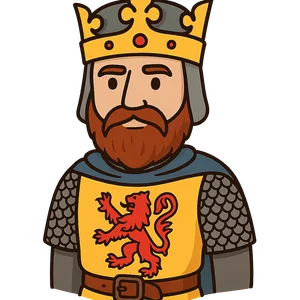
Robert the Bruce
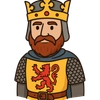
Robert the Bruce was the King of Scots from 1306 to 1329.
Reads at Grades 6–8 Listens at Grades 4–8
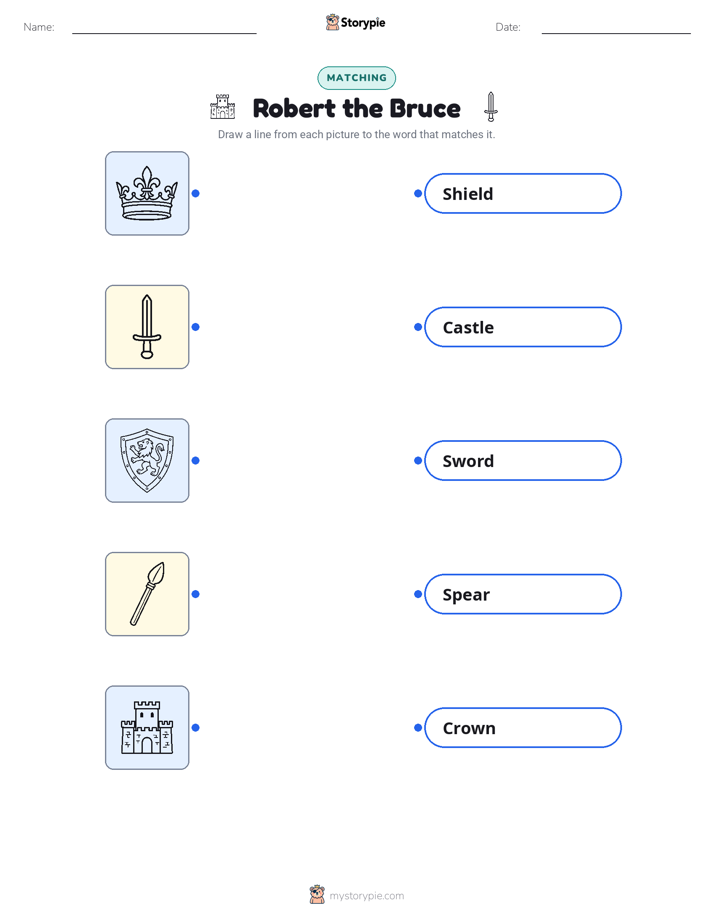
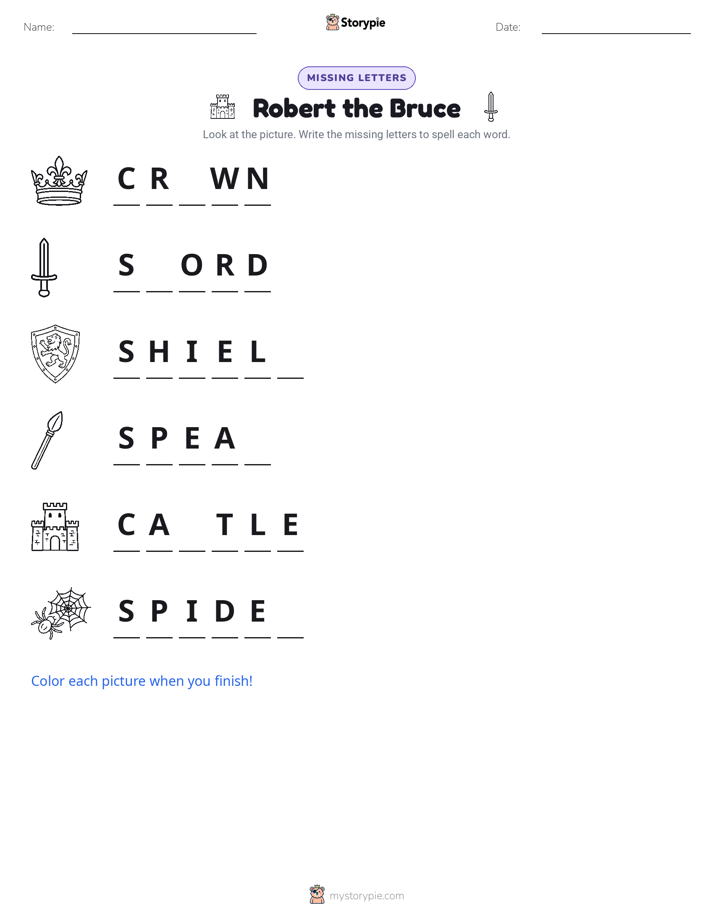
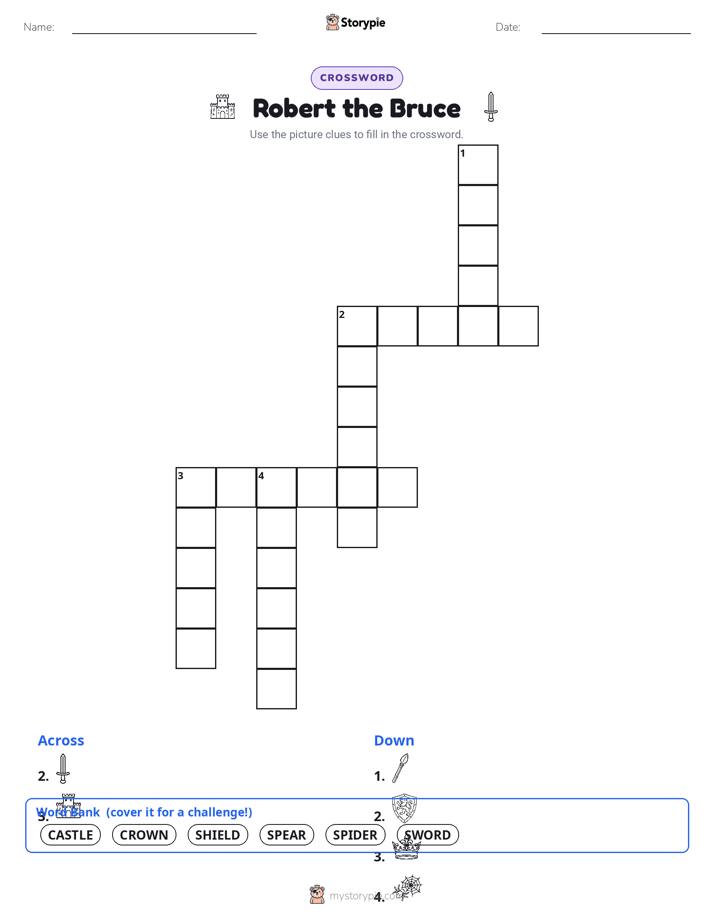
Print & create
Answer keys·No prep·Free with an account
28 worksheets · answer keys · full story · quiz · Ages 10-12 · CEFR B2
Plus adds 244,000+ more stories in 27 languages, audio for every one, and printables for all of them.
Just want Robert the Bruce?
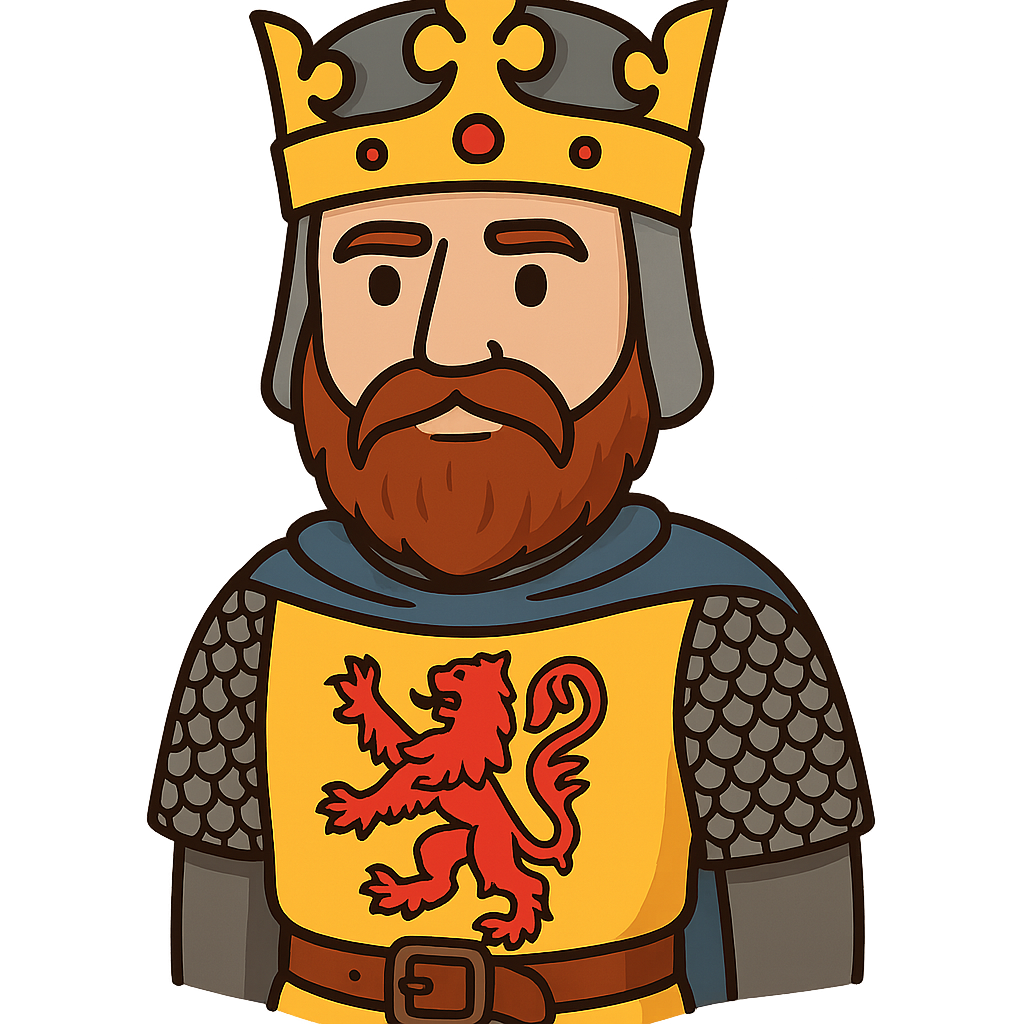
Hello! My name is Robert the Bruce, and I became a king who fought for the freedom of my country, Scotland. I was born on July 11th, 1274, into a powerful noble family. From a young age, I was taught that my family had a strong claim to the Scottish throne. This was a time of great uncertainty for our nation. After our king, Alexander III, died without a son, the powerful King Edward I of England saw an opportunity to control Scotland. My own grandfather competed for the crown, but another man, John Balliol, was chosen in 1292. The political world was very complicated, and I knew I had to learn how to be a leader for my people.
For a time, I found myself making difficult choices, and I even sided with King Edward I of England. The politics of the era were complex, and alliances could shift quickly. However, I always believed in my heart that Scotland must be a free and independent nation. My journey to the throne truly began on a fateful day. I had a great rival for the crown, a man named John Comyn. We arranged to meet in a church in Dumfries on February 10th, 1306, to discuss our differences. Our conversation grew into a heated argument, which ended in a fight where I struck him down. It was a grave act, but it left me with only one path forward. I had to claim the throne and lead the fight for Scotland's freedom myself. Just a few weeks later, on March 25th, 1306, I was crowned King of Scots at Scone.
My reign did not begin with celebration. King Edward I was enraged by my actions and immediately sent his armies to hunt me down. I was defeated in my first battles and was forced to become an outlaw in my own kingdom. For many months, I had to hide in the rugged Highlands and on remote islands to survive. It was during this dark and difficult time that a famous story is told about me. While taking shelter in a cave, I spent hours watching a small spider trying to spin its web. It failed over and over, but it never gave up. Its relentless determination inspired me deeply. I thought, if a tiny spider could persevere, then so could I. From that moment on, I vowed to never give up the fight for Scotland.
Robert the Bruce: The Fight for Scotland
Hello! My name is Robert the Bruce, and I became a king who fought for the freedom of my country, Scotland. I was born on July 11th, 1274, into a powerful noble family. From a young age, I was taught that my family had a strong claim to the Scottish throne. This was a time of great uncertainty for our nation. After our king, Alexander III, died without a son, the powerful King Edward I of England saw an opportunity to control Scotland. My own grandfather competed for the crown, but another man, John Balliol, was chosen in 1292. The political world was very complicated, and I knew I had to learn how to be a leader for my people.
For a time, I found myself making difficult choices, and I even sided with King Edward I of England. The politics of the era were complex, and alliances could shift quickly. However, I always believed in my heart that Scotland must be a free and independent nation. My journey to the throne truly began on a fateful day. I had a great rival for the crown, a man named John Comyn. We arranged to meet in a church in Dumfries on February 10th, 1306, to discuss our differences. Our conversation grew into a heated argument, which ended in a fight where I struck him down. It was a grave act, but it left me with only one path forward. I had to claim the throne and lead the fight for Scotland's freedom myself. Just a few weeks later, on March 25th, 1306, I was crowned King of Scots at Scone.
My reign did not begin with celebration. King Edward I was enraged by my actions and immediately sent his armies to hunt me down. I was defeated in my first battles and was forced to become an outlaw in my own kingdom. For many months, I had to hide in the rugged Highlands and on remote islands to survive. It was during this dark and difficult time that a famous story is told about me. While taking shelter in a cave, I spent hours watching a small spider trying to spin its web. It failed over and over, but it never gave up. Its relentless determination inspired me deeply. I thought, if a tiny spider could persevere, then so could I. From that moment on, I vowed to never give up the fight for Scotland.
With renewed inspiration, I came out of hiding and began to gather my most loyal supporters, including the brave and skilled warrior James Douglas. We started fighting back, not with large armies at first, but with clever tactics. We launched surprise raids, won small but important battles, and began taking back our castles one by one. As we succeeded, more and more Scots rallied to our cause. King Edward I died in 1307, and his son, Edward II, took the English throne. By the year 1314, our forces had reclaimed most of Scotland. King Edward II knew he had to act decisively, so he gathered a massive army and marched north, intending to crush our rebellion once and for all. We carefully chose our ground for the coming battle near a stream called the Bannock Burn, preparing for the fight of our lives.
The Battle of Bannockburn took place over two long days, on June 23rd and 24th, 1314. It was the most important battle of my entire life. The English army was enormous, with thousands of heavily armored knights on horseback. My army was much smaller, primarily made up of determined spearmen on foot. We knew we could not win in a straightforward fight, so we used our knowledge of the land. We dug hidden pits in the ground to trap the charging English cavalry. We also arranged our soldiers into tight, disciplined formations called 'schiltrons.' These were like giant, spiky hedgehogs of spears that horses and knights could not break through. Our clever strategy and unwavering bravery won the day. We defeated the mighty English army and sent King Edward II fleeing back to England. It was a glorious victory that proved to the world that Scotland could win its freedom.
Even after our incredible victory at Bannockburn, our struggle was not over. We still needed England, and the rest of the world, to officially recognize that Scotland was a free and independent country with me as its rightful king. To make our case, the nobles of Scotland sent a powerful and eloquent letter to the Pope in 1320. This letter, now known as the Declaration of Arbroath, declared our right to be a sovereign nation. After years of more fighting and negotiations, England finally agreed. In 1328, we signed the Treaty of Edinburgh-Northampton. In this historic treaty, England at last recognized me as the King of an independent Scotland. My lifelong dream had finally been achieved.
I spent my final years working to rebuild and strengthen the kingdom I had fought so hard to free. I lived to be 54 years old, passing away on June 7th, 1329. As I had wished, my heart was carried on a crusade, and my body was laid to rest in Dunfermline Abbey. Today, I am remembered as a national hero in Scotland. My story has become one of determination, of fighting for what you believe in, and of never giving up, no matter how great the odds. I hope it shows that even in the darkest of times, courage and perseverance can lead to the greatest victories.
Wow facts
About
Robert the Bruce was the King of Scots from 1306 to 1329. A national hero of Scotland, he successfully led his country during the First War of Scottish Independence against England, culminating in the decisive victory at the Battle of Bannockburn.
Take a Quiz
Question 1 of 5
After I was crowned king in 1306, what was the first major challenge I had to overcome?
Explore next


Want to do even more?
Go beyond exploring. Unlock tools that turn every story into real learning.

Storypie Plus for families
Full stories, quizzes, and printables. Nights and car rides, sorted.
- Unlimited audio stories
- Create Mode: your child stars in the story
- Offline downloads
- Printable worksheets & coloring pages

Why Storypie for Schools
Students engaged. Prep in seconds. Evenings back to you.
- Worksheets & Quizzes
- Classroom Management
- Formative Assessment
- Custom Curriculum & Lesson Plans
- 27 Languages

Why Storypie for Homeschool
Curriculum done. They'll ask for more. Hours back in your day.
- Worksheet Generator
- First-Person Audio Stories
- Built-in Comprehension Quizzes
- Custom Curriculum & Lesson Plans
- Print & Go Activities