English

Samuel F. B. Morse
Samuel F.
Reads at Grades 3–5 Listens at Grades 1–5
Print & create
Answer keys·No prep·Free with an account
28 worksheets · answer keys · full story · quiz · Ages 8-10 · CEFR B1
Plus adds 164,000+ more stories in 27 languages, audio for every one, and printables for all of them.
Just want Samuel F. B. Morse?
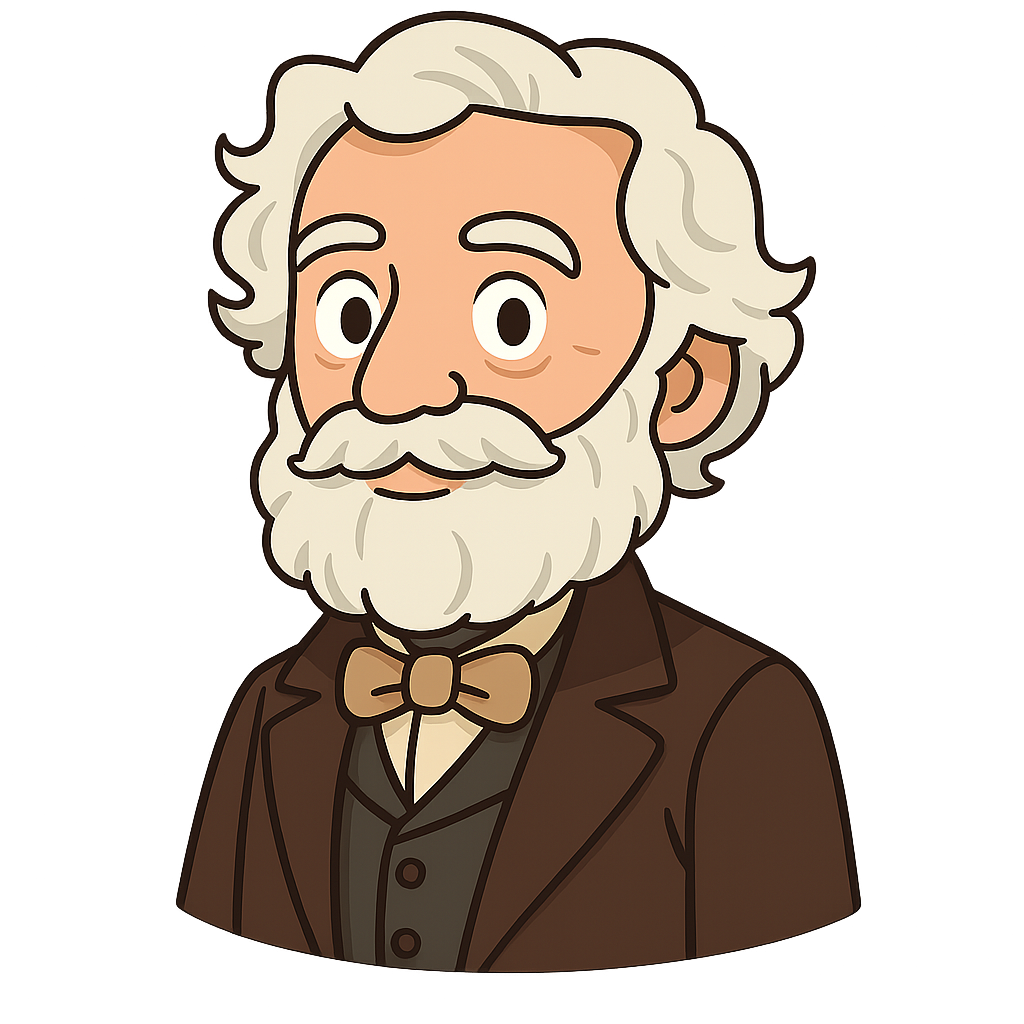
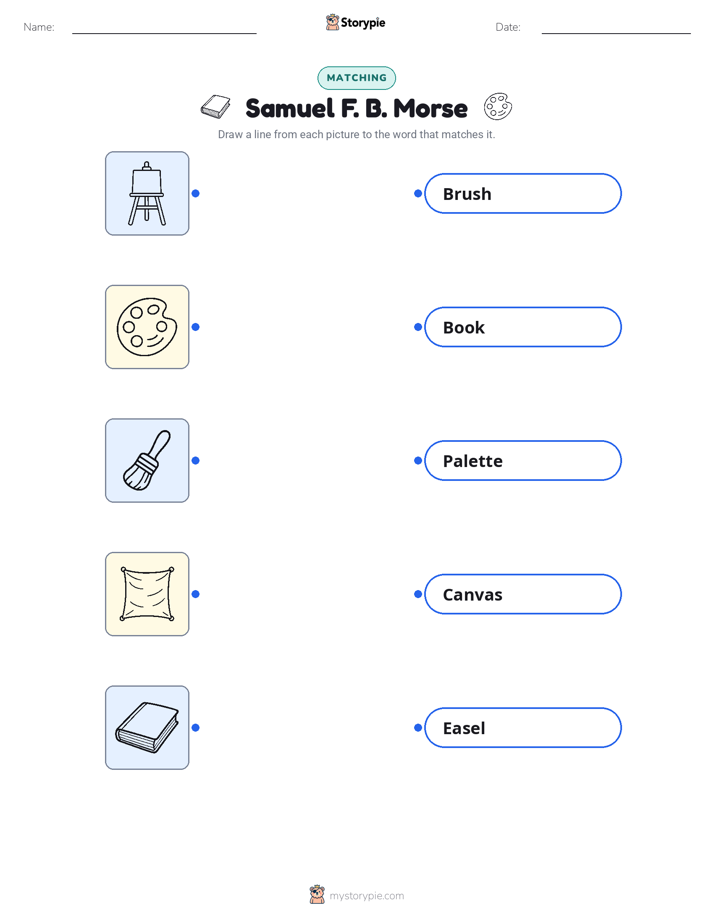
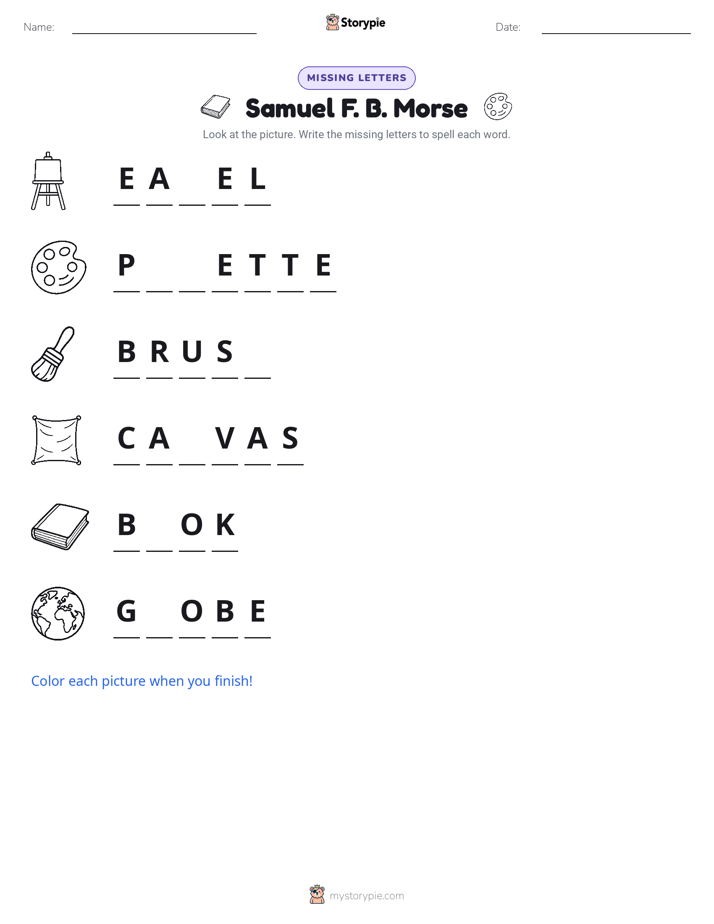
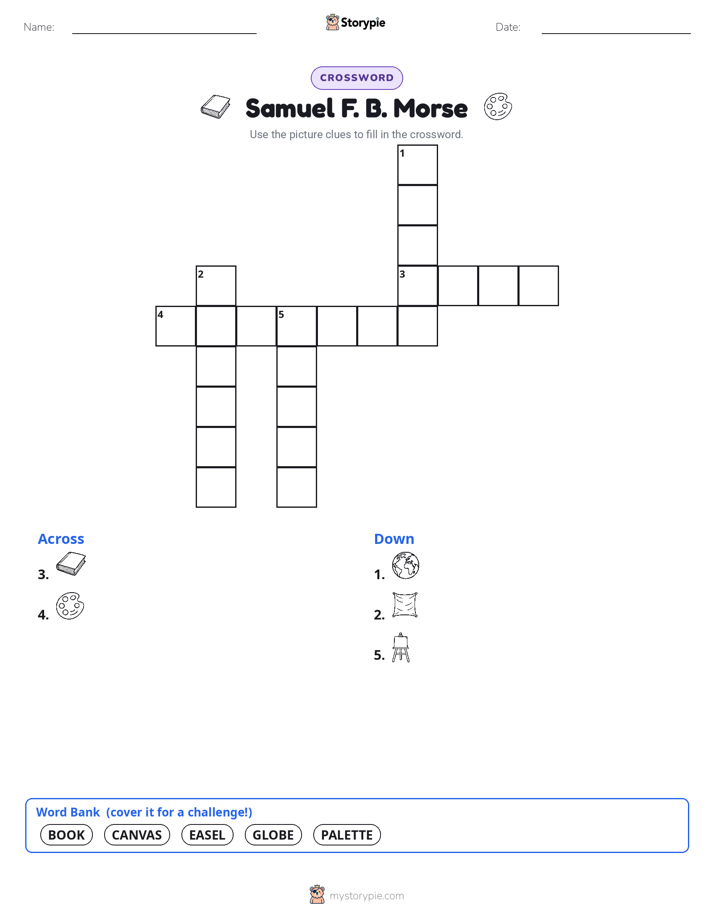
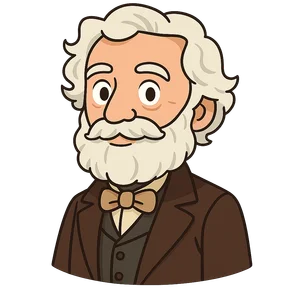
Hello there. My name is Samuel Finley Breese Morse, and I want to tell you the story of how a great sadness in my life led to an invention that changed the world. You might know my name because of a special code, but my first true love was art. I was born on April 27th, 1791, in Charlestown, Massachusetts. As a young man, I didn't dream of wires and machines; I dreamed of colors and canvases. I attended Yale College, but my passion for painting was so strong that in 1811, I traveled all the way to England to study art. When I returned to America, I became a successful portrait painter, capturing the faces of many important people with my brushes.
My life as an artist kept me busy and often took me far from home. In the year 1825, I was away in Washington, D.C., working on a painting, when my dear wife, Lucretia, became very ill and passed away. The terrible news was sent to me by a messenger on horseback, but the journey was so long that by the time I received the letter and rushed home, it was too late. I had missed her funeral. This heartbreak filled me with a powerful idea: there had to be a faster way for people to communicate over long distances. Several years later, in 1832, I was on a ship sailing home from Europe when I overheard other passengers talking about electromagnets. A spark ignited in my mind. I realized that electricity could be used to send messages almost instantly.
That one idea from 1832 took many years of hard work to become real. The 1830s were a time of great struggle and determination for me. I was no longer just a painter; I was an inventor. But I did not work alone. I found wonderful partners who helped me solve the problems I couldn't figure out on my own. A science professor named Leonard Gale helped me understand the power of electromagnets, and a skilled mechanic named Alfred Vail helped me build the machines. Together, we created a system using a key to tap out signals. To make these signals understandable, we developed a special alphabet made of short sounds (dots) and long sounds (dashes). This became known as Morse Code. It was very difficult at first to get anyone to believe in our invention. I tried for years to convince people, including the United States government, that the telegraph was not just a toy, but a powerful tool.
Samuel Morse: The Painter Who Connected the World
Hello there. My name is Samuel Finley Breese Morse, and I want to tell you the story of how a great sadness in my life led to an invention that changed the world. You might know my name because of a special code, but my first true love was art. I was born on April 27th, 1791, in Charlestown, Massachusetts. As a young man, I didn't dream of wires and machines; I dreamed of colors and canvases. I attended Yale College, but my passion for painting was so strong that in 1811, I traveled all the way to England to study art. When I returned to America, I became a successful portrait painter, capturing the faces of many important people with my brushes.
My life as an artist kept me busy and often took me far from home. In the year 1825, I was away in Washington, D.C., working on a painting, when my dear wife, Lucretia, became very ill and passed away. The terrible news was sent to me by a messenger on horseback, but the journey was so long that by the time I received the letter and rushed home, it was too late. I had missed her funeral. This heartbreak filled me with a powerful idea: there had to be a faster way for people to communicate over long distances. Several years later, in 1832, I was on a ship sailing home from Europe when I overheard other passengers talking about electromagnets. A spark ignited in my mind. I realized that electricity could be used to send messages almost instantly.
That one idea from 1832 took many years of hard work to become real. The 1830s were a time of great struggle and determination for me. I was no longer just a painter; I was an inventor. But I did not work alone. I found wonderful partners who helped me solve the problems I couldn't figure out on my own. A science professor named Leonard Gale helped me understand the power of electromagnets, and a skilled mechanic named Alfred Vail helped me build the machines. Together, we created a system using a key to tap out signals. To make these signals understandable, we developed a special alphabet made of short sounds (dots) and long sounds (dashes). This became known as Morse Code. It was very difficult at first to get anyone to believe in our invention. I tried for years to convince people, including the United States government, that the telegraph was not just a toy, but a powerful tool.
After years of trying, my big moment finally arrived. In 1843, the U.S. Congress agreed to give me the money to build an experimental telegraph line. It would stretch 40 miles, all the way from Washington, D.C., to Baltimore, Maryland. We worked for a year to set up the poles and string the wires. Then, on May 24th, 1844, everything was ready. I sat at the telegraph machine in the U.S. Capitol building, with a crowd of people watching. My heart must have been pounding as I carefully tapped out the first official message. The words I chose were from the Bible: 'What hath God wrought.' In Baltimore, my assistant received the message of dots and dashes almost instantly and sent it right back. It worked! We had proven to the world that a message could travel miles in a mere moment.
My invention, the telegraph, spread quickly across the country and then the world. It connected cities and even continents, allowing news, business information, and personal messages to travel in minutes instead of days or weeks. My special alphabet, Morse Code, is still learned and used by people today, such as amateur radio operators and pilots. I lived to be 80 years old, and I am so proud that my work helped bring people closer together, turning a moment of great sadness in my own life into a way to connect the world.
Wow facts
About
Samuel F. B. Morse was an American painter and inventor best known for his co-invention of the single-wire telegraph system and the development of Morse code, a system for transmitting information as a series of electronic signals.
Take a Quiz
Question 1 of 5
Why did Samuel Morse feel determined to find a faster way to send messages?
Explore next




Want to do even more?
Go beyond exploring. Unlock tools that turn every story into real learning.

Storypie Plus for families
Full stories, quizzes, and printables. Nights and car rides, sorted.
- Unlimited audio stories
- Create Mode: your child stars in the story
- Offline downloads
- Printable worksheets & coloring pages

Why Storypie for Schools
Students engaged. Prep in seconds. Evenings back to you.
- Worksheets & Quizzes
- Classroom Management
- Formative Assessment
- Custom Curriculum & Lesson Plans
- 27 Languages

Why Storypie for Homeschool
Curriculum done. They'll ask for more. Hours back in your day.
- Worksheet Generator
- First-Person Audio Stories
- Built-in Comprehension Quizzes
- Custom Curriculum & Lesson Plans
- Print & Go Activities