English

Simón Bolívar
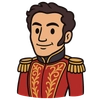
Simón Bolívar was a Venezuelan military and political leader who led the independence movements of several…
Reads at Grades 6–8 Listens at Grades 4–8
Print & create
Answer keys·No prep·Free with an account
28 worksheets · answer keys · full story · quiz · Ages 10-12 · CEFR B2
Plus adds 164,000+ more stories in 27 languages, audio for every one, and printables for all of them.
Just want Simón Bolívar?
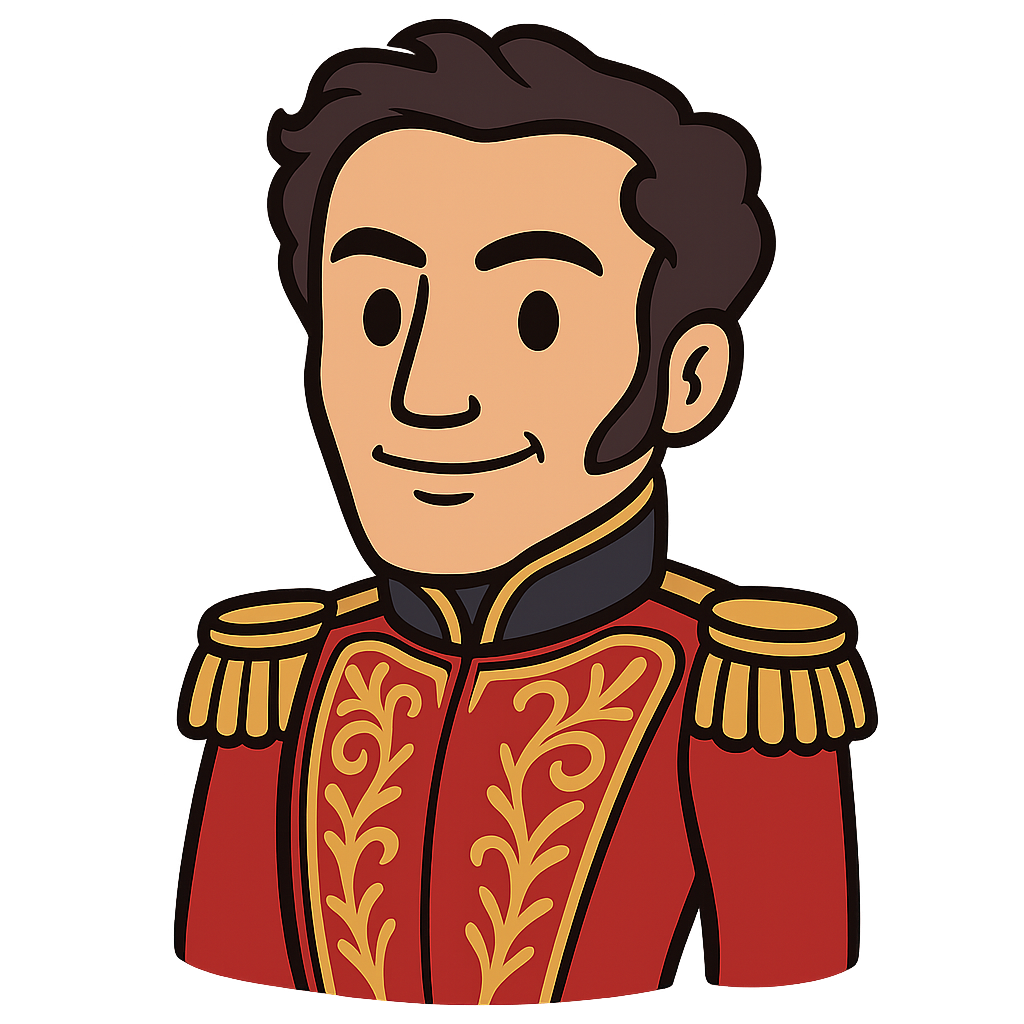
Hello! My name is Simón Bolívar, and I want to tell you the story of my life, a life I dedicated to the dream of freedom. I was born on July 24th, 1783, in Caracas, a city that was then part of the Spanish Empire in South America. My family was one of the wealthiest in the region, but my childhood was touched by great sadness. My father passed away when I was only two years old, and my mother died when I was nine. As an orphan, I was raised by my uncles and my devoted nurse, Hipólita. My most influential teacher was a man named Simón Rodríguez. He taught me about more than just books; he opened my eyes to the world, to ideas of justice, and to the powerful calls for liberty that were echoing across the globe.
As a young man, I journeyed to Europe to complete my education. It was in Spain that I met and fell in love with a wonderful woman, María Teresa Rodríguez del Toro y Alaysa. We were married in 1802 and returned to Venezuela, but our happiness was tragically brief. In 1803, she died from yellow fever. Heartbroken, I made two promises to myself: that I would never marry again and that I would dedicate my life to a cause greater than myself. I returned to Europe, and in 1804, I witnessed Napoleon Bonaparte crown himself Emperor of France in Paris. Seeing a hero of a revolution become a monarch deeply disappointed me and reinforced my belief in republics governed by the people. The next year, in 1805, I stood on Monte Sacro in Rome with my old teacher, Rodríguez. There, I made a solemn vow that I would not rest until I had broken the chains of Spanish rule that bound my homeland.
Simón Bolívar: The Liberator
Hello! My name is Simón Bolívar, and I want to tell you the story of my life, a life I dedicated to the dream of freedom. I was born on July 24th, 1783, in Caracas, a city that was then part of the Spanish Empire in South America. My family was one of the wealthiest in the region, but my childhood was touched by great sadness. My father passed away when I was only two years old, and my mother died when I was nine. As an orphan, I was raised by my uncles and my devoted nurse, Hipólita. My most influential teacher was a man named Simón Rodríguez. He taught me about more than just books; he opened my eyes to the world, to ideas of justice, and to the powerful calls for liberty that were echoing across the globe.
As a young man, I journeyed to Europe to complete my education. It was in Spain that I met and fell in love with a wonderful woman, María Teresa Rodríguez del Toro y Alaysa. We were married in 1802 and returned to Venezuela, but our happiness was tragically brief. In 1803, she died from yellow fever. Heartbroken, I made two promises to myself: that I would never marry again and that I would dedicate my life to a cause greater than myself. I returned to Europe, and in 1804, I witnessed Napoleon Bonaparte crown himself Emperor of France in Paris. Seeing a hero of a revolution become a monarch deeply disappointed me and reinforced my belief in republics governed by the people. The next year, in 1805, I stood on Monte Sacro in Rome with my old teacher, Rodríguez. There, I made a solemn vow that I would not rest until I had broken the chains of Spanish rule that bound my homeland.
I returned to South America in 1807, my spirit ignited with revolutionary fire. The path to independence was incredibly difficult and filled with many failures. Our first attempt to establish a free republic in Venezuela collapsed by 1812. But I refused to surrender to despair. From exile, I wrote the Cartagena Manifesto, a document where I analyzed our strategic mistakes and passionately called for unity among revolutionaries. In 1813, I organized and led a daring military action that became known as the Admirable Campaign. I marched my small but determined army from New Granada back into Venezuela, fighting our way across the country. When we finally reached Caracas, the people welcomed us with joyous celebrations and gave me a title I have cherished above all others: 'El Libertador,' which means 'The Liberator.'
Even with this title, our fight was far from over. To truly defeat the Spanish forces, I knew we had to achieve something no one believed was possible. In 1819, I led an army of about 2,500 soldiers on a perilous journey across the formidable Andes mountains to launch a surprise attack on the Spanish in New Granada. The trek was treacherous; we climbed towering, frozen peaks, endured relentless rains, and navigated raging rivers. We lost many brave men and horses to the harsh conditions, but our resolve never broke. Exhausted but victorious in our crossing, we descended from the mountains and caught the enemy completely off guard. On August 7th, 1819, we achieved a monumental victory at the Battle of Boyacá, which secured the independence of the territory that would soon become Colombia.
My ultimate dream was not just to free individual territories, but to unite them into one great and powerful nation. Following our success at Boyacá, I helped establish a new republic called Gran Colombia, which was meant to include the lands of modern-day Colombia, Venezuela, Ecuador, and Panama. The fight for liberation continued across the continent. We secured Venezuela’s final independence at the Battle of Carabobo in 1821. The following year, my most trusted general, Antonio José de Sucre, freed Ecuador with a victory at the Battle of Pichincha in 1822. I then marched my forces south into Peru, which was the last major stronghold of Spanish power in South America. After critical victories at the Battles of Junín and Ayacucho in 1824, the Spanish presence was finally broken. In 1825, the region known as Upper Peru was liberated and renamed in my honor: Bolivia.
I had achieved my military goals of freeing the continent, but my political dream of a united South America proved to be a far greater challenge. Gran Colombia was a massive nation, and the people in its different regions had their own unique cultures, leaders, and ambitions. Political disagreements and infighting were constant. I dedicated all my energy to holding the great republic together, but the forces pulling it apart were simply too powerful. It brought me profound sadness to watch my dream of unity crumble as, one by one, the different regions began to declare their own independence from the federation I had worked so hard to build.
Exhausted from years of war and political struggle, and with my health failing, I stepped down from power. I lived to be 47 years old, passing away on December 17th, 1830. Although my grand vision of a single, united South American nation did not endure, my life's work helped give birth to six new countries, free from foreign rule. Today, I am remembered as El Libertador, a symbol of freedom and the fight for independence. My story continues to inspire people around the world who strive for liberty and the right to determine their own destiny.
Wow facts
About
Simón Bolívar was a Venezuelan military and political leader who led the independence movements of several South American countries from Spanish rule. He is known as 'El Libertador' (The Liberator).
Take a Quiz
Question 1 of 5
What key events led to Simón Bolívar making a solemn promise to liberate his homeland?
Explore next

Want to do even more?
Go beyond exploring. Unlock tools that turn every story into real learning.

Storypie Plus for families
Full stories, quizzes, and printables. Nights and car rides, sorted.
- Unlimited audio stories
- Create Mode: your child stars in the story
- Offline downloads
- Printable worksheets & coloring pages

Why Storypie for Schools
Students engaged. Prep in seconds. Evenings back to you.
- Worksheets & Quizzes
- Classroom Management
- Formative Assessment
- Custom Curriculum & Lesson Plans
- 27 Languages

Why Storypie for Homeschool
Curriculum done. They'll ask for more. Hours back in your day.
- Worksheet Generator
- First-Person Audio Stories
- Built-in Comprehension Quizzes
- Custom Curriculum & Lesson Plans
- Print & Go Activities