English

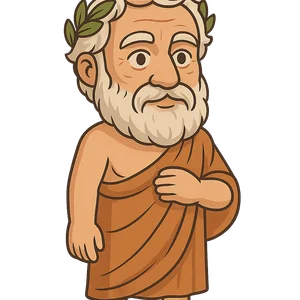
Sophocles
Sophocles was one of the three great ancient Greek tragedians, whose surviving plays…
Reads at Grades 6–8 Listens at Grades 4–8
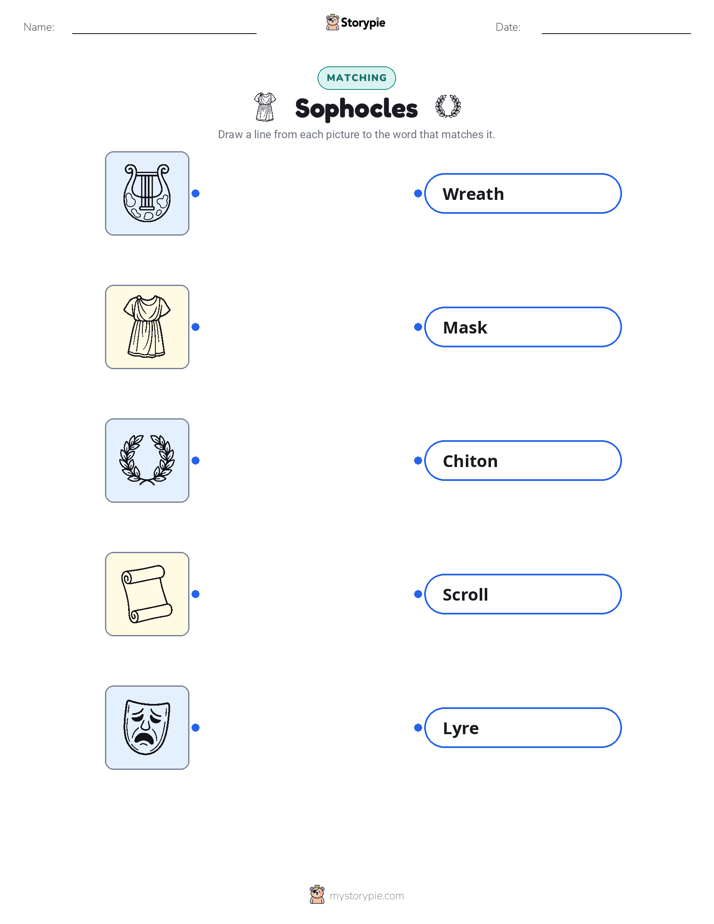
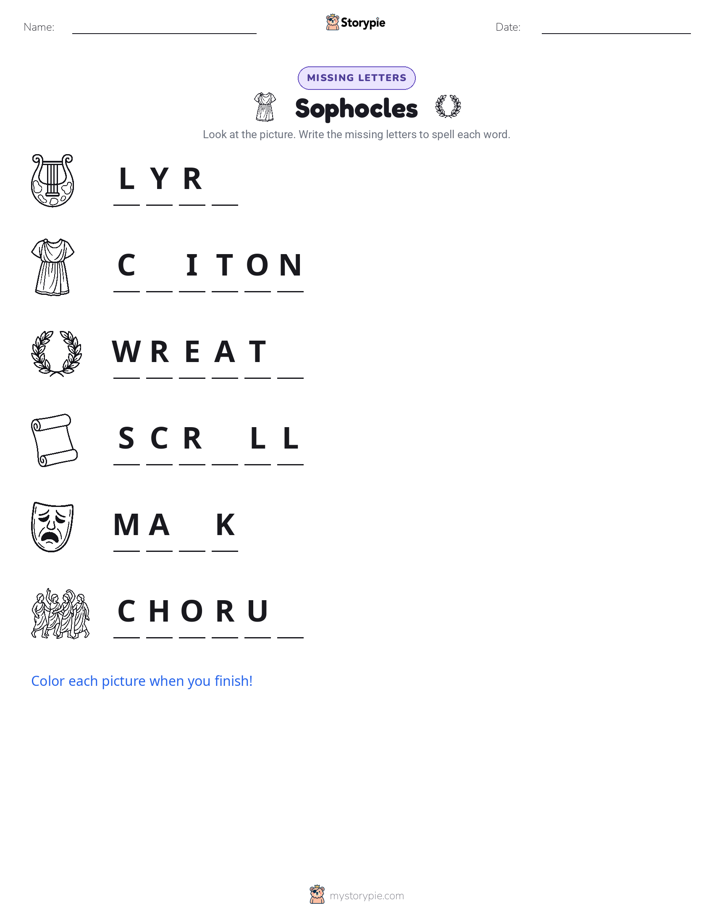
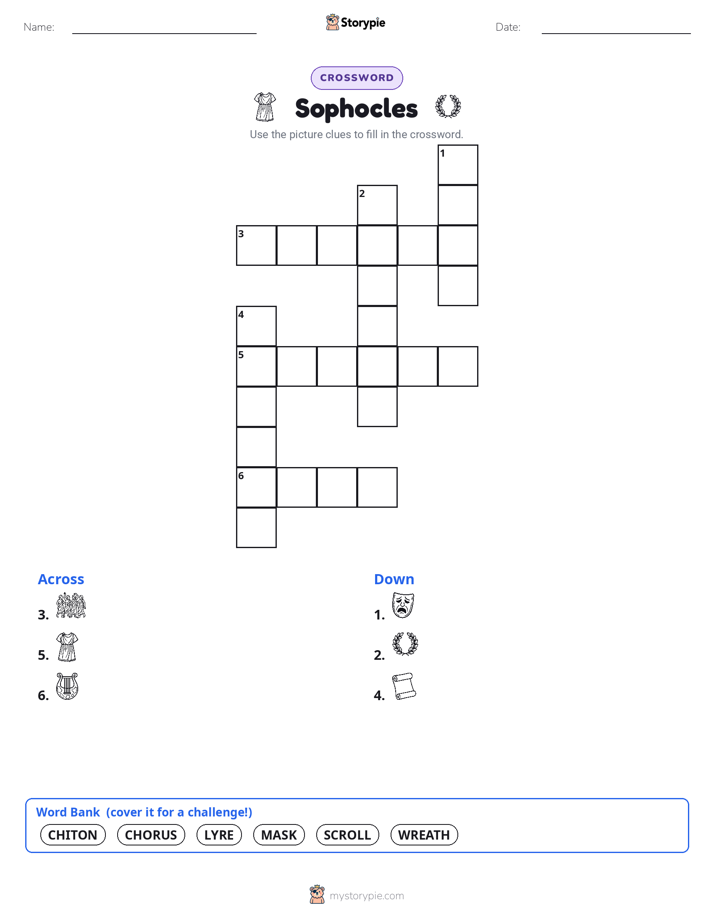
Print & create
Answer keys·No prep·Free with an account
28 worksheets · answer keys · full story · quiz · Ages 10-12 · CEFR B2
Plus adds 244,000+ more stories in 27 languages, audio for every one, and printables for all of them.
Just want Sophocles?
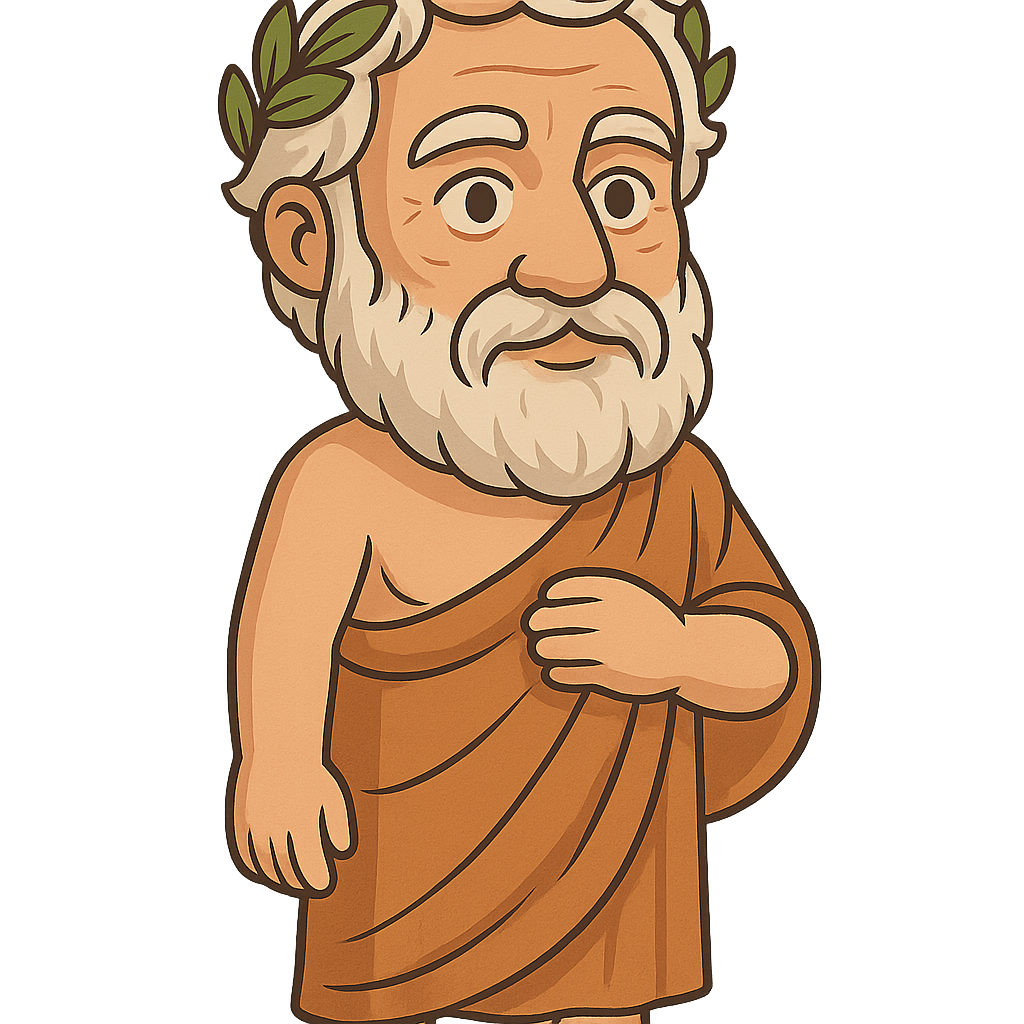
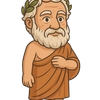
Hello! My name is Sophocles. I want to tell you the story of my life in a remarkable place called Ancient Greece. I was born around the year 496 BCE in a village just outside Athens called Colonus. My father was a wealthy man, so I had a wonderful childhood and received the best education an Athenian boy could hope for. I learned all about music, poetry, and dancing. I even became a champion wrestler! My talents were recognized early on. When our city won a great sea battle at Salamis in 480 BCE, I was chosen to lead the celebratory chorus of boys because of my skill and poise. It was a huge honor and one of my proudest early memories, a sign of the public life I would later lead.
As I grew up, my passion for storytelling led me to the theatre. In Athens, we held a grand festival every year called the City Dionysia to honor the god Dionysus. The most exciting part of this festival was the play competition. Playwrights from all over would present their new tragedies, and a panel of judges would select the winner. For many years, the undisputed champion was a man named Aeschylus, a writer I greatly admired for his powerful stories. In 468 BCE, when I was about 28 years old, I decided to enter the competition for the first time. I was nervous to compete against such a famous playwright, but I was also excited to share my own vision. To everyone’s surprise, including my own, the judges chose my plays as the winner. That victory marked the beginning of my long and wonderful career as a storyteller for the Athenian stage.
Sophocles: A Storyteller of Ancient Greece
Hello! My name is Sophocles. I want to tell you the story of my life in a remarkable place called Ancient Greece. I was born around the year 496 BCE in a village just outside Athens called Colonus. My father was a wealthy man, so I had a wonderful childhood and received the best education an Athenian boy could hope for. I learned all about music, poetry, and dancing. I even became a champion wrestler! My talents were recognized early on. When our city won a great sea battle at Salamis in 480 BCE, I was chosen to lead the celebratory chorus of boys because of my skill and poise. It was a huge honor and one of my proudest early memories, a sign of the public life I would later lead.
As I grew up, my passion for storytelling led me to the theatre. In Athens, we held a grand festival every year called the City Dionysia to honor the god Dionysus. The most exciting part of this festival was the play competition. Playwrights from all over would present their new tragedies, and a panel of judges would select the winner. For many years, the undisputed champion was a man named Aeschylus, a writer I greatly admired for his powerful stories. In 468 BCE, when I was about 28 years old, I decided to enter the competition for the first time. I was nervous to compete against such a famous playwright, but I was also excited to share my own vision. To everyone’s surprise, including my own, the judges chose my plays as the winner. That victory marked the beginning of my long and wonderful career as a storyteller for the Athenian stage.
I didn't just want to write plays; I wanted to push the art form forward and make the stories more exciting and meaningful for the audience. Before my time, plays usually had only two actors on stage who could speak to each other. I had an idea that seemed simple but was truly revolutionary: what if I added a third actor? This change opened up a whole new world of storytelling. It allowed for more complex conversations, secret plots, and deeper relationships between characters. I also expanded the size of the chorus, the group of performers who sang, danced, and commented on the action, from 12 to 15 people to give their voice more power. To make the world of the play feel more real and immersive, I also introduced the use of painted scenery on big panels behind the stage. These innovations helped the audience feel like they were right there inside the story, experiencing the drama alongside the characters.
Over my long life, I was very productive and wrote more than 120 plays. Sadly, only seven of them have survived completely for you to read today. You might have heard of some of them, especially the three plays about the cursed royal family in the city of Thebes: Oedipus Rex, Antigone, and Oedipus at Colonus. These stories are filled with powerful kings, brave princesses, and terrible fates, but they are more than just dramatic tales. They ask some of the biggest questions we face as humans. What is our destiny, and can we change it? What happens when our own pride gets in the way of reason? What is the right thing to do when the laws of the gods clash with the laws of people? I wanted my stories to make people think deeply about their own lives and the difficult moral choices we all have to confront.
My life wasn't only about the theatre. I loved my city, Athens, and I believed it was every citizen's duty to serve it. My commitment to public service took many forms. In 443 BCE, I was elected as one of the city's treasurers, which was a very important job managing the finances of our empire. A few years later, around 441 BCE, I was even chosen to be a general in the army, serving alongside the great Athenian leader, Pericles, during a military campaign. I also took on religious duties as a priest for one of our local gods. For me, being an active part of my city's public life was just as important as writing my plays. It was all part of being a good and responsible citizen.
I was lucky to live a very long life, witnessing both the greatest triumphs and the most difficult times for Athens. I lived to be about 90 years old, passing away around the year 406 BCE. Even though my life ended, my stories lived on. For over two thousand years, my plays have been performed in theaters all around the world, translated into countless languages. They show us that even though times change, the core of human nature does not—we still struggle with pride, fight for what we believe in, and search for the truth. I hope that when you hear my stories, you feel a connection to the people of my time and see a little bit of yourself in the characters on the stage.
Wow facts
About
Sophocles was one of the three great ancient Greek tragedians, whose surviving plays, such as 'Oedipus Rex' and 'Antigone,' are cornerstones of Western theater.
Take a Quiz
Question 1 of 5
Which of Sophocles's contributions to theatre was described as 'revolutionary'?
Explore next




Want to do even more?
Go beyond exploring. Unlock tools that turn every story into real learning.

Storypie Plus for families
Full stories, quizzes, and printables. Nights and car rides, sorted.
- Unlimited audio stories
- Create Mode: your child stars in the story
- Offline downloads
- Printable worksheets & coloring pages

Why Storypie for Schools
Students engaged. Prep in seconds. Evenings back to you.
- Worksheets & Quizzes
- Classroom Management
- Formative Assessment
- Custom Curriculum & Lesson Plans
- 27 Languages

Why Storypie for Homeschool
Curriculum done. They'll ask for more. Hours back in your day.
- Worksheet Generator
- First-Person Audio Stories
- Built-in Comprehension Quizzes
- Custom Curriculum & Lesson Plans
- Print & Go Activities