English

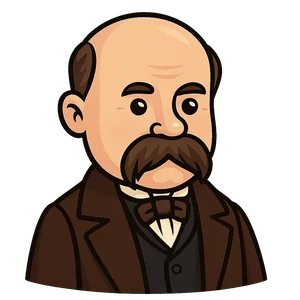
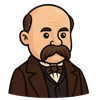
Taras Shevchenko
Taras Shevchenko was a Ukrainian poet, writer, artist, and political figure…
Reads at Grades 6–8 Listens at Grades 4–8
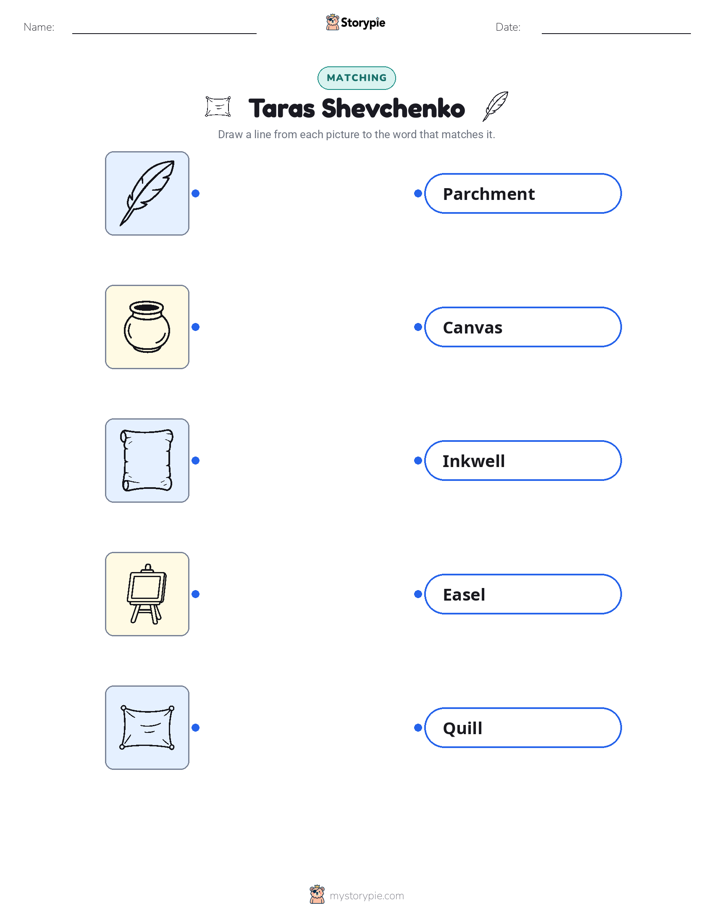
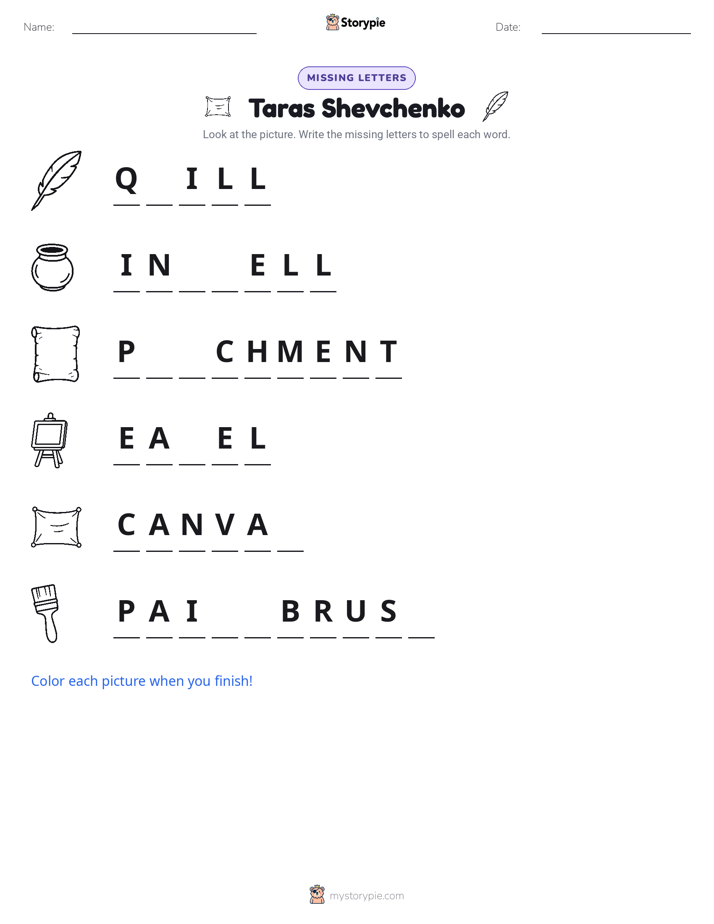
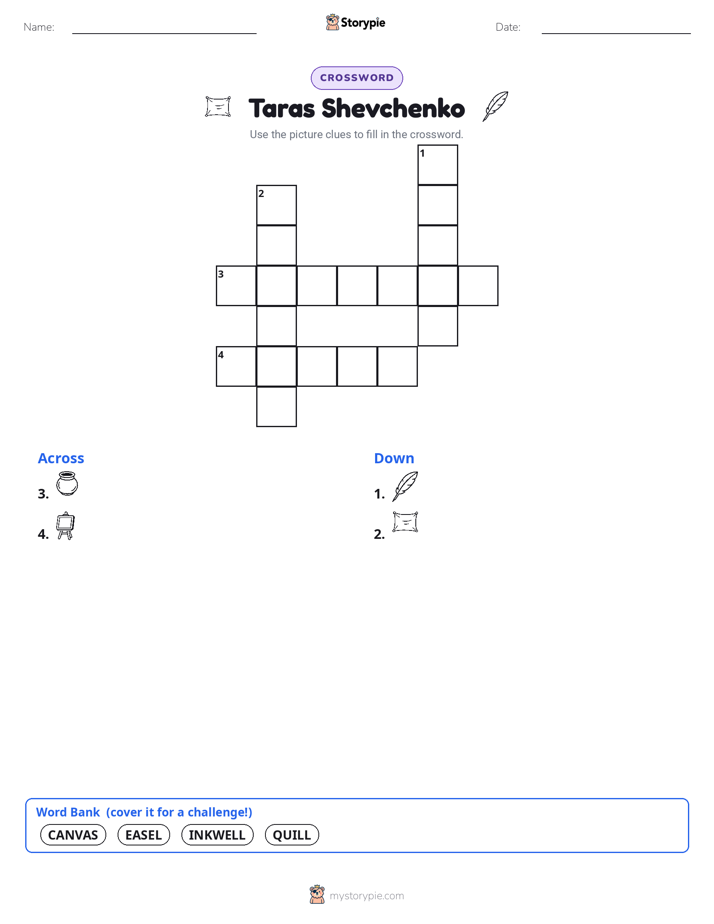
Print & create
Answer keys·No prep·Free with an account
28 worksheets · answer keys · full story · quiz · Ages 10-12 · CEFR B2
Plus adds 164,000+ more stories in 27 languages, audio for every one, and printables for all of them.
Just want Taras Shevchenko?
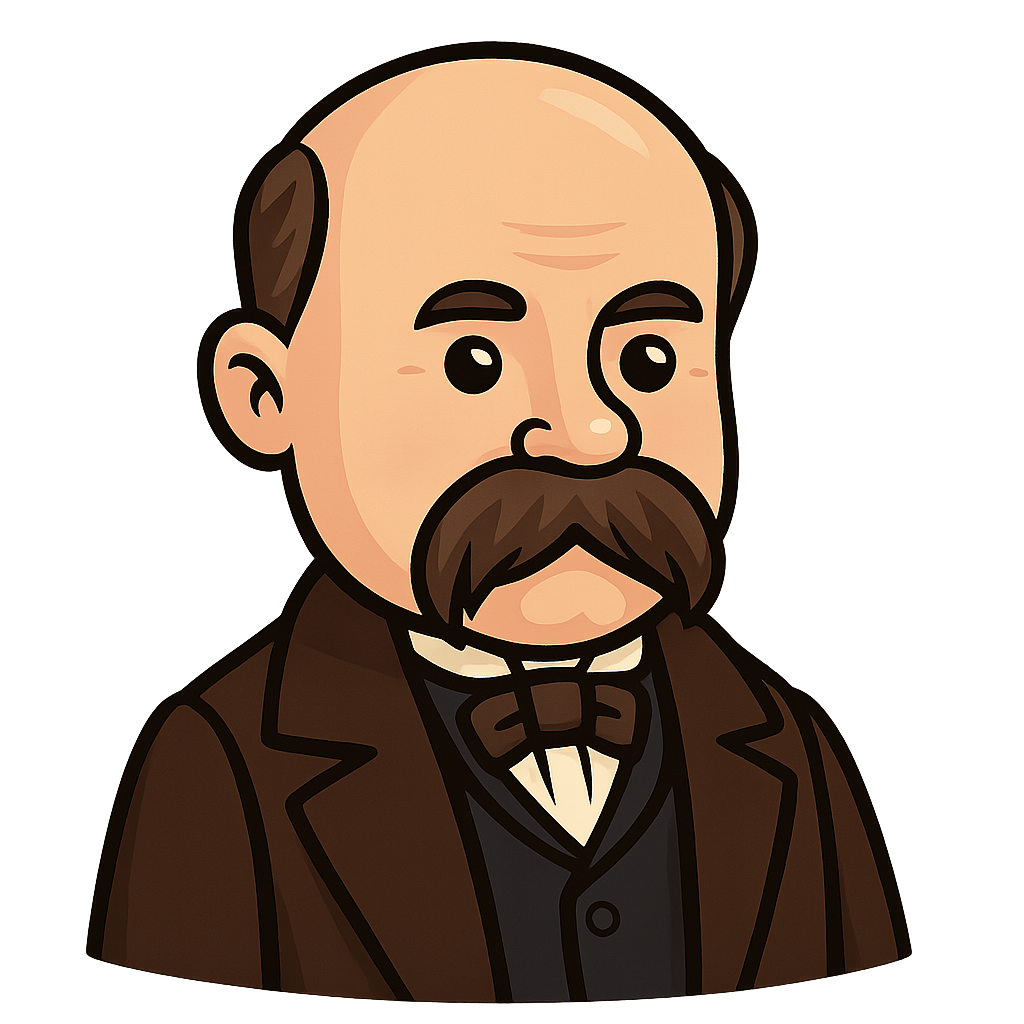
Hello, my name is Taras Shevchenko. I want to tell you my story, which is also the story of my beloved homeland, Ukraine. I was born on March 9th, 1814, not as a free person, but as a serf. This meant my family and I were considered the property of a wealthy landlord. The world I grew up in was one where our lives were not our own. Even though my life was difficult and I was orphaned as a young boy, I found a special kind of joy in drawing and writing poems about the beautiful Ukrainian countryside that I loved so deeply. I would sketch on any scrap of paper I could find, dreaming of a day when I could share my art with the world and when my people could be free.
When I was a teenager, my master, Pavel Engelhardt, took me with him to the grand city of Saint Petersburg in the Russian Empire. It was a world away from my village. There, my talent for painting was noticed by some of Russia's most famous artists and writers. They saw a spark in my work and believed in my potential, so they decided they had to help me. In 1838, something truly incredible happened. A famous painter named Karl Bryullov painted a portrait of the poet Vasily Zhukovsky. They organized a lottery, selling tickets for a chance to win the painting. With the 2,500 rubles they raised, they bought my freedom. At last, I was able to enroll as a student at the Imperial Academy of Arts, a dream I never thought possible for a boy born into serfdom.
With my new freedom, my heart and my pen belonged completely to Ukraine. In 1840, I published my first collection of poems, which I called 'Kobzar.' In Ukrainian tradition, a kobzar was a traveling poet and musician who sang songs about our history, our heroes, and the soul of our people. That is what I wanted to be—a voice for my nation. My poems and paintings told the stories of Ukraine's beautiful landscapes, its brave and often tragic history, and the daily struggles of ordinary people living under the rule of the Russian Empire. Through my art, I wanted the world to know and remember our unique culture and language, which were being suppressed.
Taras Shevchenko
Hello, my name is Taras Shevchenko. I want to tell you my story, which is also the story of my beloved homeland, Ukraine. I was born on March 9th, 1814, not as a free person, but as a serf. This meant my family and I were considered the property of a wealthy landlord. The world I grew up in was one where our lives were not our own. Even though my life was difficult and I was orphaned as a young boy, I found a special kind of joy in drawing and writing poems about the beautiful Ukrainian countryside that I loved so deeply. I would sketch on any scrap of paper I could find, dreaming of a day when I could share my art with the world and when my people could be free.
When I was a teenager, my master, Pavel Engelhardt, took me with him to the grand city of Saint Petersburg in the Russian Empire. It was a world away from my village. There, my talent for painting was noticed by some of Russia's most famous artists and writers. They saw a spark in my work and believed in my potential, so they decided they had to help me. In 1838, something truly incredible happened. A famous painter named Karl Bryullov painted a portrait of the poet Vasily Zhukovsky. They organized a lottery, selling tickets for a chance to win the painting. With the 2,500 rubles they raised, they bought my freedom. At last, I was able to enroll as a student at the Imperial Academy of Arts, a dream I never thought possible for a boy born into serfdom.
With my new freedom, my heart and my pen belonged completely to Ukraine. In 1840, I published my first collection of poems, which I called 'Kobzar.' In Ukrainian tradition, a kobzar was a traveling poet and musician who sang songs about our history, our heroes, and the soul of our people. That is what I wanted to be—a voice for my nation. My poems and paintings told the stories of Ukraine's beautiful landscapes, its brave and often tragic history, and the daily struggles of ordinary people living under the rule of the Russian Empire. Through my art, I wanted the world to know and remember our unique culture and language, which were being suppressed.
My work quickly became very popular among Ukrainians, but it also brought me into direct conflict with the authorities. The government of the Russian Empire did not like that I wrote in the Ukrainian language and spoke so passionately of freedom and our national identity. I joined a secret political group called the Brotherhood of Saints Cyril and Methodius, where we discussed ideas for a future where all Slavic people could live as equals in a free federation. Our ideas were seen as a threat, and in 1847, I was arrested. The Tsar himself was reportedly furious about my satirical poem 'The Dream,' which made fun of him and his wife. My words, which I believed were a voice for truth, were officially declared dangerous.
My punishment was severe and designed to break my spirit. I was sent into exile for ten years, forced to serve as a private in a remote military fortress far from my home. The Tsar gave a personal order that I was to be kept under the strictest surveillance and, most cruelly, I was forbidden from writing or painting. For an artist, a creator, this felt like a kind of living death. They wanted to silence my voice and my vision. But even in that lonely, desolate place, they could not crush my spirit. I secretly wrote poems in tiny, handmade notebooks that I called 'bootleg' books because I hid them in my boots. I also managed to create sketches of the landscapes around me, defying the Tsar's order.
After a decade of harsh exile, I was finally freed in 1857. However, I was never allowed to return to live permanently in my beloved Ukraine. I lived to be 47 years old, passing away in Saint Petersburg on March 10th, 1861, just one day after my birthday. But my story did not end there. My friends honored my deepest wish, ensuring my body was brought back home. I was buried on a high hill overlooking the Dnieper River, just as I had described in my famous poem, 'My Testament.' Today, I am remembered as the father of modern Ukrainian literature and a powerful symbol of our nation's unbreakable spirit. My words helped inspire a dream of freedom that continues to live on in the hearts of Ukrainians everywhere.
Wow facts
About
Taras Shevchenko was a Ukrainian poet, writer, artist, and political figure, widely regarded as the founder of modern Ukrainian literature and a symbol of Ukrainian national identity.
Take a Quiz
Question 1 of 5
What is the main idea of the section titled 'The Price of Freedom'?
Explore next


Want to do even more?
Go beyond exploring. Unlock tools that turn every story into real learning.

Storypie Plus for families
Full stories, quizzes, and printables. Nights and car rides, sorted.
- Unlimited audio stories
- Create Mode: your child stars in the story
- Offline downloads
- Printable worksheets & coloring pages

Why Storypie for Schools
Students engaged. Prep in seconds. Evenings back to you.
- Worksheets & Quizzes
- Classroom Management
- Formative Assessment
- Custom Curriculum & Lesson Plans
- 27 Languages

Why Storypie for Homeschool
Curriculum done. They'll ask for more. Hours back in your day.
- Worksheet Generator
- First-Person Audio Stories
- Built-in Comprehension Quizzes
- Custom Curriculum & Lesson Plans
- Print & Go Activities