English

Thales of Miletus
Thales of Miletus was an ancient Greek philosopher, mathematician, and astronomer.
Reads at Grades 3–5 Listens at Grades 1–5
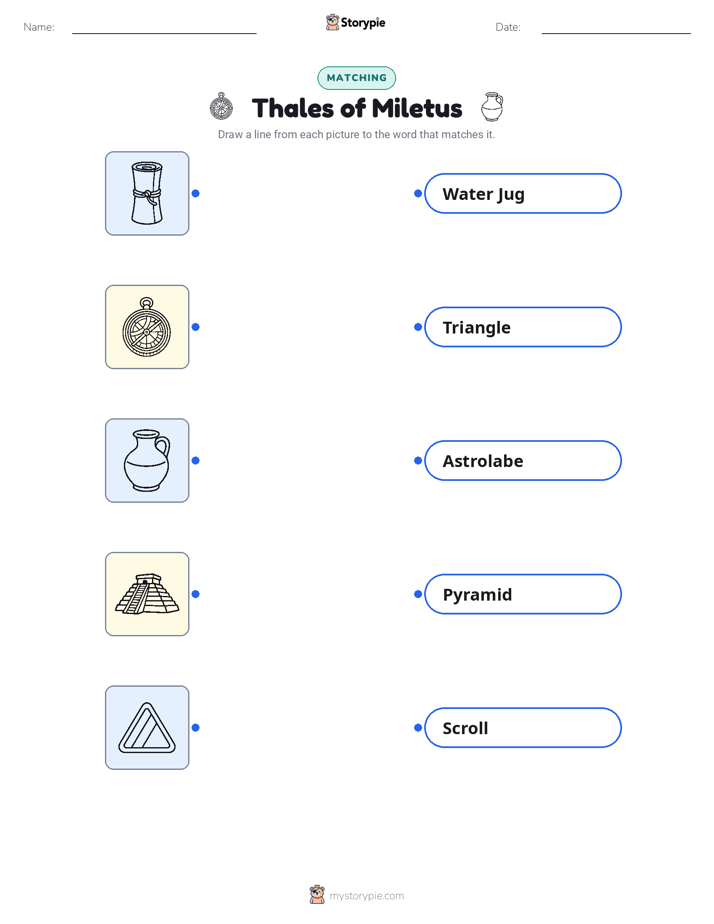
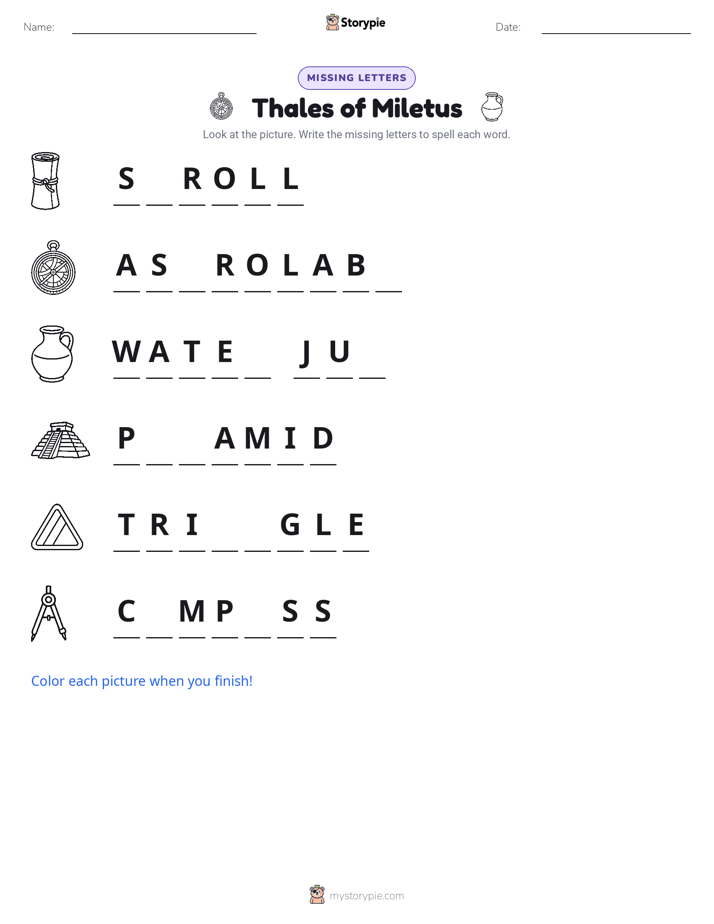
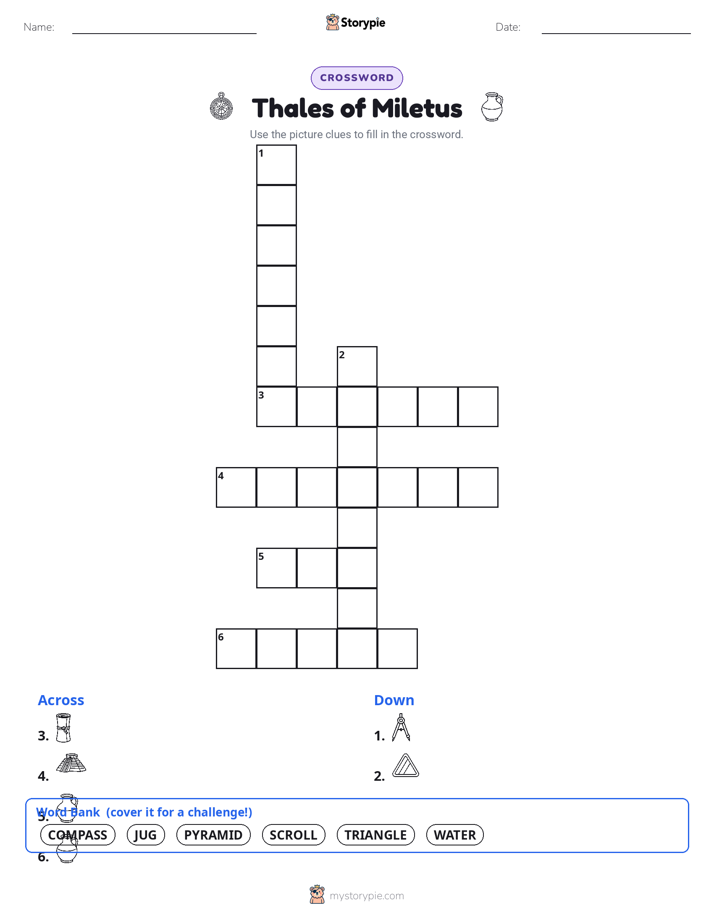
Print & create
Answer keys·No prep·Free with an account
28 worksheets · answer keys · full story · quiz · Ages 8-10 · CEFR B1
Plus adds 208,000+ more stories in 27 languages, audio for every one, and printables for all of them.
Just want Thales of Miletus?
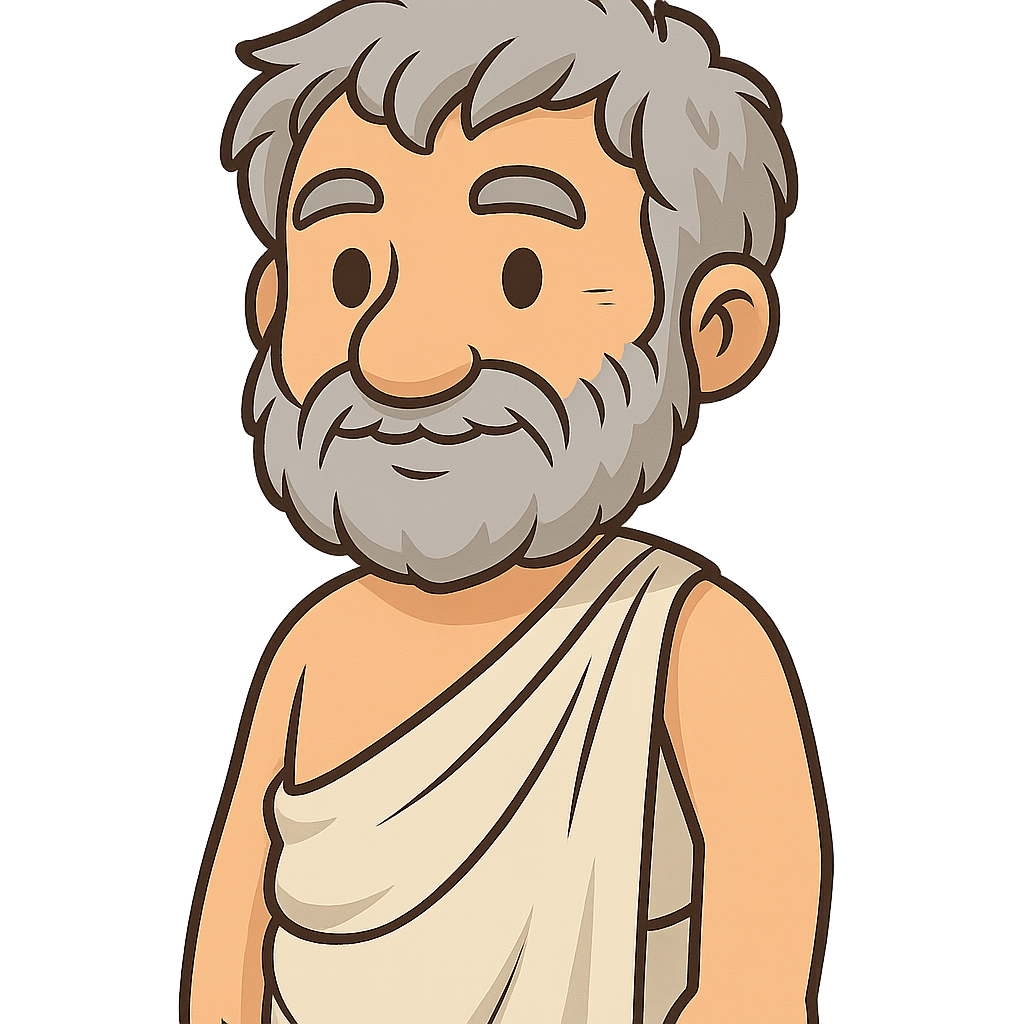
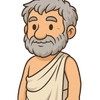
Hello, my name is Thales, and I lived a very long time ago in a busy city by the sea called Miletus. I was born there around the year 624 BCE. Miletus was a port, which meant ships were always coming and going, bringing goods and stories from faraway lands like Egypt and Babylon. Growing up near the sparkling water and under the vast, starry sky made me very curious. I spent my days watching the waves and my nights gazing at the stars. I couldn't stop asking questions about the world around me. I would wonder, 'Why does the world work the way it does?' and 'What is everything truly made of?' These questions set me on a path to find answers not in old stories, but in nature itself.
In my time, most people believed that powerful gods and goddesses controlled everything. They thought a god named Zeus threw lightning bolts to create thunderstorms and that the seasons changed because of the feelings of another goddess. While I respected these beliefs, I had a different idea. I looked around and observed the world carefully. I started to think that perhaps everything, from the tallest tree to the smallest bug, was made from one single, simple substance. My theory was that everything was made of water. I reasoned that water could change its form—it could be a liquid to drink, a solid like ice, or a gas like steam. I also noticed that every living thing, from plants to people, needed water to survive. This was a brand new way of thinking. Instead of explaining the world with myths, I tried to explain it using observation and logic.
Thales of Miletus: The First Philosopher
Hello, my name is Thales, and I lived a very long time ago in a busy city by the sea called Miletus. I was born there around the year 624 BCE. Miletus was a port, which meant ships were always coming and going, bringing goods and stories from faraway lands like Egypt and Babylon. Growing up near the sparkling water and under the vast, starry sky made me very curious. I spent my days watching the waves and my nights gazing at the stars. I couldn't stop asking questions about the world around me. I would wonder, 'Why does the world work the way it does?' and 'What is everything truly made of?' These questions set me on a path to find answers not in old stories, but in nature itself.
In my time, most people believed that powerful gods and goddesses controlled everything. They thought a god named Zeus threw lightning bolts to create thunderstorms and that the seasons changed because of the feelings of another goddess. While I respected these beliefs, I had a different idea. I looked around and observed the world carefully. I started to think that perhaps everything, from the tallest tree to the smallest bug, was made from one single, simple substance. My theory was that everything was made of water. I reasoned that water could change its form—it could be a liquid to drink, a solid like ice, or a gas like steam. I also noticed that every living thing, from plants to people, needed water to survive. This was a brand new way of thinking. Instead of explaining the world with myths, I tried to explain it using observation and logic.
My curiosity didn't stop with water. I also had a great love for mathematics and astronomy, the study of the stars. On a trip to Egypt, I saw the great pyramids and was amazed by their size. The Egyptians were masters of geometry, which is the study of shapes and lines, and I learned a great deal from them. I even figured out a clever way to measure the height of a giant pyramid. I waited for the time of day when my own shadow was the exact same length as my body. At that moment, I measured the pyramid's shadow, and I knew that its shadow was equal to its real height. My study of the sky led to my most famous achievement. I studied the movements of the sun and the moon so closely that I predicted a solar eclipse. I calculated that on a specific day, the moon would pass in front of the sun and block its light. And just as I said it would, on May 28th, 585 BCE, the sky grew dark in the middle of a battle, astonishing everyone.
I lived a long and thoughtful life, and I was about 78 years old when my time on Earth ended. Looking back, I see that my most important contribution was not a single discovery, but a new way of asking questions. By looking for explanations in nature rather than in the stories of gods, I helped begin what we now call science and philosophy. I encouraged people to use their own minds to observe, to reason, and to understand the universe. My hope was that others would continue to be curious and to seek knowledge, a tradition of thinking that has been passed down through the centuries and is still alive today.
Wow facts
About
Thales of Miletus was an ancient Greek philosopher, mathematician, and astronomer. He is widely regarded as the first philosopher in the Greek tradition and the father of Western science for seeking natural explanations for worldly phenomena.
Take a Quiz
Question 1 of 5
In the story, why was Thales's idea that everything was made of water considered a 'new way of thinking'?
Explore next






Want to do even more?
Go beyond exploring. Unlock tools that turn every story into real learning.

Storypie Plus for families
Full stories, quizzes, and printables. Nights and car rides, sorted.
- Unlimited audio stories
- Create Mode: your child stars in the story
- Offline downloads
- Printable worksheets & coloring pages

Why Storypie for Schools
Students engaged. Prep in seconds. Evenings back to you.
- Worksheets & Quizzes
- Classroom Management
- Formative Assessment
- Custom Curriculum & Lesson Plans
- 27 Languages

Why Storypie for Homeschool
Curriculum done. They'll ask for more. Hours back in your day.
- Worksheet Generator
- First-Person Audio Stories
- Built-in Comprehension Quizzes
- Custom Curriculum & Lesson Plans
- Print & Go Activities