English

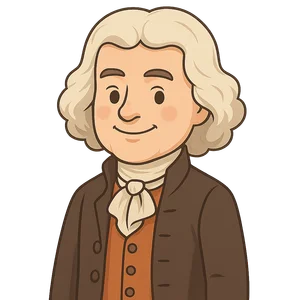
Thomas Jefferson
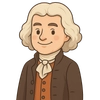
Thomas Jefferson was an American Founding Father, the primary drafter of the Declaration of Independence…
Reads at Grades 6–8 Listens at Grades 4–8
Print & create
Answer keys·No prep·Free with an account
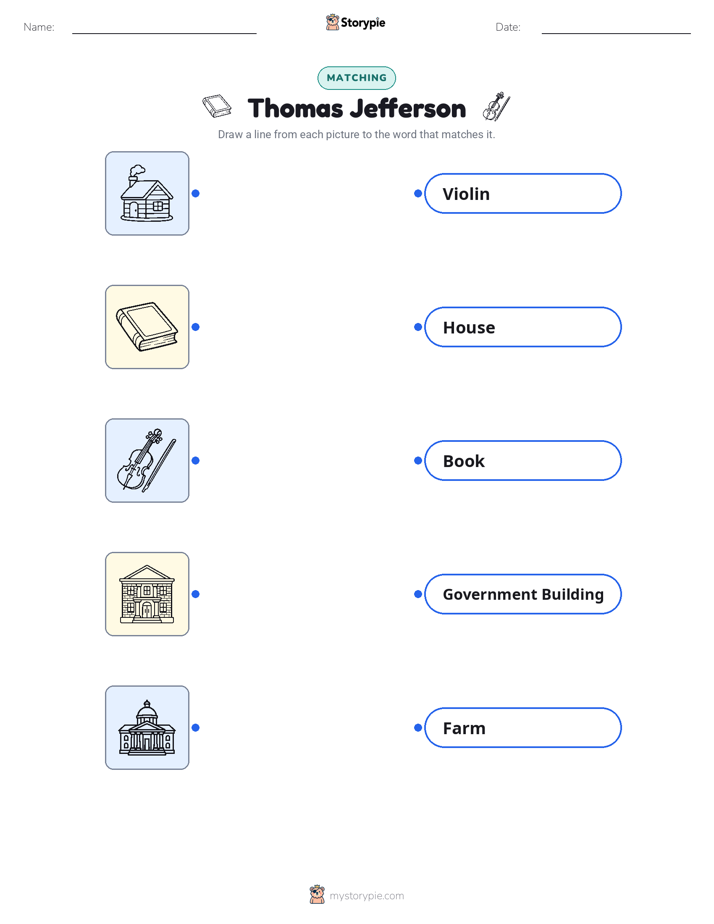
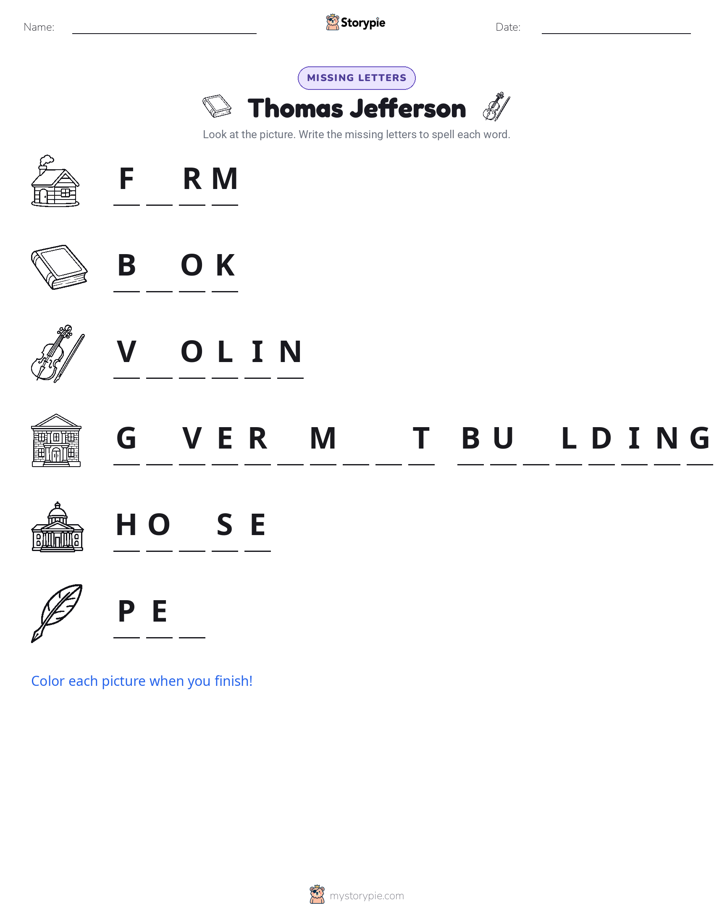
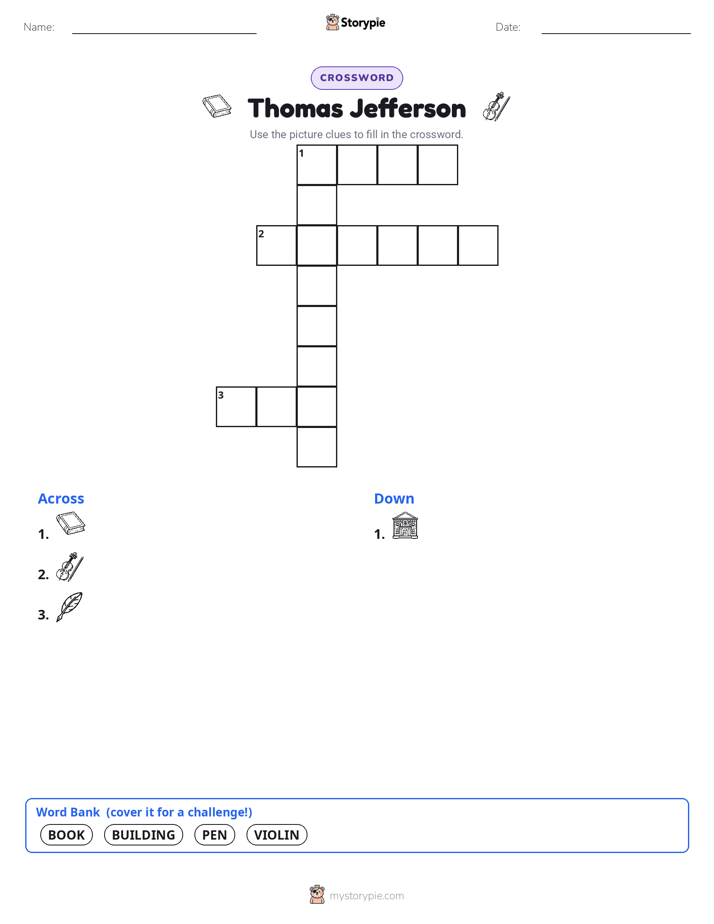
28 worksheets · answer keys · full story · quiz · Ages 10-12 · CEFR B2
Plus adds 102,000+ more stories in 27 languages, audio for every one, and printables for all of them.
Just want Thomas Jefferson?
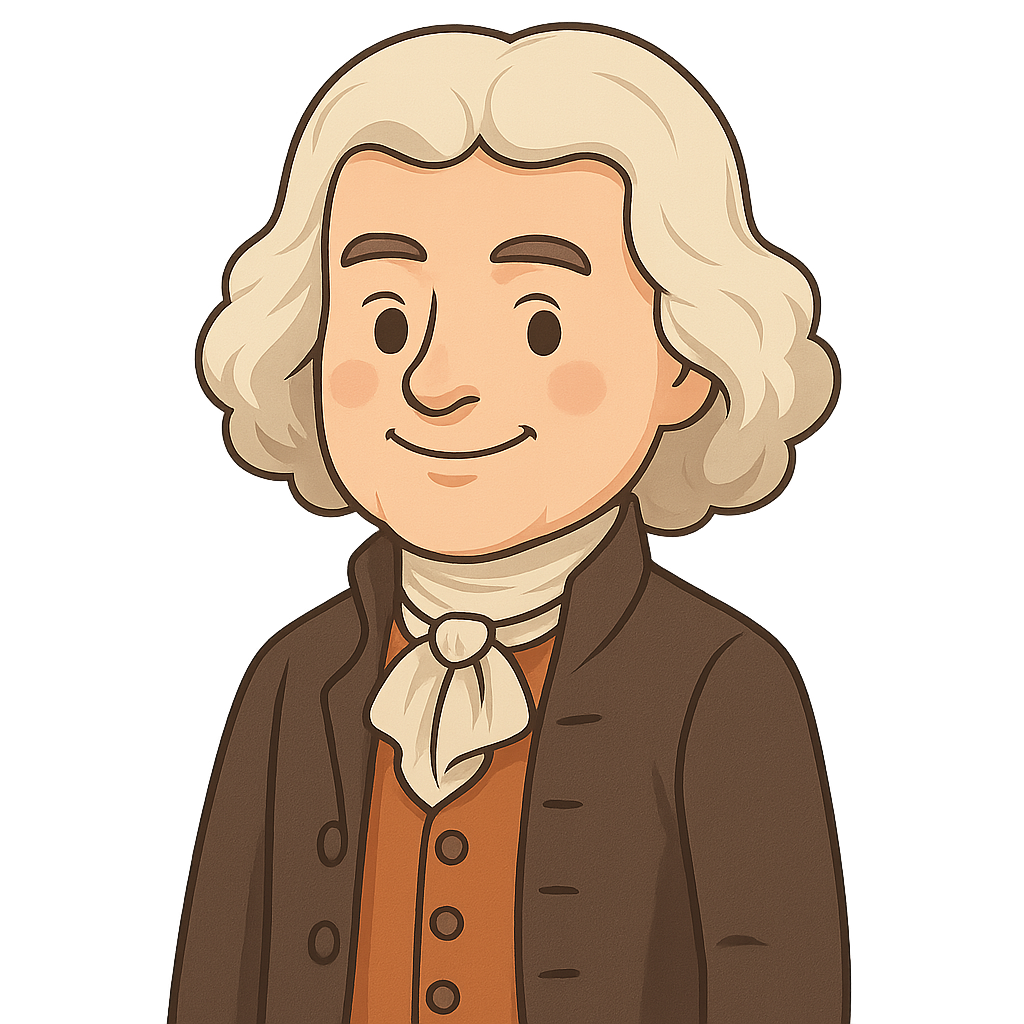
Hello, my name is Thomas Jefferson. My story begins on April 13th, 1743, on my family’s farm, called Shadwell, in the colony of Virginia. I grew up surrounded by books and nature. My father taught me to explore the woods and read everything I could get my hands on. When I was 17 years old, in the year 1760, I went off to the College of William & Mary, where my love for learning grew even stronger. I studied law, but I was also fascinated by science, history, architecture, and music—I especially loved playing my violin.
After finishing my studies, I became a lawyer in 1767 and was elected to the Virginia government, the House of Burgesses, in 1769. During this time, many of us in the American colonies felt that the rules set by the King of Great Britain were unfair. We believed people should have the right to govern themselves. These ideas were very important to me. In 1772, I married a wonderful woman named Martha Wayles Skelton, and I began designing and building my dream home on a hilltop, which I named Monticello. It was a busy time, but my mind was always buzzing with thoughts about liberty and what it meant for a country to be truly free.
By 1775, the disagreements with Great Britain had grown into the American Revolutionary War. I was chosen to represent Virginia at the Second Continental Congress in Philadelphia. There, in June of 1776, I was given a very important job: to write a document explaining to the world why we wanted to be independent. I worked hard to find just the right words. I wrote that all people have certain rights that can't be taken away, including the rights to 'Life, Liberty and the pursuit of Happiness.' On July 4th, 1776, the Congress approved this document, the Declaration of Independence. It was a moment that changed the course of history.
Thomas Jefferson: Words of a New Nation
Hello, my name is Thomas Jefferson. My story begins on April 13th, 1743, on my family’s farm, called Shadwell, in the colony of Virginia. I grew up surrounded by books and nature. My father taught me to explore the woods and read everything I could get my hands on. When I was 17 years old, in the year 1760, I went off to the College of William & Mary, where my love for learning grew even stronger. I studied law, but I was also fascinated by science, history, architecture, and music—I especially loved playing my violin.
After finishing my studies, I became a lawyer in 1767 and was elected to the Virginia government, the House of Burgesses, in 1769. During this time, many of us in the American colonies felt that the rules set by the King of Great Britain were unfair. We believed people should have the right to govern themselves. These ideas were very important to me. In 1772, I married a wonderful woman named Martha Wayles Skelton, and I began designing and building my dream home on a hilltop, which I named Monticello. It was a busy time, but my mind was always buzzing with thoughts about liberty and what it meant for a country to be truly free.
By 1775, the disagreements with Great Britain had grown into the American Revolutionary War. I was chosen to represent Virginia at the Second Continental Congress in Philadelphia. There, in June of 1776, I was given a very important job: to write a document explaining to the world why we wanted to be independent. I worked hard to find just the right words. I wrote that all people have certain rights that can't be taken away, including the rights to 'Life, Liberty and the pursuit of Happiness.' On July 4th, 1776, the Congress approved this document, the Declaration of Independence. It was a moment that changed the course of history.
After the war, I served our new country in many ways. I was the Governor of Virginia, and then in 1785, I went to France to represent the United States. When I returned, President George Washington asked me to be his Secretary of State in 1790. Finally, in 1801, I became the third President of the United States. One of the most significant events during my presidency happened in 1803. I arranged for the United States to buy a huge piece of land from France called the Louisiana Territory. This deal, known as the Louisiana Purchase, nearly doubled the size of our country! To see what we had bought, in 1804 I sent two brave explorers, Meriwether Lewis and William Clark, on an amazing journey to map the new land all the way to the Pacific Ocean.
After serving two terms as president, I retired to Monticello in 1809. But I wasn't done working. I believed that education was essential for a democracy to succeed. So, I spent years planning and designing a new school, the University of Virginia. It opened in 1825, and I considered it one of my greatest accomplishments. I even sold my personal collection of thousands of books to the government to help rebuild the Library of Congress after it was burned during the War of 1812. My love for books and knowledge was something I wanted to share with everyone.
My life was long and full of incredible moments, but it was also complicated. I wrote that 'all men are created equal,' yet I enslaved over 600 people during my lifetime at Monticello. This is a difficult part of my story, and it shows that my actions did not always match my words about liberty. It is a contradiction that America still thinks about today. I lived to be 83 years old, passing away on July 4th, 1826—exactly 50 years after the Declaration of Independence was adopted. I am remembered today for my words that helped create a new nation, my vision for expanding the country, and my belief in the power of education.
Wow facts
About
Thomas Jefferson was an American Founding Father, the primary drafter of the Declaration of Independence, and the third President of the United States from 1801 to 1809.
Take a Quiz
Question 1 of 5
Based on the story, what was the main problem between the American colonies and Great Britain that led Jefferson to write the Declaration of Independence?
Explore next



Want to do even more?
Go beyond exploring. Unlock tools that turn every story into real learning.

Storypie Plus for families
Full stories, quizzes, and printables. Nights and car rides, sorted.
- Unlimited audio stories
- Create Mode: your child stars in the story
- Offline downloads
- Printable worksheets & coloring pages

Why Storypie for Schools
Students engaged. Prep in seconds. Evenings back to you.
- Worksheets & Quizzes
- Classroom Management
- Formative Assessment
- Custom Curriculum & Lesson Plans
- 27 Languages

Why Storypie for Homeschool
Curriculum done. They'll ask for more. Hours back in your day.
- Worksheet Generator
- First-Person Audio Stories
- Built-in Comprehension Quizzes
- Custom Curriculum & Lesson Plans
- Print & Go Activities