English

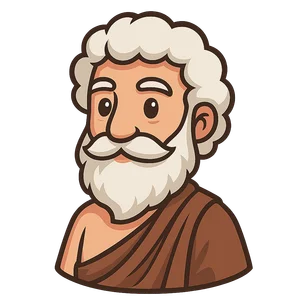
Vitruvius
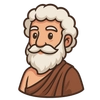
Marcus Vitruvius Pollio was a Roman architect, engineer, and author…
Reads at Grades 3–5 Listens at Grades 1–5
Print & create
Answer keys·No prep·Free with an account
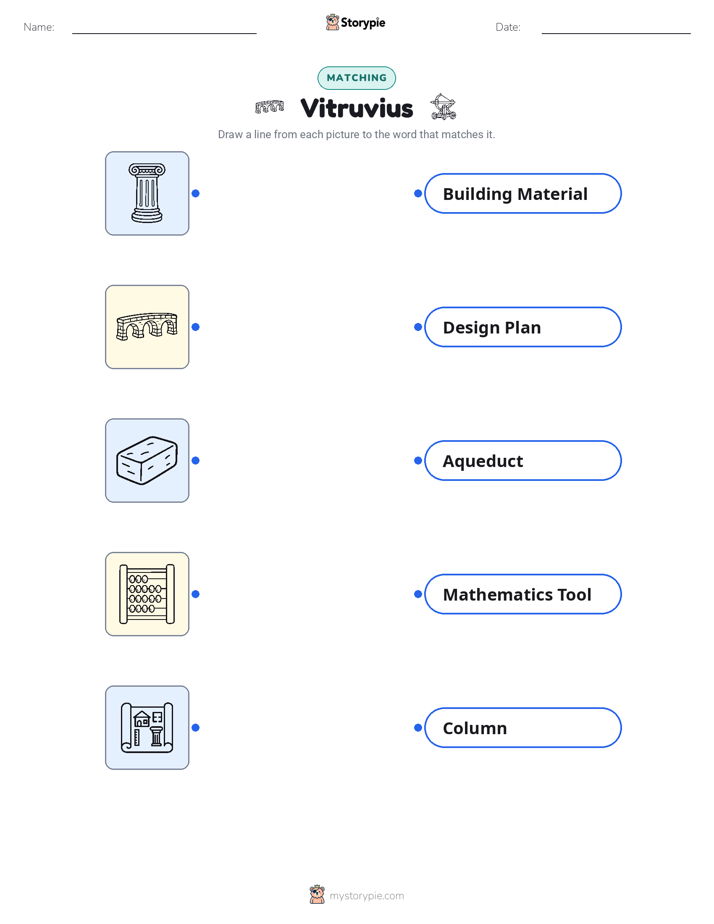
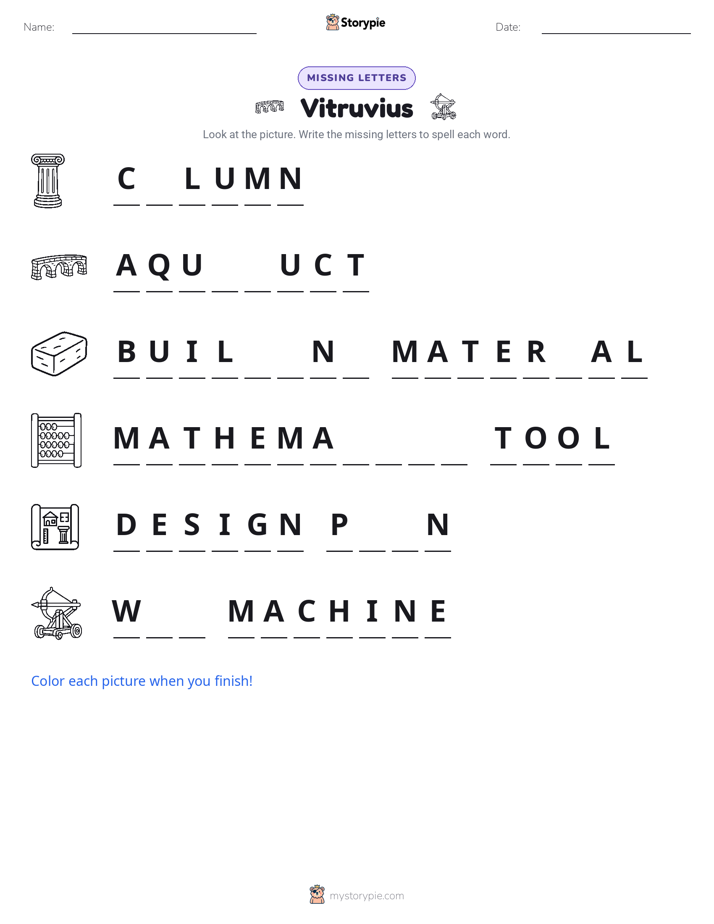
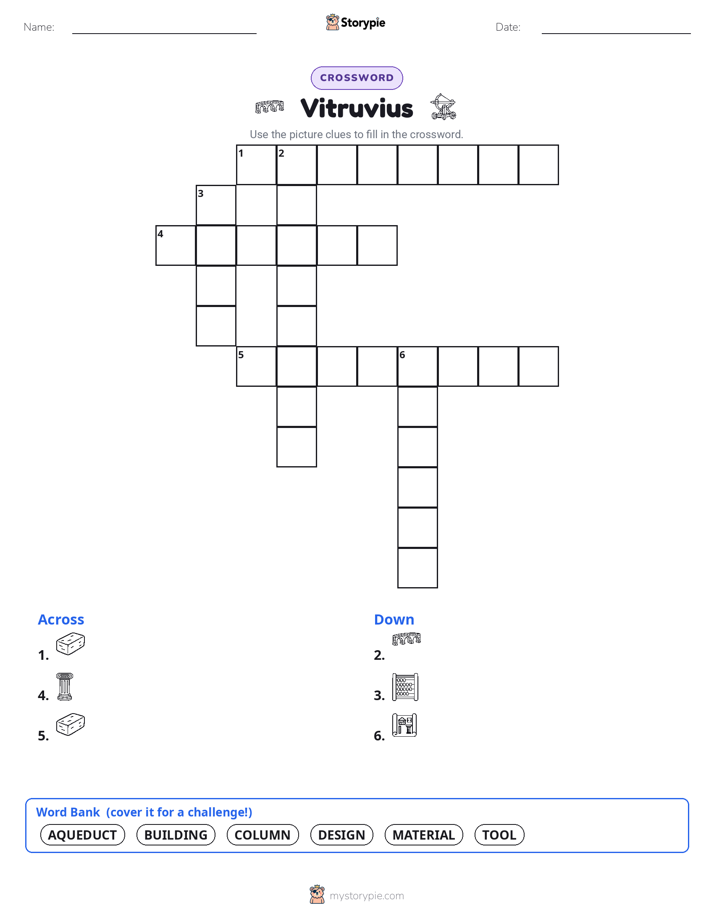
28 worksheets · answer keys · full story · quiz · Ages 8-10 · CEFR B1
Plus adds 244,000+ more stories in 27 languages, audio for every one, and printables for all of them.
Just want Vitruvius?
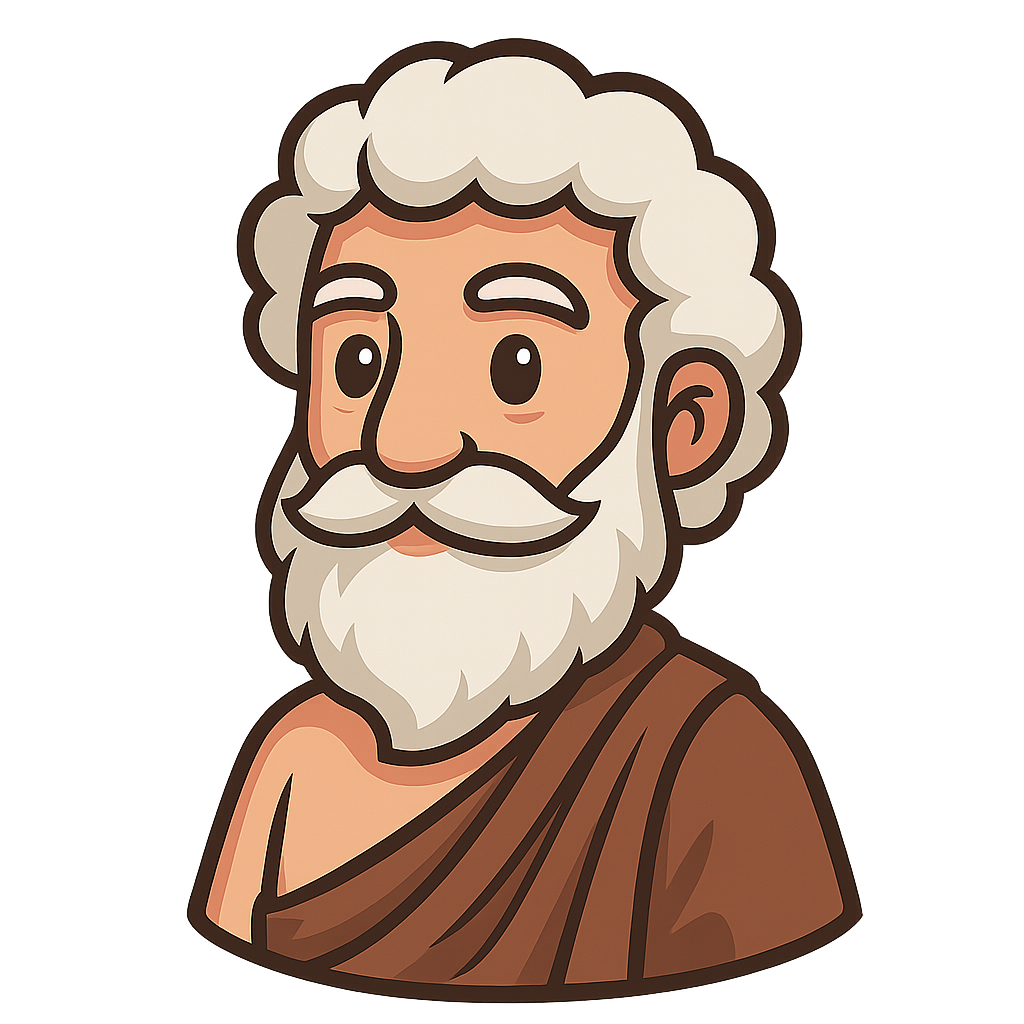
Hello, my name is Marcus Vitruvius Pollio. I was born a long, long time ago, around the year 80 BCE, when Rome was still a Republic. Even as a young boy, I was fascinated by the world being built around me. I would stare at the stone roads that connected our great cities, wondering how they were made so strong that they could last for hundreds of years. I looked up at the grand temples with their tall columns and admired the clever aqueducts, the amazing water bridges that carried fresh water for miles. It became my dream to understand the secret rules of building. I wanted to learn how to create things that were not just strong and useful, but also beautiful for everyone to see.
When I became a young man, I joined the Roman army and served under the famous general, Julius Caesar. This was during the 50s BCE. My job was not to be a soldier fighting with a sword and shield. Instead, I used my mind as a military engineer. I designed powerful war machines called catapults that could hurl large stones over enemy walls. I also helped the army build what it needed to succeed in its campaigns. If we came to a wide river, I would help design a strong bridge to get the soldiers across. When we needed to capture a fortified city, I helped construct tall siege towers that could be rolled up to the walls. My work was to solve problems with wood, stone, and smart design, helping the army overcome any obstacle in its path.
After my time in the army, I knew I had learned so much that I wanted to share it. I decided to write down everything I knew about building and machines. I was very fortunate because the first Roman Emperor, Augustus, supported my work. This meant I had the time and resources to focus on my writing. Between the years 30 and 15 BCE, I worked tirelessly on my great project. The result was a ten-volume book called 'De architectura,' which means 'On Architecture.' It was my life's work. Inside its pages, I wrote about everything I could think of related to building. I covered how to plan entire cities, how to choose the best wood and stone, and how to construct buildings. I also wrote about how to design machines, water clocks, and even aqueducts. In my book, I explained my three most important principles: that every structure must have firmitas, which means strength; utilitas, which means usefulness; and venustas, which means beauty. I believed that anything built should be strong, serve a purpose, and be pleasing to the eye.
Vitruvius: The Architect of Rome
Hello, my name is Marcus Vitruvius Pollio. I was born a long, long time ago, around the year 80 BCE, when Rome was still a Republic. Even as a young boy, I was fascinated by the world being built around me. I would stare at the stone roads that connected our great cities, wondering how they were made so strong that they could last for hundreds of years. I looked up at the grand temples with their tall columns and admired the clever aqueducts, the amazing water bridges that carried fresh water for miles. It became my dream to understand the secret rules of building. I wanted to learn how to create things that were not just strong and useful, but also beautiful for everyone to see.
When I became a young man, I joined the Roman army and served under the famous general, Julius Caesar. This was during the 50s BCE. My job was not to be a soldier fighting with a sword and shield. Instead, I used my mind as a military engineer. I designed powerful war machines called catapults that could hurl large stones over enemy walls. I also helped the army build what it needed to succeed in its campaigns. If we came to a wide river, I would help design a strong bridge to get the soldiers across. When we needed to capture a fortified city, I helped construct tall siege towers that could be rolled up to the walls. My work was to solve problems with wood, stone, and smart design, helping the army overcome any obstacle in its path.
After my time in the army, I knew I had learned so much that I wanted to share it. I decided to write down everything I knew about building and machines. I was very fortunate because the first Roman Emperor, Augustus, supported my work. This meant I had the time and resources to focus on my writing. Between the years 30 and 15 BCE, I worked tirelessly on my great project. The result was a ten-volume book called 'De architectura,' which means 'On Architecture.' It was my life's work. Inside its pages, I wrote about everything I could think of related to building. I covered how to plan entire cities, how to choose the best wood and stone, and how to construct buildings. I also wrote about how to design machines, water clocks, and even aqueducts. In my book, I explained my three most important principles: that every structure must have firmitas, which means strength; utilitas, which means usefulness; and venustas, which means beauty. I believed that anything built should be strong, serve a purpose, and be pleasing to the eye.
I lived a long and full life, dedicated to understanding how our world is built. For many centuries after I was gone, my book 'De architectura' was not very well known. But then, during an exciting time of new ideas called the Renaissance, my work was rediscovered. Artists and thinkers were amazed by what I had written so long ago. A brilliant artist named Leonardo da Vinci was especially inspired by my description of the ideal proportions of the human body. He used my ideas to create his famous drawing, the 'Vitruvian Man.' My ideas found a new life, and today, my three principles of strength, usefulness, and beauty continue to inspire architects and engineers all over the world to create amazing things.
Wow facts
About
Marcus Vitruvius Pollio was a Roman architect, engineer, and author, best known for his multi-volume treatise 'De architectura,' which outlined the principles of classical architecture and engineering.
Take a Quiz
Question 1 of 5
What were the three principles that Vitruvius believed every building should have?
Explore next




Want to do even more?
Go beyond exploring. Unlock tools that turn every story into real learning.

Storypie Plus for families
Full stories, quizzes, and printables. Nights and car rides, sorted.
- Unlimited audio stories
- Create Mode: your child stars in the story
- Offline downloads
- Printable worksheets & coloring pages

Why Storypie for Schools
Students engaged. Prep in seconds. Evenings back to you.
- Worksheets & Quizzes
- Classroom Management
- Formative Assessment
- Custom Curriculum & Lesson Plans
- 27 Languages

Why Storypie for Homeschool
Curriculum done. They'll ask for more. Hours back in your day.
- Worksheet Generator
- First-Person Audio Stories
- Built-in Comprehension Quizzes
- Custom Curriculum & Lesson Plans
- Print & Go Activities