English


Vitus Bering
Vitus Bering was a Danish-born navigator and explorer in Russian service who led two major expeditions to…
Reads at Grades 3–5 Listens at Grades 1–5
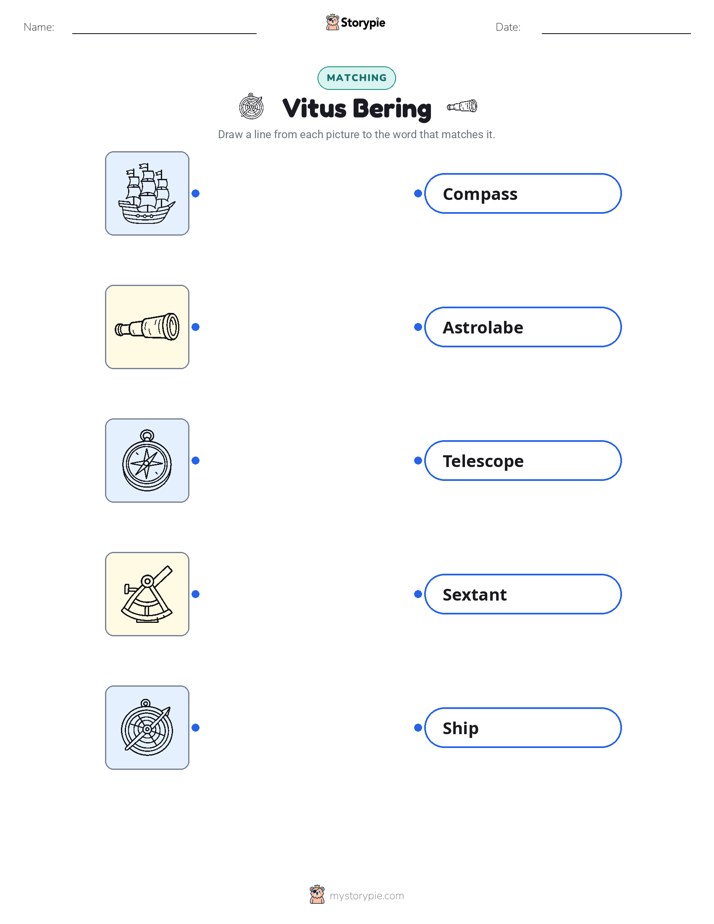
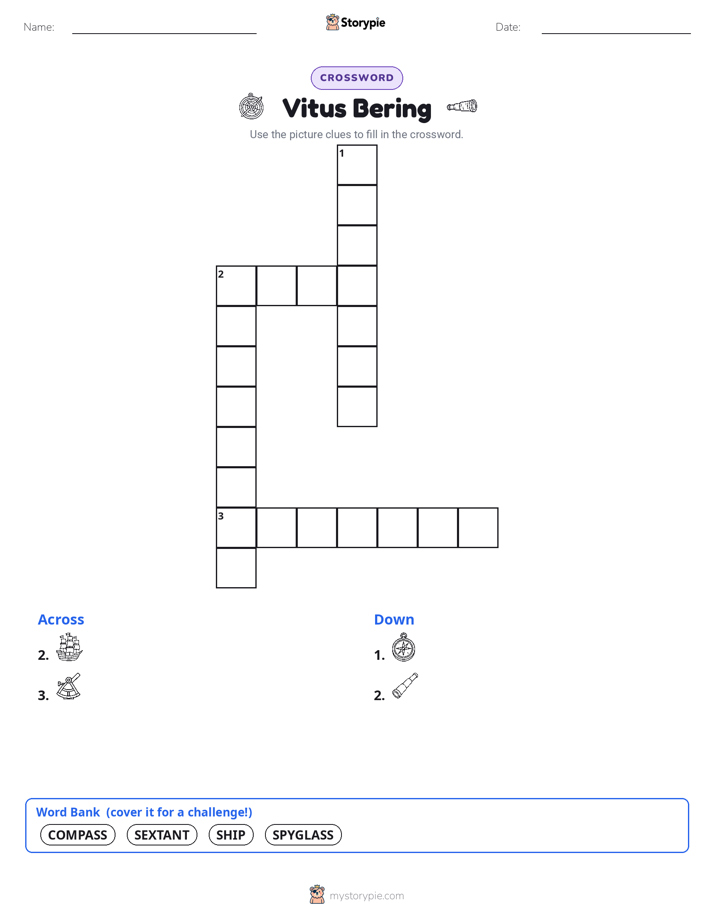
Print & create
Answer keys·No prep·Free with an account
28 worksheets · answer keys · full story · quiz · Ages 8-10 · CEFR B1
Plus adds 244,000+ more stories in 27 languages, audio for every one, and printables for all of them.
Just want Vitus Bering?
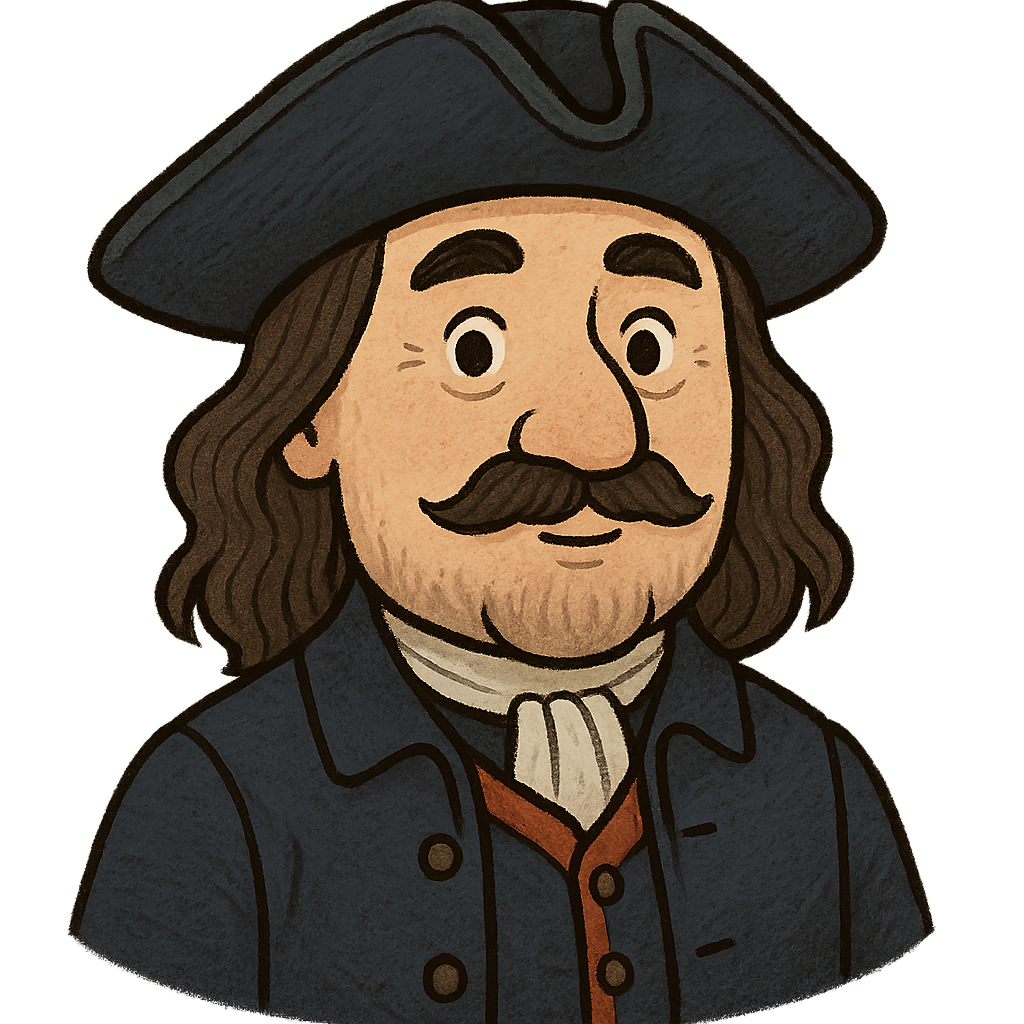
Hello! My name is Vitus Bering, and I was an explorer who loved the sea more than anything. I was born a long time ago, on August 12th, 1681, in a town called Horsens in Denmark. Even as a young boy, I would watch the big ships in the harbor and dream of sailing to faraway lands. When I was just a teenager, around 1696, my dream came true and I became a sailor. I spent years sailing to distant places like the East Indies, learning everything I could about ships, stars, and navigating the vast, open ocean. Every wave and every new shore filled me with excitement for the next adventure.
After many years at sea, I decided to join the navy in a huge and powerful country called Russia in 1703. The ruler of Russia was Tsar Peter the Great, a very clever and ambitious leader who wanted to make his country a great sea power. I worked hard and became a respected captain in his fleet. The Tsar saw that I was a skilled and trustworthy sailor. One day in 1724, he called on me for a very important mission. He pointed to a map and asked me a question that would change my life: Are the great lands of Asia and North America connected, or is there a sea between them? No one in Europe knew the answer, and he trusted me to find out.
My mission began in 1725. Getting to the eastern edge of Asia was an adventure in itself! My crew and I had to travel thousands of miles across a vast, wild land called Siberia. It took us two whole years, traveling by horse, boat, and sled. When we finally reached a peninsula called Kamchatka, we had to build our own ship! We named her the St. Gabriel. In the summer of 1728, we finally set sail into the unknown waters. We sailed north, carefully mapping the coast. After many days, we sailed through a narrow passage of water with Asia on one side and, though we couldn't see it through the fog, North America on the other. I had found the sea between the continents! I returned to the capital, St. Petersburg, in 1730 to share my amazing discovery.
Vitus Bering
Hello! My name is Vitus Bering, and I was an explorer who loved the sea more than anything. I was born a long time ago, on August 12th, 1681, in a town called Horsens in Denmark. Even as a young boy, I would watch the big ships in the harbor and dream of sailing to faraway lands. When I was just a teenager, around 1696, my dream came true and I became a sailor. I spent years sailing to distant places like the East Indies, learning everything I could about ships, stars, and navigating the vast, open ocean. Every wave and every new shore filled me with excitement for the next adventure.
After many years at sea, I decided to join the navy in a huge and powerful country called Russia in 1703. The ruler of Russia was Tsar Peter the Great, a very clever and ambitious leader who wanted to make his country a great sea power. I worked hard and became a respected captain in his fleet. The Tsar saw that I was a skilled and trustworthy sailor. One day in 1724, he called on me for a very important mission. He pointed to a map and asked me a question that would change my life: Are the great lands of Asia and North America connected, or is there a sea between them? No one in Europe knew the answer, and he trusted me to find out.
My mission began in 1725. Getting to the eastern edge of Asia was an adventure in itself! My crew and I had to travel thousands of miles across a vast, wild land called Siberia. It took us two whole years, traveling by horse, boat, and sled. When we finally reached a peninsula called Kamchatka, we had to build our own ship! We named her the St. Gabriel. In the summer of 1728, we finally set sail into the unknown waters. We sailed north, carefully mapping the coast. After many days, we sailed through a narrow passage of water with Asia on one side and, though we couldn't see it through the fog, North America on the other. I had found the sea between the continents! I returned to the capital, St. Petersburg, in 1730 to share my amazing discovery.
The Russian rulers were thrilled with my discovery, but they wanted to know more. In 1733, they asked me to lead another, even bigger expedition. This one was called the Great Northern Expedition. Our goal was not just to cross the sea, but to actually land on the coast of North America and map everything we could find. This was the largest expedition the world had ever seen, with thousands of people and scientists. It took many years just to prepare. Finally, on June 4th, 1741, my ship, the St. Peter, and another ship, the St. Paul, captained by my friend Aleksei Chirikov, sailed from Kamchatka, heading east into the mysterious ocean.
After weeks at sea, on July 16th, 1741, we saw it—a coastline with towering, snow-covered mountains! It was the coast of what is now called Alaska. I had reached North America from Asia! We were all so excited, but our journey was far from over. A terrible storm separated my ship from the St. Paul, and we had to turn back alone. The voyage home was incredibly difficult. The weather was harsh, and many of my crew, including me, grew sick from a disease called scurvy because we didn't have enough fresh food. In November 1741, our damaged ship crashed onto the shore of a deserted island. We were shipwrecked and stranded, with a long, cold winter ahead.
The winter on the island was very hard, and I did not survive. I passed away there on December 8th, 1741. I lived to be 60 years old. But my story didn't end there. The brave survivors of my crew built a new, smaller boat from the wreckage of our ship. The next summer, in 1742, they managed to sail back to Kamchatka, bringing my maps and the news of our discoveries. Today, the sea, the strait, and the island where I was buried are all named after me: the Bering Sea, the Bering Strait, and Bering Island. I am remembered as the explorer who put the final piece of the world map in place, proving the two great continents were separate.
Wow facts
About
Vitus Bering was a Danish-born navigator and explorer in Russian service who led two major expeditions to explore the northeastern coast of Asia and the western coast of North America, providing evidence that Asia and North America were separated by a sea, especially the Bering Strait.
Take a Quiz
Question 1 of 5
What was the main question Tsar Peter the Great wanted me to answer on my first expedition?
Explore next





Want to do even more?
Go beyond exploring. Unlock tools that turn every story into real learning.

Storypie Plus for families
Full stories, quizzes, and printables. Nights and car rides, sorted.
- Unlimited audio stories
- Create Mode: your child stars in the story
- Offline downloads
- Printable worksheets & coloring pages

Why Storypie for Schools
Students engaged. Prep in seconds. Evenings back to you.
- Worksheets & Quizzes
- Classroom Management
- Formative Assessment
- Custom Curriculum & Lesson Plans
- 27 Languages

Why Storypie for Homeschool
Curriculum done. They'll ask for more. Hours back in your day.
- Worksheet Generator
- First-Person Audio Stories
- Built-in Comprehension Quizzes
- Custom Curriculum & Lesson Plans
- Print & Go Activities