English

Walter Houser Brattain
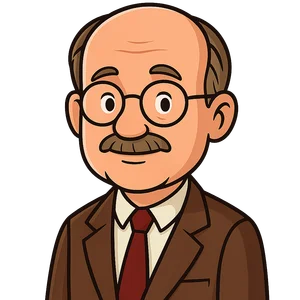
Walter Houser Brattain was an American physicist who, along with John Bardeen and William Shockley…
Reads at Grades 6–8 Listens at Grades 4–8
Print & create
Answer keys·No prep·Free with an account
28 worksheets · answer keys · full story · quiz · Ages 10-12 · CEFR B2
Plus adds 244,000+ more stories in 27 languages, audio for every one, and printables for all of them.
Just want Walter Houser Brattain?
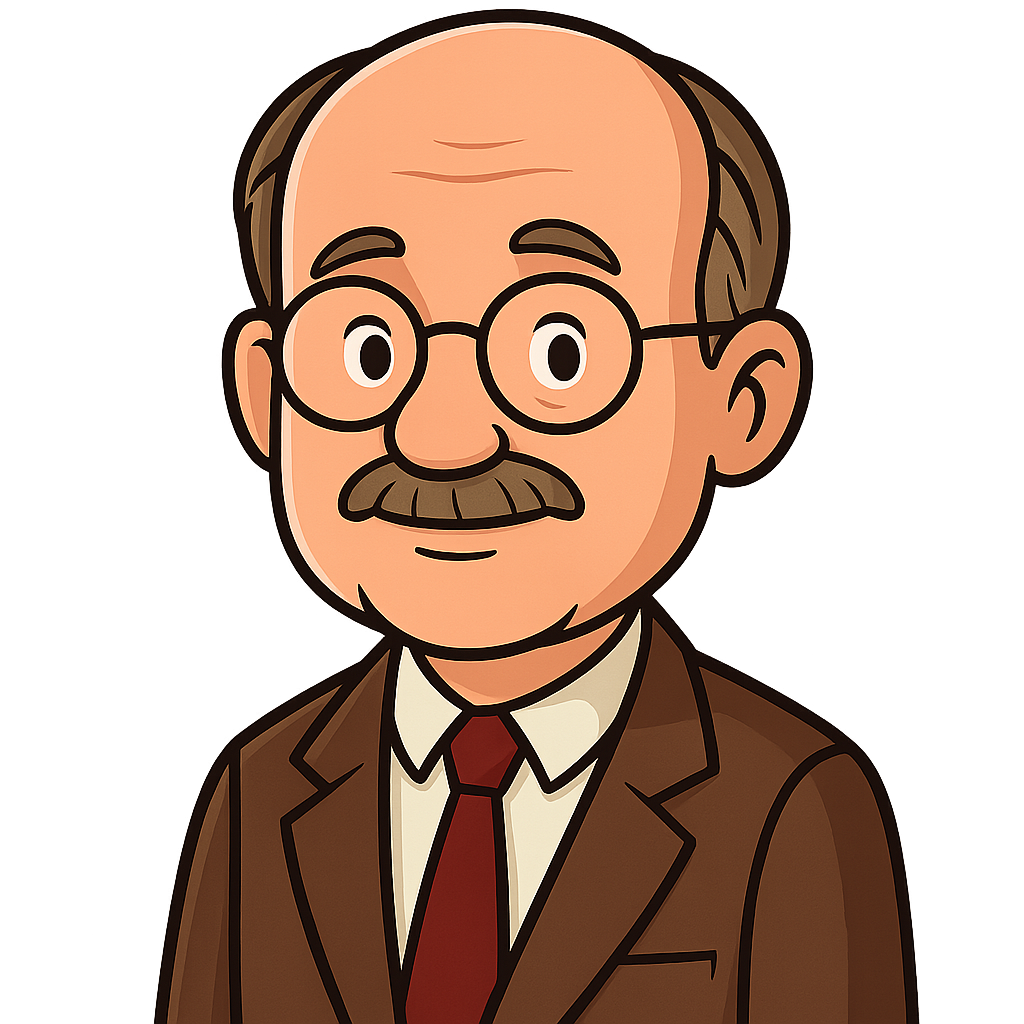
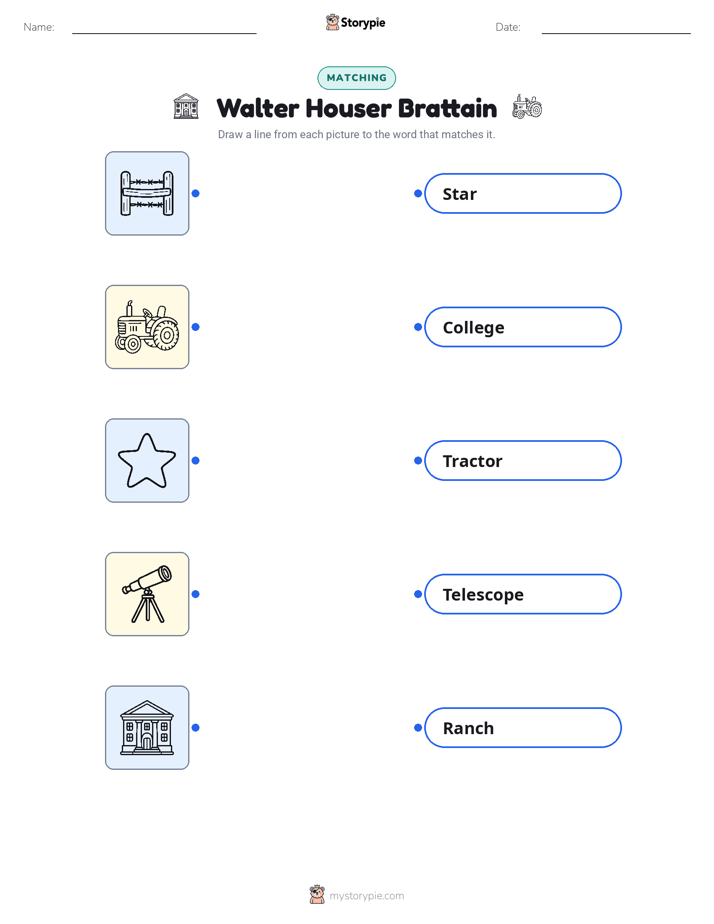
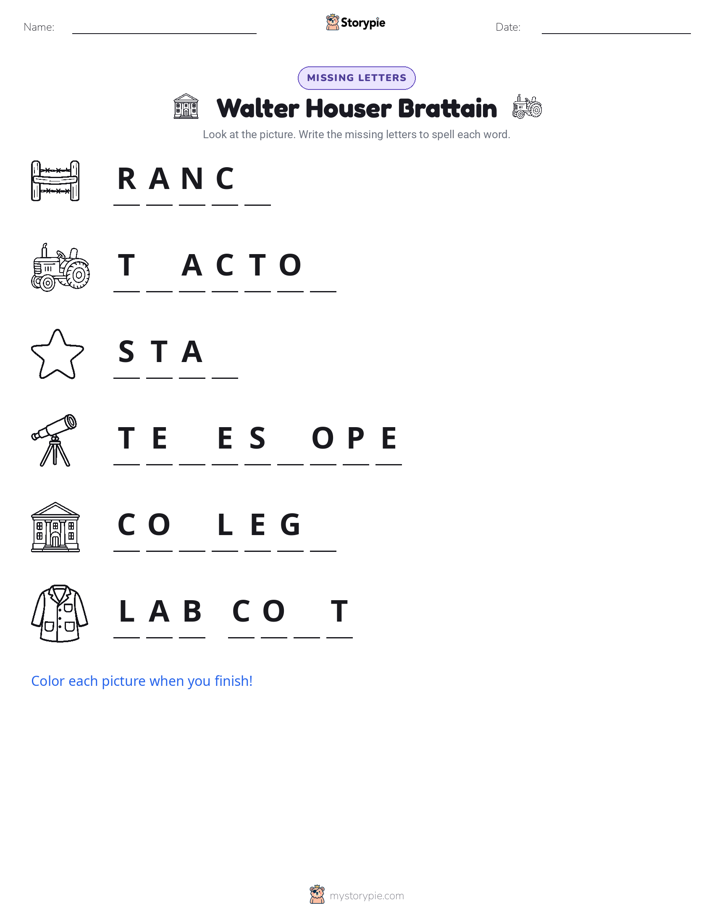
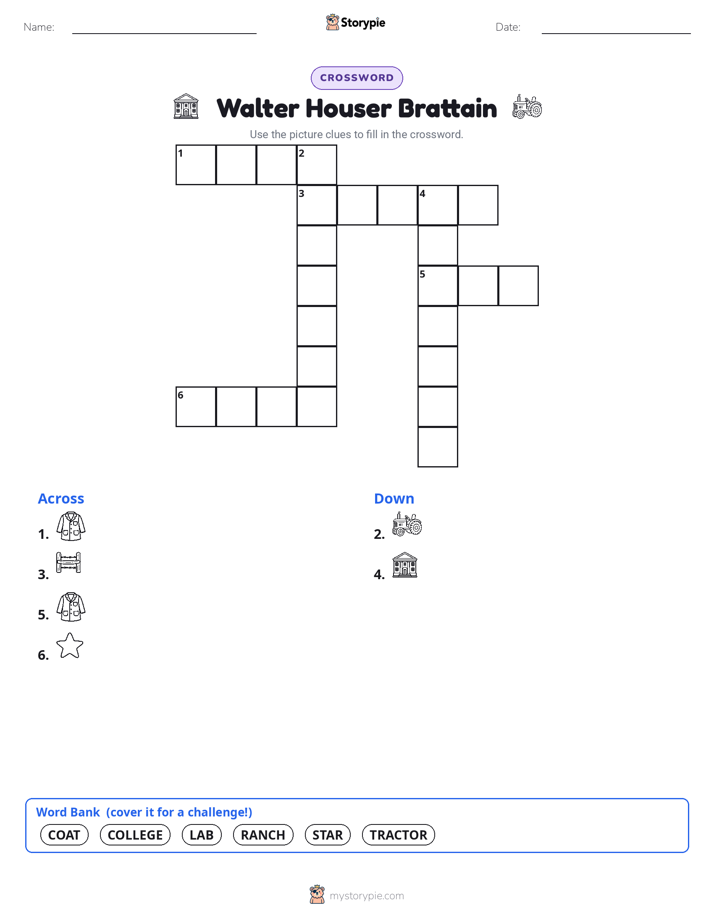
Hello, my name is Walter Brattain, and I helped create a tiny device that changed the world. My story begins in a place you might not expect. I was born on February 10th, 1902, in Amoy, China. My parents were American, and they were working there as teachers. Though I was born far from the United States, my family soon returned, and I spent my childhood in a very different environment: a large cattle ranch in the state of Washington. Life on the ranch was full of practical challenges. There were always fences to mend, animals to care for, and machinery to fix. This upbringing taught me to be resourceful and to solve problems with my own two hands. I wasn't just learning how to work; I was learning how to think. I became deeply curious about the world around me, constantly wondering how things worked, from the gears in a tractor to the patterns of the stars in the night sky. That practical, hands-on curiosity sparked on the ranch would guide me for the rest of my life.
My fascination with how the world worked naturally led me to the world of science. After finishing high school, I knew I wanted to study physics and mathematics, so I enrolled at Whitman College in Washington. It was there that my passion for science truly grew, and I graduated with my first degree in 1924. But my education was far from over. I continued my studies, earning a master's degree from the University of Oregon in 1926. My thirst for knowledge pushed me even further, and I moved to the University of Minnesota to pursue the highest degree in my field. In 1929, I proudly earned my Ph.D. in physics. That same year, an incredible opportunity came my way. I was invited to join the research team at Bell Telephone Laboratories in New Jersey. In 1929, Bell Labs was one of the most famous and innovative research centers in the world. It was a place where the brightest minds gathered to solve big problems, and I was thrilled to become a research physicist there.
Walter Brattain: The Spark of a Tiny Giant
Hello, my name is Walter Brattain, and I helped create a tiny device that changed the world. My story begins in a place you might not expect. I was born on February 10th, 1902, in Amoy, China. My parents were American, and they were working there as teachers. Though I was born far from the United States, my family soon returned, and I spent my childhood in a very different environment: a large cattle ranch in the state of Washington. Life on the ranch was full of practical challenges. There were always fences to mend, animals to care for, and machinery to fix. This upbringing taught me to be resourceful and to solve problems with my own two hands. I wasn't just learning how to work; I was learning how to think. I became deeply curious about the world around me, constantly wondering how things worked, from the gears in a tractor to the patterns of the stars in the night sky. That practical, hands-on curiosity sparked on the ranch would guide me for the rest of my life.
My fascination with how the world worked naturally led me to the world of science. After finishing high school, I knew I wanted to study physics and mathematics, so I enrolled at Whitman College in Washington. It was there that my passion for science truly grew, and I graduated with my first degree in 1924. But my education was far from over. I continued my studies, earning a master's degree from the University of Oregon in 1926. My thirst for knowledge pushed me even further, and I moved to the University of Minnesota to pursue the highest degree in my field. In 1929, I proudly earned my Ph.D. in physics. That same year, an incredible opportunity came my way. I was invited to join the research team at Bell Telephone Laboratories in New Jersey. In 1929, Bell Labs was one of the most famous and innovative research centers in the world. It was a place where the brightest minds gathered to solve big problems, and I was thrilled to become a research physicist there.
At Bell Labs, I was given a challenge that would define my career. At the time, electronic devices like radios and telephone systems relied on something called a vacuum tube. These glass tubes were large, fragile, generated a lot of heat, and burned out easily. Our goal was to find something smaller, more reliable, and more efficient to replace them. I was fortunate to be part of a brilliant team. I worked closely with two other physicists, the thoughtful John Bardeen and the determined William Shockley. We each brought different skills to the table, and we spent years experimenting with materials called semiconductors. Our work was full of challenges and setbacks, but we encouraged each other and pushed forward. Then, on a day I will never forget, December 16th, 1947, we had a breakthrough. Using a sliver of germanium, some gold foil, and a paperclip, we created a device that could amplify an electrical signal. It worked. We had invented the first point-contact transistor. A week later, on December 23rd, 1947, we demonstrated our tiny invention to the executives at Bell Labs. They were amazed. This small, solid device did the job of a bulky vacuum tube, and we knew it was the beginning of something revolutionary.
Our little invention, the transistor, turned out to be a tiny giant. It was the missing piece that engineers and inventors had been waiting for. Because it was small, durable, and used very little power, it could be used to build electronics that were impossible to create with vacuum tubes. The transistor became the fundamental building block of all modern electronics. The first portable radios, which you could carry in your hand, were powered by transistors. Soon, they were used in everything from hearing aids to early computers, making technology more accessible and powerful than ever before. The work we did laid the foundation for the integrated circuits and microchips that power the computers, smartphones, and countless other devices we use today. For our discovery, my colleagues John Bardeen, William Shockley, and I were awarded the highest honor in science. In 1956, we traveled to Sweden to accept the Nobel Prize in Physics. It was a moment of immense pride, not just for us, but for the spirit of collaboration and scientific discovery.
I continued my research at Bell Labs until I retired in 1967. After leaving, I returned to where my academic journey began, Whitman College, this time as a teacher. I enjoyed sharing my love of physics with a new generation of students. I lived to be 85 years old, and when I look back, I see a life shaped by curiosity. My story shows that great things can come from teamwork and a persistent desire to understand how the world works. The transistor started as a small solution to a big problem, but it grew to have a giant impact, connecting our world in ways I could have only dreamed of as a boy on the ranch.
Wow facts
About
Walter Houser Brattain was an American physicist who, along with John Bardeen and William Shockley, invented the point-contact transistor in 1947. They shared the 1956 Nobel Prize in Physics for their work, which revolutionized the field of electronics.
Take a Quiz
Question 1 of 5
What was the main problem Walter Brattain and his team were trying to solve at Bell Labs?
Explore next





Want to do even more?
Go beyond exploring. Unlock tools that turn every story into real learning.

Storypie Plus for families
Full stories, quizzes, and printables. Nights and car rides, sorted.
- Unlimited audio stories
- Create Mode: your child stars in the story
- Offline downloads
- Printable worksheets & coloring pages

Why Storypie for Schools
Students engaged. Prep in seconds. Evenings back to you.
- Worksheets & Quizzes
- Classroom Management
- Formative Assessment
- Custom Curriculum & Lesson Plans
- 27 Languages

Why Storypie for Homeschool
Curriculum done. They'll ask for more. Hours back in your day.
- Worksheet Generator
- First-Person Audio Stories
- Built-in Comprehension Quizzes
- Custom Curriculum & Lesson Plans
- Print & Go Activities