English

Walter Houser Brattain
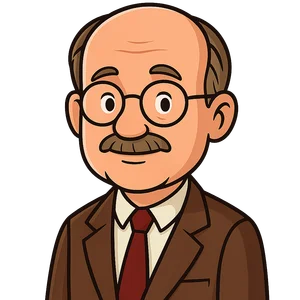
Walter Houser Brattain was an American physicist who, along with John Bardeen and William Shockley…
Reads at Grades 3–5 Listens at Grades 1–5
Print & create
Answer keys·No prep·Free with an account
28 worksheets · answer keys · full story · quiz · Ages 8-10 · CEFR B1
Plus adds 244,000+ more stories in 27 languages, audio for every one, and printables for all of them.
Just want Walter Houser Brattain?
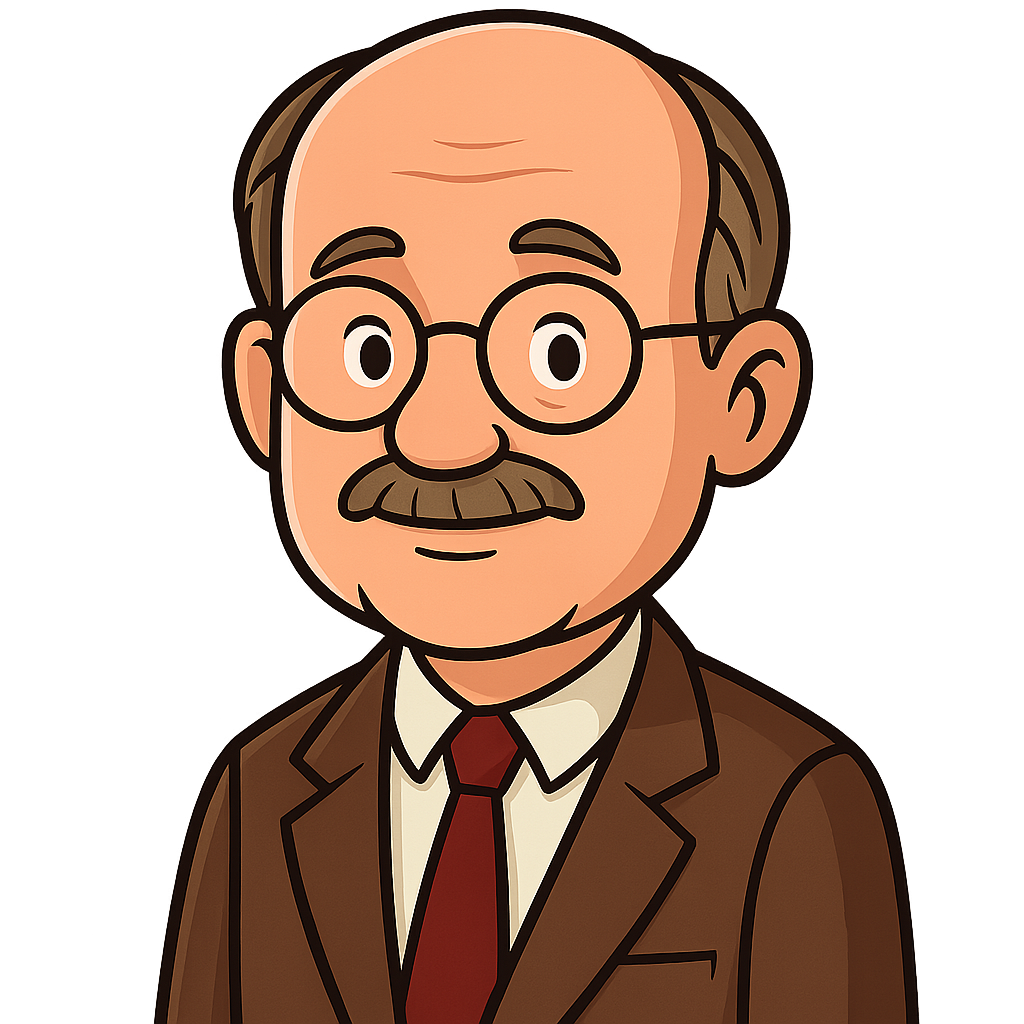
Hello! My name is Walter Brattain, and I want to tell you about my life as a scientist. I was born on February 10th, 1902, in a place very far from America called Amoy, China, where my American parents were working. When I was just a baby, my family moved back to the United States and we lived on a big cattle ranch in the state of Washington. I loved growing up in the country, riding horses and helping with chores, but I was also very curious about how the world worked. I always asked questions and loved figuring out puzzles.
As I got older, my favorite subjects in school were math and physics. Physics is the science of how things move and use energy. I decided I wanted to spend my life studying it. I went to Whitman College and graduated in 1924. But I still wanted to learn more! So, I kept going to school, getting a master's degree from the University of Oregon in 1926 and then my Ph.D., the highest degree you can get, from the University of Minnesota in 1929. I was officially a physicist!
In 1929, I got a very exciting job at a famous place called Bell Telephone Laboratories in New Jersey. It was like a giant playground for scientists and inventors! Our job was to find new ways to make telephones and communication better. At the time, radios and other electronics used big, glassy parts called vacuum tubes. They worked, but they were large, got very hot, and broke easily. My team and I were trying to find something smaller and stronger to do the same job. I spent years studying special materials called semiconductors, learning everything I could about how electricity moved through them.
Walter Brattain: The Man Who Made Our World Smaller
Hello! My name is Walter Brattain, and I want to tell you about my life as a scientist. I was born on February 10th, 1902, in a place very far from America called Amoy, China, where my American parents were working. When I was just a baby, my family moved back to the United States and we lived on a big cattle ranch in the state of Washington. I loved growing up in the country, riding horses and helping with chores, but I was also very curious about how the world worked. I always asked questions and loved figuring out puzzles.
As I got older, my favorite subjects in school were math and physics. Physics is the science of how things move and use energy. I decided I wanted to spend my life studying it. I went to Whitman College and graduated in 1924. But I still wanted to learn more! So, I kept going to school, getting a master's degree from the University of Oregon in 1926 and then my Ph.D., the highest degree you can get, from the University of Minnesota in 1929. I was officially a physicist!
In 1929, I got a very exciting job at a famous place called Bell Telephone Laboratories in New Jersey. It was like a giant playground for scientists and inventors! Our job was to find new ways to make telephones and communication better. At the time, radios and other electronics used big, glassy parts called vacuum tubes. They worked, but they were large, got very hot, and broke easily. My team and I were trying to find something smaller and stronger to do the same job. I spent years studying special materials called semiconductors, learning everything I could about how electricity moved through them.
I worked with two other brilliant scientists, John Bardeen and William Shockley. We were a team, sharing ideas and trying experiments. We believed we could use a semiconductor, a material called germanium, to control electricity. One day, on December 16th, 1947, we put together a strange-looking device. It had a tiny slab of germanium and some gold foil held in place with a plastic triangle that looked a bit like a paperclip. When we hooked it up, it worked! We had created the very first point-contact transistor. It could make an electrical signal stronger, just like a vacuum tube, but it was incredibly tiny and didn't need to heat up.
Our little invention changed everything. Because transistors were so small and reliable, people could build smaller radios, better hearing aids, and powerful new machines called computers. In 1956, my partners John Bardeen, William Shockley, and I were awarded the Nobel Prize in Physics for our invention. It was one of the proudest moments of my life. Our teamwork had created something that would help the whole world connect in new ways.
After I retired from Bell Labs in 1967, I enjoyed teaching physics to college students. I lived to be 85 years old, passing away on October 13th, 1987. Though I am gone, the work my team and I did lives on. The next time you use a computer, a phone, or almost any electronic gadget, remember the tiny transistor inside. It all started with a few curious scientists who weren't afraid to ask big questions.
Wow facts
About
Walter Houser Brattain was an American physicist who, along with John Bardeen and William Shockley, invented the point-contact transistor in 1947. They shared the 1956 Nobel Prize in Physics for their work, which revolutionized the field of electronics.
Take a Quiz
Question 1 of 5
What was the problem with the vacuum tubes that my team and I were trying to replace?
Explore next





Want to do even more?
Go beyond exploring. Unlock tools that turn every story into real learning.

Storypie Plus for families
Full stories, quizzes, and printables. Nights and car rides, sorted.
- Unlimited audio stories
- Create Mode: your child stars in the story
- Offline downloads
- Printable worksheets & coloring pages

Why Storypie for Schools
Students engaged. Prep in seconds. Evenings back to you.
- Worksheets & Quizzes
- Classroom Management
- Formative Assessment
- Custom Curriculum & Lesson Plans
- 27 Languages

Why Storypie for Homeschool
Curriculum done. They'll ask for more. Hours back in your day.
- Worksheet Generator
- First-Person Audio Stories
- Built-in Comprehension Quizzes
- Custom Curriculum & Lesson Plans
- Print & Go Activities