English

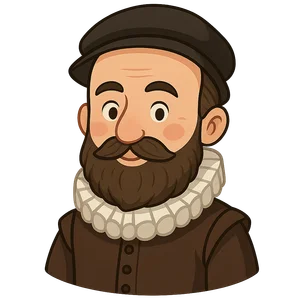
William Gilbert
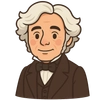
William Gilbert was an English physician, physicist…
Reads at Grades 6–8 Listens at Grades 4–8
Print & create
Answer keys·No prep·Free with an account
28 worksheets · answer keys · full story · quiz · Ages 10-12 · CEFR B2
Plus adds 244,000+ more stories in 27 languages, audio for every one, and printables for all of them.
Just want William Gilbert?
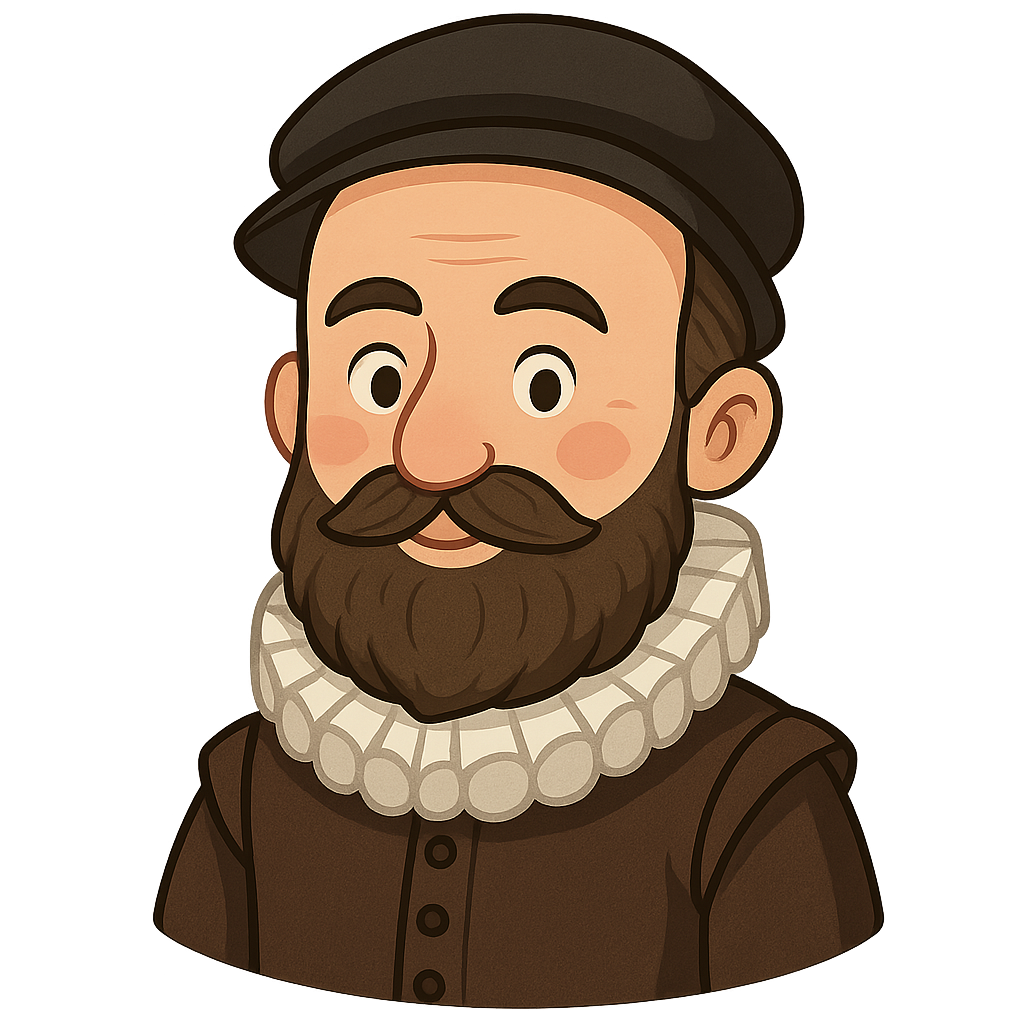
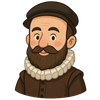
Hello! My name is William Gilbert, and I’d like to tell you my story. I was born on May 24th, 1544, in a town called Colchester in England. The world in the 16th century was a place of great change and discovery, and I was filled with an endless desire to understand it. Even as a boy, I was fascinated by everything around me, always asking questions about how things worked. My family saw my love for learning and understood that education was the key to unlocking the world's secrets. Around the year 1558, they sent me to study at St. John's College at the prestigious University of Cambridge. There, I trained to become a doctor and studied medicine, but my curiosity stretched far beyond the human body to the very secrets of the Earth itself. I wanted to understand the invisible forces that shaped our world.
After finishing my studies in the late 1560s, I moved to London to begin my career as a physician. London was a bustling, growing city, and I worked very hard to be the best doctor I could be. My reputation for careful observation and dedication grew over the years, and I became quite well-known among the city's elite. My greatest honor came in the year 1601, when I was chosen to be the personal physician to the queen of England, Queen Elizabeth I. It was a position of immense responsibility and trust. Even while I was busy taking care of the queen and my other patients, I spent every free moment on my true passion: conducting scientific experiments in my home, which I had turned into a personal laboratory.
William Gilbert: The Father of Magnetism
Hello! My name is William Gilbert, and I’d like to tell you my story. I was born on May 24th, 1544, in a town called Colchester in England. The world in the 16th century was a place of great change and discovery, and I was filled with an endless desire to understand it. Even as a boy, I was fascinated by everything around me, always asking questions about how things worked. My family saw my love for learning and understood that education was the key to unlocking the world's secrets. Around the year 1558, they sent me to study at St. John's College at the prestigious University of Cambridge. There, I trained to become a doctor and studied medicine, but my curiosity stretched far beyond the human body to the very secrets of the Earth itself. I wanted to understand the invisible forces that shaped our world.
After finishing my studies in the late 1560s, I moved to London to begin my career as a physician. London was a bustling, growing city, and I worked very hard to be the best doctor I could be. My reputation for careful observation and dedication grew over the years, and I became quite well-known among the city's elite. My greatest honor came in the year 1601, when I was chosen to be the personal physician to the queen of England, Queen Elizabeth I. It was a position of immense responsibility and trust. Even while I was busy taking care of the queen and my other patients, I spent every free moment on my true passion: conducting scientific experiments in my home, which I had turned into a personal laboratory.
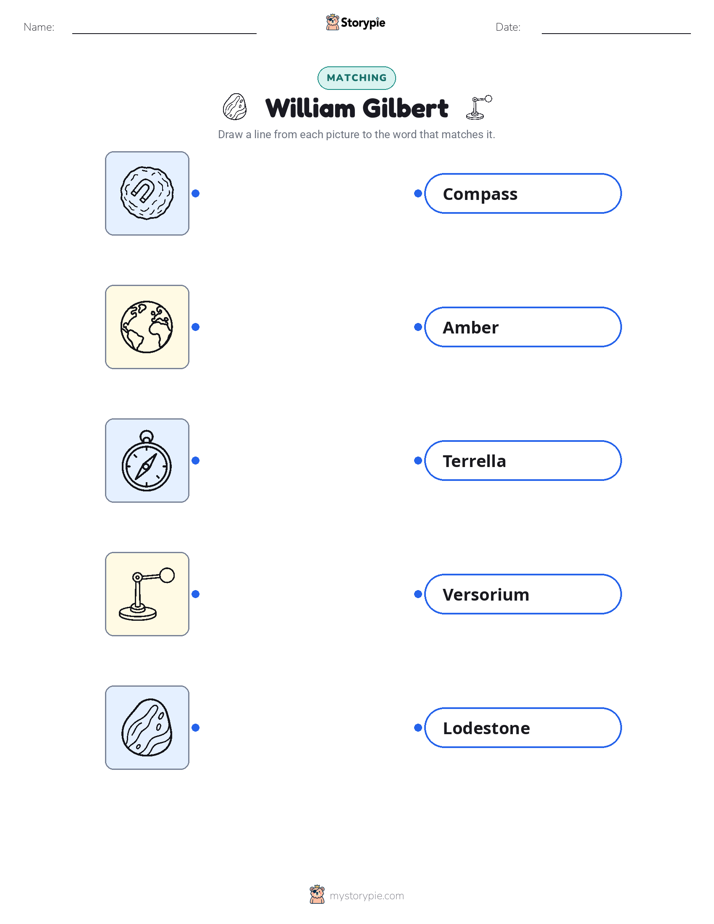
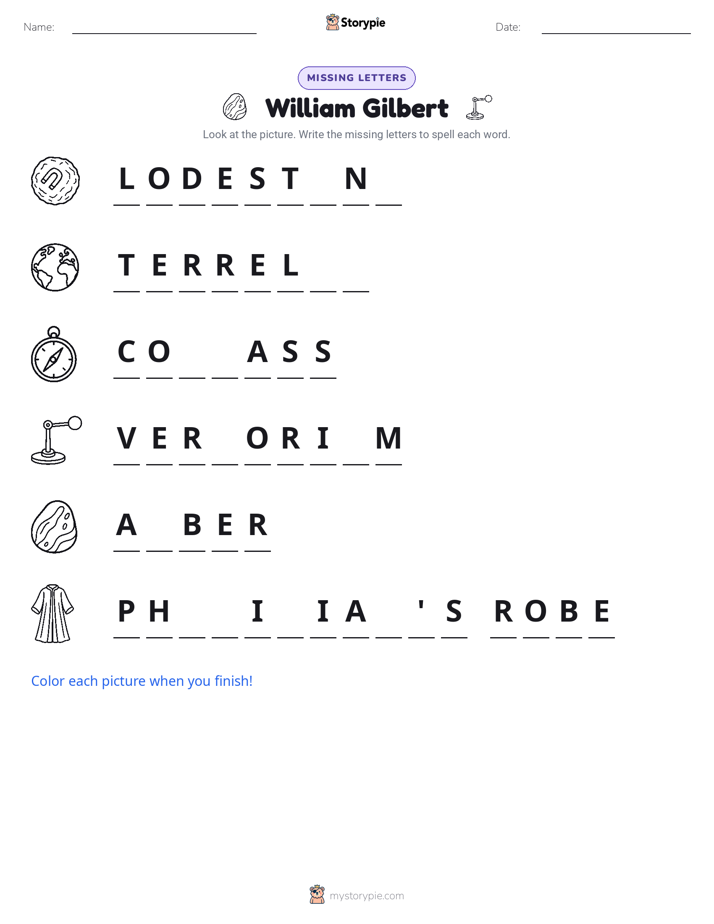
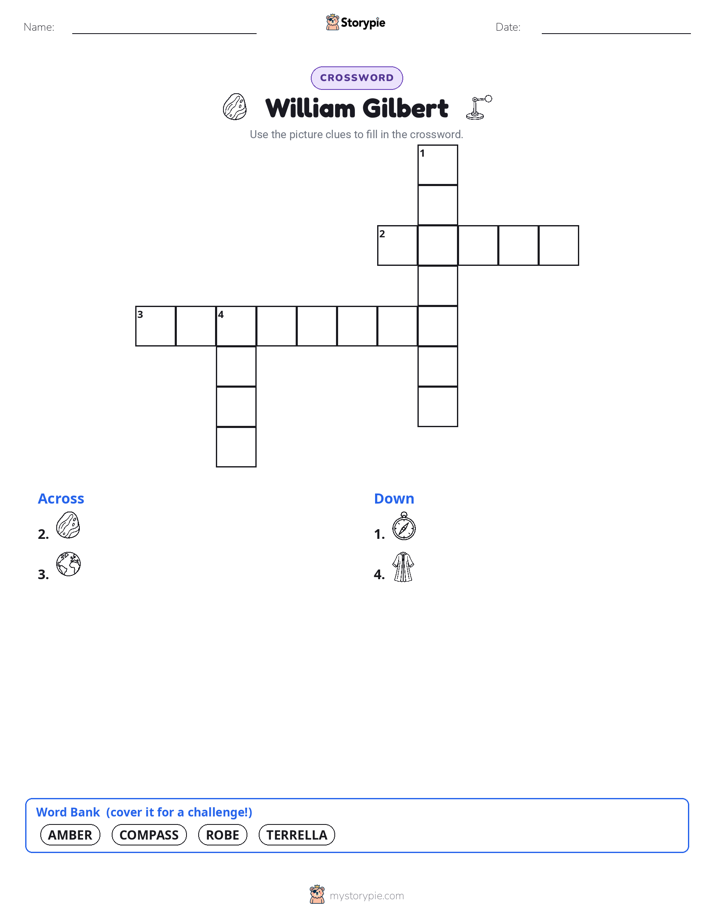
For nearly 20 years, I dedicated myself to studying the mysterious force of magnetism. My house was filled with strange instruments and materials, all part of my quest to understand why compass needles always pointed north, no matter where you were. Sailors had relied on this for centuries, but no one could explain it. To find the answer, I took a large, round piece of a magnetic rock called lodestone and carefully shaped it into a sphere. I called it my 'terrella,' which is Latin for 'little Earth.' By moving a tiny, pivoting compass over its surface, I made a remarkable discovery: my little Earth had north and south poles that attracted the compass needle, just like the real planet. This experiment led me to a huge and revolutionary conclusion: the Earth itself is one gigantic magnet! I published all my findings in the year 1600 in a book titled 'De Magnete,' which means 'On the Magnet.' I was careful to describe every experiment in detail so that other thinkers could test my ideas for themselves, a crucial step in the new scientific method.
While I was deep in my study of magnets, I noticed another strange force at work. You may have seen how rubbing a balloon on your hair makes it stick to a wall. I discovered that many materials, like amber, did a similar thing when they were rubbed. For a long time, people confused this force with magnetism, but my experiments proved they were different phenomena. Magnetism was a natural property of certain rocks, while this other force was created by friction. To describe this new force, I needed a new word. I turned to the ancient Greek word for amber, which is 'elektron,' and I called the force 'electricus.' This is where we get our modern word 'electricity.' I even built a special tool to detect it, a lightweight spinning pointer I called a 'versorium.' It was the very first instrument designed to detect and study what we now call static electricity.
My time as the queen's physician was short, as Queen Elizabeth I passed away in early 1603. I followed later that same year, on November 30th, 1603. I lived to be 59 years old. Though my life ended, my ideas were just getting started. Scientists across Europe, including the great Galileo Galilei, read my book and were inspired by my method of using hands-on experiments to test ideas, rather than just accepting old traditions. Today, people call me the 'father of magnetism' and the 'father of electricity' for my foundational work. My work helped build the foundation for our modern understanding of how the world works, all because I never stopped asking questions and searching for the answers myself.
Wow facts
About
William Gilbert was an English physician, physicist, and natural philosopher who is credited with using the term 'electricity' in a new way. He is also widely regarded as the father of magnetism for his work showing that the Earth is a giant magnet.
Take a Quiz
Question 1 of 5
In your own words, describe the experiment I used to conclude that the Earth is a giant magnet.
Explore next


Want to do even more?
Go beyond exploring. Unlock tools that turn every story into real learning.

Storypie Plus for families
Full stories, quizzes, and printables. Nights and car rides, sorted.
- Unlimited audio stories
- Create Mode: your child stars in the story
- Offline downloads
- Printable worksheets & coloring pages

Why Storypie for Schools
Students engaged. Prep in seconds. Evenings back to you.
- Worksheets & Quizzes
- Classroom Management
- Formative Assessment
- Custom Curriculum & Lesson Plans
- 27 Languages

Why Storypie for Homeschool
Curriculum done. They'll ask for more. Hours back in your day.
- Worksheet Generator
- First-Person Audio Stories
- Built-in Comprehension Quizzes
- Custom Curriculum & Lesson Plans
- Print & Go Activities