English

William Herschel
Sir Friedrich Wilhelm Herschel was a German-born British astronomer and composer who is most famous for…
Reads at Grades 6–8 Listens at Grades 4–8
Print & create
Answer keys·No prep·Free with an account
28 worksheets · answer keys · full story · quiz · Ages 10-12 · CEFR B2
Plus adds 208,000+ more stories in 27 languages, audio for every one, and printables for all of them.
Just want William Herschel?
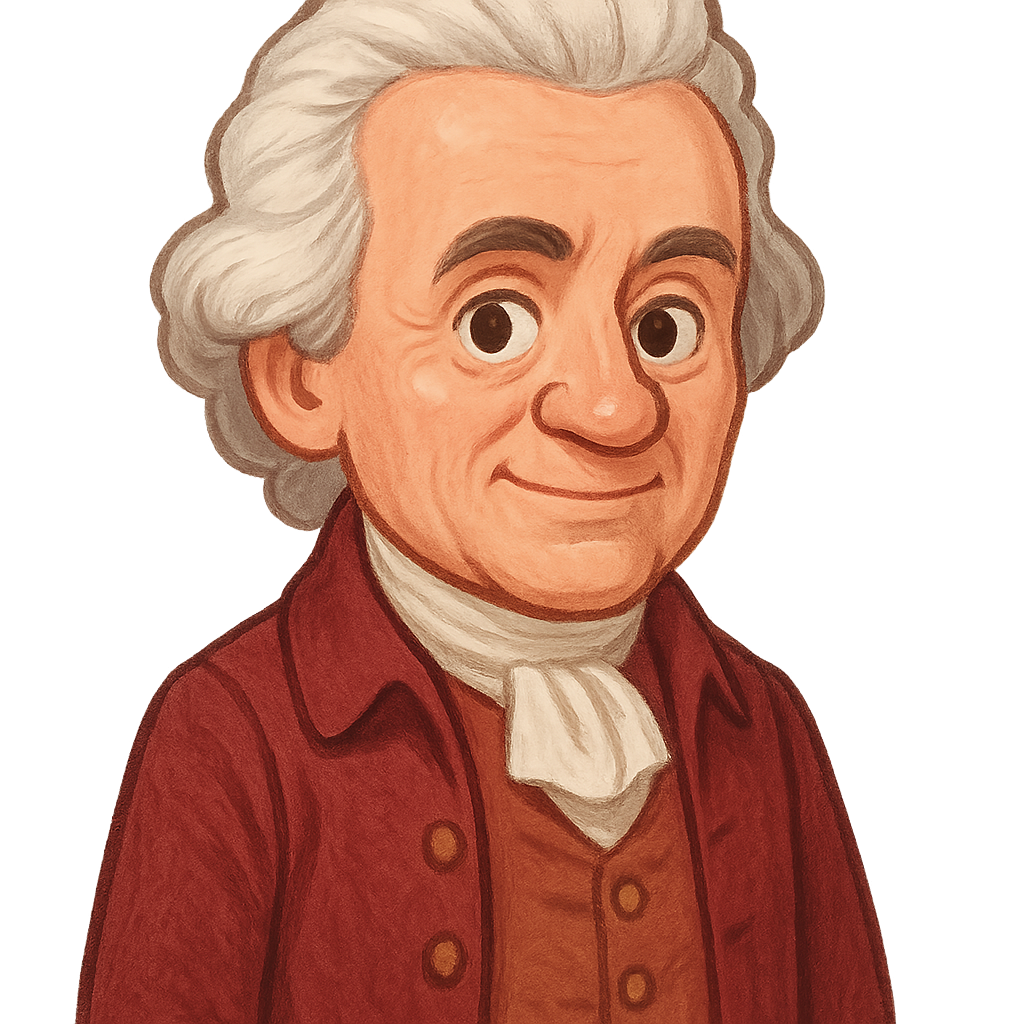
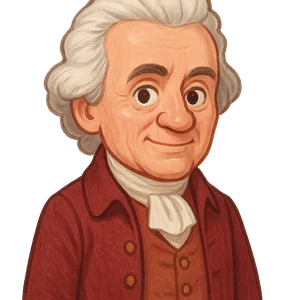
Hello. My name is Friedrich Wilhelm Herschel, but you can call me William, as that is what most people knew me by. I was born on November 15th, 1738, in the city of Hanover, Germany, into a world filled with music. My father was a musician, and from a young age, I learned to play several instruments. I followed in his footsteps and joined a military band as an oboist. The world at that time was one of constant change, and seeking new opportunities, I moved to England around the year 1757. There, I settled in the beautiful city of Bath and built a new life for myself as a music teacher, organist, and composer. I loved the beautiful patterns and perfect harmony in music, how every note had its place in a grand design. I soon realized that the same elegant order could be found in mathematics and the vast, silent universe above. This connection ignited a deep passion within me, a curiosity to understand the heavens as well as I understood a musical score. My nights were soon spent not just with melodies, but with the stars.
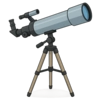
My fascination with the night sky grew from a simple hobby into a consuming passion. The more I read about astronomy, the more I wanted to see for myself. I longed to peer deeper into space than anyone had before, but the telescopes available for purchase were not powerful enough for my ambitions. I knew that if I wanted a window to the heavens that could satisfy my curiosity, I would have to build it myself. It was a long and difficult process. I learned to create my own mirrors by casting discs of metal and then grinding and polishing them to a perfect, reflective curve. This work required incredible patience and precision. I would sometimes spend up to sixteen hours at a time polishing a single mirror, making sure its shape was flawless. In 1772, my life changed for the better when my dear sister, Caroline, came from Germany to live with me in England. She became my essential partner in everything I did. While I was at the telescope, she would sit by an open window, even on the coldest nights, taking careful notes of my observations. She was a brilliant mathematician in her own right and performed the complex calculations needed to make sense of what we saw. Together, from our home, we built some of the most powerful telescopes the world had ever seen.
William Herschel: A Symphony of Stars
Hello. My name is Friedrich Wilhelm Herschel, but you can call me William, as that is what most people knew me by. I was born on November 15th, 1738, in the city of Hanover, Germany, into a world filled with music. My father was a musician, and from a young age, I learned to play several instruments. I followed in his footsteps and joined a military band as an oboist. The world at that time was one of constant change, and seeking new opportunities, I moved to England around the year 1757. There, I settled in the beautiful city of Bath and built a new life for myself as a music teacher, organist, and composer. I loved the beautiful patterns and perfect harmony in music, how every note had its place in a grand design. I soon realized that the same elegant order could be found in mathematics and the vast, silent universe above. This connection ignited a deep passion within me, a curiosity to understand the heavens as well as I understood a musical score. My nights were soon spent not just with melodies, but with the stars.
My fascination with the night sky grew from a simple hobby into a consuming passion. The more I read about astronomy, the more I wanted to see for myself. I longed to peer deeper into space than anyone had before, but the telescopes available for purchase were not powerful enough for my ambitions. I knew that if I wanted a window to the heavens that could satisfy my curiosity, I would have to build it myself. It was a long and difficult process. I learned to create my own mirrors by casting discs of metal and then grinding and polishing them to a perfect, reflective curve. This work required incredible patience and precision. I would sometimes spend up to sixteen hours at a time polishing a single mirror, making sure its shape was flawless. In 1772, my life changed for the better when my dear sister, Caroline, came from Germany to live with me in England. She became my essential partner in everything I did. While I was at the telescope, she would sit by an open window, even on the coldest nights, taking careful notes of my observations. She was a brilliant mathematician in her own right and performed the complex calculations needed to make sense of what we saw. Together, from our home, we built some of the most powerful telescopes the world had ever seen.
Our hard work led to a night that would change the course of my life and our understanding of the solar system. On the evening of March 13th, 1781, I was in my backyard garden in Bath, conducting a careful survey of the stars. I was systematically mapping the sky, one small patch at a time, when I noticed something unusual. Among the sharp, glittering points of light that were the stars, there was a faint object that looked different. It wasn't a point but a small, fuzzy disc. My first thought was that I had discovered a new comet, which was an exciting possibility. To be certain, I observed it carefully over the next several nights. I saw that it was moving slowly against the background of the fixed stars. This confirmed it was part of our solar system, but was it a comet? I shared my observations with other astronomers across Europe. After they studied its path and did many calculations, we all came to a stunning realization. The object's orbit was nearly circular, not stretched and oval-shaped like a comet's. It was not a comet at all. It was a planet. For the first time in recorded history, the known map of our solar system had expanded. This new world, the seventh from the sun, eventually came to be known as Uranus.
Discovering a new planet made me famous almost overnight. My life changed completely. In 1782, I received the greatest honor I could imagine when King George III appointed me to the official position of 'King's Astronomer.' This came with a yearly salary, which meant I could finally stop teaching music and dedicate all of my time to my true passion: studying the stars. My sister Caroline and I moved from Bath to a new home closer to the king and his castle at Windsor. With this newfound freedom and financial support, our explorations of the universe deepened. We were no longer limited to observing when I had free time from my music lessons. Using my powerful telescopes, I continued to make incredible discoveries. In 1787, I found two of Uranus's largest moons, which were later named Titania and Oberon. Just two years later, in 1789, I turned my telescope toward Saturn and discovered two more of its moons, Mimas and Enceladus. My curiosity wasn't limited to just what I could see. In the year 1800, while experimenting with sunlight, I discovered a new form of light invisible to the human eye. By passing sunlight through a prism and using a thermometer to measure the temperature of each color, I found that there was heat beyond the red end of the spectrum. This was the discovery of what we now call infrared radiation.
I spent my life looking up, driven by a desire to understand the vast universe. With my sister Caroline's invaluable help, I did more than just discover a planet. Together, we cataloged thousands of nebulae and star clusters, creating a detailed map of the deep sky that revealed the universe was far larger and more complex than anyone had previously imagined. I never stopped trying to improve my view of the heavens, building bigger and better telescopes throughout my life. My greatest achievement in telescope-making was my giant 40-foot telescope, which we completed in 1789. It was the largest in the world for many decades. I lived to be 83 years old, and my work showed that with relentless curiosity and patience, anyone can uncover the secrets of the cosmos. I hope my story inspires you to look up at the night sky, to ask questions, and to wonder what new discoveries are still waiting to be found among the stars.
Wow facts
About
Sir Friedrich Wilhelm Herschel was a German-born British astronomer and composer who is most famous for discovering the planet Uranus. He was also a pioneer in telescope construction and discovered infrared radiation.
Take a Quiz
Question 1 of 5
What event in 1782 allowed William Herschel to dedicate all of his time to astronomy?
Explore next


Want to do even more?
Go beyond exploring. Unlock tools that turn every story into real learning.

Storypie Plus for families
Full stories, quizzes, and printables. Nights and car rides, sorted.
- Unlimited audio stories
- Create Mode: your child stars in the story
- Offline downloads
- Printable worksheets & coloring pages

Why Storypie for Schools
Students engaged. Prep in seconds. Evenings back to you.
- Worksheets & Quizzes
- Classroom Management
- Formative Assessment
- Custom Curriculum & Lesson Plans
- 27 Languages

Why Storypie for Homeschool
Curriculum done. They'll ask for more. Hours back in your day.
- Worksheet Generator
- First-Person Audio Stories
- Built-in Comprehension Quizzes
- Custom Curriculum & Lesson Plans
- Print & Go Activities