English

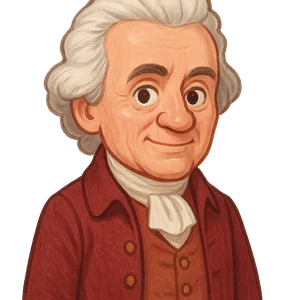
William Herschel
Sir Friedrich Wilhelm Herschel was a German-born British astronomer and composer who is most famous for…
Reads at Grades 3–5 Listens at Grades 1–5
Print & create
Answer keys·No prep·Free with an account
28 worksheets · answer keys · full story · quiz · Ages 8-10 · CEFR B1
Plus adds 208,000+ more stories in 27 languages, audio for every one, and printables for all of them.
Just want William Herschel?
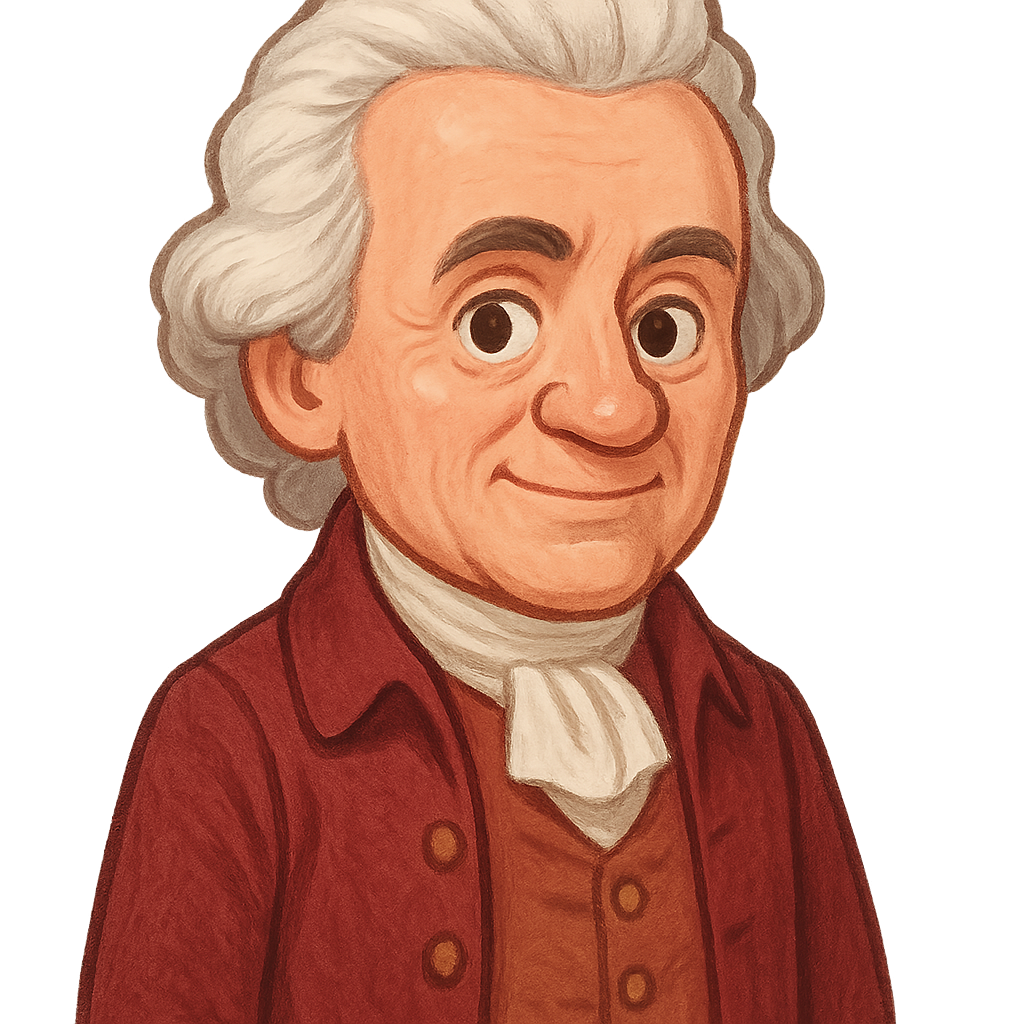
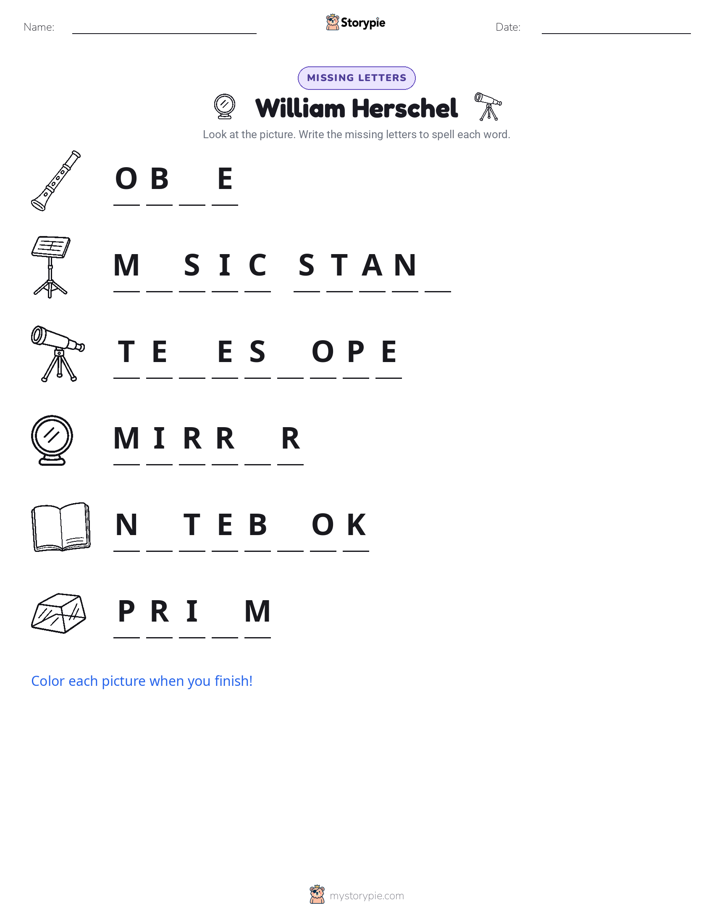
Hello, my name is William Herschel, and I am a musician who fell in love with the stars. I was born a long time ago, on November 15th, 1738, in a city called Hanover in Germany. My father was a musician in an army band, and our house was always filled with music. It was no surprise that I wanted to be a musician, too! I learned to play several instruments, but I was best at the oboe and the violin. When I was a young man, I decided to follow my musical dreams. In 1757, I moved to England. Life wasn't always easy, but I worked very hard. I eventually settled in the beautiful city of Bath, where I found success as an organist and a music teacher. I spent my days teaching and my evenings performing, surrounded by the beautiful sounds I loved so much.
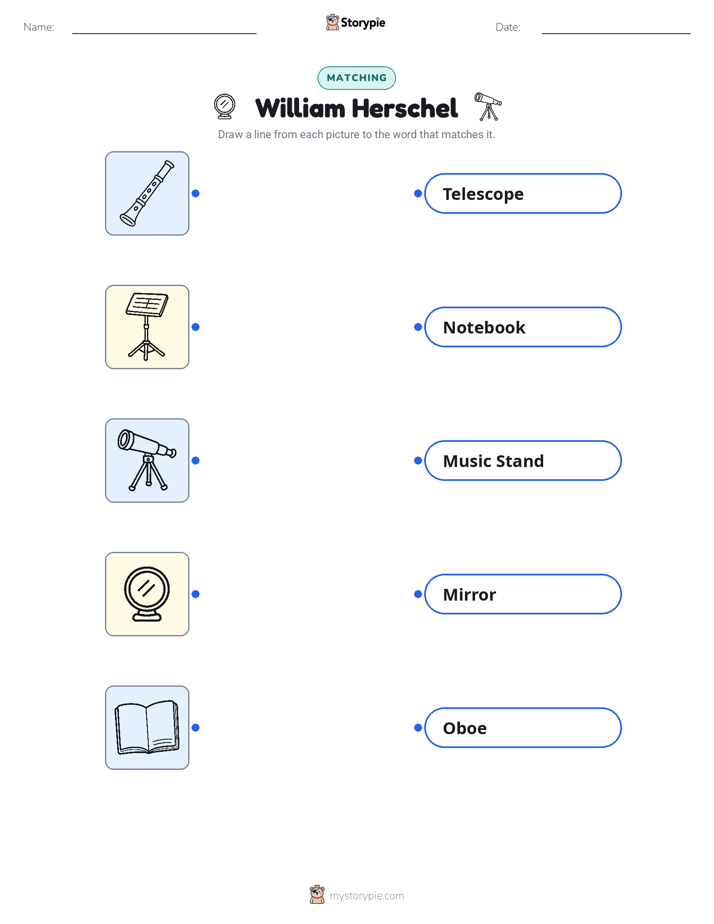
Even though my life was filled with music, I started to feel a pull toward something else: the vast, starry night sky. I began reading every book I could find about astronomy, the study of stars and planets. The more I learned, the more I wanted to see these distant worlds for myself. I tried to buy a powerful telescope, but they were incredibly expensive, far more than a music teacher could afford. I felt disappointed, but then I had an idea. If I could not buy a great telescope, I would build one myself! Starting around the year 1773, my wonderful sister, Caroline, joined me in this new adventure. We turned part of our house into a workshop. We spent countless hours grinding and polishing huge metal discs to create mirrors that could capture the faint light from distant stars. It was messy, tiring, and difficult work, but we were determined to create the best telescopes in the world.
William Herschel: The Star-Gazer
Hello, my name is William Herschel, and I am a musician who fell in love with the stars. I was born a long time ago, on November 15th, 1738, in a city called Hanover in Germany. My father was a musician in an army band, and our house was always filled with music. It was no surprise that I wanted to be a musician, too! I learned to play several instruments, but I was best at the oboe and the violin. When I was a young man, I decided to follow my musical dreams. In 1757, I moved to England. Life wasn't always easy, but I worked very hard. I eventually settled in the beautiful city of Bath, where I found success as an organist and a music teacher. I spent my days teaching and my evenings performing, surrounded by the beautiful sounds I loved so much.
Even though my life was filled with music, I started to feel a pull toward something else: the vast, starry night sky. I began reading every book I could find about astronomy, the study of stars and planets. The more I learned, the more I wanted to see these distant worlds for myself. I tried to buy a powerful telescope, but they were incredibly expensive, far more than a music teacher could afford. I felt disappointed, but then I had an idea. If I could not buy a great telescope, I would build one myself! Starting around the year 1773, my wonderful sister, Caroline, joined me in this new adventure. We turned part of our house into a workshop. We spent countless hours grinding and polishing huge metal discs to create mirrors that could capture the faint light from distant stars. It was messy, tiring, and difficult work, but we were determined to create the best telescopes in the world.
All of that hard work finally paid off. On the night of March 13th, 1781, I was in my garden in Bath, pointing one of my best homemade telescopes toward the heavens. I was carefully mapping the stars in a part of the sky when I saw something strange. There was a faint, fuzzy-looking object that was not on any of my star charts. At first, I thought it must be a comet, a visitor of ice and dust passing through our solar system. Stars stay in fixed patterns, but this little spot seemed to be moving slowly against the background of stars. I was so curious! Night after night, I returned to my garden and pointed my telescope at the same spot. I carefully recorded its position, and I soon realized it wasn't moving like a comet at all. It was moving like a planet. I couldn't believe it. No one had discovered a new planet in all of recorded history.
My discovery caused a huge stir in the world of science! Astronomers all over the world were talking about it and pointing their own telescopes to the sky to see for themselves. I was so grateful to the King of England, King George III, that I wanted to name the new planet 'Georgium Sidus,' which means 'George's Star' in his honor. For a while, some people called it that, but a different name was eventually chosen. To fit with the other planets named after ancient gods, my discovery was named Uranus, after the Greek god of the sky. The king was very impressed with my work. In 1782, he offered me a yearly salary to become his official Court Astronomer. This was a dream come true! It meant I no longer had to teach music to earn a living and could spend all of my time studying the stars.
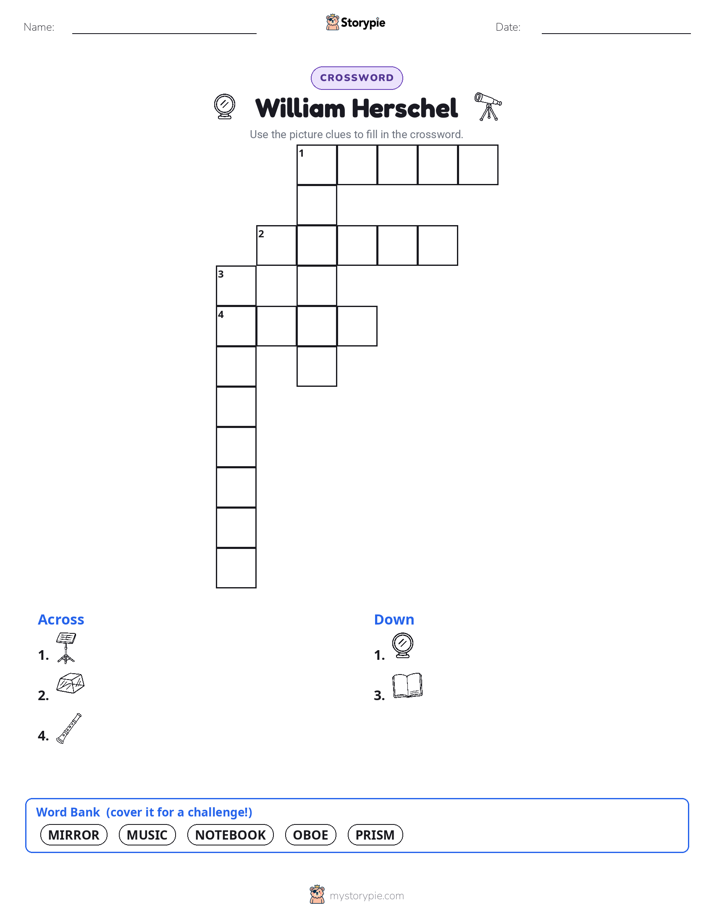
With the King's support, I was able to build even bigger and more powerful telescopes than before. My sister Caroline was always by my side, working as my assistant. She became a brilliant astronomer herself! Together, we spent nearly every clear night searching the sky. We discovered thousands of new star clusters and fuzzy patches of light called nebulae, which are clouds of dust and gas where new stars are born. My discoveries didn't stop there. I also found two of Saturn's moons and the two largest moons orbiting my new planet, Uranus. Today, they are known as Titania and Oberon. Then, in the year 1800, I made another incredible discovery. By passing sunlight through a glass prism, I found that there was a type of light we cannot see with our eyes, but we can feel as heat. We now call this infrared radiation.
I lived a long and wonderful life filled with the joy of music and the wonder of the stars. I lived to be 83 years old. People remember me as the man who discovered a new planet and doubled the size of our known solar system overnight. My powerful telescopes and careful observations changed astronomy forever. My work helped us understand that the universe is a much bigger, busier, and more amazing place than anyone had ever imagined, and there is always something new to discover if you just keep looking up.
Wow facts
About
Sir Friedrich Wilhelm Herschel was a German-born British astronomer and composer who is most famous for discovering the planet Uranus. He was also a pioneer in telescope construction and discovered infrared radiation.
Take a Quiz
Question 1 of 5
Why did I decide to build my own telescope?
Explore next


Want to do even more?
Go beyond exploring. Unlock tools that turn every story into real learning.

Storypie Plus for families
Full stories, quizzes, and printables. Nights and car rides, sorted.
- Unlimited audio stories
- Create Mode: your child stars in the story
- Offline downloads
- Printable worksheets & coloring pages

Why Storypie for Schools
Students engaged. Prep in seconds. Evenings back to you.
- Worksheets & Quizzes
- Classroom Management
- Formative Assessment
- Custom Curriculum & Lesson Plans
- 27 Languages

Why Storypie for Homeschool
Curriculum done. They'll ask for more. Hours back in your day.
- Worksheet Generator
- First-Person Audio Stories
- Built-in Comprehension Quizzes
- Custom Curriculum & Lesson Plans
- Print & Go Activities