English

Wilma Mankiller
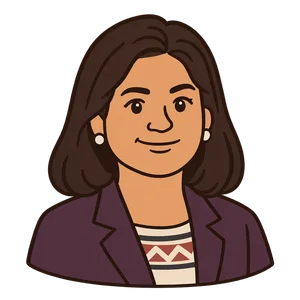
Wilma Mankiller was the first female Principal Chief of the Cherokee Nation…
Reads at Grades 6–8 Listens at Grades 4–8
Print & create
Answer keys·No prep·Free with an account
28 worksheets · answer keys · full story · quiz · Ages 10-12 · CEFR B2
Plus adds 290,000+ more stories in 27 languages, audio for every one, and printables for all of them.
Just want Wilma Mankiller?
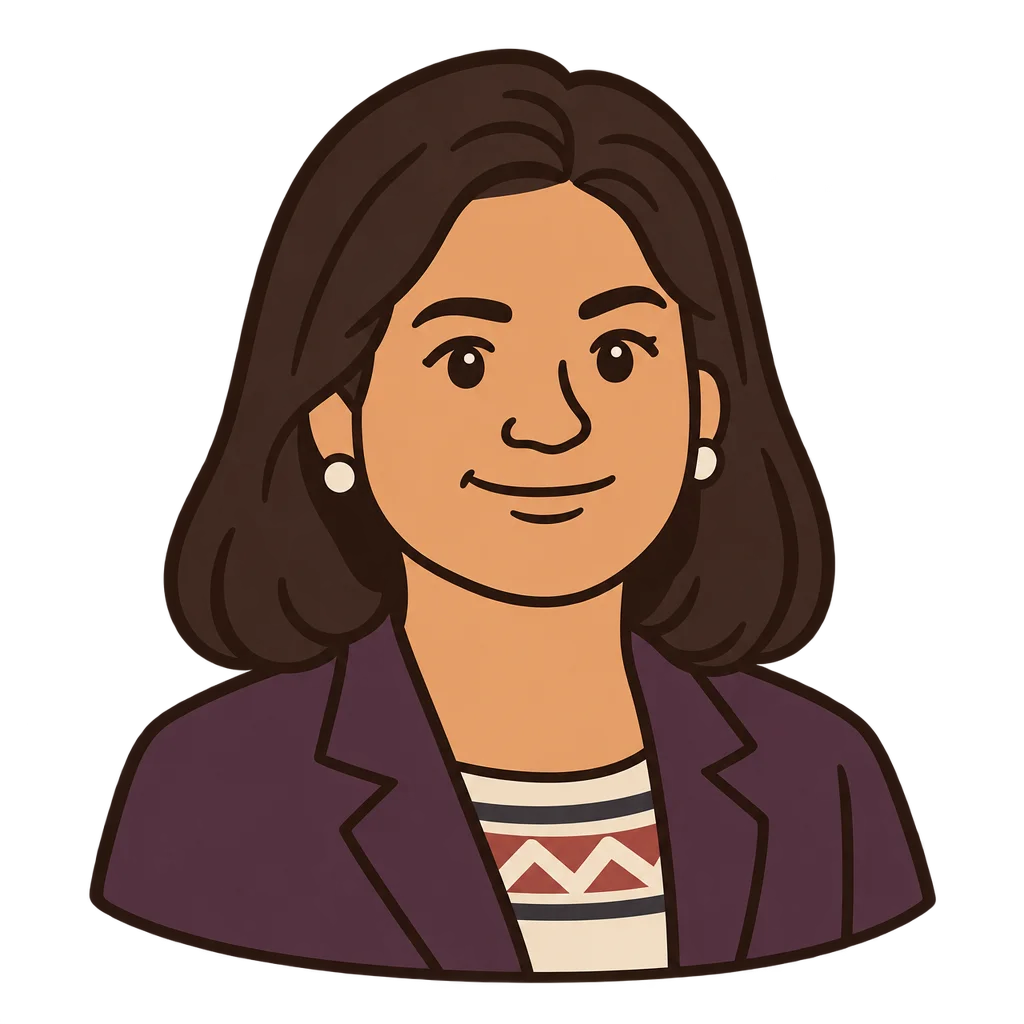
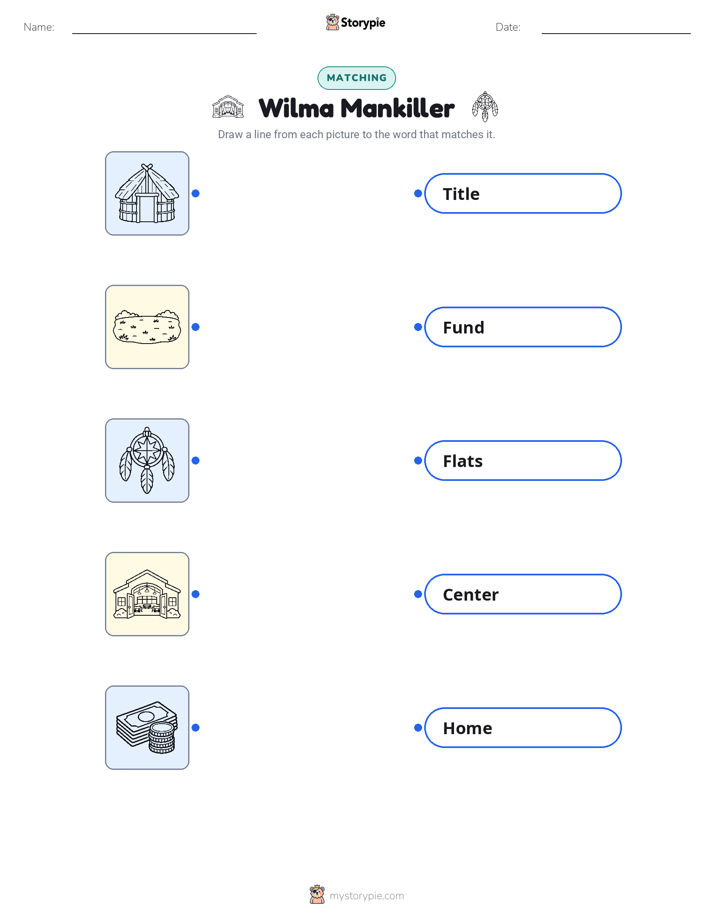
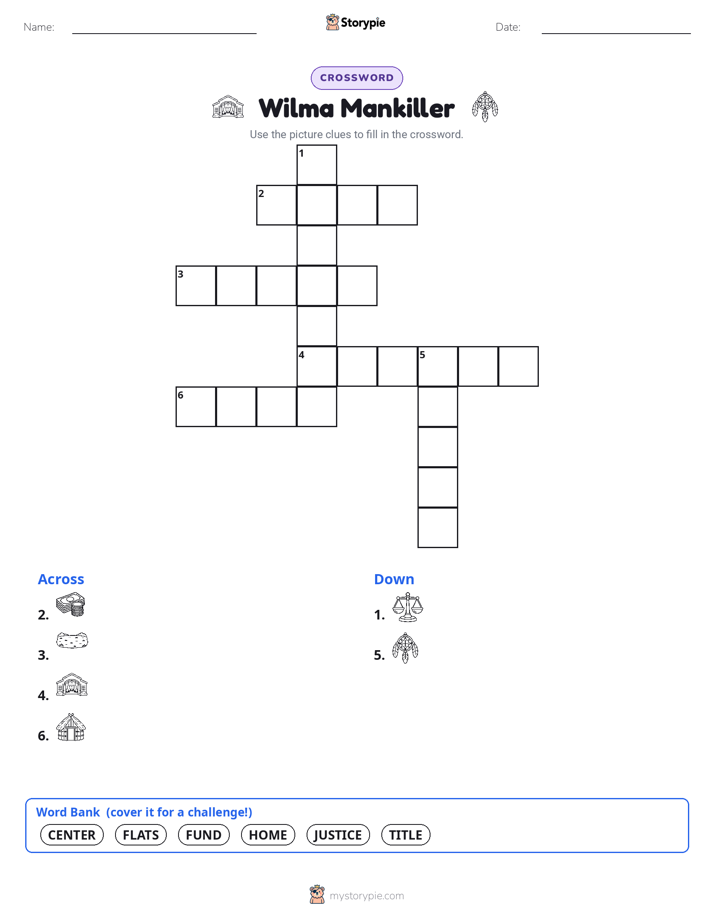
Hello, my name is Wilma Mankiller. My story begins on November 18th, 1945, in Tahlequah, Oklahoma, which is the capital of the Cherokee Nation. I grew up on my family’s land, a place we called Mankiller Flats. Life there was simple and deeply connected to our traditions. We didn't have electricity or running water, but we had something far more valuable: a strong community where everyone helped one another. My family name, Mankiller, might sound alarming, but it is actually a traditional Cherokee military title given to someone who protected our villages. It's a name of honor and respect, a reminder of the responsibility we have to our people.
When I was 11 years old, in 1956, my world changed completely. The United States government had a program called the Indian Relocation Act, which encouraged Native American families to move from their rural homelands to big cities. My family was moved to San Francisco, California. The change was a huge shock. I went from the quiet, open land of Oklahoma to a noisy, crowded city where we knew no one. We faced prejudice and often felt isolated and alone. It was a difficult time, but it was in San Francisco that I discovered a place that gave me a sense of belonging: the San Francisco Indian Center. There, I met other Native Americans from many different tribes. This center became a second home, a place where we could share our cultures and support each other. It was there that the first seeds of my activism were planted.
My desire to fight for my people grew stronger over the years. In 1969, a group of Native American activists began an event that would capture the world's attention: the Occupation of Alcatraz Island. They were demanding that the U.S. government honor its treaties and recognize Native American rights to self-determination. Seeing their courage and determination inspired me deeply. I knew I had to get involved. I started volunteering, helping to raise funds and awareness for the cause. This experience taught me how to organize and fight for social justice. After several years of activism in California, I made a life-changing decision. In 1977, I moved back home to Oklahoma. I wanted to use the skills I had learned to help the Cherokee Nation directly, working from within my own community.
Wilma Mankiller
Hello, my name is Wilma Mankiller. My story begins on November 18th, 1945, in Tahlequah, Oklahoma, which is the capital of the Cherokee Nation. I grew up on my family’s land, a place we called Mankiller Flats. Life there was simple and deeply connected to our traditions. We didn't have electricity or running water, but we had something far more valuable: a strong community where everyone helped one another. My family name, Mankiller, might sound alarming, but it is actually a traditional Cherokee military title given to someone who protected our villages. It's a name of honor and respect, a reminder of the responsibility we have to our people.
When I was 11 years old, in 1956, my world changed completely. The United States government had a program called the Indian Relocation Act, which encouraged Native American families to move from their rural homelands to big cities. My family was moved to San Francisco, California. The change was a huge shock. I went from the quiet, open land of Oklahoma to a noisy, crowded city where we knew no one. We faced prejudice and often felt isolated and alone. It was a difficult time, but it was in San Francisco that I discovered a place that gave me a sense of belonging: the San Francisco Indian Center. There, I met other Native Americans from many different tribes. This center became a second home, a place where we could share our cultures and support each other. It was there that the first seeds of my activism were planted.
My desire to fight for my people grew stronger over the years. In 1969, a group of Native American activists began an event that would capture the world's attention: the Occupation of Alcatraz Island. They were demanding that the U.S. government honor its treaties and recognize Native American rights to self-determination. Seeing their courage and determination inspired me deeply. I knew I had to get involved. I started volunteering, helping to raise funds and awareness for the cause. This experience taught me how to organize and fight for social justice. After several years of activism in California, I made a life-changing decision. In 1977, I moved back home to Oklahoma. I wanted to use the skills I had learned to help the Cherokee Nation directly, working from within my own community.
Back in Oklahoma, I saw firsthand the challenges our people faced. One of the most urgent problems was in a remote community called Bell, where families had no access to running water. As the founder of the Cherokee Nation's Community Development Department, I knew we couldn't wait for outside help. I believed in the Cherokee concept of 'gadugi,' which means working together for the common good. Starting in 1979, I organized the people of Bell. Men and women, young and old, volunteered to build their own water line. It was incredibly hard work. Together, we dug a trench that stretched for 16 miles. By 1981, the project was complete. For the first time, the families of Bell had clean, running water in their homes. The Bell Water Project was more than just a pipeline; it was proof that when we work together, we can solve our own problems and build a better future.
My work with the Bell Water Project showed me that I could make a real difference, and it led me to enter tribal politics. In 1983, I decided to run for Deputy Chief of the Cherokee Nation. The campaign was difficult. Because I was a woman, some people said I shouldn't be a leader. I faced sexism and even received threats. But many others believed in my vision, and we won the election. Then, in 1985, the Principal Chief resigned, and I stepped into the role, becoming the first woman to ever lead the Cherokee Nation as Principal Chief. I was formally elected in my own right in 1987 and was re-elected again in 1991. During my time as chief, my administration focused on strengthening our nation from within. We doubled our tribe's enrollment, tripled employment, and built new health clinics and schools. We took control of our own future through self-governance.
After serving my people for a decade, I chose not to run for a third term and left office in 1995. However, my work was not finished. I continued to be a voice for Indigenous peoples and for women's rights, writing books and giving speeches around the world. In 1998, I was awarded the Presidential Medal of Freedom, the highest civilian honor in the United States, for my work. I lived to be 64 years old. My life's work was rooted in the Cherokee belief that we all have a responsibility to one another. I hope my story reminds you that one person, especially when joined by their community, can create lasting change.
Wow facts
About
Wilma Mankiller was the first female Principal Chief of the Cherokee Nation, a dedicated activist for Native American rights, and a community developer who improved healthcare, education, and housing for her people.
Take a Quiz
Question 1 of 5
What does the Cherokee concept of 'gadugi' mean, and how did Wilma Mankiller demonstrate it in the story?
Explore next






Want to do even more?
Go beyond exploring. Unlock tools that turn every story into real learning.

Storypie Plus for families
Full stories, quizzes, and printables. Nights and car rides, sorted.
- Unlimited audio stories
- Create Mode: your child stars in the story
- Offline downloads
- Printable worksheets & coloring pages

Why Storypie for Schools
Students engaged. Prep in seconds. Evenings back to you.
- Worksheets & Quizzes
- Classroom Management
- Formative Assessment
- Custom Curriculum & Lesson Plans
- 27 Languages

Why Storypie for Homeschool
Curriculum done. They'll ask for more. Hours back in your day.
- Worksheet Generator
- First-Person Audio Stories
- Built-in Comprehension Quizzes
- Custom Curriculum & Lesson Plans
- Print & Go Activities