English

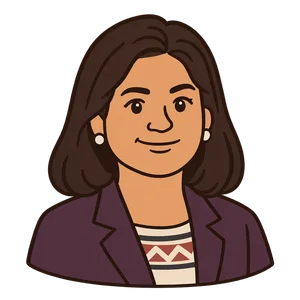
Wilma Mankiller
Wilma Mankiller was the first female Principal Chief of the Cherokee Nation…
Reads at Grades 3–5 Listens at Grades 1–5
Print & create
Answer keys·No prep·Free with an account
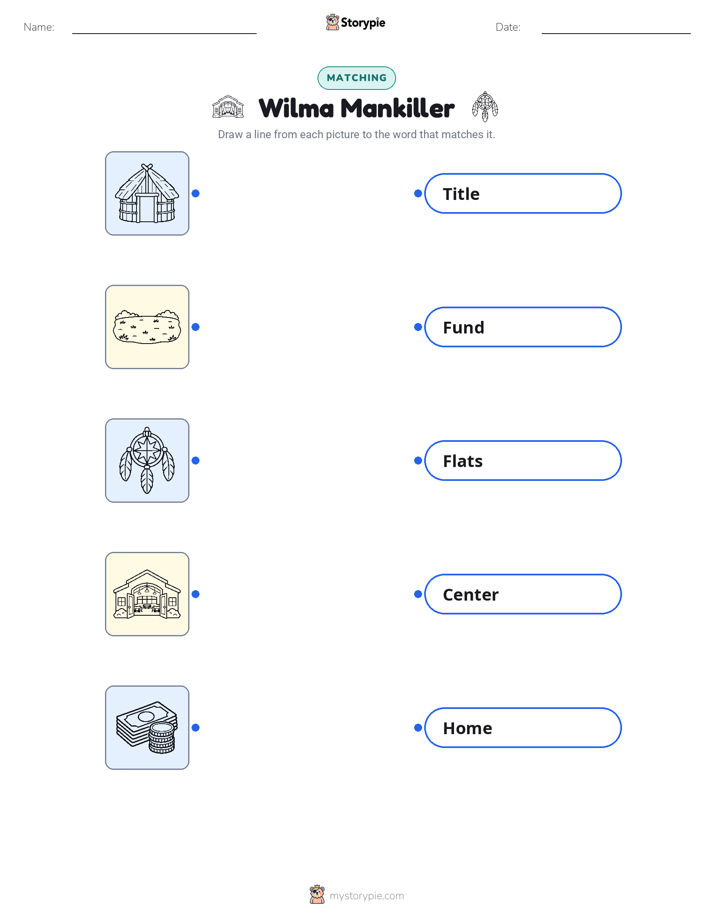
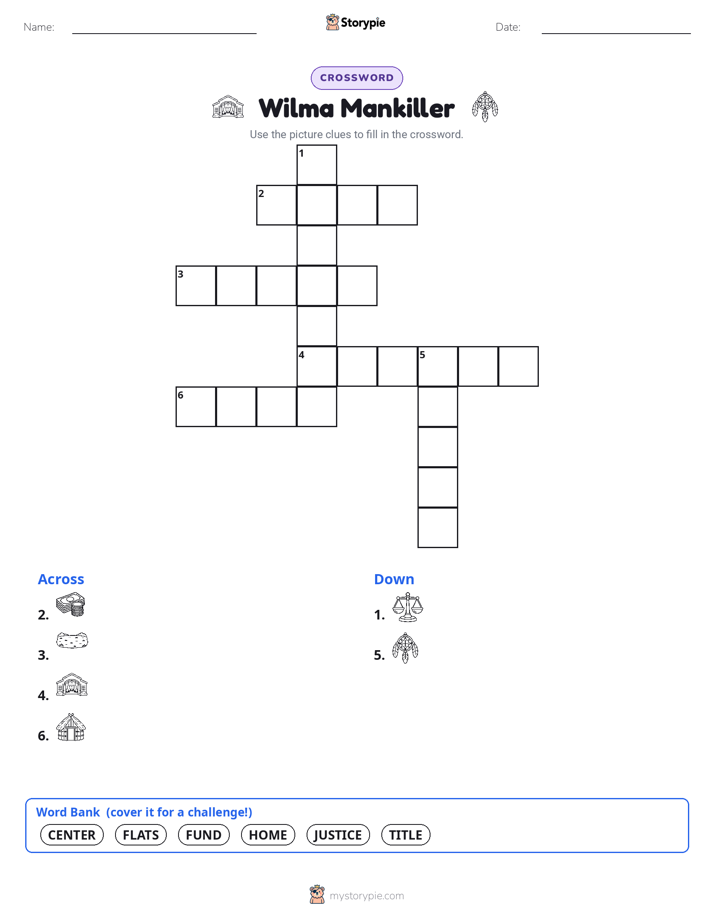
28 worksheets · answer keys · full story · quiz · Ages 8-10 · CEFR B1
Plus adds 290,000+ more stories in 27 languages, audio for every one, and printables for all of them.
Just want Wilma Mankiller?

Hello, my name is Wilma Mankiller. I was born on November 18th, 1945, in Tahlequah, Oklahoma, which is the heart of the Cherokee Nation. I grew up on our family's land, a place we called Mankiller Flats. Life there was full of lessons. With ten brothers and sisters, I quickly learned from my parents about the importance of community and working together. You might think my last name, Mankiller, sounds a bit scary, but it's not. It's actually an old, honorable Cherokee title that was given to a warrior who protected our villages long ago. It’s a name that reminds my family of our duty to care for our people, a lesson I carried with me my entire life. My childhood was rooted in our Cherokee traditions, and I learned early on that we are strongest when we help one another.
When I was about 11 years old, in 1956, a big change happened in my life. My family moved all the way to San Francisco, California. We moved as part of a government program that encouraged Native American families like mine to leave our rural homes and find work in big cities. It was a very difficult time for us. The city felt so different from our home in Oklahoma, and we were far away from our culture and traditions. In San Francisco, I met many other Native people who had also moved from their homes. I saw the problems they faced, like having a hard time finding jobs and housing. This experience opened my eyes. Later, in 1969, I became involved in the occupation of Alcatraz Island. This was an important protest where Native Americans demanded their rights be respected. Seeing so many people stand together for a cause helped me decide that I wanted to spend my life fighting for my people.
Wilma Mankiller: A Leader for Her People
Hello, my name is Wilma Mankiller. I was born on November 18th, 1945, in Tahlequah, Oklahoma, which is the heart of the Cherokee Nation. I grew up on our family's land, a place we called Mankiller Flats. Life there was full of lessons. With ten brothers and sisters, I quickly learned from my parents about the importance of community and working together. You might think my last name, Mankiller, sounds a bit scary, but it's not. It's actually an old, honorable Cherokee title that was given to a warrior who protected our villages long ago. It’s a name that reminds my family of our duty to care for our people, a lesson I carried with me my entire life. My childhood was rooted in our Cherokee traditions, and I learned early on that we are strongest when we help one another.
When I was about 11 years old, in 1956, a big change happened in my life. My family moved all the way to San Francisco, California. We moved as part of a government program that encouraged Native American families like mine to leave our rural homes and find work in big cities. It was a very difficult time for us. The city felt so different from our home in Oklahoma, and we were far away from our culture and traditions. In San Francisco, I met many other Native people who had also moved from their homes. I saw the problems they faced, like having a hard time finding jobs and housing. This experience opened my eyes. Later, in 1969, I became involved in the occupation of Alcatraz Island. This was an important protest where Native Americans demanded their rights be respected. Seeing so many people stand together for a cause helped me decide that I wanted to spend my life fighting for my people.
In the 1970s, I knew it was time to go back home to Oklahoma. When I returned, I saw that many of my people were struggling. In a community called Bell, families lived in poor housing, and some didn't even have clean, running water in their homes. I knew I had to do something to help. So, in 1981, I started the Bell Waterline Project. I reminded my community of our Cherokee tradition of 'gadugi,' which means everyone working together for the good of all. Instead of waiting for someone else to help us, we decided to help ourselves. Men, women, and even children came together. We dug ditches and laid 16 miles of pipe with our own hands. It was hard work, but when we finally turned on the faucets and clean water flowed, it was a moment of great pride. This success showed me the incredible power a community has when it works together. It also inspired me to get more involved in the government of the Cherokee Nation.
My work on the waterline project led me to a new path: leadership. In 1983, I was elected as the Deputy Chief of the Cherokee Nation. This was a huge honor, as I was the first woman ever to hold this position. Just two years later, in 1985, I became the Principal Chief. This made me the first woman to lead a major Native American tribe in modern times. At first, some people weren't sure a woman could do the job. They were used to men being in charge. But I was determined to work hard and prove that a leader’s strength comes from their heart and their commitment to their people, not whether they are a man or a woman. The Cherokee people put their trust in me, and I was elected as chief on my own in 1987 and then again in 1991. During my time as chief, the Cherokee Nation grew stronger. Our population tripled, we built new health clinics, we created jobs, and we improved education for our children.
One of the proudest moments of my life was in 1998, when President Bill Clinton awarded me the Presidential Medal of Freedom, the highest honor a civilian can receive in the United States. I lived to be 64 years old, and my entire life was dedicated to serving the Cherokee people. I wanted to empower them to solve their own problems and build a better future. Today, I am remembered for showing the world that a woman could be a great leader and for inspiring my people to believe in themselves. I hope my story encourages you to see the strength in your own community and to work together to make a difference.
Wow facts
About
Wilma Mankiller was the first female Principal Chief of the Cherokee Nation, a dedicated activist for Native American rights, and a community developer who improved healthcare, education, and housing for her people.
Take a Quiz
Question 1 of 5
What does the Cherokee word 'gadugi' mean in this story?
Explore next






Want to do even more?
Go beyond exploring. Unlock tools that turn every story into real learning.

Storypie Plus for families
Full stories, quizzes, and printables. Nights and car rides, sorted.
- Unlimited audio stories
- Create Mode: your child stars in the story
- Offline downloads
- Printable worksheets & coloring pages

Why Storypie for Schools
Students engaged. Prep in seconds. Evenings back to you.
- Worksheets & Quizzes
- Classroom Management
- Formative Assessment
- Custom Curriculum & Lesson Plans
- 27 Languages

Why Storypie for Homeschool
Curriculum done. They'll ask for more. Hours back in your day.
- Worksheet Generator
- First-Person Audio Stories
- Built-in Comprehension Quizzes
- Custom Curriculum & Lesson Plans
- Print & Go Activities