English

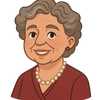
Zora Neale Hurston
Zora Neale Hurston was a prominent American author, anthropologist…
Reads at Grades 3–5 Listens at Grades 1–5
Print & create
Answer keys·No prep·Free with an account
28 worksheets · answer keys · full story · quiz · Ages 8-10 · CEFR B1
Plus adds 244,000+ more stories in 27 languages, audio for every one, and printables for all of them.
Just want Zora Neale Hurston?
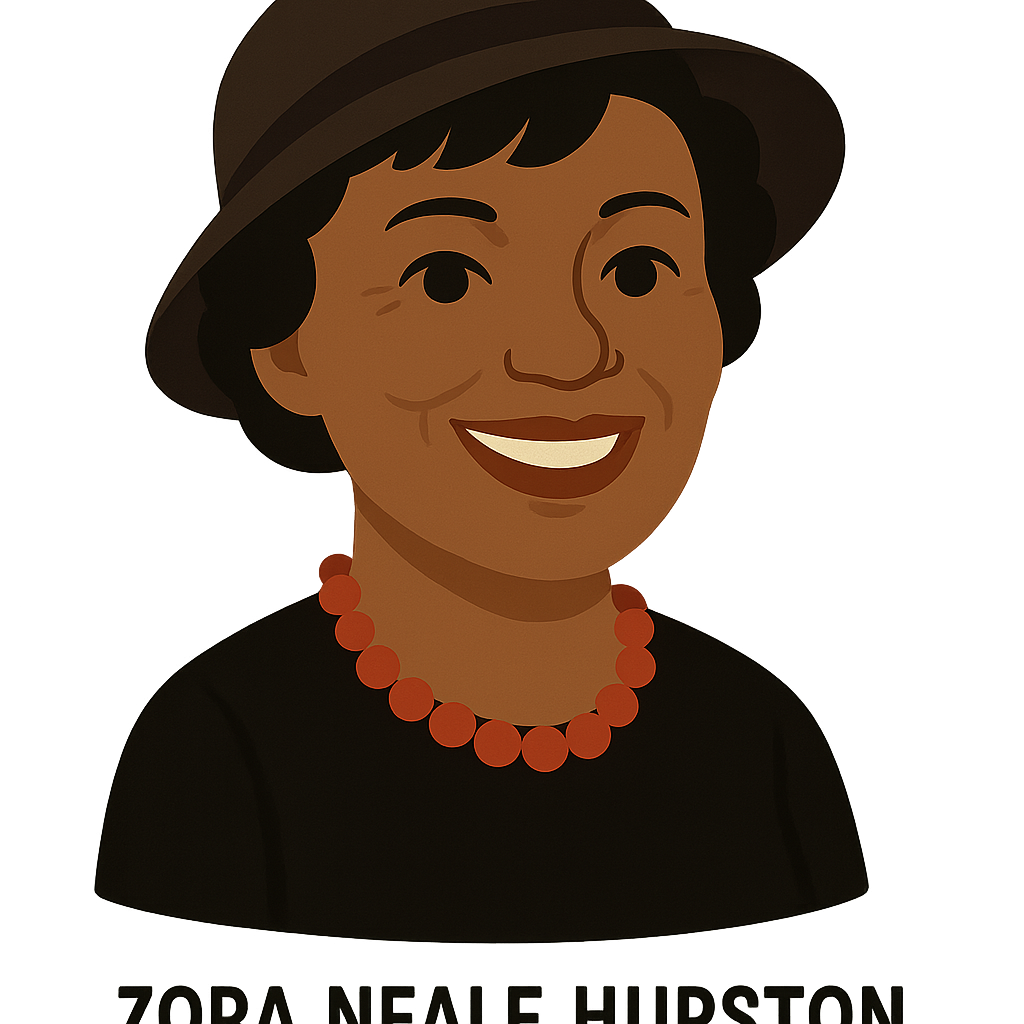
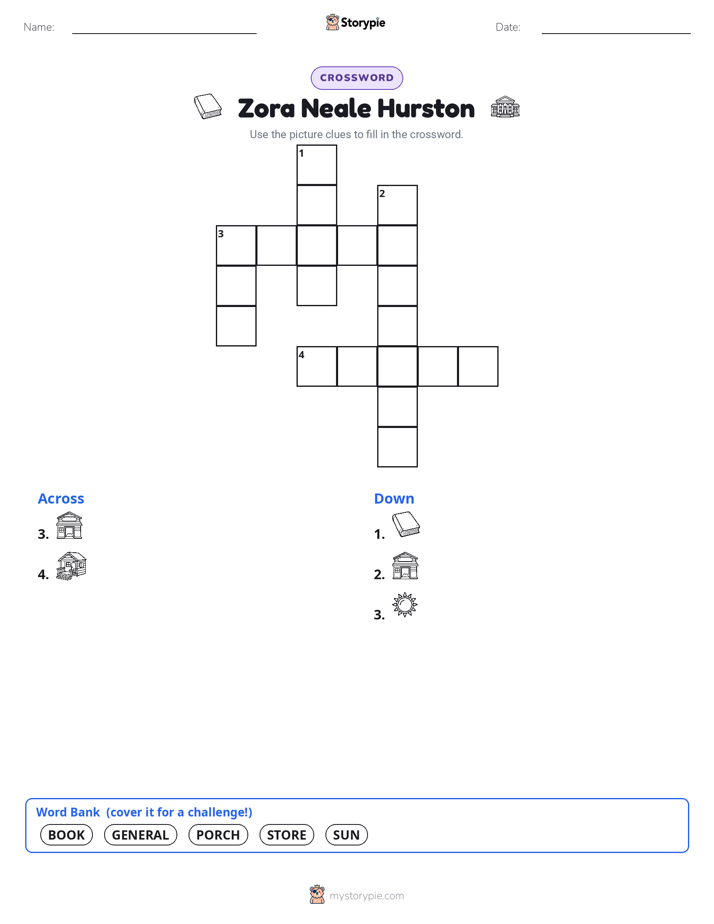
Hello there! My name is Zora Neale Hurston, and I’m a storyteller. I was born on January 7th, 1891, in Notasulga, Alabama, but the place I call home is Eatonville, Florida. Eatonville wasn’t just any town; it was one of the first all-Black towns in America, a place where we governed ourselves and built our own community. Growing up, I loved sitting on the porch of our general store, listening to the grown-ups tell the most amazing tall tales. Those stories were full of magic, humor, and wisdom, and they lit a fire in my imagination. My father was a preacher and the mayor, and my mother always told me to 'jump at de sun'—to reach for my biggest dreams.
My world turned upside down when my dear mother passed away in 1904. I was only 13 years old, and life became very difficult. I had to leave home and work many different jobs just to get by, from a maid to a waitress. But no matter what, I held on to my dream of getting an education. I was so determined to finish high school that when I was 26, I fibbed about my age to qualify for free public school. It worked, and I eventually made my way to Howard University in Washington, D.C., in 1921. It was a wonderful place, a center for Black thinkers and artists. I loved it there, but I wanted to learn even more. So, in 1925, I moved to New York City and earned a scholarship to Barnard College, where I was the only Black student. I studied anthropology, which is the study of people and their cultures.
At Barnard, my professor, Franz Boas, encouraged me to use my unique skills. He knew I had a special way of connecting with people and that I understood the culture of the Black South better than anyone. So, I traveled back to the South with a notebook and a curious mind. I went to lumber camps, small towns, and church gatherings, listening to the stories, songs, and jokes that people shared. These weren't just simple tales; they were folklore, the heart and soul of our culture. I wanted to make sure these voices were heard and that these beautiful, funny, and powerful stories were preserved forever. I wasn't just collecting stories; I was collecting the spirit of my people.
Zora Neale Hurston: A Storyteller's Story
Hello there! My name is Zora Neale Hurston, and I’m a storyteller. I was born on January 7th, 1891, in Notasulga, Alabama, but the place I call home is Eatonville, Florida. Eatonville wasn’t just any town; it was one of the first all-Black towns in America, a place where we governed ourselves and built our own community. Growing up, I loved sitting on the porch of our general store, listening to the grown-ups tell the most amazing tall tales. Those stories were full of magic, humor, and wisdom, and they lit a fire in my imagination. My father was a preacher and the mayor, and my mother always told me to 'jump at de sun'—to reach for my biggest dreams.
My world turned upside down when my dear mother passed away in 1904. I was only 13 years old, and life became very difficult. I had to leave home and work many different jobs just to get by, from a maid to a waitress. But no matter what, I held on to my dream of getting an education. I was so determined to finish high school that when I was 26, I fibbed about my age to qualify for free public school. It worked, and I eventually made my way to Howard University in Washington, D.C., in 1921. It was a wonderful place, a center for Black thinkers and artists. I loved it there, but I wanted to learn even more. So, in 1925, I moved to New York City and earned a scholarship to Barnard College, where I was the only Black student. I studied anthropology, which is the study of people and their cultures.
At Barnard, my professor, Franz Boas, encouraged me to use my unique skills. He knew I had a special way of connecting with people and that I understood the culture of the Black South better than anyone. So, I traveled back to the South with a notebook and a curious mind. I went to lumber camps, small towns, and church gatherings, listening to the stories, songs, and jokes that people shared. These weren't just simple tales; they were folklore, the heart and soul of our culture. I wanted to make sure these voices were heard and that these beautiful, funny, and powerful stories were preserved forever. I wasn't just collecting stories; I was collecting the spirit of my people.
Living in New York City during the 1920s was like being in the middle of a joyful explosion of creativity called the Harlem Renaissance. Black artists, writers, and musicians were all celebrating our heritage, and I jumped right in. I wrote short stories, plays, and essays that showed the beauty and complexity of Black life, using the real language and dialect I had grown up hearing. In 1937, I published my most famous novel, Their Eyes Were Watching God. It’s a story about a strong woman named Janie Crawford and her journey to find her own voice and happiness. I wanted to write a story about love, independence, and the power of words that felt true to the people I knew.
I kept writing and collecting stories for many more years. Though there was a time when my books weren't as well-known, the stories themselves never lost their power. I lived to be 69 years old, passing away in 1960. Years later, a writer named Alice Walker rediscovered my work and shared it with the world again. Today, my books are read in schools and homes everywhere. People remember me as someone who celebrated Black culture with pride and joy. I hope my stories inspire you to listen closely to the voices in your own community and to always 'jump at de sun.'
Wow facts
About
Zora Neale Hurston was a prominent American author, anthropologist, and filmmaker who was a central figure in the Harlem Renaissance. She is best known for her 1937 novel 'Their Eyes Were Watching God' and for her work preserving African American folklore.
Take a Quiz
Question 1 of 5
In the story, I said my mother told me to 'jump at de sun.' What did she mean by this?
Explore next





Want to do even more?
Go beyond exploring. Unlock tools that turn every story into real learning.

Storypie Plus for families
Full stories, quizzes, and printables. Nights and car rides, sorted.
- Unlimited audio stories
- Create Mode: your child stars in the story
- Offline downloads
- Printable worksheets & coloring pages

Why Storypie for Schools
Students engaged. Prep in seconds. Evenings back to you.
- Worksheets & Quizzes
- Classroom Management
- Formative Assessment
- Custom Curriculum & Lesson Plans
- 27 Languages

Why Storypie for Homeschool
Curriculum done. They'll ask for more. Hours back in your day.
- Worksheet Generator
- First-Person Audio Stories
- Built-in Comprehension Quizzes
- Custom Curriculum & Lesson Plans
- Print & Go Activities