English

Algae
Algae are a diverse group of simple, plant-like aquatic organisms that generate oxygen through photosynthesis.
Reads at Grades 6–8 Listens at Grades 4–8
Print & create
Answer keys·No prep·Free with an account
28 worksheets · answer keys · full story · quiz · Ages 10-12 · CEFR B2
Plus adds 208,000+ more stories in 27 languages, audio for every one, and printables for all of them.
Just want Algae?
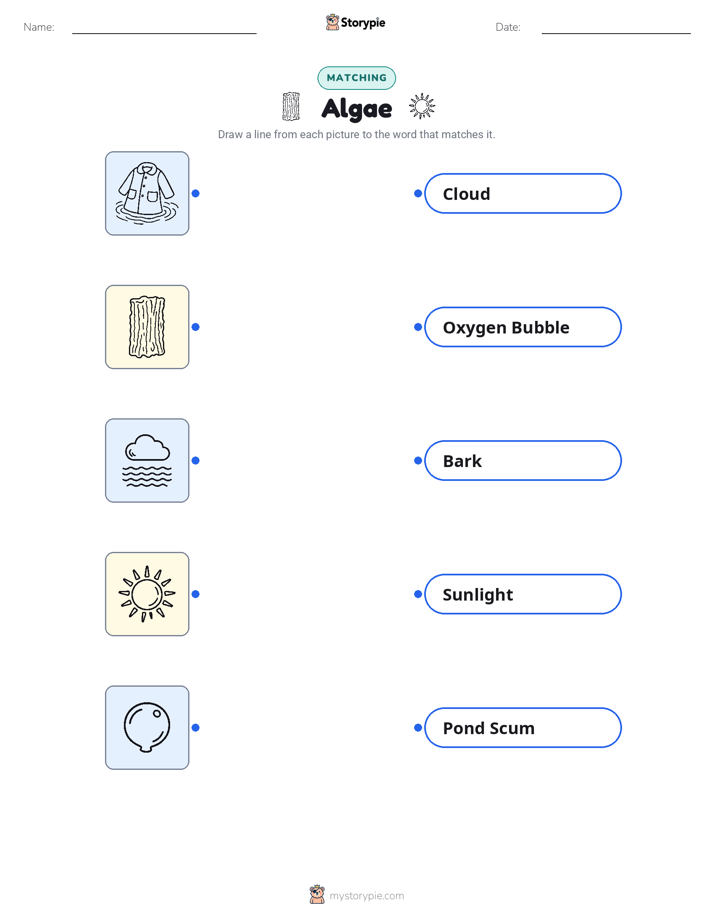
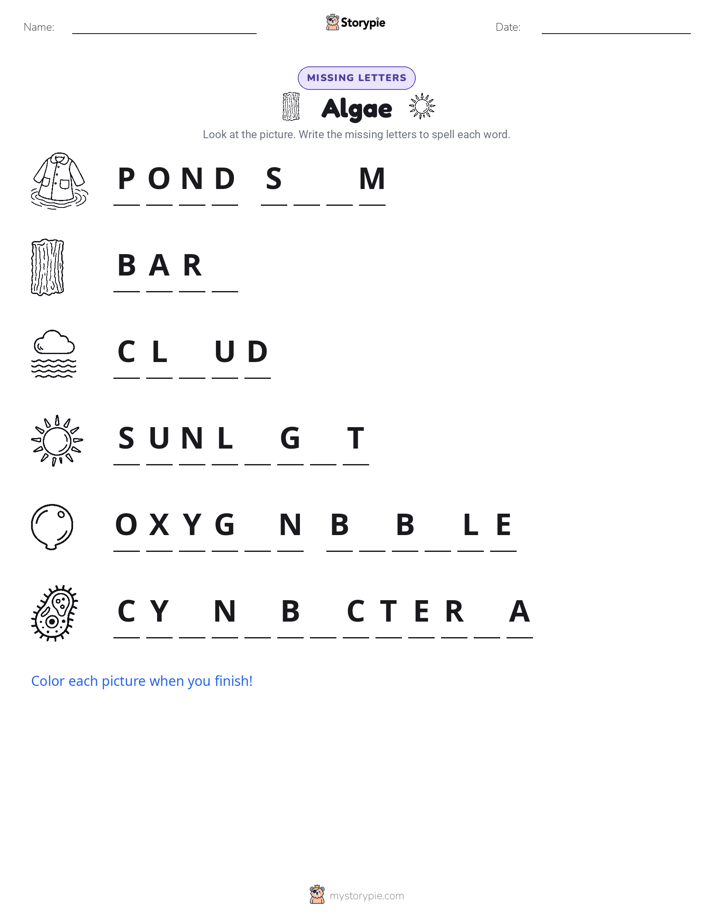
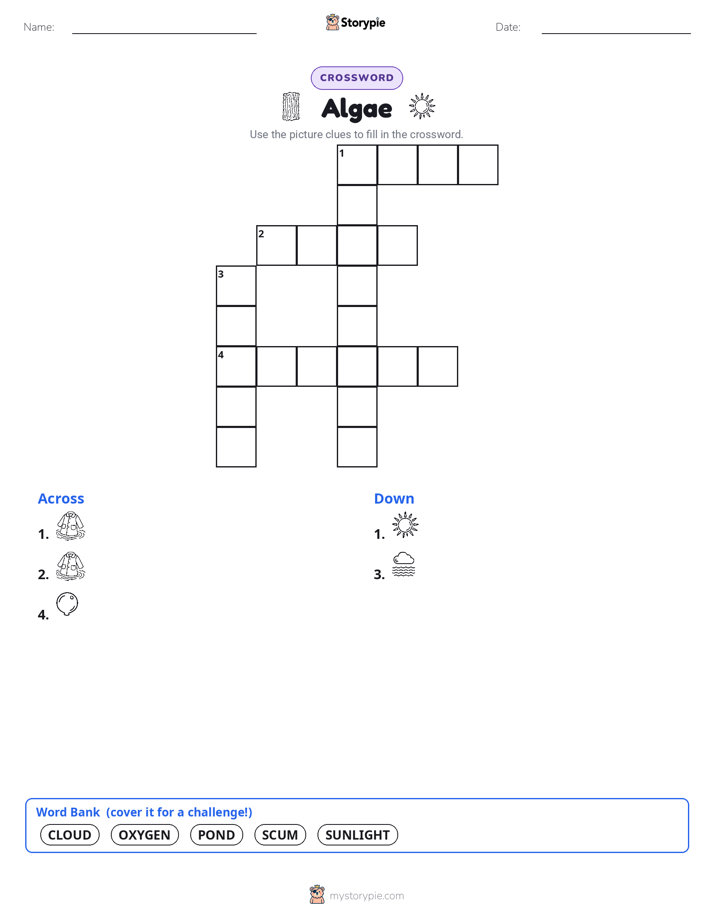
I am everywhere and nowhere, all at once. You can find me painting the surface of a quiet pond with a shimmering green coat, clinging to the damp bark of an ancient tree, or drifting in vast, invisible clouds through the sunlit layers of the ocean. I am in the deepest trenches and the warmest lagoons. My life is elegantly simple. I drink in water, I bask in the golden light of the sun, and with a quiet, constant sigh, I breathe out the very oxygen that fills your lungs. I am older than any mountain you have ever seen, any river that has carved a canyon. I was here long before the first dinosaur left a footprint, and long before the first human looked up at the stars. It was my countless ancestors who first painted this world green and filled its skies with the breath of life, turning a rocky, barren planet into a vibrant, blue jewel. I am the planet's first and most important producer. I am Algae.
My story begins in the deep past, over three billion years ago, when the Earth was still a young, turbulent world. My earliest ancestors, tiny single-celled organisms called cyanobacteria, were pioneers. They figured out a planetary magic trick that would change everything. It’s called photosynthesis. Using only sunlight, water, and the carbon dioxide that filled the air, they created their own food. But the most incredible part was what they released as waste: oxygen. For millions of years, they breathed out, and slowly, painstakingly, they filled the atmosphere with this new gas. This incredible transformation, which scientists now call the Great Oxidation Event around 2.4 billion years ago, was what made it possible for larger, more complex life—like animals, and eventually you—to evolve. For billions of years, I lived my life unseen, a silent, microscopic force shaping the world. Then, in the 1670s, a man in the Netherlands with an incredible curiosity changed that. His name was Anton van Leeuwenhoek, and he had a passion for grinding lenses to create powerful microscopes. One day, looking at a drop of pond water, he saw me. He called my relatives “animalcules,” or tiny animals, marveling at the bustling, invisible world he had uncovered. For the first time, a human had peered into my reality. A century later, in the 1700s, a Swedish botanist named Carl Linnaeus tried to organize all living things. He gave me a place in his system, classifying me and my relatives, trying to make sense of my enormous and diverse family, which ranges from microscopic diatoms with glassy shells to the towering giant kelp that form underwater forests.
The Green Breath of the World
I am everywhere and nowhere, all at once. You can find me painting the surface of a quiet pond with a shimmering green coat, clinging to the damp bark of an ancient tree, or drifting in vast, invisible clouds through the sunlit layers of the ocean. I am in the deepest trenches and the warmest lagoons. My life is elegantly simple. I drink in water, I bask in the golden light of the sun, and with a quiet, constant sigh, I breathe out the very oxygen that fills your lungs. I am older than any mountain you have ever seen, any river that has carved a canyon. I was here long before the first dinosaur left a footprint, and long before the first human looked up at the stars. It was my countless ancestors who first painted this world green and filled its skies with the breath of life, turning a rocky, barren planet into a vibrant, blue jewel. I am the planet's first and most important producer. I am Algae.
My story begins in the deep past, over three billion years ago, when the Earth was still a young, turbulent world. My earliest ancestors, tiny single-celled organisms called cyanobacteria, were pioneers. They figured out a planetary magic trick that would change everything. It’s called photosynthesis. Using only sunlight, water, and the carbon dioxide that filled the air, they created their own food. But the most incredible part was what they released as waste: oxygen. For millions of years, they breathed out, and slowly, painstakingly, they filled the atmosphere with this new gas. This incredible transformation, which scientists now call the Great Oxidation Event around 2.4 billion years ago, was what made it possible for larger, more complex life—like animals, and eventually you—to evolve. For billions of years, I lived my life unseen, a silent, microscopic force shaping the world. Then, in the 1670s, a man in the Netherlands with an incredible curiosity changed that. His name was Anton van Leeuwenhoek, and he had a passion for grinding lenses to create powerful microscopes. One day, looking at a drop of pond water, he saw me. He called my relatives “animalcules,” or tiny animals, marveling at the bustling, invisible world he had uncovered. For the first time, a human had peered into my reality. A century later, in the 1700s, a Swedish botanist named Carl Linnaeus tried to organize all living things. He gave me a place in his system, classifying me and my relatives, trying to make sense of my enormous and diverse family, which ranges from microscopic diatoms with glassy shells to the towering giant kelp that form underwater forests.
My partnership with humanity is nearly as old as human civilization itself. Long before scientists knew my name, ancient peoples understood my value. Archaeologists have found evidence at a site called Monte Verde in Chile that people were harvesting me for food as far back as 14,000 years ago. They knew that I was a source of nourishment, a gift from the water. I am the foundation of almost every aquatic food web. Tiny animals eat me, bigger fish eat them, and so on, all the way up to sharks, dolphins, and even the great blue whales who filter tons of my smaller relatives from the sea. Without me, the oceans would be empty. As human knowledge grew, so did your uses for me. You learned to extract special substances from my larger seaweed forms. Perhaps you’ve heard of agar or carrageenan. They are used to make things like ice cream, yogurt, and even toothpaste thick and smooth. One of my proudest moments of partnership came in the 1940s. In Japan, the farming of nori, a type of seaweed you might see wrapped around sushi, was in crisis. No one could figure out how to grow it reliably. An English botanist named Kathleen Drew-Baker spent years studying my life cycle and made a breakthrough discovery. She figured out a hidden stage of my life that was the key to cultivating me. Her research saved the entire industry, and to this day, she is celebrated in Japan as the “Mother of the Sea.”
Now, I stand at the edge of a new era, ready to help humanity face its biggest challenges. Just as my ancestors transformed the early Earth, I am being called upon to help shape a better future. Scientists are exploring how to use my rapid growth and oil-producing abilities to create biofuels. Imagine cars, trucks, and even airplanes powered by green fuel grown in water, a clean energy source that can be renewed again and again. I am also a key player in the fight against pollution. Researchers have developed bioplastics from my cellular structures, creating materials that can break down naturally instead of choking oceans and landfills for centuries. My most fundamental job, however, remains the most important. Every day, I absorb enormous amounts of carbon dioxide, the gas that is warming your planet. I pull it from the atmosphere and use it to grow, locking it away and releasing life-giving oxygen in its place. I am a tiny, powerful engine for a healthier climate. I helped create a breathable world for you billions of years ago. Today, as you look for solutions for a cleaner, greener, and more sustainable future, remember me. I am still here, working quietly in the waters of the world, ready to help you again.
Wow facts
About
Algae are a diverse group of simple, plant-like aquatic organisms that generate oxygen through photosynthesis. They range from single-celled microorganisms to large seaweeds and form the base of most aquatic food webs.
Take a Quiz
Question 1 of 5
How did humanity's relationship with algae change from ancient times to the 20th century, according to the story?
Explore next






Want to do even more?
Go beyond exploring. Unlock tools that turn every story into real learning.

Storypie Plus for families
Full stories, quizzes, and printables. Nights and car rides, sorted.
- Unlimited audio stories
- Create Mode: your child stars in the story
- Offline downloads
- Printable worksheets & coloring pages

Why Storypie for Schools
Students engaged. Prep in seconds. Evenings back to you.
- Worksheets & Quizzes
- Classroom Management
- Formative Assessment
- Custom Curriculum & Lesson Plans
- 27 Languages

Why Storypie for Homeschool
Curriculum done. They'll ask for more. Hours back in your day.
- Worksheet Generator
- First-Person Audio Stories
- Built-in Comprehension Quizzes
- Custom Curriculum & Lesson Plans
- Print & Go Activities