English

Archaeology
Archaeology is the scientific study of human history and prehistory through the excavation of sites and the…
Reads at Grades 6–8 Listens at Grades 4–8
Print & create
Answer keys·No prep·Free with an account
28 worksheets · answer keys · full story · quiz · Ages 10-12 · CEFR B2
Plus adds 102,000+ more stories in 27 languages, audio for every one, and printables for all of them.
Just want Archaeology?
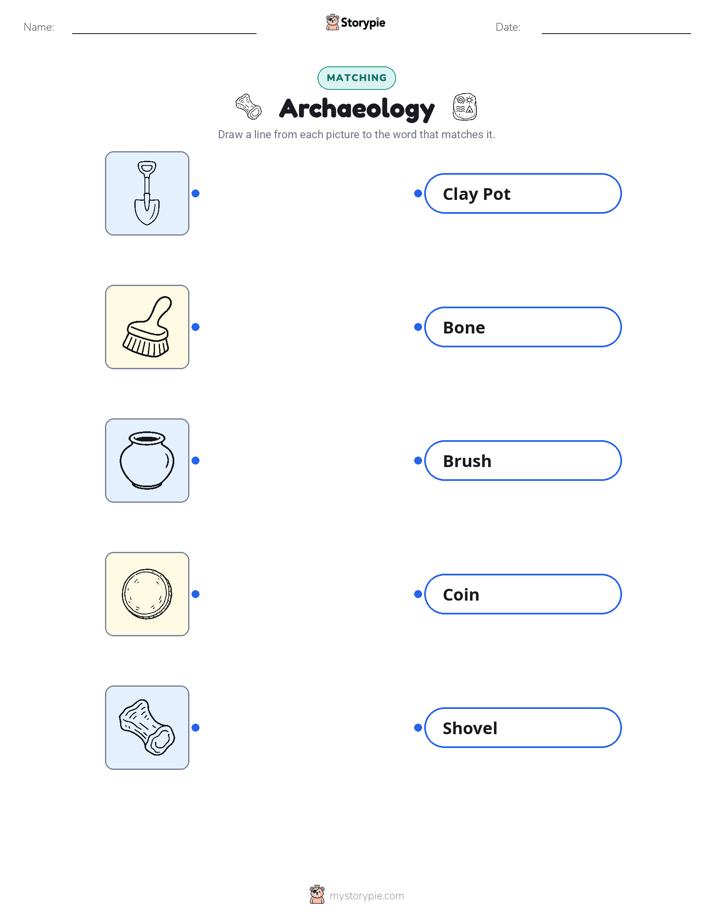
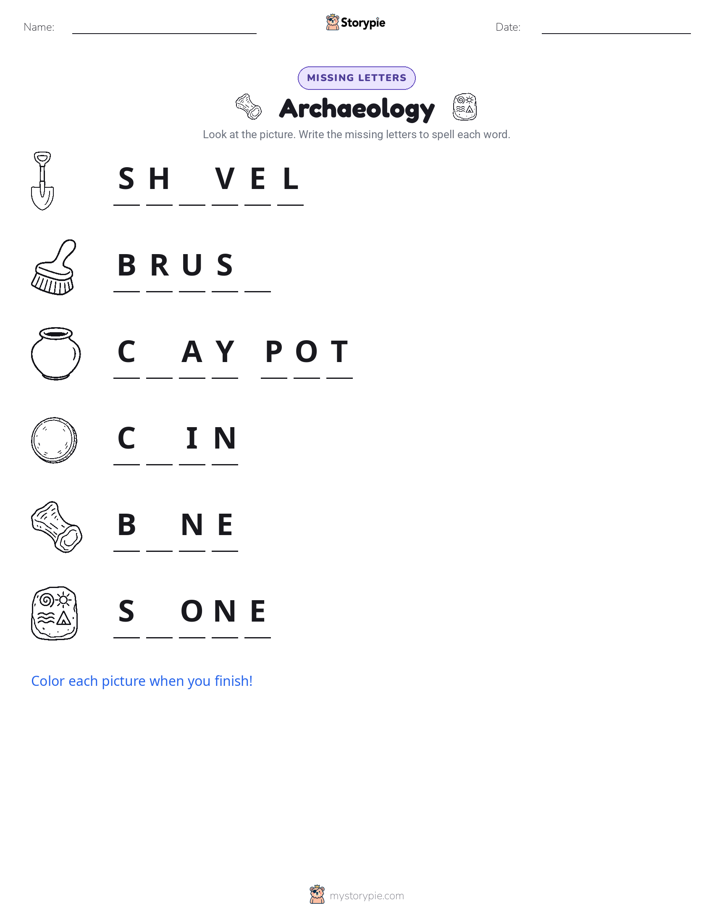
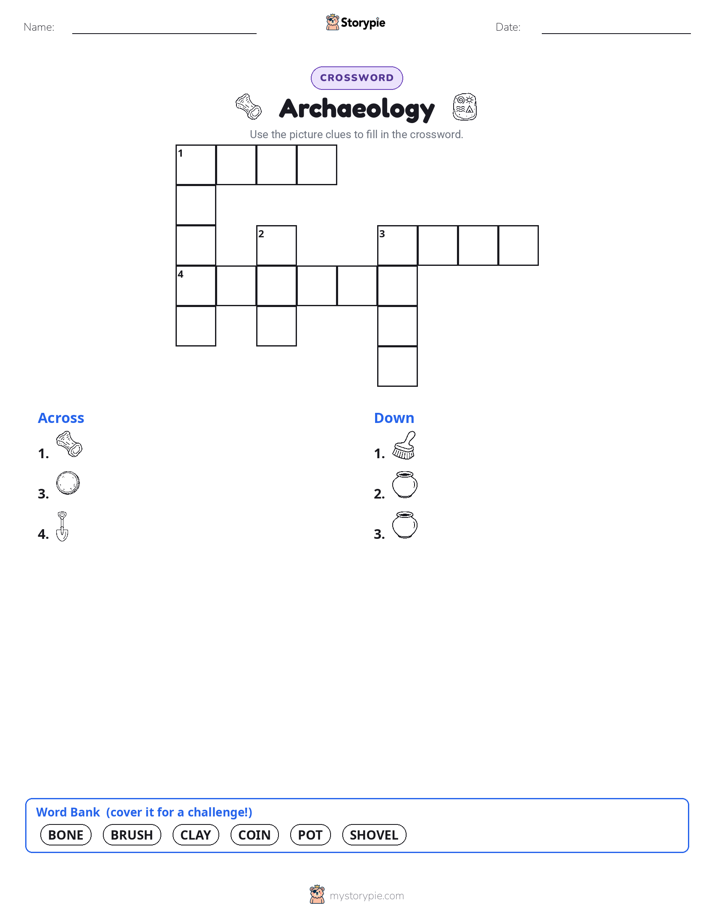
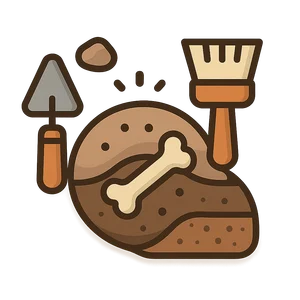
Imagine the metallic scrape of a shovel hitting something that isn’t rock. Picture the patient flick of a brush, whisking away centuries of dust to reveal the curve of a clay pot or the glint of a worn coin. Feel the silence of a forgotten city, its foundations sleeping beneath layers of earth, waiting for sunlight. These are the moments I live for. I am the whisper in the ruins, the echo in the tomb, the detective who sifts through the garbage of empires and the treasures of kings. For thousands of years, I lay dormant, a scattered puzzle with no one to piece it together. People would stumble upon my clues—a strange bone, a carved stone—and see them as curiosities, magical objects, or the work of giants. They saw the pieces, but they couldn't see the grand story they belonged to, the story of humanity itself. I am the connection between a shard of pottery and the person who drank from it, between a fallen wall and the family that lived within it. I am the story written in soil and stone. I am Archaeology.
My voice, though ancient, has not always been understood. The curiosity I represent is as old as civilization, but it took time for people to learn how to truly listen. One of the first to try was a king named Nabonidus, who ruled the vast Neo-Babylonian Empire way back in the 6th century BCE. He was a restorer of temples, but he did more than just rebuild. He would carefully excavate the foundations of crumbling structures, searching for artifacts and inscriptions left by the kings who came long before him. He recorded his findings on clay cylinders, treating these remnants of the past with a deep reverence, seeking to understand his kingdom’s history. For a long time, his careful work was an exception. Much later, during the European Renaissance from the 14th to the 17th centuries, a different kind of interest bloomed. Wealthy scholars and nobles, known as antiquarians, became obsessed with the classical worlds of Greece and Rome. They collected magnificent statues, intricate mosaics, and ancient texts, but often it was for their beauty and the status they provided. An artifact was a prize to be owned, a symbol of culture and learning, rather than a clue to be investigated. The story was less important than the object itself.
The Story Written in Soil and Stone
Imagine the metallic scrape of a shovel hitting something that isn’t rock. Picture the patient flick of a brush, whisking away centuries of dust to reveal the curve of a clay pot or the glint of a worn coin. Feel the silence of a forgotten city, its foundations sleeping beneath layers of earth, waiting for sunlight. These are the moments I live for. I am the whisper in the ruins, the echo in the tomb, the detective who sifts through the garbage of empires and the treasures of kings. For thousands of years, I lay dormant, a scattered puzzle with no one to piece it together. People would stumble upon my clues—a strange bone, a carved stone—and see them as curiosities, magical objects, or the work of giants. They saw the pieces, but they couldn't see the grand story they belonged to, the story of humanity itself. I am the connection between a shard of pottery and the person who drank from it, between a fallen wall and the family that lived within it. I am the story written in soil and stone. I am Archaeology.
My voice, though ancient, has not always been understood. The curiosity I represent is as old as civilization, but it took time for people to learn how to truly listen. One of the first to try was a king named Nabonidus, who ruled the vast Neo-Babylonian Empire way back in the 6th century BCE. He was a restorer of temples, but he did more than just rebuild. He would carefully excavate the foundations of crumbling structures, searching for artifacts and inscriptions left by the kings who came long before him. He recorded his findings on clay cylinders, treating these remnants of the past with a deep reverence, seeking to understand his kingdom’s history. For a long time, his careful work was an exception. Much later, during the European Renaissance from the 14th to the 17th centuries, a different kind of interest bloomed. Wealthy scholars and nobles, known as antiquarians, became obsessed with the classical worlds of Greece and Rome. They collected magnificent statues, intricate mosaics, and ancient texts, but often it was for their beauty and the status they provided. An artifact was a prize to be owned, a symbol of culture and learning, rather than a clue to be investigated. The story was less important than the object itself.
My transformation from a hobby for the wealthy into a true science was a slow and dusty process, built on revolutionary ideas. A huge turning point began in 1748 with the rediscovery of Pompeii, the Roman city famously buried under volcanic ash when Mount Vesuvius erupted in 79 CE. For the first time, excavators weren't just finding a single statue or a buried building; they were uncovering an entire city, frozen in a single, tragic moment. They found homes with furniture intact, bread still in the ovens, and vibrant paintings on the walls. It was a complete snapshot of daily life, and it demanded a more systematic approach. This need for order gave rise to one of my most fundamental principles: stratigraphy. It’s the brilliant but simple idea that the earth is layered like a cake, and the deepest layers are the oldest. By carefully recording the layer in which an object is found, we can understand its age relative to other objects. Then, in the 1830s, a Danish museum curator named Christian Jürgensen Thomsen was faced with a warehouse overflowing with unorganized artifacts. To make sense of it all, he sorted the objects by what they were made of. He noticed a clear pattern: the oldest tools, found in the lowest strata, were always stone. Above them were tools made of bronze, and in the most recent layers, tools of iron. He called this the Three-Age System—the Stone Age, the Bronze Age, and the Iron Age. It was the first timeline of human progress based on physical evidence.
With a system in place, I was ready for my most famous adventures, and new technology gave me superpowers. The whole world held its breath on November 4th, 1922, when the British archaeologist Howard Carter peered through a small hole into a sealed tomb in Egypt's Valley of the Kings. When asked if he could see anything, he uttered the famous words, “Yes, wonderful things.” He had found the nearly untouched tomb of the pharaoh Tutankhamun. The discovery was more than just glittering gold; it was a treasure trove of information, revealing intimate details about Egyptian royalty, religion, and craftsmanship. But my greatest leap forward didn't come from a tomb; it came from a laboratory. In the late 1940s, a scientist named Willard Libby developed a method called radiocarbon dating. He discovered that all living things absorb a radioactive form of carbon, which begins to decay at a constant rate after they die. By measuring the remaining carbon, I could finally tell the absolute age of organic materials like wood, bone, and cloth. Guesses became facts. My work was no longer just relative; it was precise. Today, I use this and other amazing technologies to explore everywhere, from using sonar to map sunken shipwrecks on the ocean floor to using satellites and laser scanning to uncover entire cities hidden for centuries beneath the dense canopy of the Amazon rainforest.
In the end, all the digging, the careful brushing, and the scientific dating are not about finding treasure. Gold is exciting, but a simple, thumb-worn clay pot can tell a far richer story. I am not the study of things; I am the study of people. Every artifact is a connection to a human being who lived, dreamed, worked, and loved. A sharpened flint point is the story of a hunter providing for their family. A set of carved game pieces is the story of friends sharing a moment of leisure. A decorated burial is the story of a community grieving a loss. I reveal the vast, sprawling epic of us. I show that while our technologies and cultures change, the fundamental human experience remains the same. We all build homes, create art, form communities, and search for meaning. By understanding where we came from, we can better understand who we are now and where we are going. So be curious about the ground beneath your feet. The past is not gone; it is just sleeping, and by listening to its stories, we learn how to build a better, more connected future.
Wow facts
About
Archaeology is the scientific study of human history and prehistory through the excavation of sites and the analysis of artifacts and other physical remains.
Take a Quiz
Question 1 of 5
According to the story, what was the main difference between King Nabonidus and the Renaissance antiquarians?
Explore next






Want to do even more?
Go beyond exploring. Unlock tools that turn every story into real learning.

Storypie Plus for families
Full stories, quizzes, and printables. Nights and car rides, sorted.
- Unlimited audio stories
- Create Mode: your child stars in the story
- Offline downloads
- Printable worksheets & coloring pages

Why Storypie for Schools
Students engaged. Prep in seconds. Evenings back to you.
- Worksheets & Quizzes
- Classroom Management
- Formative Assessment
- Custom Curriculum & Lesson Plans
- 27 Languages

Why Storypie for Homeschool
Curriculum done. They'll ask for more. Hours back in your day.
- Worksheet Generator
- First-Person Audio Stories
- Built-in Comprehension Quizzes
- Custom Curriculum & Lesson Plans
- Print & Go Activities