English

Archaeology
Archaeology is the scientific study of human history and prehistory through the excavation of sites and the…
Reads at Grades K-2 Listens at K–3
Print & create
Answer keys·No prep·Free with an account
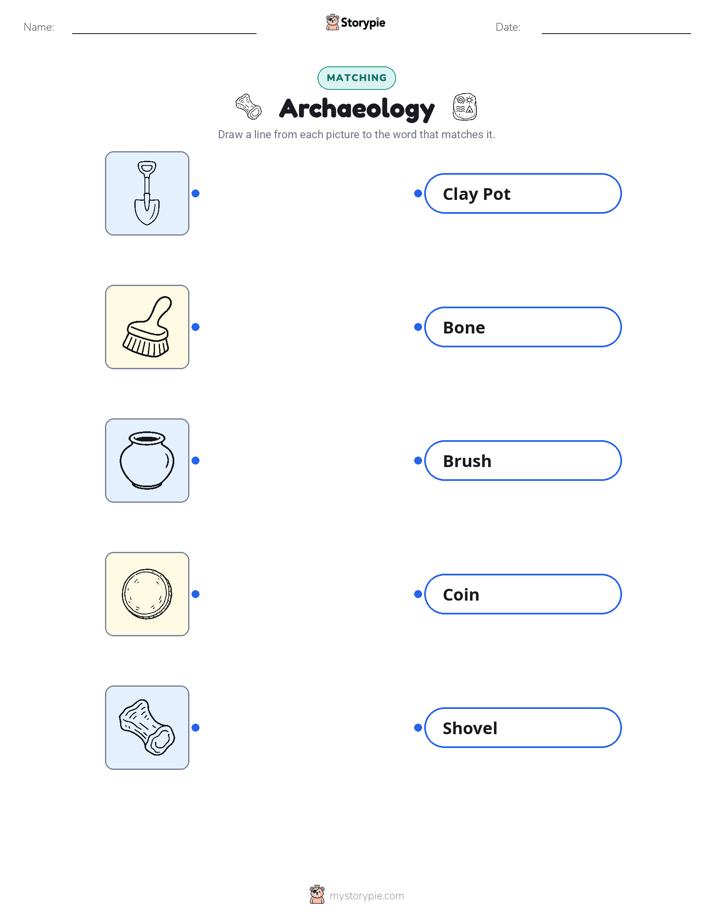
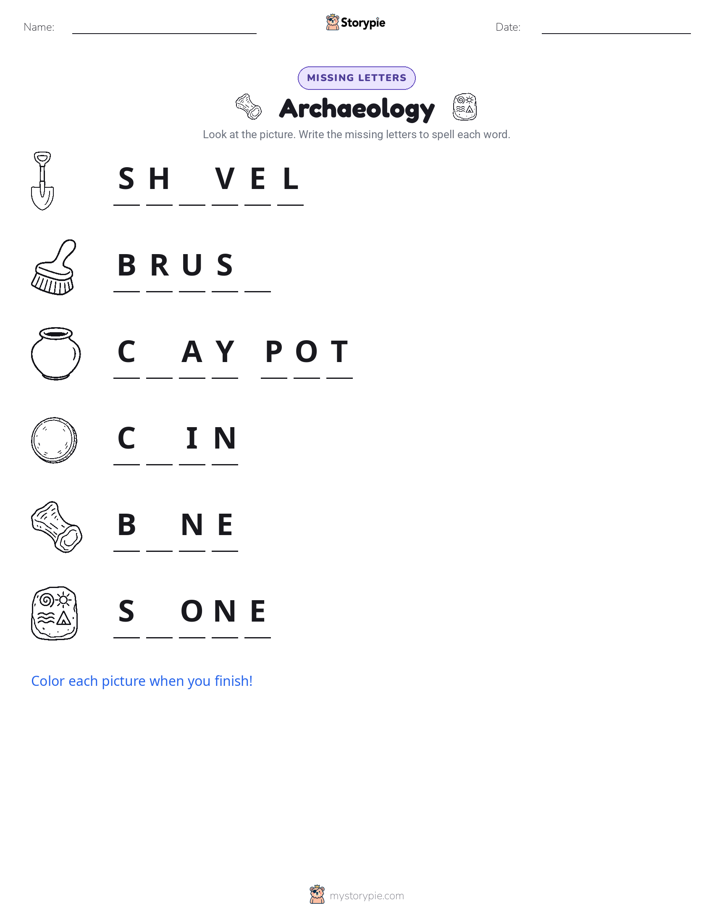
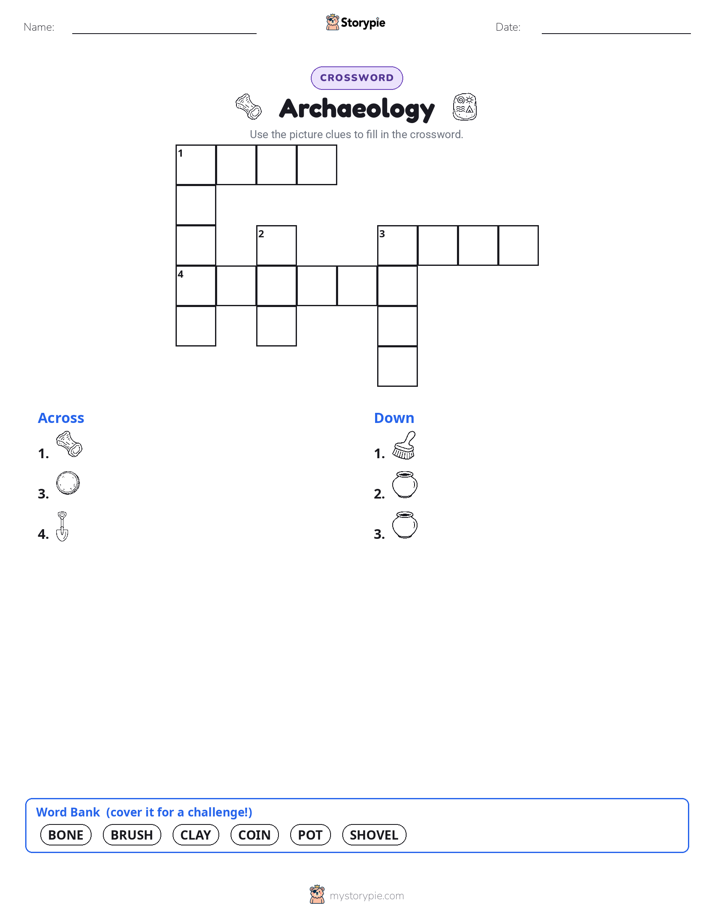
28 worksheets · answer keys · full story · quiz · Ages 6-8 · CEFR A2
Plus adds 102,000+ more stories in 27 languages, audio for every one, and printables for all of them.
Just want Archaeology?
Have you ever dug in the dirt and found a smooth, colorful rock or an old, funny-looking bottle cap. Did you wonder who might have left it there. That feeling of curiosity is where I live. I am the excitement you feel when you uncover something secret and old, a piece of a story that was hidden under your feet. I help people become time detectives, searching for clues about how people lived long, long ago. My job is to whisper stories from the ground, from broken pots and forgotten tools, to anyone who is willing to listen carefully. Hello. My name is Archaeology.
For a very long time, people would find old things but didn't always understand what stories they told. One of the very first time detectives was a king named Nabonidus, who lived in a place called Babylonia way back in the 6th century BCE. He loved to dig up the foundations of old temples to find messages left by the kings who came before him. Much later, during a time called the Renaissance that started in the 1300s, people in Europe got very interested in old art from ancient Greece and Rome. They collected statues and coins because they were beautiful. But the biggest clue that helped me grow came on a special day in 1748. That’s when explorers found the lost city of Pompeii, which had been buried by a volcano. It was a whole city, perfectly saved in time. This showed everyone that by digging carefully, you could find more than just treasure—you could find an entire lost world.
After Pompeii, people got much better at being time detectives. In the 1800s, they realized that the earth is like a giant layer cake—the deeper you dig, the older the things you find are. A very clever museum keeper named Christian Jürgensen Thomsen had a great idea around 1836. He started sorting old tools into three groups: the Stone Age, the Bronze Age, and the Iron Age. This helped put the puzzle of the past in the right order. Then, I became super famous. On November 4th, 1922, a man named Howard Carter peeked into the tomb of an Egyptian pharaoh named Tutankhamun. It was filled with sparkling gold and amazing treasures that hadn’t been seen for thousands of years. Everyone saw how exciting it was to uncover stories from the past.
I Am Archaeology: A Time Detective's Story
Have you ever dug in the dirt and found a smooth, colorful rock or an old, funny-looking bottle cap. Did you wonder who might have left it there. That feeling of curiosity is where I live. I am the excitement you feel when you uncover something secret and old, a piece of a story that was hidden under your feet. I help people become time detectives, searching for clues about how people lived long, long ago. My job is to whisper stories from the ground, from broken pots and forgotten tools, to anyone who is willing to listen carefully. Hello. My name is Archaeology.
For a very long time, people would find old things but didn't always understand what stories they told. One of the very first time detectives was a king named Nabonidus, who lived in a place called Babylonia way back in the 6th century BCE. He loved to dig up the foundations of old temples to find messages left by the kings who came before him. Much later, during a time called the Renaissance that started in the 1300s, people in Europe got very interested in old art from ancient Greece and Rome. They collected statues and coins because they were beautiful. But the biggest clue that helped me grow came on a special day in 1748. That’s when explorers found the lost city of Pompeii, which had been buried by a volcano. It was a whole city, perfectly saved in time. This showed everyone that by digging carefully, you could find more than just treasure—you could find an entire lost world.
After Pompeii, people got much better at being time detectives. In the 1800s, they realized that the earth is like a giant layer cake—the deeper you dig, the older the things you find are. A very clever museum keeper named Christian Jürgensen Thomsen had a great idea around 1836. He started sorting old tools into three groups: the Stone Age, the Bronze Age, and the Iron Age. This helped put the puzzle of the past in the right order. Then, I became super famous. On November 4th, 1922, a man named Howard Carter peeked into the tomb of an Egyptian pharaoh named Tutankhamun. It was filled with sparkling gold and amazing treasures that hadn’t been seen for thousands of years. Everyone saw how exciting it was to uncover stories from the past.
Today, my detectives—called archaeologists—use amazing tools like special cameras and computers to peek under the ground before they even start digging. They look for clues about how regular people lived, like broken pottery, old toys, and even tiny seeds that show what they ate for dinner. I help you see that people who lived thousands of years ago were a lot like you. They loved their families, told stories, and dreamed about the future. By helping you listen to the whispers of the past, I show you that we are all part of one big, amazing human story.
Wow facts
About
Archaeology is the scientific study of human history and prehistory through the excavation of sites and the analysis of artifacts and other physical remains.
Take a Quiz
Question 1 of 4
Why was finding the city of Pompeii so important?
Explore next






Want to do even more?
Go beyond exploring. Unlock tools that turn every story into real learning.

Storypie Plus for families
Full stories, quizzes, and printables. Nights and car rides, sorted.
- Unlimited audio stories
- Create Mode: your child stars in the story
- Offline downloads
- Printable worksheets & coloring pages

Why Storypie for Schools
Students engaged. Prep in seconds. Evenings back to you.
- Worksheets & Quizzes
- Classroom Management
- Formative Assessment
- Custom Curriculum & Lesson Plans
- 27 Languages

Why Storypie for Homeschool
Curriculum done. They'll ask for more. Hours back in your day.
- Worksheet Generator
- First-Person Audio Stories
- Built-in Comprehension Quizzes
- Custom Curriculum & Lesson Plans
- Print & Go Activities