English

Atom
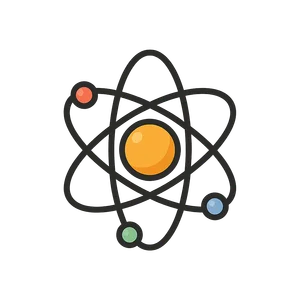
The atom is the smallest unit of ordinary matter that forms a chemical element.
Reads at Grades 6–8 Listens at Grades 4–8
Print & create
Answer keys·No prep·Free with an account
28 worksheets · answer keys · full story · quiz · Ages 10-12 · CEFR B2
Plus adds 244,000+ more stories in 27 languages, audio for every one, and printables for all of them.
Just want Atom?
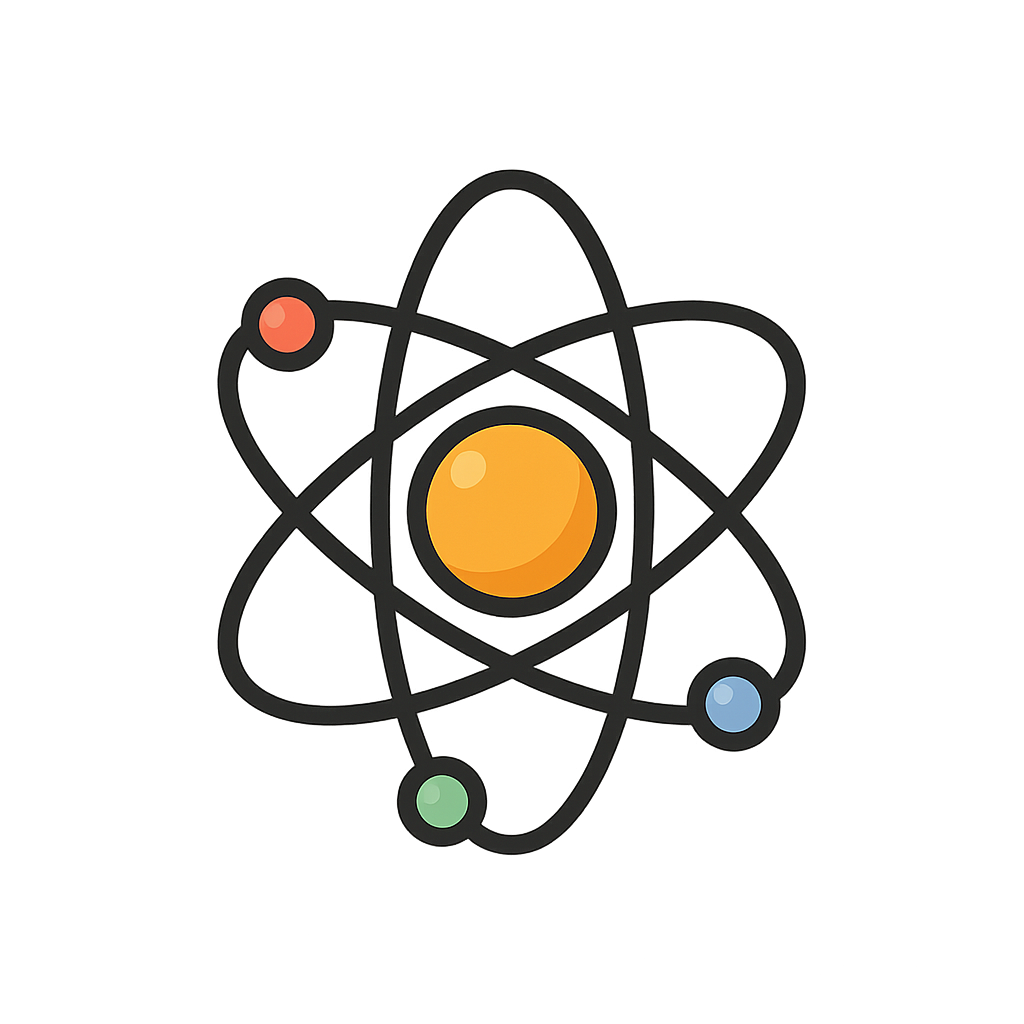
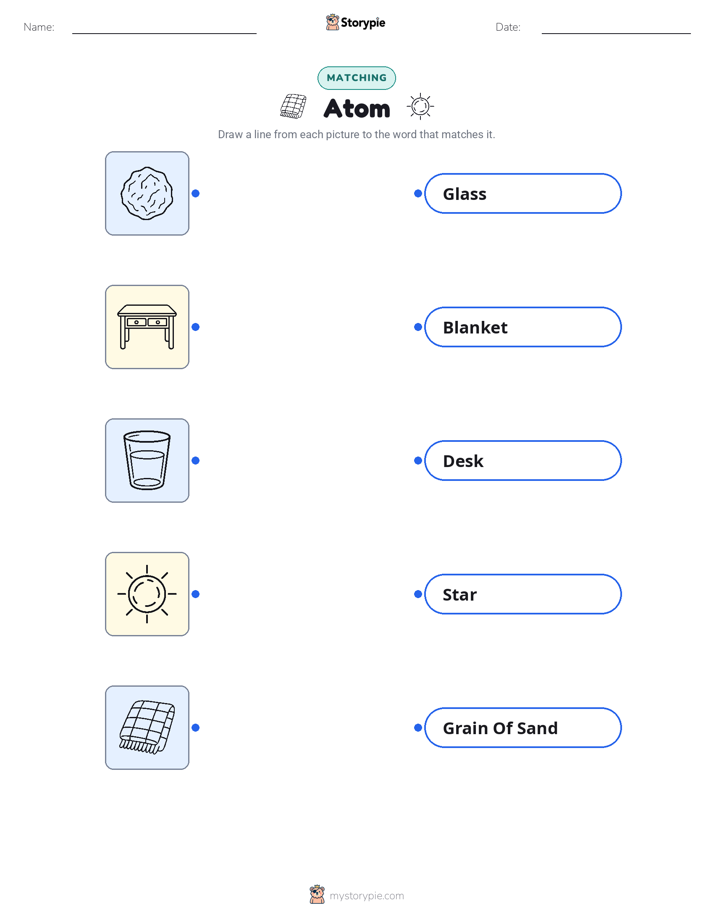
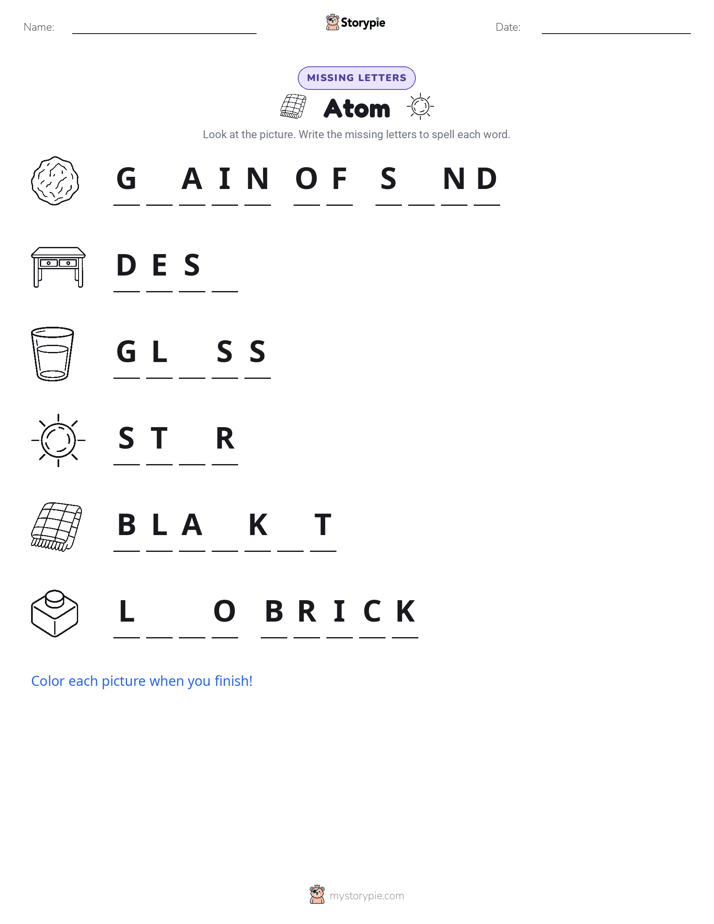
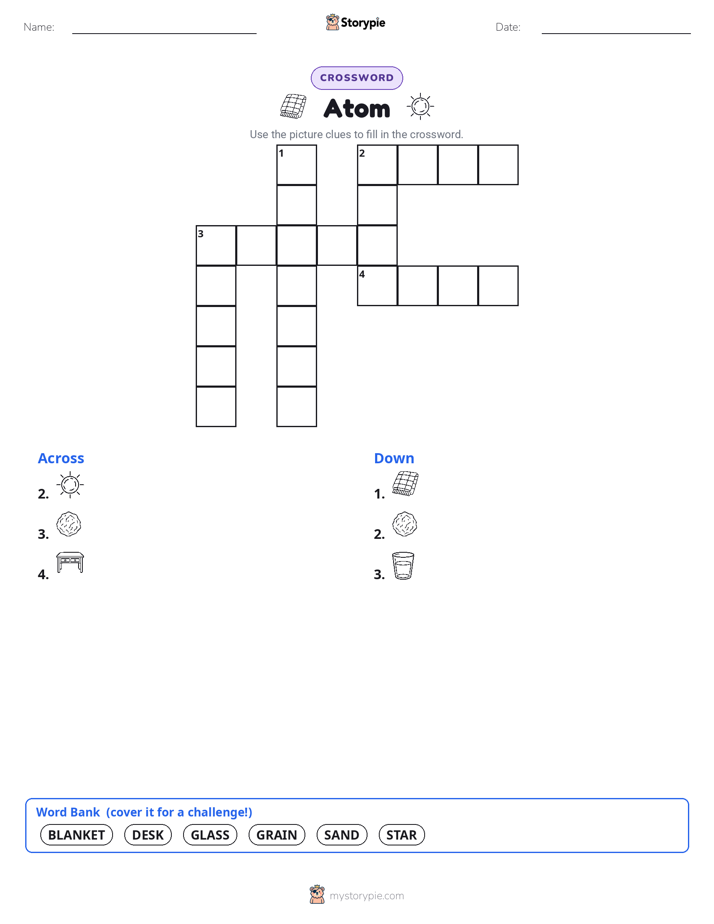
Imagine the smallest thing you can think of. A grain of sand? A speck of dust? Now imagine something so incredibly small that you could fit billions of them on the head of a pin. Something you can’t see, can’t touch, and can’t feel, yet it makes up everything around you. I am in the wood of your desk, the water in your glass, and the air you are breathing right now. I build the distant stars burning in the night sky and the cozy blanket on your bed. I am the ultimate building block, the universal Lego brick from which everything in the entire cosmos is constructed. You are made of me, your pets are made of me, and so is the planet you live on. I am the fundamental particle that gives substance to all of reality, linking everything together in a vast, invisible web. Have you guessed who I am yet? I am the Atom.
My story doesn’t begin in a modern laboratory with bubbling beakers and fancy equipment. It begins long, long ago, on the sunny shores of ancient Greece in the 5th century BCE. Back then, there were brilliant thinkers called philosophers who tried to understand the world using the power of their minds. Two of these thinkers, a man named Leucippus and his star student, Democritus, were sitting and thinking about matter. They wondered, what would happen if you took a piece of cheese, or a rock, and cut it in half? Then you cut that half in half, and in half again, and again, and again. Their powerful logic told them that you couldn't do this forever. Eventually, you would reach a particle so tiny and so fundamental that it could not be cut any further. They gave me my name based on this idea. In their language, Greek, the word ‘atomos’ meant ‘uncuttable’ or ‘indivisible.’ For nearly two thousand years, this amazing idea was mostly forgotten, a brilliant guess that floated in the background while other theories took center stage. It was the first time anyone had imagined me, not with their eyes, but with the sheer force of their curiosity.
I Am the Atom
Imagine the smallest thing you can think of. A grain of sand? A speck of dust? Now imagine something so incredibly small that you could fit billions of them on the head of a pin. Something you can’t see, can’t touch, and can’t feel, yet it makes up everything around you. I am in the wood of your desk, the water in your glass, and the air you are breathing right now. I build the distant stars burning in the night sky and the cozy blanket on your bed. I am the ultimate building block, the universal Lego brick from which everything in the entire cosmos is constructed. You are made of me, your pets are made of me, and so is the planet you live on. I am the fundamental particle that gives substance to all of reality, linking everything together in a vast, invisible web. Have you guessed who I am yet? I am the Atom.
My story doesn’t begin in a modern laboratory with bubbling beakers and fancy equipment. It begins long, long ago, on the sunny shores of ancient Greece in the 5th century BCE. Back then, there were brilliant thinkers called philosophers who tried to understand the world using the power of their minds. Two of these thinkers, a man named Leucippus and his star student, Democritus, were sitting and thinking about matter. They wondered, what would happen if you took a piece of cheese, or a rock, and cut it in half? Then you cut that half in half, and in half again, and again, and again. Their powerful logic told them that you couldn't do this forever. Eventually, you would reach a particle so tiny and so fundamental that it could not be cut any further. They gave me my name based on this idea. In their language, Greek, the word ‘atomos’ meant ‘uncuttable’ or ‘indivisible.’ For nearly two thousand years, this amazing idea was mostly forgotten, a brilliant guess that floated in the background while other theories took center stage. It was the first time anyone had imagined me, not with their eyes, but with the sheer force of their curiosity.
After my long nap in the pages of history books, I was woken up in the early 19th century. On September 6th, 1803, an English schoolteacher and chemist named John Dalton proposed a new theory about me. He pictured me as a tiny, solid, indestructible sphere, like a miniature billiard ball. He realized that different types of me, which he called elements, had different weights. This was a monumental step forward because it brought me out of philosophy and into the world of science. But the story was far from over. In 1897, a British physicist named J.J. Thomson was experimenting with cathode rays when he discovered a particle that was thousands of times smaller and lighter than me. It had a negative electric charge. He had found one of my essential parts: the electron. Suddenly, I wasn't an uncuttable solid ball anymore. Thomson imagined I was like a blueberry muffin, a sphere of positive dough studded with tiny negative electrons. This was called the ‘plum pudding model,’ and it was the best picture of me anyone had. But it was about to be completely overturned. In 1911, a scientist from New Zealand named Ernest Rutherford conducted a brilliant experiment. He fired tiny, positive particles at a sheet of gold foil so thin it was practically transparent. He expected the particles to pass right through, like bullets through a ghost. Most of them did, but to his astonishment, some bounced right back. He later said, “It was as if you fired a 15-inch shell at a piece of tissue paper and it came back and hit you.” This could only mean one thing: I was mostly empty space, with a tiny, dense, positively charged center he named the nucleus. It was like discovering a single marble in the middle of a giant football stadium. Just two years later, in 1913, a Danish physicist named Niels Bohr refined this picture, figuring out that my electrons weren't just buzzing around randomly. They moved in specific orbits, or shells, around my nucleus, like planets orbiting a sun. The final major piece of my puzzle fell into place in 1932, when an English physicist named James Chadwick discovered a neutral particle in my nucleus, the neutron, which explained my full weight. At last, the picture of my core structure was complete.
From those early philosophical guesses to the incredible experiments that revealed my inner workings, humanity’s understanding of me has changed the world. Knowing how I behave and interact allows scientists and engineers to perform wonders. When my nucleus is split, I can release immense energy to power entire cities. Doctors use my properties in machines like MRIs to see inside the human body without ever making a cut. The computer or phone you might be using to read this works because engineers can precisely control the flow of my electrons through materials called semiconductors. I am the foundation of all chemistry, the key to understanding biology, and the rulebook for physics. My story is a great adventure of human curiosity, a journey of asking questions and refusing to accept that some things are too small to be understood. And my story isn't over. Scientists are still exploring my deepest secrets, and with every discovery, they unlock new possibilities. I am the building block of your world, and the quest to understand me is the quest to understand the universe itself. So stay curious, ask big questions, and perhaps one day, you will be the one to write the next chapter of my story.
Wow facts
About
The atom is the smallest unit of ordinary matter that forms a chemical element. Every solid, liquid, gas, and plasma is composed of neutral or ionized atoms.
Take a Quiz
Question 1 of 5
What is the main idea of the section 'Putting the Pieces Together'?
Explore next





Want to do even more?
Go beyond exploring. Unlock tools that turn every story into real learning.

Storypie Plus for families
Full stories, quizzes, and printables. Nights and car rides, sorted.
- Unlimited audio stories
- Create Mode: your child stars in the story
- Offline downloads
- Printable worksheets & coloring pages

Why Storypie for Schools
Students engaged. Prep in seconds. Evenings back to you.
- Worksheets & Quizzes
- Classroom Management
- Formative Assessment
- Custom Curriculum & Lesson Plans
- 27 Languages

Why Storypie for Homeschool
Curriculum done. They'll ask for more. Hours back in your day.
- Worksheet Generator
- First-Person Audio Stories
- Built-in Comprehension Quizzes
- Custom Curriculum & Lesson Plans
- Print & Go Activities